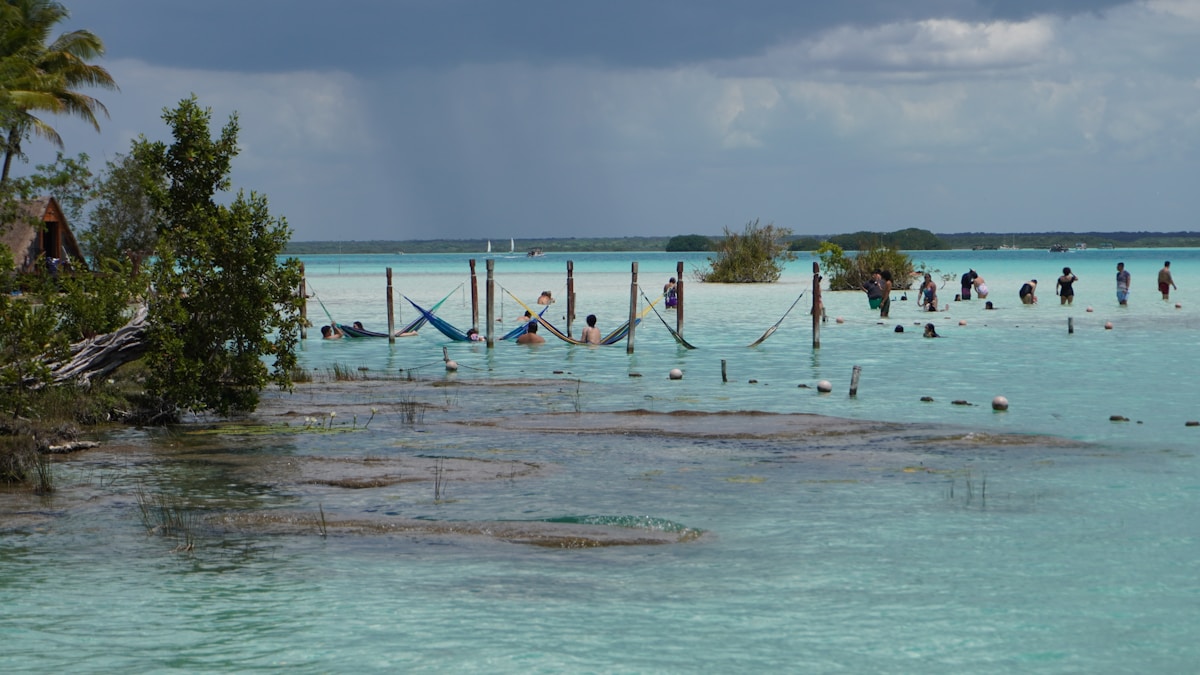
Bacalar is a destination built almost entirely around one thing: the lagoon. The activities here are water-based, the history is concentrated in the Fort, and the pace is deliberately slow. This is not a destination for ticking off sights - it is a place to spend time on and in the water.
Activity overview
| Activity | Cost | Duration | Best Time |
|---|---|---|---|
| Catamaran sailing tour | ~MXN $500–800/person | 3–4 hours | Morning (best light) |
| Cenote Azul | ~MXN $150 | 1–2 hours | Early morning |
| Cenote Esmeralda | ~MXN $60 | 1 hour | Anytime |
| Kayak (Canal de los Piratas) | ~MXN $200/hour | 1–2 hours | Calm mornings |
| Paddleboard rental | ~MXN $250/hour | 1–2 hours | Calm mornings |
| Fuerte de San Felipe | ~MXN $80 | 45 min | Anytime |
| Sunrise kayaking | ~MXN $400/person (guided) | 1.5 hours | 5:30–7:00 am |
All prices approximate, as of 2026.
Top Tours at a Glance
| Tour | Duration | Price (from) | Group Size | Highlights |
|---|---|---|---|---|
| Bacalar catamaran sailing tour | 3–4 hrs | from $25 | Up to 20 | Lagoon stops, Rapidos swim, stromatolites |
| Cenote Azul snorkel tour | 2 hrs | from $18 | Up to 12 | 90m-deep cenote, reef snorkelling |
| Sunrise kayak Bacalar | 1.5 hrs | from $15 | Up to 8 | Glassy lagoon at dawn, mangroves |
| Fort San Felipe guided tour | 1.5 hrs | from $12 | Up to 15 | 18th-century fort, Caste War history |
| Pirate Canal kayak & swim | 3 hrs | from $20 | Up to 10 | Canal de los Piratas, stromatolites |
Browse all Bacalar tours → GetYourGuide
Sailing the lagoon
A sailing catamaran tour is the best single way to experience Bacalar. Most operators run half-day tours (3–4 hours, approximately MXN $500–800 per person) with stops at:
- Cenote Azul - swimming in the deep open cenote
- Canal de los Piratas - a narrow mangrove channel historically used by pirates to access the lagoon without passing the Fort
- The Rapidos - a shallow, fast-flowing section where the current carries swimmers through the channel between two parts of the lagoon. The water here is warm and the flow is gentle enough for all abilities.
- Stromatolite zone - ancient living organisms in the southern shallows (no swimming - viewing from the boat)
Several operators dock at the main waterfront near the town centre. Bacalar Sailing Club and Velero Kalima are established. Skippered sailboat charters for private groups are also available (from approximately MXN $2,500 for 3–4 hours). Morning tours offer the best light for the lagoon’s colour gradients.
Cenote Azul
4 km south of town on the main highway. A large open cenote that connects to the lagoon via an underground passage. The depth at the centre exceeds 90 metres - the dark blue centre surrounded by turquoise shallows gives it one of the most dramatic colour contrasts of any cenote in Mexico. Entry approximately MXN $150.
Snorkelling the shallows is excellent - the water clarity is better than the lagoon itself. No chemical sunscreen permitted (the cenote is part of the protected underground water system). The cenote has a restaurant, changing facilities, and rental equipment.
Cenote Esmeralda
5 km south of Bacalar, a smaller private cenote with clear blue-green water and a vine for swinging into the water. Entry approximately MXN $60. Less crowded than Cenote Azul and more intimate - a good option if you want a quieter swim.
Kayaking the Canal de los Piratas
A narrow mangrove channel connecting the north end of the lagoon to a quieter section, historically used by pirates to access the lagoon without passing the Fort’s cannons. Kayak rentals are available at several waterfront spots (approximately MXN $200/hour). The canal takes 30–60 minutes to paddle and is flat, calm water suitable for beginners. The mangrove tunnel is atmospheric - birds, fish, and occasional turtles.
Sunrise kayaking - several operators offer guided sunrise paddles (approximately MXN $400 per person, 1.5 hours). The lagoon is glassy calm at dawn and the colour gradient as the sun rises is the most photogenic moment.
The Fort (Fuerte de San Felipe)
The 18th-century Spanish fort was built to defend the lagoon trade route against British pirates operating from Belize. The fort is small but well-preserved with a moat, cannons on the ramparts, and views across the lagoon. Inside, a museum documents the history of the lagoon zone and the Caste War of Yucatán (1847–1901) - a major indigenous uprising that controlled this region for over 50 years. Entry approximately MXN $80. Allow 45 minutes.
The history of the region is more complex and violent than the peaceful current atmosphere suggests - the museum gives important context for understanding southern Quintana Roo.
Stromatolites
At the south end of the lagoon, the Bahía de las Algas has one of the world’s few living stromatolite communities - layered microbial mats that are essentially the same organisms that produced Earth’s first oxygen 3.5 billion years ago. They grow less than 1 mm per year and are extremely fragile. Swimming is not permitted in the stromatolite zone. Sailing tours approach close enough to see the dome-shaped formations below the surface.
Swimming spots
La Playita (municipal swimming area near the Fort) has free lagoon access with a sandy bottom. The Mágico Bacalar waterfront strip has several swimming spots - some are attached to restaurants (buy a meal for access), others charge a small entry fee (approximately MXN $50–100).
The clearest water and best colour is slightly south of the fort, where the lagoon reaches 20+ metres depth. Many boutique hotels along the lagoon shore allow day access to their private docks for a fee (approximately MXN $100–200, sometimes with food/drink credit).
Paddleboarding
The lagoon’s calm, shallow water makes it excellent for stand-up paddleboarding. Rentals are available from waterfront operators (approximately MXN $250/hour). The best conditions are early morning before any wind picks up. Some operators offer paddleboard yoga sessions (approximately MXN $400 per person).
Practical tips
- Best light: The lagoon’s colours are most vivid between 9 am and noon on sunny days. Overcast skies flatten the colour palette.
- Sunscreen: Biodegradable/reef-safe sunscreen only. Several cenotes and lagoon access points prohibit chemical sunscreen entirely.
- Mosquitoes: Significant in summer, especially near the mangroves. Bring repellent.
- Getting around: The town is small and walkable. Bicycles (approximately MXN $200–300/day) and golf carts (approximately MXN $500–800/day) are available for reaching the cenotes south of town.
More Bacalar Guides
Plan your trip: tours in Bacalar · travel insurance.
See Also
- Cenotes in the Yucatán - the full guide to swimming cenotes across the peninsula, including the Bacalar lagoon
- Tulum Travel Guide - 2.5 hours north, the most popular Riviera Maya base with its own cenotes
- Riviera Maya Beaches - Caribbean coast context including the coastline south of Tulum
Search hotels in Bacalar on Booking.com
- Caribbean Island Ferries - connections from nearby Chetumal to Belize and the cayes