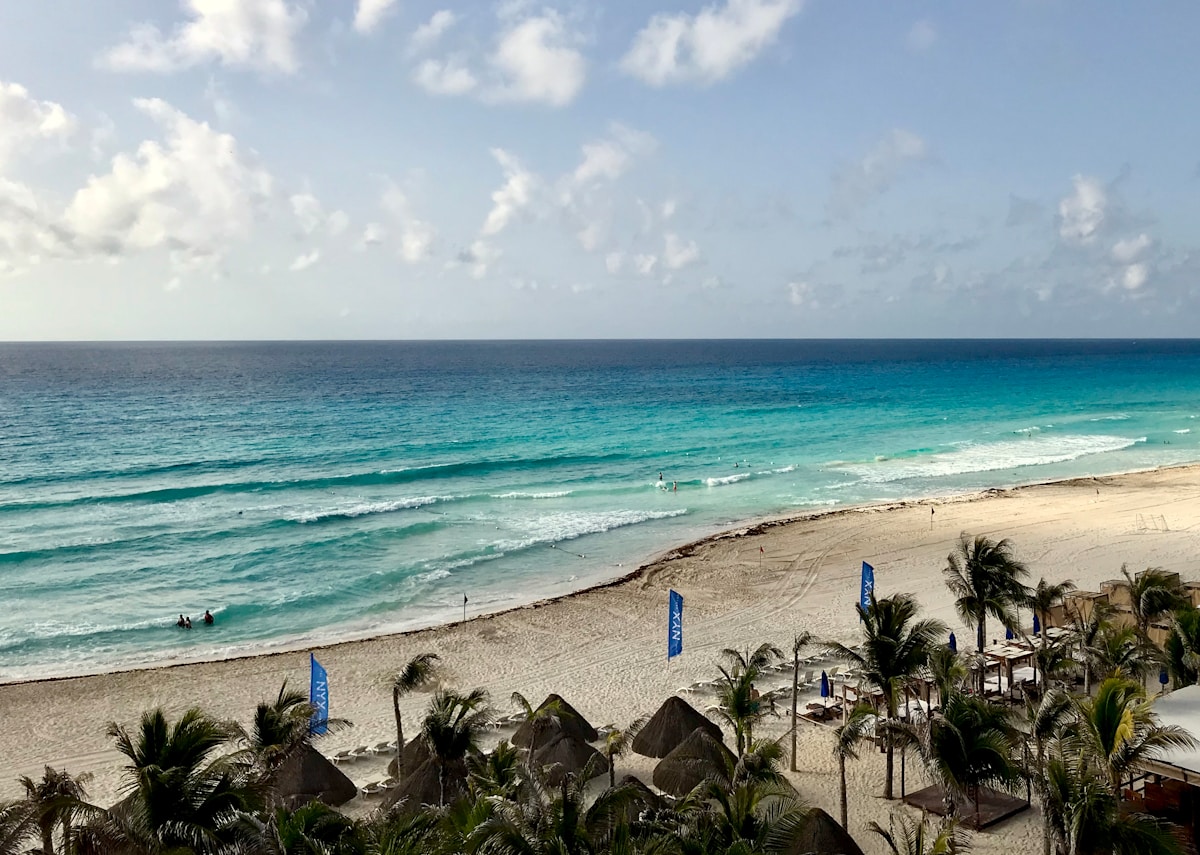
Cozumel Travel Guide
Cozumel guide: world-class diving in the Mesoamerican Reef, snorkelling, the San Gervasio Maya site, and the island's beaches.
Guides for Cozumel
Cozumel is a 48 km × 16 km island in the Caribbean, 18 km off the coast of Playa del Carmen. It sits on the Mesoamerican Barrier Reef - the second-largest coral reef system in the world - which makes it one of the top dive destinations in the Western Hemisphere. The western (lee) side has calm, clear water with world-class reef sites; the eastern (windward) coast is rougher with more isolated beaches.
Key activities
| Activity | Cost | Duration | Notes |
|---|---|---|---|
| 2-tank dive | From ~USD $70–90 | Half day | Drift diving, 30+ m visibility |
| Snorkel boat tour | ~USD $35–50 | 2–3 hours | Palancar Gardens, Colombia Shallows |
| San Gervasio ruins | ~MXN $110 | 1–1.5 hours | Maya shrine to Ixchel |
| Punta Sur Eco Park | ~MXN $200 | 2–3 hours | Lighthouse, lagoon, crocodiles |
| Scooter rental | ~USD $35–45/day | Full day | Island circuit |
| Beach club day pass | ~USD $20–40 | Half/full day | Mr. Sanchos, Paradise Beach |
All prices approximate, as of 2026.
Diving
The west coast dive sites are legendary. Palancar Reef has walls dropping to 30+ metres with towering coral formations and is one of the most photographed reef systems in the world. Santa Rosa Wall is a vertical wall with large coral overhangs, sponges, and strong drift currents - intermediate to advanced. Columbia Wall is deeper with enormous barrel sponges and eagle rays - the most spectacular wall dive on the island.
Most diving here is drift diving - you enter the water, drift with the current along the reef, and are picked up by the boat downstream. Visibility is typically 30–40 metres. Water temperature is 25–29°C year-round. Dozens of dive operators line the waterfront in San Miguel (the main town); most offer 2-tank dive packages from approximately USD $70–90. PADI certification courses (Open Water) run approximately USD $350–450.
Snorkelling
Non-divers are not excluded. Palancar Gardens (a shallower section of Palancar Reef at 3–5 m depth) has excellent snorkelling with dense fish populations and healthy coral. Colombia Shallows is another strong option. Snorkel boat tours from the pier in San Miguel cost approximately USD $35–50 including gear. The water off the western beach clubs also has decent shore snorkelling.
San Gervasio
The only accessible Maya archaeological site on the island, located 8 km inland from San Miguel. The site was dedicated to Ixchel, the Maya goddess of fertility and medicine - women from across the Maya world made pilgrimages here before marriage and childbirth. The ruins are modest in scale compared to mainland sites (low platforms and small temples) but historically significant. Entry approximately MXN $110 (combined federal + state fee). Open daily 8 am–4 pm. Allow 1–1.5 hours. Accessible by scooter, taxi (approximately MXN $200 each way), or guided tour.
Beaches and the island circuit
The standard way to see the island beyond San Miguel is by scooter (approximately USD $35–45/day from shops on Avenida Rafael Melgar). The circuit:
- Western coast - beach clubs (Mr. Sanchos, Paradise Beach, Playa Palancar) with day passes from approximately USD $20–40 including food/drink credit. Playa Palancar is the most natural beach on this side.
- Eastern coast - wilder, ocean-facing beaches with rough surf. Playa Bonita and Punta Morena have beach bars and dramatic waves. Not ideal for swimming but visually impressive.
- Punta Sur Ecological Park - the southern tip. Lighthouse, lagoon, crocodile habitat, and a small Maya ruin. Entry approximately MXN $200. The panoramic views from the lighthouse are worth the stop.
- Playa El Cielo - accessible by boat taxi from the Playa Palancar area. A sandbar with crystal-clear shallow water and starfish on the sandy bottom. One of the most photographed spots on the island.
Where to stay
| Zone | Budget | Mid-range | Resort |
|---|---|---|---|
| San Miguel (town) | Hostels from ~MXN $400/night | Hotels from ~MXN $1,000/night | - |
| Western coast | - | From ~MXN $1,500/night | From ~MXN $4,000/night |
Named properties: Amigos Hostel (dorms from approximately MXN $400/night, central San Miguel). Hotel B Cozumel (boutique, from approximately MXN $2,500/night, waterfront with pool). Casa Mexicana (mid-range, from approximately MXN $1,200/night, overlooking the waterfront). Presidente InterContinental (resort, from approximately MXN $4,000/night, own beach and reef access). Iberostar Cozumel (all-inclusive, from approximately MXN $5,000/night, southern coast).
Most divers stay in San Miguel for proximity to the dive operators and the pier. For beach time, the southern coast hotels have better beach access.
Food
San Miguel has the main restaurant concentration. La Cocay (Calle 8 Norte, mains approximately MXN $200–350) is the best restaurant on the island - Mediterranean-Mexican fusion in a garden setting. Kinta (Avenida 5 between Calles 2 and 4, mains approximately MXN $180–280) does creative Mexican cuisine. Mercado Municipal (Calle Adolfo Rosado Salas) has budget fondas with comida corrida from approximately MXN $60–80. For seafood, La Lobstería (mains approximately MXN $250–400) does grilled lobster and ceviche.
Cruise ship passengers flood San Miguel’s waterfront restaurants between 10 am and 4 pm - eat at the market or one block inland for better prices and fewer crowds.
Getting there
By ferry: Ultramar and Winjet ferries from Playa del Carmen every 30–60 minutes. Journey time 35–45 minutes. Cost approximately MXN $240–280 each way. The Playa del Carmen ferry pier is on the waterfront, a 5-minute walk from the ADO bus terminal.
By air: Cozumel International Airport (CZM) has direct flights from Mexico City, Houston, Dallas, and Miami. The airport is 3 km north of San Miguel - taxi to town approximately MXN $100.
Vehicle ferry: A car ferry operates from Calica (south of Playa del Carmen) but most visitors come as foot passengers and rent scooters on the island.
When to go
Year-round diving destination. February–April: Driest months, best visibility. June–September: Whale shark season (tours available from Cozumel). October–November: Highest hurricane risk - some operations close. Water temperature is warm year-round (25–29°C).
More Cozumel Guides
- Things to Do in Cozumel
- Best Tours in Cozumel - diving, snorkelling and reef tours in Cozumel
Plan your trip: tours in Cozumel · flights to Mexico · travel insurance · eSIM for Mexico.
See Also
- Playa del Carmen Travel Guide - the ferry departure point, 18 km away on the mainland
- Riviera Maya Beaches - Caribbean coast beaches from Cancún to Tulum
- Scuba Diving in Mexico - dive destinations across Mexico including Cozumel’s top sites
- Caribbean Island Ferries - ferry schedules and tips for island hopping
- Cancún Travel Guide - the nearest major airport hub, 85 km north by road and ferry
Book an experience
Top experiences in Cozumel
Explore the best tours and activities in Cozumel, with instant confirmation and free cancellation on most bookings.
Find hotels in Cozumel
Compare rates and availability across hundreds of options, free cancellation on most.
Browse hotels in Cozumel →Affiliate link; commission earned at no cost to you.