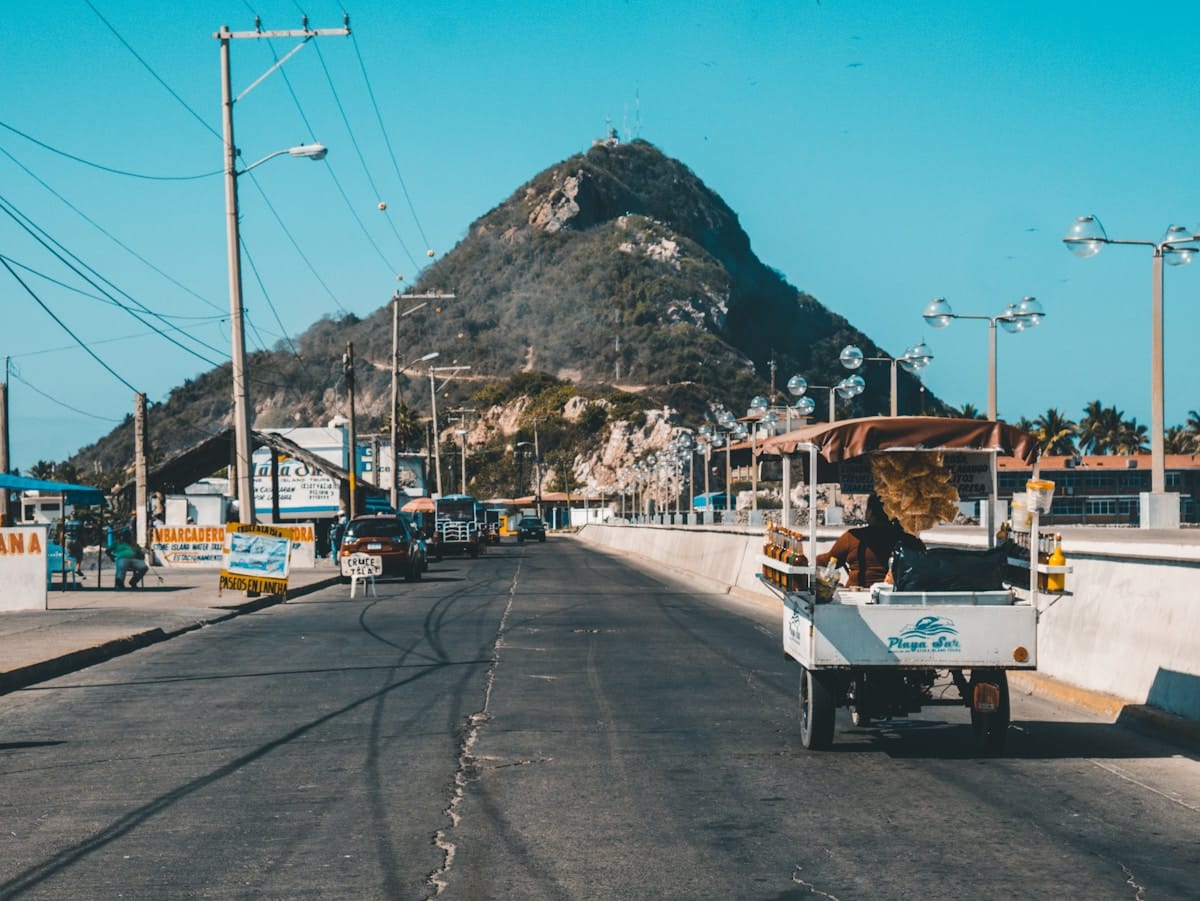
Mazatlán is Sinaloa’s largest city and Mexico’s closest beach resort to the US border - which historically made it a favourite for West Coast American visitors. The city divides clearly into three zones: the historic centre (renovated, genuinely attractive), the Zona Dorada (Golden Zone, 1970s-style resort strip), and the long beach Malecón connecting them. The historic centre is the best part.
Top Tours at a Glance
| Tour | Duration | Price (from) | Group Size | Highlights |
|---|---|---|---|---|
| Mazatlán Historic Centre Walking Tour | 2 hrs | from $20 | Small group | Centro, cathedral, Olas Altas, cliff divers |
| Stone Island Beach & Seafood Tour | 4 hrs | from $35 | Up to 15 | Water taxi, beach clubs, fresh Pacific seafood |
| Malecón & El Faro Lighthouse Bike Tour | 3 hrs | from $30 | Small group | 21 km promenade, lighthouse hike, Zona Dorada |
| Mazatlán Sport Fishing Charter | 5 hrs | from $85 | Up to 4 | Marlin, dorado, sailfish, gear & bait included |
| Mazatlán City & Carnaval History Tour | 2.5 hrs | from $25 | Small group | Carnaval heritage, Ángela Peralta theatre, local stories |
Browse all Mazatlán tours → GetYourGuide
Activity overview
| Activity | Cost | Duration | Notes |
|---|---|---|---|
| Centro Histórico walking | Free | 2–3 hours | Plaza Machado, cathedral, theatre |
| Malecón walk or cycle | Bike rental ~MXN $100/hr | 1–3 hours | 21 km, cliff divers at El Mirador |
| Stone Island beach | Water taxi ~MXN $30 return | Half/full day | Horse riding, beach clubs |
| Deep-sea fishing | From ~USD $250/boat (half day) | Half/full day | Peak Oct–May |
| Deer Island boat tour | ~MXN $200–400/person | 2–3 hours | Snorkelling, wildlife |
| El Faro lighthouse hike | Free | 1–1.5 hours | One of world’s highest natural lighthouses |
| Pacifico Brewery tour | ~MXN $100–150 | 1 hour | Iconic Mazatlán beer |
All prices approximate, as of 2026.
Historic centre (Centro Histórico)
The renovation of Mazatlán’s centro, largely completed through the 2010s, is one of the better urban regeneration projects in Mexico. Plazuela Machado is the heart - a well-preserved 19th-century plaza with a bandstand, surrounded by restaurants, the Teatro Ángela Peralta (opera house, 1860, approximately MXN $30 entry for self-guided visits, or attend a performance from approximately MXN $150), and restored colonial buildings.
Walking the streets between Plazuela Machado and the Cathedral Basilica of the Immaculate Conception (1890, free entry) takes a comfortable morning. The cathedral’s twin yellow towers are the city’s most recognisable landmark. Side streets have galleries, craft shops, and small museums including the Museo Arqueológico (approximately MXN $30, Tuesday–Sunday) and the Casa Machado gallery.
The Plazuela de la Música has a small amphitheatre with free banda performances on weekend evenings - Mazatlán is the birthplace of banda sinaloense, the brass-heavy genre that dominates northern Mexican music.
The Malecón
At 21 km, Mazatlán’s waterfront promenade is one of the longest in the world. It connects the historic centre to the Zona Dorada - walkable, cyclable (bikes and quadricycles for rent at intervals, approximately MXN $100–150/hour). The promenade passes through distinct sections:
Olas Altas (south end) - the original tourist beach, lined with cafés and bars. The atmosphere is local and relaxed. The Monumento al Venado (deer statue) marks the start.
El Mirador (Punta del Clavadista) - cliff divers perform dives into a narrow rocky inlet at high tide, approximately every 30 minutes during daylight hours. Free to watch from the viewpoint above. The dives are genuine - the divers jump from approximately 15 m into shallow, surge-filled water.
Valentinos junction - where the Malecón reaches the Zona Dorada. The beach widens and the character shifts from historic to resort.
El Faro (the lighthouse)
The lighthouse on Cerro del Crestón at the southern tip of the city is one of the highest natural lighthouses in the world - sitting approximately 157 m above sea level on a rocky headland. The hike up takes 30–45 minutes on a steep but well-maintained trail. Start early to avoid the midday heat. The views from the top span the entire city, the harbour, and the offshore islands. Free, open during daylight hours. The trailhead is near the sport fishing marina.
Beaches
Playa Olas Altas - near the historic centre, the most atmospheric beach with a local feel. Some wave action; better for walking and watching than swimming on rough days.
Playa Gaviotas and Playa Los Pinos - in the Zona Dorada, calmer and better for swimming. Beach vendors sell cocteles de camarón and cold Pacifico from buckets. Parasailing (approximately MXN $500–700) and jet ski rental (approximately MXN $800–1,200/30 min) available.
Playa Cerritos - north of the Zona Dorada, a cleaner, less crowded beach with a gentle break suitable for beginner surfers. Board rental from shops near the beach (approximately MXN $150–200/hour). The atmosphere is younger and more relaxed than the Zona Dorada.
Stone Island (Isla de la Piedra) - accessible by a 5-minute water taxi from the south Malecón (approximately MXN $30 return, boats depart frequently). A long, palm-lined beach with beach clubs serving fresh seafood (mains approximately MXN $100–200), horse riding along the sand (approximately MXN $200–300/30 min), and far fewer people than the city beaches. Worth a half day.
Isla de los Venados (Deer Island)
The uninhabited island directly offshore from the Zona Dorada. Boat tours depart from several points along the beach (approximately MXN $200–400 per person, 2–3 hours including snorkel time). The island has rocky coves with decent snorkelling, hiking trails through scrubby vegetation, and no development. Bring water and snacks - there are no facilities. El Cid Marina and beach-front operators run regular departures.
Deep-sea fishing
Mazatlán has long been known as the “sailfish capital of the world.” The Flota Faro (sport fishing fleet) operates from the marina at the south end of the Zona Dorada. Half-day trips from approximately USD $250–350 for the boat (typically 2–4 anglers); full-day trips from approximately USD $400–600. Aries Fleet, Star Fleet, and Bibi Fleet are established operators with decades in the harbour. Best season for billfish (sailfish, marlin): October to May. Dorado and tuna are year-round.
Carnaval
Mazatlán’s Carnaval (February/March, the week before Ash Wednesday) is the third-largest in the world after Rio and New Orleans and the biggest in Mexico. The main parade runs along the Malecón - floats, banda music, dancers, and enormous crowds. Olas Altas hosts the most atmospheric street parties. Fireworks over the bay nightly. The coronation of the queen and the quema del mal humor (burning of bad humour, a political effigy) are uniquely Mazatleco traditions.
Book accommodation 3–6 months in advance for Carnaval week. Prices double or triple. Hotels in the historic centre and Zona Dorada sell out completely.
Practical tips
- Getting around: Mazatlán’s pulmonías (open-air golf cart taxis, unique to the city) are the most fun way to get around. Fares approximately MXN $50–100 for short trips within a zone. Regular taxis and Uber are also available.
- Best time: November–April (dry season, warm without extreme humidity). May–October is hotter and rainy.
- Getting there: Direct flights from Mexico City (1 hour), Guadalajara (1 hour), and several US cities. The Durango–Mazatlán highway (5 hours from Guadalajara) crosses the Sierra Madre and is one of Mexico’s most scenic drives, including the Baluarte Bridge - the highest cable-stayed bridge in the Americas.
More Mazatlán Guides
Plan your trip: tours in Mazatlán · travel insurance.
See Also
- Pacific Coast Beaches - how Stone Island and Mazatlán’s beaches compare with the wider Pacific coast
- Sayulita Travel Guide - 3 hours south, the surf village on the Riviera Nayarit
- Puerto Vallarta Travel Guide - the largest Pacific coast resort, 5 hours south
Search hotels in Mazatlán on Booking.com
- Festivals and Events in Mexico - where Mazatlán’s Carnaval sits in Mexico’s annual events calendar