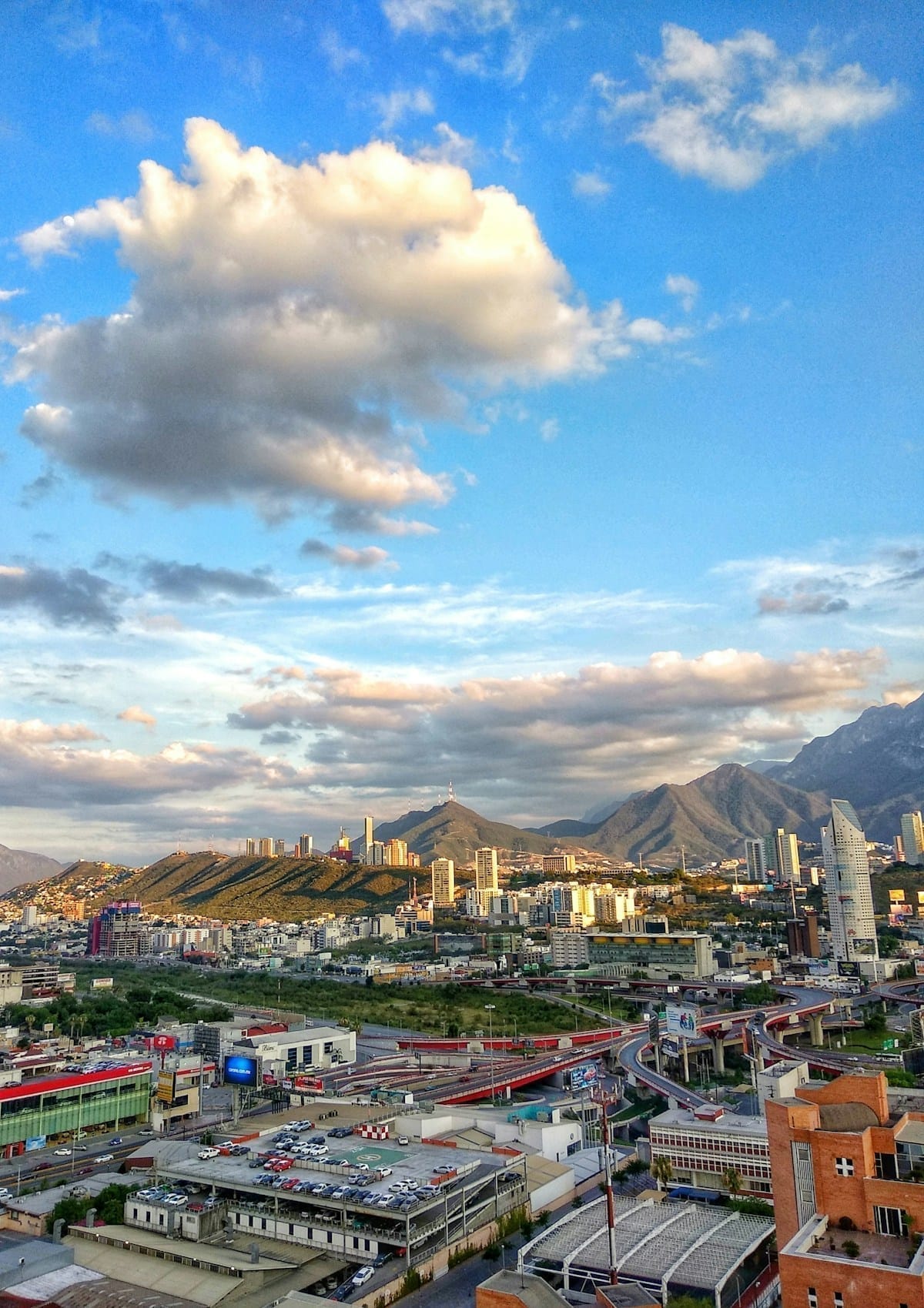
Monterrey is a different kind of Mexican city - industrial rather than colonial, northern rather than central, meat rather than mole. It sits in a high valley ringed by the Sierra Madre Oriental, with the distinctive jagged profile of Cerro de la Silla (Saddle Hill) dominating the eastern skyline. The city has invested heavily in cultural infrastructure, and the combination of serious museums, excellent food, mountain proximity, and a nightlife scene concentrated in the Barrio Antiguo makes it more rewarding than its business-city reputation suggests.
Top Tours at a Glance
| Tour | Duration | Price (from) | Group Size | Highlights |
|---|---|---|---|---|
| Monterrey City Walking Tour | 2.5 hrs | from $20 | Small group | Macroplaza, Barrio Antiguo, Faro del Comercio |
| García Caves & Cola de Caballo Day Trip | 7 hrs | from $45 | Small group | Limestone caverns, cable car, 35 m waterfall |
| Cañón de la Huasteca Half-Day Tour | 4 hrs | from $35 | Up to 12 | 300 m canyon walls, river hike, city views |
| Monterrey Food & Craft Beer Tour | 3 hrs | from $40 | Small group | Cabrito, carne asada, local breweries, Barrio Antiguo |
| Parque Fundidora & Horno 3 Steel Museum Tour | 2 hrs | from $25 | Up to 15 | Former steel mill, industrial heritage, city park |
Browse all Monterrey tours → GetYourGuide
Activity overview
| Activity | Cost | Duration | Notes |
|---|---|---|---|
| Macroplaza walk | Free | 1–2 hours | Faro del Comercio, cathedral, museums |
| MARCO museum | ~MXN $80 (free Sun) | 1.5–2 hours | Top contemporary art |
| Parque Fundidora | Free (museum ~MXN $90) | 2–3 hours | Former steel mill, Horno 3 |
| Paseo Santa Lucía boat | ~MXN $80 | 30 min | Canal connecting centro to Fundidora |
| Barrio Antiguo | Free to walk | Evening | Nightlife, bars, mezcal, live music |
| Cañón de la Huasteca | Free | Half day | 300 m canyon walls, 20 km west |
| Cerro de la Silla hike | Free | 4–6 hours | Summit hike, city views |
| Grutas de García | ~MXN $120 | Half day | Limestone caves, cable car, 45 km NW |
| Cola de Caballo | ~MXN $50 entry | Half day | 35 m waterfall, 45 km south |
All prices approximate, as of 2026.
Macroplaza
The civic centre - one of the largest public plazas in the world at 40 hectares, stretching 400 metres between government buildings. The key landmarks:
Faro del Comercio - a 70 m orange concrete tower with a green laser that sweeps across the city at night. Love it or find it odd - either way, it is the Monterrey landmark. Designed by Luis Barragán.
Catedral Metropolitana - an 18th-century cathedral on the west side. Modest by Mexican standards but the interior has good neoclassical altarpieces.
Museo de Historia Mexicana (approximately MXN $60, free Sundays) - well-curated Mexican history from pre-Hispanic to modern. Connected by a bridge to the Museo del Noreste (MUNE) (approximately MXN $60, free Sundays), which covers the specific history of northeastern Mexico - the frontier, mining, and the industrial revolution that made Monterrey.
Palacio de Gobierno - the state government building with an austere modern plaza in front.
The Macroplaza is more impressive in scale than in atmosphere - walk through rather than linger. The museums are the reason to spend time here.
MARCO (Museo de Arte Contemporáneo)
One of the best contemporary art museums in Latin America. The building (Ricardo Legorreta, 1991) is a destination in itself - warm terracotta walls, a central courtyard with a massive bronze dove sculpture by Juan Soriano, and excellent natural light in the galleries. The permanent collection includes works by Mexican and Latin American artists; temporary exhibitions are frequently outstanding.
Entry approximately MXN $80, free Sundays. Open Tuesday–Sunday 10 am–6 pm (Wednesday until 8 pm). On the Macroplaza, Zuazua and Juan de la Barrera.
Parque Fundidora
The former Fundidora steel foundry (founded 1900, closed 1986) is now one of Mexico’s best urban parks. The old industrial structures - blast furnaces, rolling mill buildings, smokestacks - are preserved throughout the 144-hectare park as sculpture and landmarks. The setting is genuinely striking - walking past a rusted blast furnace while families picnic on the surrounding lawns.
Horno 3 (Furnace 3, approximately MXN $90) - a museum built inside an original blast furnace. Climb through the interior of the furnace structure with exhibits on steel production and Monterrey’s industrial history. The rooftop observation deck has good views.
The park also has an ice rink, playgrounds, bike rental (approximately MXN $80/hour), concert venues, and restaurants. The Paseo Santa Lucía - an artificial canal - connects the park to the Macroplaza (2.5 km walk, or approximately MXN $80 by boat ride). Free entry to the park.
Barrio Antiguo
The old colonial quarter east of the Macroplaza - smaller and less preserved than the historic centres of Oaxaca or San Miguel, but the nightlife is concentrated and lively. Calle Morelos and the streets around it have:
- Mezcal bars - the mezcal scene in Monterrey is surprisingly serious for a northern city
- Craft beer taprooms - the craft beer movement is strong here
- Live music venues - rock, cumbia, and norteño
- Late-night taco stands - the post-midnight taco run is a Monterrey institution
Friday and Saturday nights are the peak. Daytime, the neighbourhood has galleries, coffee shops, and a growing brunch culture. Alameda (cocktails and mezcal) and La Tumba (live music, dark atmosphere) are established.
García Caves (Grutas de García)
45 km northwest of Monterrey. Large limestone caves - multiple chambers up to 70 m high, with stalactites, stalagmites, and a dry underground lake formation. An aerial tramway ascends the mountainside (included in the ticket); the cave tour inside lasts approximately 1.5 hours with a guide.
Entry approximately MXN $120 including tramway. Open daily. Take the Transportes García bus from Monterrey’s central bus station, or drive. Allow a half day.
Cola de Caballo waterfall
45 km south in the mountains near Villa de Santiago. The “Horse’s Tail” waterfall drops 35 m within a small national park. Horse rental at the entrance (approximately MXN $100), then a 2.5 km walk through forest to the falls. Entry approximately MXN $50. Peak flow after summer rain (May–October); reduced but still visible in dry season.
The nearby town of Santiago has the Presa Rodrigo Gómez reservoir - boat tours, lakeside restaurants, and a popular weekend escape for Monterrey families.
Cañón de la Huasteca
20 km west of the city centre - a dramatic canyon with 300 m vertical walls carved by the Santa Catarina River. The canyon is accessible by car or taxi (approximately MXN $150 from centro). Hiking trails run along the canyon floor; rock climbing routes are available on the walls (experienced climbers only). The scale of the rock walls - visible from the highway approach - is immediately impressive. Free access.
Cerro de la Silla
The saddle-shaped mountain that defines Monterrey’s skyline. Hiking trails lead to the summit (1,820 m) from several trailheads on the eastern side of the city. The full climb takes 4–6 hours return and requires reasonable fitness - the trail is steep and exposed in sections. Views over the entire metropolitan area from the top. Start early to avoid midday heat. Free.
Practical tips
- Getting around: Metrorrey (2 metro lines) covers the main corridors. Uber and taxis are widely available. For mountain day trips, a rental car is most practical.
- Best time: October–April avoids the extreme summer heat (temperatures reach 40°C+ in July–August). Winter evenings can be cool.
- Safety: Monterrey has improved significantly since the difficult period of 2010–2012. The tourist areas (centro, Fundidora, Barrio Antiguo, San Pedro) are generally safe. Exercise normal urban precautions.
More Monterrey Guides
- Back to Monterrey Guide
- Day Trips in Monterrey
- Food to Try in Monterrey
- World Cup 2026 Guide in Monterrey
Plan your trip: tours in Monterrey · travel insurance.
See Also
- World Cup 2026 in Mexico - Monterrey’s role as a host city in the tournament
- Getting Around Mexico - bus, flight, and road options connecting Monterrey to the US border and other Mexican cities
Search hotels in Monterrey on Booking.com
- Adventure Sports in Mexico - canyoning, rock climbing, and mountain activities in the Sierra Madre context