Taxco Travel Guide
Taxco guide: Mexico's silver capital, cobblestone hilltop town, the Santa Prisca church, and workshops selling real silver jewellery.
Guides for Taxco
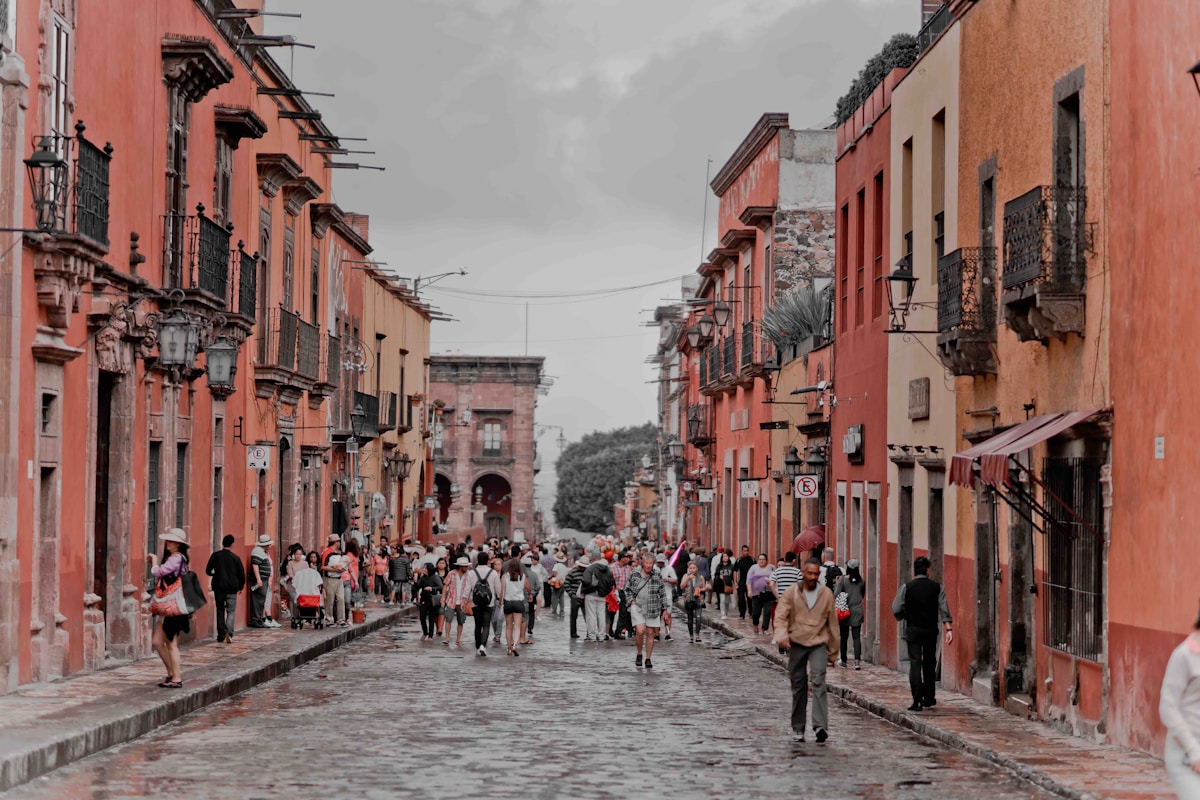
Taxco is a silver-mining colonial town built into steep hills in the state of Guerrero, three hours south of Mexico City. Its cobblestone streets, white-walled houses with terracotta roofs, and the baroque Santa Prisca church at its centre make it one of the most photogenic small towns in Mexico. The silver trade continues - the town has hundreds of workshops and shops selling jewellery at competitive prices, and a silversmithing school that sustains the tradition.
Quick reference
| Detail | Info |
|---|---|
| State | Guerrero |
| Altitude | 1,778 m |
| From Mexico City | 3 hours by bus (Taxqueña terminal) |
| From Cuernavaca | 1.5 hours by bus |
| Bus companies | Estrella de Oro, Flecha Roja |
| Best time | Year-round; Semana Santa is peak |
| Climate | Mild highland (18–27°C) |
Sights
| Sight | Entry | Notes |
|---|---|---|
| Iglesia de Santa Prisca | Free | 1751–1758, Churrigueresque masterpiece |
| Teleférico | ~MXN $100 return | Cable car to Monte Taxco, panoramic views |
| Museo de la Platería | ~MXN $30 | Silver history, techniques, notable pieces |
| Museo Guillermo Spratling | ~MXN $60 | Pre-Hispanic art, silver pioneer’s collection |
| Casa Borda | ~MXN $30 | Colonial mansion, cultural centre |
| Grutas de Cacahuamilpa | ~MXN $170 | Mexico’s largest accessible caves, 40 km north |
Santa Prisca and the Zócalo
The Iglesia de Santa Prisca (1751–1758) is the architectural centrepiece - built entirely by silver magnate José de la Borda, whose mining fortune funded every detail. The facade is late Churrigueresque - an ultra-ornate Spanish Baroque style that reaches its Mexican peak here, with carved saints, relief panels, and twin pink-stone towers rising above the town. The interior has twelve gilded altarpieces in the same style; the sacristy contains 17th-century paintings by Miguel Cabrera.
The small Plaza Borda (Zócalo) in front is the social heart of the town - cafés under the arcades, silver vendors, and a view up to the towers. The square is small enough to feel intimate rather than monumental.
Silver
Taxco has been a centre of silver craft since the Aztec period. The modern silver industry was revived in the 1930s by American architect William Spratling, who established workshops and trained local artisans - his legacy is visible in the Museo Guillermo Spratling (approximately MXN $60, Calle Porfirio Delgado).
Shopping tips:
- Look for the .925 mark (sterling silver, 92.5% purity) and the “Hecho en Taxco” certification
- The Mercado de Artesanías (craft market, below the Zócalo) has the widest range at multiple price points - good for browsing
- Individual workshops off the main streets produce higher-quality, unique pieces - Calle de los Plateros (Silversmiths’ Street) has established galleries
- The Escuela de Platería (silversmithing school) sells student pieces at good value
- Prices range from approximately MXN $100 for simple rings to MXN $5,000+ for elaborate necklaces and statement pieces
- Bargaining is expected at the market; less so at established workshops
Exploring the town
The town is small but very steep - navigation is vertical. Peseros (shared VW Beetles that serve as local taxis) navigate the main routes. Walking the back streets and callejones (narrow lanes) above the main square gives the best views of the town and surrounding hills.
The teleférico (cable car) connects the lower town to Monte Taxco hill - approximately MXN $100 return. The panoramic views over the town from the top are the best available. The Hotel Montetaxco at the summit has a pool accessible for a day fee (approximately MXN $150) if you want to swim with the view.
Museo de la Platería (approximately MXN $30) - a small museum documenting silver mining and silversmithing techniques through the centuries. Worth 30 minutes for context before shopping.
Grutas de Cacahuamilpa
40 km north of Taxco - Mexico’s largest accessible cave system with chambers over 80 m high. Guided tours through the main cavern last approximately 2 hours (entry approximately MXN $170). The formations - stalactites, stalagmites, and flowstone - are impressive in scale. The Dos Ríos picnic area outside, where two rivers emerge from the cave mouth, is pleasant for a break. Combinable with Taxco as a day trip from Mexico City.
Semana Santa
Taxco’s Holy Week celebrations (March/April) are among the most intense in Mexico. Processions of penitentes (flagellants in dark hoods carrying wooden crosses) pass through the cobblestone streets at night; elaborate theatrical productions of the Passion story run through the week. The atmosphere is deeply solemn and visually extraordinary. The town fills completely - accommodation books up months in advance, and prices rise significantly.
Food
Taxco’s food is Guerrero highland cuisine - hearty and unpretentious.
| Spot | What to try | Approx. price |
|---|---|---|
| El Adobe | Regional Guerrero cuisine | Mains MXN $100–180 |
| La Hacienda de Taxco | Mole, pozole, enchiladas | Mains MXN $120–200 |
| Pozolería Tía Calla | Pozole (pork and hominy stew) | MXN $60–100 |
| Cafés on the Zócalo | Coffee, light meals | MXN $40–80 |
| Market fondas | Budget comida corrida | MXN $50–70 |
Pozole (hominy and pork stew, served with radish, lettuce, and tostadas) is the essential Guerrero dish. Mole rojo (a simpler mole than Oaxaca’s, with dried chiles and sesame) appears at traditional restaurants.
Where to stay
| Property | Type | Approx. rate | Notes |
|---|---|---|---|
| Hotel de la Borda | Mid-range | From MXN $1,200/night | Historic, pool, central |
| Posada de la Misión | Mid-range | From MXN $900/night | Hilltop, pool, murals by O’Gorman |
| Hotel Agua Escondida | Mid-range | From MXN $700/night | On the Zócalo, rooftop views |
| Hotel Los Arcos | Budget | From MXN $500/night | Near Zócalo, simple, clean |
| Hotel Santa Prisca | Budget | From MXN $400/night | Basic, central location |
Most visitors do Taxco as a day trip from Mexico City, but staying overnight - when the day-trippers leave after 4 pm and the town quiets - gives a different and more atmospheric experience.
Getting there
- From Mexico City: Buses from Taxqueña (Central del Sur) terminal with Estrella de Oro or Flecha Roja - approximately 2.5–3 hours, frequent departures, approximately MXN $200–300
- From Cuernavaca: 1–1.5 hours by bus
- No train or airport - road is the only option
- A rental car allows combining Taxco with the Grutas de Cacahuamilpa and Cuernavaca in a day
When to go
Year-round. Semana Santa (Holy Week, March/April) is the peak event. The climate is mild at altitude. The Feria Nacional de la Plata (Silver Fair, November–December) features silverwork competitions and exhibitions - a more relaxed time to visit and see the craft at its best.
More Taxco Guides
Plan your trip: tours in Taxco · flights to Mexico · travel insurance · eSIM for Mexico.
See Also
- Mexico City Travel Guide - 3 hours north by bus, the most logical base for a Taxco day trip
- Puebla Travel Guide - another colonial city reachable from Mexico City on the same trip
- Pueblos Mágicos - Mexico’s network of heritage towns, of which Taxco is one
- Day of the Dead in Mexico - context for Mexico’s major religious festivals including Semana Santa
- Getting Around Mexico - bus and car options for reaching Taxco from Mexico City
Book an experience
Top experiences in Taxco
Explore the best tours and activities in Taxco, with instant confirmation and free cancellation on most bookings.
Find hotels in Taxco
Compare rates and availability across hundreds of options, free cancellation on most.
Browse hotels in Taxco →Affiliate link; commission earned at no cost to you.