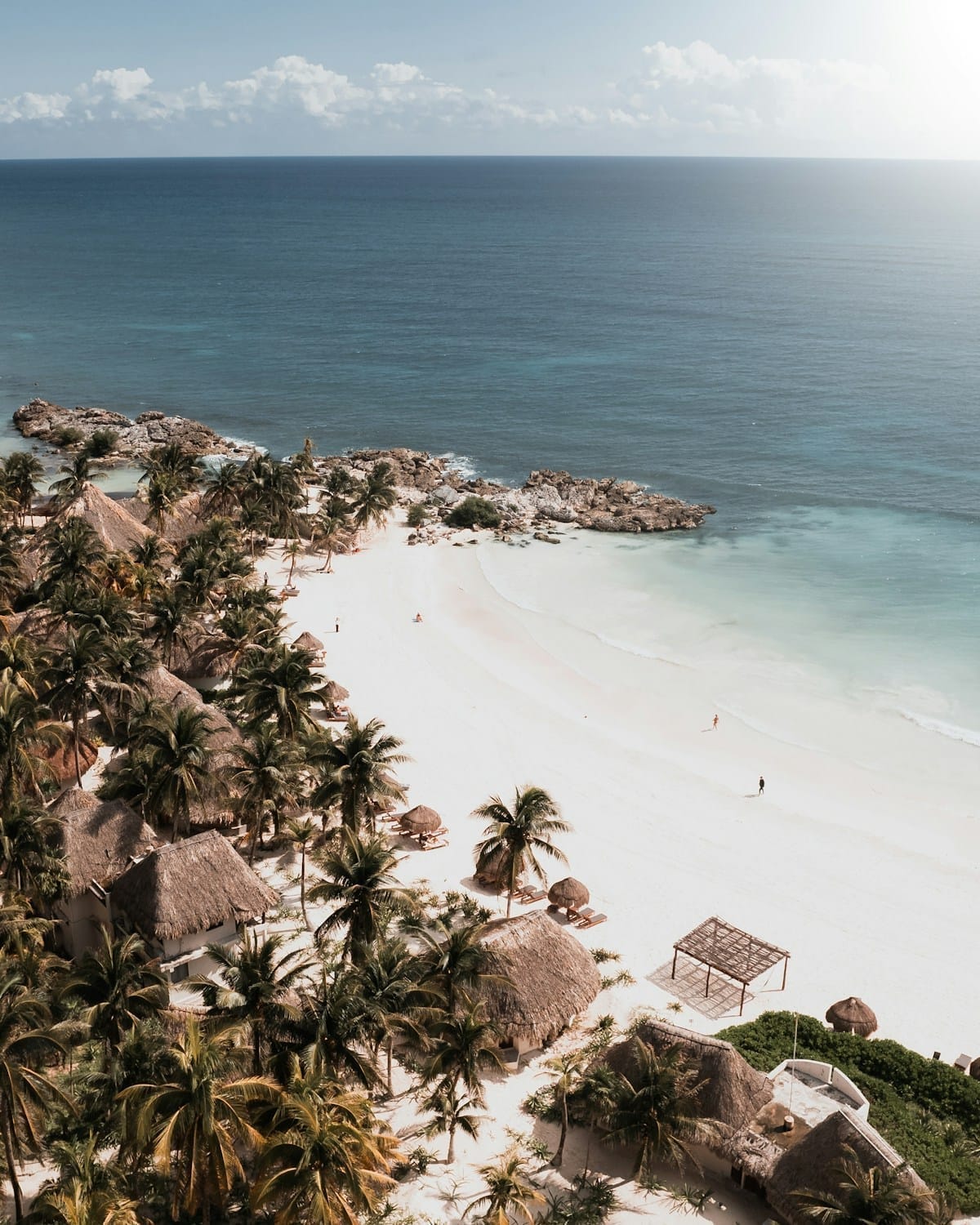
Tulum is a popular nomad destination on paper - Caribbean beach lifestyle, yoga studios, and a wellness community. The reality is more complicated: internet reliability on the hotel strip is genuinely poor, costs have risen sharply since 2020, and the town has significant infrastructure limitations that affect daily work life. Here is an honest assessment of what works, what does not, and who Tulum is actually suitable for.
The internet problem
This is the central issue for nomads in Tulum and the reason many switch to Playa del Carmen after a few weeks:
The hotel strip (Carretera Tulum–Boca Paila): Poorly served by fibre - most beachfront properties run on satellite, degraded DSL, or wireless connections that struggle with video calls. Speeds of 5–15 Mbps are common, with frequent drops during peak hours. If you are booking beach accommodation expecting to work comfortably, ask the property for a speed test screenshot before booking. Many beach hotels advertise “WiFi” that is adequate for email but not for calls.
Tulum town (the pueblo): Has better internet infrastructure - fibre has reached most of the town’s coworking spaces and many newer guesthouses and apartments. Speeds of 30–80 Mbps are achievable in town. If reliable work connectivity is a priority, stay in town rather than on the beach.
Mobile backup: Telcel 4G coverage is adequate in town and spotty on the beach strip. A Telcel SIM with data (approximately MXN $200–300/month) is essential as a backup but not reliable enough to be your primary connection for video calls.
Cost of living
Tulum has become one of Mexico’s most expensive towns for residents. The price difference between the beach strip and town is dramatic:
| Item | Town (USD) | Beach strip (USD) |
|---|---|---|
| Apartment (studio/1BR, furnished) | $450–850 | $1,000–3,500+ |
| Food (restaurants + some cooking) | $350–600 | $800–1,500+ |
| Coworking | $130–280 | Limited options |
| Transport (bike/colectivo) | $30–80 | $50–150 |
| Utilities + phone | $40–70 | $60–100 |
| Total | $1,000–1,880 | $2,040–5,330+ |
Budget reality: Tulum town is comparable to Playa del Carmen. The beach strip is 2–3× more expensive - comparable to or exceeding European resort pricing. The same monthly budget that provides comfortable living in Oaxaca (approximately USD $1,000) covers basic survival in Tulum.
Coworking spaces
| Space | Location | Day pass | Monthly | Notes |
|---|---|---|---|---|
| Selina Tulum | Town | ~MXN $350 (~USD $19) | ~MXN $3,500 | Most established, reliable internet, pool, social events |
| Centro Kin | Town | ~MXN $250 | ~MXN $3,000 | Locally run, fibre, quieter than Selina |
| Coworking Tulum | Av. Tulum (town) | ~MXN $200 | ~MXN $2,200 | Basic setup, reliable, budget-friendly |
| Digital Jungle | Town | ~MXN $280 | ~MXN $2,800 | Good air conditioning, newer space |
| Papaya Playa Project | Beach strip | Varies | - | Has a work area with WiFi - functional for light work, not for calls |
All serious coworking is in Tulum town, not on the beach strip. Plan your work setup accordingly.
Best cafés for working
| Café | Location | Notes |
|---|---|---|
| Ki’bok | Town (Av. Tulum) | Best coffee in town, reliable WiFi, work-friendly atmosphere |
| Matcha Mama | Town | Good WiFi, healthy food, popular morning work spot |
| Raw Love | Beach road | Beach-adjacent but WiFi is inconsistent - better for breaks than work |
Town cafés are significantly more work-friendly than beach cafés. WiFi on the beach road is unreliable and most beach cafés are oriented toward relaxation rather than laptop work.
Where to live
Tulum town (recommended for work)
The practical choice for nomads who need to work. Better internet, lower costs, more local services (supermarkets, pharmacies, laundry, OXXO), and a growing café and restaurant scene that operates independently of the tourist beach strip.
La Veleta: The neighbourhood directly south of town centre - newer construction, many furnished apartments designed for nomads, improving infrastructure. Furnished 1BR approximately MXN $8,000–15,000/month.
Centro: The main town - Avenida Tulum, the ADO terminal area. Walkable to everything in town. Noisier but convenient. Apartments approximately MXN $7,000–14,000/month.
Aldea Zamá: A planned development between town and the beach. Newer buildings with better internet infrastructure. Mid-range pricing: approximately MXN $10,000–20,000/month. Good compromise between town convenience and beach proximity.
Beach strip (lifestyle choice)
The eco-lodges and boutique hotels on the Carretera Tulum–Boca Paila road. Beautiful setting - jungle meets Caribbean - but the infrastructure limitations are real. Best for nomads with flexible schedules, light internet needs, or those willing to commute to town coworking spaces for focused work.
Accommodation: approximately MXN $18,000–60,000+/month for eco-lodges and boutique hotels. Some longer-stay apartments exist at approximately MXN $15,000–25,000/month.
The commute: Town to beach strip is approximately 5 km. By bike (approximately MXN $100–150/day rental or MXN $2,000–3,000 to buy a used bike) - 15–20 minutes. By taxi approximately MXN $80–120 each way. By colectivo from town to beach access points approximately MXN $20.
Finding accommodation
Airbnb: Monthly rates in town: approximately USD $500–900. Beach strip: approximately USD $1,200–3,500. Always negotiate monthly rates.
Facebook groups: “Tulum Rentals”, “Living in Tulum”, “Tulum Nomads”. These groups are active and listings turn over frequently. Many furnished apartments target nomads specifically.
Walk-around: “Se Renta” signs in La Veleta and the town centre. Best deals are found this way, especially for longer stays (3+ months).
Visa and legal situation
Same as all of Mexico: 180-day tourist FMM. For longer stays, border runs to Belize (ADO bus to Chetumal, approximately MXN $200–300, 3.5 hours; cross the border, return the same day) are the most common from Tulum. The Chetumal–Belize border is straightforward. Mexico’s INM has tightened enforcement - repeated border runs may result in shorter stamps.
Healthcare
- Costamed Tulum: The main private clinic in town. Good for routine care, basic emergencies, and consultations
- Hospiten Playa del Carmen (45 minutes by car): the nearest international-standard hospital for serious medical situations
- Farmacias Similares: Walk-in doctor approximately MXN $30–50. Multiple locations in town
- Dental: Basic dental care available in town; for specialist work, Playa del Carmen has better options
For serious medical situations: Playa del Carmen (45 minutes) or Cancún (2 hours) have full-service hospitals. Travel insurance with evacuation cover is strongly advisable.
Community
Tulum’s nomad community is distinct from CDMX’s tech-focused scene - it skews toward wellness, creative work, and lifestyle entrepreneurship:
- Facebook groups: “Digital Nomads Tulum”, “Tulum Expats”, “Living in Tulum”
- Yoga and wellness: The wellness community is Tulum’s distinctive feature - yoga studios (Yoga Dicha, Sanará), cacao ceremonies, sound healing, breathwork. If this aligns with your interests, Tulum offers a density of practice that few other destinations match
- Beach and cenote culture: Weekend cenote trips (Gran Cenote approximately MXN $180, Dos Ojos approximately MXN $400), beach days, snorkelling, and diving (Cenote Dos Ojos is one of the best cave diving sites in the world)
- Social events: Full moon parties, beach club events, and community dinners. The social calendar is active during peak season (November–April)
Who Tulum works for
Good fit: You prioritise beach access and lifestyle over cost efficiency. You work lighter hours or have flexible scheduling that tolerates occasional connectivity issues. You are on a short-term basis (1–3 months) rather than indefinite. You are drawn to the wellness and yoga community. You have a comfortable budget (USD $1,500+/month minimum).
Poor fit: You need rock-solid internet for heavy video calls, livestreaming, or data-intensive work. You are on a tight budget. You get frustrated by inconsistent infrastructure. You want an urban cultural scene rather than a beach town. You are looking for a tech or professional networking community.
Practical notes
- Water: Do not drink tap water. Garrafones (20L refill bottles) available throughout town for approximately MXN $20–30
- Getting around: Bicycle is the standard nomad transport - rental approximately MXN $100–150/day or approximately MXN $1,500–2,500/month. Buy a used bike for approximately MXN $2,000–3,500 if staying longer
- Sargassum seaweed (May–August): Brown seaweed accumulates on the beach in varying amounts. Some years are worse than others. Check current conditions - during bad sargassum periods, beach access is less appealing
- Hurricane season (September–October): Real risk. Have flexible plans and cancellation-friendly bookings
- Safety: Tulum town has had security incidents in recent years - the area around the beach road junction has seen isolated incidents. Stay informed, use common sense, avoid walking the dark stretch between town and the beach at night
- Noise: The beach strip’s eco-lodge aesthetic suggests tranquility, but many properties host music events, DJ sessions, and parties, particularly on weekends. Ask about noise levels before booking if this matters to you
Plan your trip: tours in Tulum · eSIM for Mexico · travel insurance.