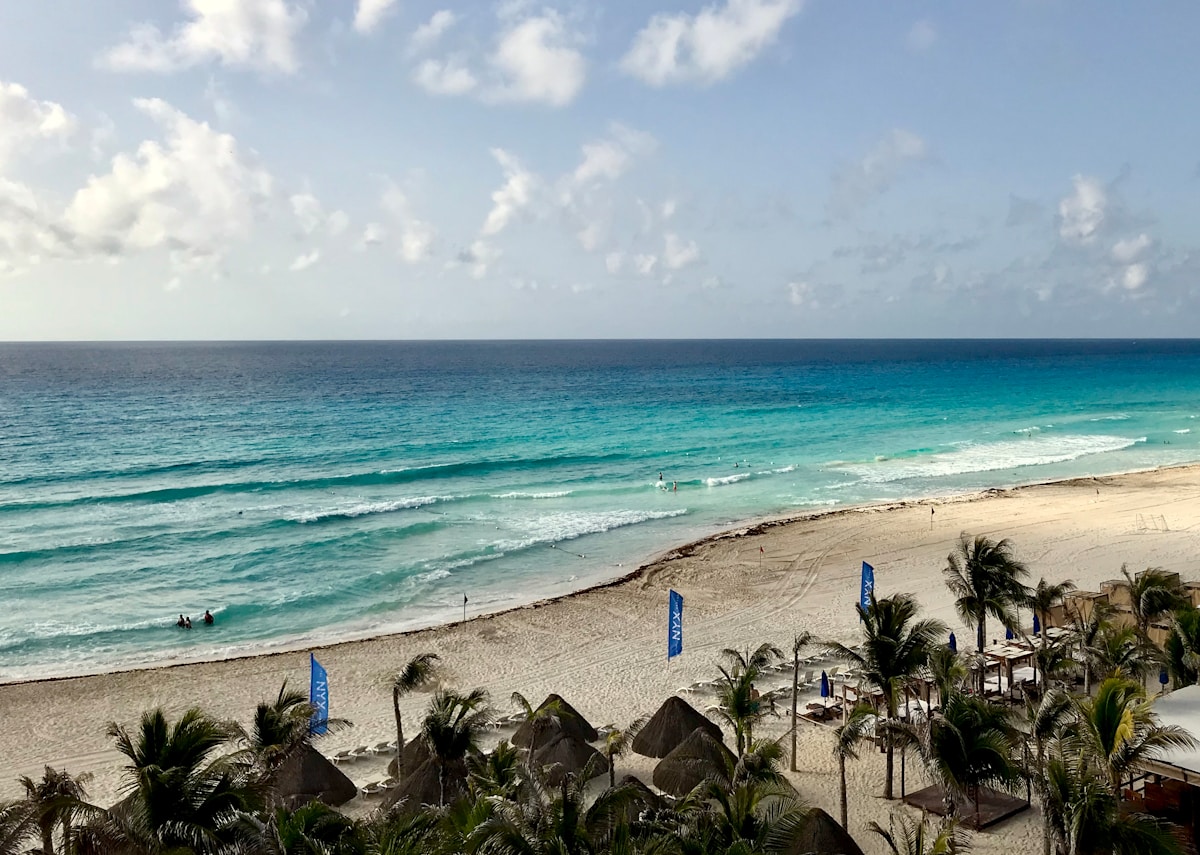
Cancún Travel Guide
Cancun guide: Hotel Zone beaches, cenotes from MXN 150, Isla Mujeres day trips, snorkelling, and the Riviera Maya gateway. Hotels and costs.
Guides for Cancún
Cancún divides neatly into two places: the Hotel Zone (Zona Hotelera), a 23 km barrier island lined with all-inclusive resorts facing the Caribbean, and Downtown Cancún (Ciudad Cancún), a working Mexican city of over 900,000 people where most of the population lives. Most tourists never leave the Hotel Zone; those who do find a more affordable, more authentic Mexico a short bus ride away.
Hotel Zone beaches
The Hotel Zone’s beaches face either the calm turquoise waters of Laguna Nichupté (the western/lagoon side) or the open Caribbean (the eastern side). The Caribbean-facing beaches are more dramatic but have stronger waves and currents.
Playa Delfines - the best free public beach, at the southern end of the Hotel Zone. Wide white sand, a viewpoint with the Cancún sign, free parking, and no resort infrastructure blocking access. Waves are moderate to strong.
Playa Tortugas and Playa Langosta - calmer waters on the northern, lagoon-facing side of the barrier island. Better for families and relaxed swimming, though the water is less vivid blue.
Playa Norte on Isla Mujeres - 20–30 minutes by ferry, consistently rated among the best beaches in the Caribbean. Calm, shallow, turquoise, and far less crowded than anything in the Hotel Zone.
All beaches in Mexico are public by law, including those fronting resorts. In practice, some hotels discourage non-guest access, but the right to enter via the waterline is protected.
What to see and do
| Sight | Entry Fee | Hours | Notes |
|---|---|---|---|
| Museo Maya de Cancún | ~MXN $100 | Tue–Sun 9:00–18:00 | Excellent Maya collection + adjacent San Miguelito ruins |
| Chichén Itzá | ~MXN $614 (INAH + state fee) | 8:00–17:00 daily | 180 km west. Allow a full day |
| Tulum Ruins | ~MXN $100 | 8:00–17:00 daily | 130 km south. Clifftop ruins + Caribbean views |
| Cobá | ~MXN $100 | 8:00–17:00 daily | Climbable 42m pyramid. Bicycle rental MXN $80 on site |
| Isla Mujeres | Free (ferry ~MXN $300 return) | Ferry every 30 min | Playa Norte, golf cart rental, turtle sanctuary |
Entry fees approximate, as of 2026. Chichén Itzá charges a combined INAH federal fee plus a Yucatán state fee - total approximately MXN $614 for foreign visitors.
Downtown Cancún (Ciudad Cancún)
Downtown is where the real food and local life are. A 10-minute ride on the R1 or R2 bus (approximately MXN $12) connects the Hotel Zone to the city centre.
Mercado 28 (Mercado de Artesanías) - the best place to buy souvenirs, crafts, and textiles at non-tourist prices. Bargaining is expected. The surrounding food stalls serve cochinita pibil tacos from approximately MXN $15–25 each.
Mercado 23 - the main local food market. Comida corrida (set lunch) from approximately MXN $60–80. Panuchos, salbutes, and fresh-squeezed juices. Less tourist-oriented than Mercado 28.
Parque de las Palapas - the central gathering point for street food in the evenings: marquesitas (crispy rolled crêpes filled with Edam cheese), elotes (grilled corn), and esquites (corn cups). Live music on weekends.
Avenida Yaxchilán - a strip of local restaurants serving Yucatecan food at a fraction of Hotel Zone prices. Walk both sides and look for the busiest spots.
Cenotes
The Yucatán Peninsula sits on a limestone shelf riddled with over 6,000 cenotes (natural sinkholes, many swimmable). The closest to Cancún:
Puerto Morelos cenotes (35 km south) - Cenote El Mojarral and Cenote Boca del Puma are family-friendly, well-maintained, and accessible. Entry approximately MXN $200–350 per cenote.
Grand Cenote (near Tulum, 130 km) - one of the most photogenic cenotes in the Yucatán. Crystal-clear water, snorkelling with turtles, cave sections. Entry approximately MXN $500.
Cenotes Dos Ojos (near Tulum) - a cave diving system; non-divers can snorkel the surface sections. Entry approximately MXN $400.
Cenote Ik Kil (near Chichén Itzá) - a deep open-air cenote popular as a post-ruins swim. Entry approximately MXN $150. Gets crowded by midday. To visit multiple cenotes in one day with transport included, browse cenote tours from Cancún on GetYourGuide.
Where to stay
| Area | Budget | Mid-range | Luxury |
|---|---|---|---|
| Hotel Zone | Limited - hostels from ~USD $25/night | All-inclusive from ~USD $150/night | Le Blanc, Hyatt Zilara from ~USD $400/night |
| Downtown Cancún | Hostels from ~MXN $200/night | Hotels from ~MXN $800/night | Limited luxury options |
Hotel Zone all-inclusives dominate the accommodation scene. Budget all-inclusives like Oasis Cancún Lite start from approximately USD $150/night per couple. Mid-range properties like Live Aqua and Hyatt Ziva run approximately USD $250–400/night. Luxury options like Le Blanc Spa Resort start from approximately USD $500/night. Prices rise 30–50% during peak season (December–April) and US Spring Break (March). Booking 4–6 months ahead for peak season saves 15–20%.
Downtown is significantly cheaper: budget hotels and hostels from approximately MXN $200–600/night, with easy bus access to the Hotel Zone. A good option for independent travellers who want to eat locally and use Cancún as a day-trip base.
For the full range of options across both zones, search all hotels in Cancún on Booking.com →.
Getting there and around
From the airport: Cancún International Airport (CUN) is 20 km from the Hotel Zone. ADO buses run to the Hotel Zone for approximately MXN $140 (five departures daily, 45 minutes). Official airport taxis use fixed zone pricing - approximately MXN $700 (~USD $40) to the Hotel Zone. Uber does not operate from the airport due to local regulations but works within the city and Hotel Zone. For a pre-booked private transfer with a fixed price and English-speaking driver, Welcome Pickups is a reliable option from CUN.
Within Cancún: R1 and R2 buses run the length of the Hotel Zone and into Downtown for approximately MXN $12 per trip - frequent and reliable. For cenotes, Tulum, and other day trips, renting a car gives the most flexibility - Highway 307 south is well-maintained and toll-free. Rental from approximately MXN $500–800/day. For Chichén Itzá, organised tours on GetYourGuide (from approximately USD $50–80 per person including transport, entry, and guide) handle the logistics. For last-minute booking and current availability on day trips and excursions from Cancún, see our last-minute tours page.
When to go
December–April is peak season: dry, consistently hot (28–32°C), and crowded. Prices are at their highest. May–June offers similar weather with noticeably fewer visitors - the best value window. July–August is school holiday season and very busy. Hurricane season runs June–November, with September and October carrying the most risk of direct impact. Water visibility for snorkelling and diving is best from March to June.
More Cancún Guides
- Day Trips in Cancún
- Food to Try in Cancún
- Things to Do in Cancún
- Where to Stay in Cancún
- Vegan Guide to Cancún and the Riviera Maya - plant-based restaurants in Cancún, Playa del Carmen, and Tulum
- Best Tours in Cancún - Chichen Itza, cenotes, snorkelling and Tulum day trips
Comparison Guides
- Cancún vs Tulum: Which to Choose?
- Cancún vs Playa del Carmen
- Cancún vs Los Cabos
- Puerto Vallarta vs Cancún
Plan your trip: tours in Cancún · hotels in Cancún · flights to Mexico · travel insurance · eSIM for Mexico.
See Also
- Holbox Travel Guide - the car-free island 2.5 hours north, with whale sharks June–September
- Isla Mujeres Travel Guide - the nearby island 20 minutes by ferry
- Airport Transfer - Cancún - getting from CUN airport to the Hotel Zone and beyond
- All-Inclusive Resorts in Mexico - how to choose a resort in the Cancún Hotel Zone
- 10 Days in the Yucatán - a circuit starting from Cancún through Mérida and the Riviera Maya
Book an experience
Top experiences in Cancún
Explore the best tours and activities in Cancún, with instant confirmation and free cancellation on most bookings.
Find hotels in Cancún
Compare rates and availability across hundreds of options, free cancellation on most.
Browse hotels in Cancún →Affiliate link; commission earned at no cost to you.