Guanajuato City Travel Guide
Guanajuato guide: underground roads, mummified bodies, Diego Rivera's birthplace, and one of Mexico's most photogenic colonial cities.
Guides for Guanajuato
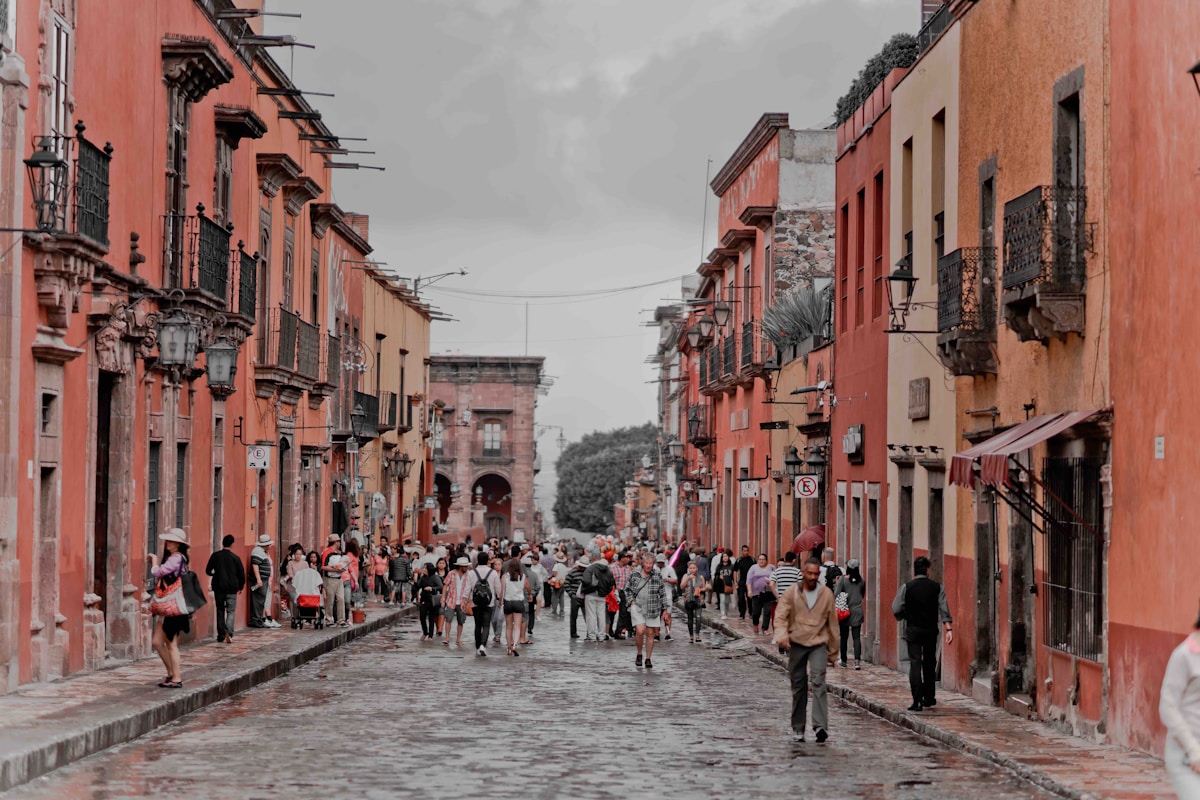
Guanajuato is one of Mexico’s most visually dramatic cities: a former silver-mining capital built into a steep ravine, its streets running through underground tunnels and up staircases between tightly-packed coloured buildings. The city centre is a UNESCO World Heritage Site and largely traffic-free at street level, with a road network running underground through converted mine shafts and flood channels.
Key sights
| Sight | Entry Fee | Hours | Notes |
|---|---|---|---|
| Museo de las Momias | ~MXN $100 | Daily 9:00–18:00 | ~100 naturally mummified bodies |
| Alhóndiga de Granaditas | ~MXN $70 | Tue–Sat 10:00–18:00, Sun 10:00–15:00 | Independence War museum, Chávez Morado murals |
| Teatro Juárez | ~MXN $50 (tour) | Tour times vary | Porfirian neoclassical, Moorish interior |
| Casa Museo Diego Rivera | ~MXN $40 | Tue–Sun 10:00–18:00 | Birthplace of the muralist |
| Pípila viewpoint | Free (funicular ~MXN $50) | Open-air, funicular 8:00–22:00 | Panoramic city view, best at sunset |
| Mina de Valencia | ~MXN $80 | Daily 9:00–18:00 | 45 m underground in cage elevator |
| Iglesia de la Valenciana | Free | Daily 8:00–18:00 | Finest churrigueresque facade in Mexico |
All prices approximate, as of 2026.
Getting oriented
The city is confusing to navigate at first. The main underground road network (Túnel General Escalona and connected tunnels) carries most traffic; surface streets are pedestrianised or very narrow. The Jardín de la Unión - a triangular garden in front of the Teatro Juárez - is the heart of the city. The Callejón del Beso (Alley of the Kiss) is 68 cm wide at its narrowest point - local legend holds that couples who kiss on the third step receive seven years of happiness.
The city is small enough to walk entirely, though the hills and staircases make it more physically demanding than flat colonial cities. Taxis are metered; Uber does not operate here.
Where to stay
| Zone | Budget | Mid-range | Luxury |
|---|---|---|---|
| Centro (near Jardín de la Unión) | Hostels from ~MXN $200/night | Hotels from ~MXN $600/night | Boutique from ~MXN $2,500/night |
| Panorámica (hillside) | Limited | B&Bs from ~MXN $800/night | From ~MXN $2,000/night |
Named properties: Hostal La Casa del Tío (dorms from approximately MXN $200/night, social atmosphere). Hotel Posada Santa Fe (overlooking Jardín de la Unión, from approximately MXN $1,200/night). Casa del Rector (boutique, from approximately MXN $2,000/night, restored colonial house). Edelmira Hotel Boutique (from approximately MXN $1,800/night, near the Basilica).
Food
The food is rooted in the Bajío tradition - hearty and tied to the city’s mining history. Enchiladas mineras (tortillas with chicken, guajillo sauce, fresh cheese, and pickled carrots, approximately MXN $60–90) are the signature dish. Chamorros (slow-braised pork shanks, approximately MXN $180–250) and gorditas (thick stuffed masa rounds, approximately MXN $20–35) are everywhere.
The Mercado Hidalgo - housed in a repurposed 1910 train station - has the best budget eating: market fondas, enchiladas, and fresh juices from approximately MXN $20. The streets around the Jardín de la Unión have tourist-facing restaurants at higher prices. Truco 7 (Calle Truco 7) is a reliable mid-range option popular with locals (mains approximately MXN $120–200).
Festival Internacional Cervantino
Held annually in October, the Cervantino is one of the largest arts and cultural festivals in Latin America, drawing theatre, music, and dance companies from across the world. The festival originated in performances of Cervantes’s entremeses (short plays) in the city’s alleyways. During the festival, the city fills completely - book accommodation months ahead and expect higher prices.
Getting there
Nearest airport: Del Bajío International (BJX) in León, 40 km northwest. Taxi to Guanajuato approximately MXN $500–700. Shared shuttles approximately MXN $200–300.
Buses: Primera Plus and ETN first-class to Mexico City (approximately MXN $500–700, 5 hours), Guadalajara (approximately MXN $400–600, 5 hours), and San Miguel de Allende (approximately MXN $100–150, 1.5 hours).
When to go
The climate is mild year-round at 2,000 m elevation. October for the Festival Cervantino (book months ahead). November–March for the driest weather and coolest temperatures (highs 20–25°C, lows 5–10°C). June–September has afternoon rain but the hills are greenest.
More Guanajuato Guides
- Day Trips in Guanajuato
- Food to Try in Guanajuato
- Things to Do in Guanajuato
- Best Tours in Guanajuato - mummy museum, silver mines and colonial city tours
Comparison Guides
Plan your trip: tours in Guanajuato · flights to Mexico · travel insurance · eSIM for Mexico.
See Also
- San Miguel de Allende Travel Guide - 1.5 hours east, the expat colonial city frequently compared with Guanajuato
- Morelia Travel Guide - 3 hours south, another highland colonial city worth combining on an itinerary
- Pueblos Mágicos - Mexico’s heritage town designation programme
- Monarch Butterfly Migration - accessible from the Bajío highlands in November–March
- 2 Weeks in Mexico - an itinerary connecting Guanajuato with Mexico City and other stops
Book an experience
Top experiences in Guanajuato
Explore the best tours and activities in Guanajuato, with instant confirmation and free cancellation on most bookings.
Find hotels in Guanajuato
Compare rates and availability across hundreds of options, free cancellation on most.
Browse hotels in Guanajuato →Affiliate link; commission earned at no cost to you.