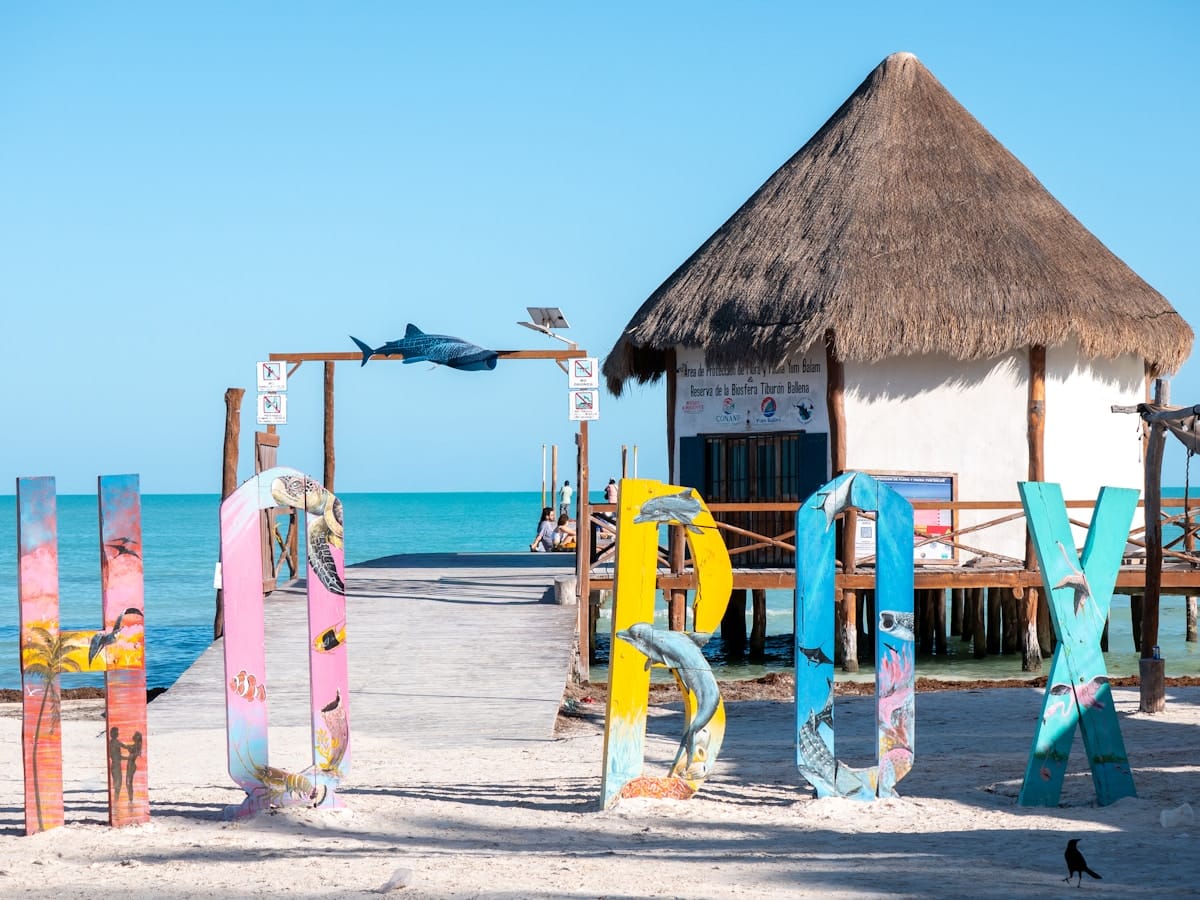
Isla Holbox is a 42 km sand island in the Yalahau Lagoon - separated from the Yucatán mainland by a shallow, brackish body of water and accessible only by boat from Chiquilá (2 hours north of Cancún). There are no cars on the island (golf carts and bicycles only), no party infrastructure, and water so shallow in places you can walk 200 m from shore and still be knee-deep.
Activity overview
| Activity | Cost | Season | Duration |
|---|---|---|---|
| Whale shark swimming | ~USD $90–130/person | Jun–Sep | 3–4 hours (sunrise) |
| Bioluminescence tour | ~USD $30–40/person | Jun–Nov (dark nights) | 1.5–2 hours |
| Three Islands tour | ~USD $40–60/person | Year-round | 4–5 hours |
| Kayak rental | ~MXN $200/hour | Year-round | 1–3 hours |
| Paddleboard rental | ~MXN $250/hour | Year-round | 1–2 hours |
| Fishing trip (fly fishing) | ~USD $150–250/boat | Year-round | Half/full day |
| Golf cart rental | ~MXN $500–800/day | Year-round | Full day |
| Bicycle rental | ~MXN $200–300/day | Year-round | Full day |
All prices approximate, as of 2026.
Top Tours at a Glance
| Tour | Duration | Price (from) | Group Size | Highlights |
|---|---|---|---|---|
| Whale shark swimming tour — Holbox | 3–4 hrs | from $95 | Up to 10 | Swim with whale sharks, sunrise departure, gear included |
| Three Islands boat tour | 4–5 hrs | from $45 | Up to 15 | Isla Pájaros, Yalahau spring, Isla de la Pasión |
| Bioluminescence kayak tour | 2 hrs | from $35 | Up to 10 | Moonless-night glow, paddle in lit water |
| Flamingo & mangrove tour — Punta Mosquito | 2.5 hrs | from $30 | Up to 12 | Flamingos, roseate spoonbills, sandbar |
| Sunrise paddleboard tour | 1.5 hrs | from $28 | Up to 8 | Glassy lagoon at dawn, mangrove channels |
Browse all Holbox tours → GetYourGuide
Whale shark swimming (June–September)
The primary reason many people make the trip to Holbox. Between June and September, whale sharks aggregate in the waters north of the island to feed on tuna roe and plankton. These are the largest fish in the ocean - 7–12 m is typical - and are filter feeders, completely harmless to swim alongside.
Tours depart at sunrise (approximately 6–7 am) for the feeding grounds, a 30–45 minute boat ride from the island. You enter the water two at a time with a guide and swim alongside the sharks. The experience lasts 1–2 hours in the water with multiple entries. Standard tours include boat, guide, snorkel gear, life jacket, and breakfast. Approximately USD $90–130 per person.
Numbers are managed by permit - a maximum of two swimmers in the water per boat at any time. Book 1–2 days ahead in peak season (July–August). VIP Holbox and Willy’s Tours are established operators.
What to know: The water is open ocean - some chop is normal. Motion sickness medication is advisable for those prone to seasickness. The sharks are wild animals - sightings are not guaranteed, though encounters are highly reliable from mid-June to mid-September.
Bioluminescence tours
On moonless nights, phytoplankton (dinoflagellates) in the lagoon and shallow waters around Holbox bioluminesce when disturbed - the water glows blue-green as you move through it, leaving trails of light. Evening boat or kayak tours operate from the pier (approximately USD $30–40 per person, 1.5–2 hours).
The effect requires completely dark conditions - check moon phases before booking. New moon periods are ideal. Overcast, very dark nights between June and November produce the strongest bioluminescence. Some tours include a swim in the bioluminescent water - waving your arms underwater produces a spectacular glow.
Punta Cocos (western tip)
The western tip of the island, approximately 6 km from the main settlement. A sandbank extends into the lagoon here, and flamingos feed in the shallow water - the best viewing is early morning when the birds are most active. The sunsets from Punta Cocos are the best on the island.
Accessible by golf cart (15 minutes) or bicycle (45 minutes on a dirt track). No facilities - bring water and sunscreen. The track can be sandy and rough in places.
Punta Mosquito (eastern tip)
The eastern sandbank is where the Gulf and Caribbean waters meet - the colour change in the water is visible. Flamingos and other wading birds (roseate spoonbills, herons) also appear here. The sandbar extends far into the shallow water and shifts with tides and storms.
Reached by golf cart or bike (rougher track than the western route, approximately 30 minutes by cart). Best visited at low tide when the sandbar is most exposed.
Three Islands tour
A full-day boat excursion visiting three locations near Holbox:
- Isla Pájaros (Bird Island) - a small island in the lagoon that is a protected nesting site for frigatebirds, cormorants, and other seabirds. Boats approach close enough for viewing and photography but landing is prohibited.
- Yalahau Spring - a freshwater cenote spring on the mainland shore of the lagoon. The water is cool and crystal clear - good for swimming after the boat ride.
- Isla de la Pasión - a sandbar island with shallow water, hammocks, and a beach bar.
Approximately USD $40–60 per person including boat, guide, and snorkel gear. Tours depart mid-morning and return in the early afternoon.
Kayaking and paddleboarding
Gear is rentable from several shops along the main waterfront road in Holbox town. Kayaks approximately MXN $200/hour. Paddleboards approximately MXN $250/hour.
The lagoon side of the island (south) is calm and protected - good for paddling through the mangrove channels and spotting birds and marine life. The open sea side (north) has more wave action and is better for experienced paddlers. Most people paddle along the beach or into the mangrove channels on the lagoon side.
Sunrise paddleboarding is popular - the water is glassy calm at dawn and the light is excellent.
Fishing
Holbox is well-regarded for fly fishing - the lagoon flats have bonefish, tarpon, and permit. Guided fishing trips run approximately USD $150–250 per boat (half day) or USD $300–400 (full day). Pesca Holbox and local independent guides operate from the main dock. Catch-and-release is standard practice.
Simply being there
Much of Holbox’s appeal is the lack of agenda. The beach runs the length of the island; hammocks in the water are standard at beach bars and hotels - a Holbox signature. The town has no addresses, no traffic, and a small collection of restaurants and guesthouses. Phone signal and WiFi are intermittent. The sand streets turn to mud in heavy rain.
The best beach stretches are in front of the main hotel strip - shallow, warm water with a sandy bottom. The water is not always crystal clear (the lagoon influence can make it slightly milky), but the overall atmosphere is hard to match anywhere else in Mexico.
Getting there
From Cancún: Bus or colectivo from the ADO terminal to Chiquilá (approximately MXN $150–200, 2–2.5 hours). At Chiquilá, passenger ferries to Holbox depart approximately every 30–60 minutes (20-minute crossing, approximately MXN $160–200 each way). 9 Hermanos and Holbox Express are the main ferry operators.
Shuttle services: Private transfers from Cancún airport direct to Chiquilá (approximately USD $80–120 per vehicle, 2 hours) are bookable through hotels and online.
Last ferry: The last return ferry from Holbox to Chiquilá typically departs around 7–8 pm - check schedules, especially in low season when services are reduced.
Practical tips
- Cash: Bring enough from the mainland. The island’s ATMs run out of cash, especially on weekends and holidays.
- Mosquitoes: Significant in summer (June–September). Bring strong repellent and consider long sleeves at dusk.
- Golf cart taxis: Available within town for approximately MXN $20–50 per ride. For Punta Cocos or Punta Mosquito, rent your own cart.
- Season: Whale shark season (June–September) is the busiest and most expensive. December–January is also peak. October–November is the quietest window.
More Holbox Guides
- Back to Holbox Guide
- Cancún Travel Guide - the nearest airport hub 2.5 hours away
- Riviera Maya Beaches - how Holbox compares with the Caribbean coast
- 10 Days in the Yucatán - itinerary combining Holbox with Mérida and the Riviera Maya
Plan your trip: tours in Holbox · travel insurance.
See Also
- Isla Mujeres Travel Guide - the other car-free island near Cancún, with Playa Norte and whale shark tours
Search hotels in Holbox on Booking.com
- Best Time to Visit Mexico - whale shark season (June–September) and seasonal planning for the Yucatán