Holbox Island Travel Guide
Holbox guide: car-free island, whale shark swimming, bioluminescent plankton, flamingos, and the Yucatán's quietest beach escape.
Guides for Isla Holbox
Holbox (pronounced “Hol-bosh”) is a car-free island off the northern tip of the Yucatán Peninsula, separated from the mainland by a shallow lagoon. It is a sand-street, golf-cart-and-bicycle island with clear warm water, no high-rises, flamingos in the lagoon, and whale shark aggregations offshore from June to September. It is genuinely relaxed in a way that Tulum has not been for years.
Key activities
| Activity | Cost | Season | Notes |
|---|---|---|---|
| Whale shark swimming | ~USD $90–130/person | Jun–Sep | Sunrise departure, 3–4 hours |
| Bioluminescence tour | ~USD $30–40/person | Jun–Nov (dark nights) | Kayak or boat, moonless nights |
| Punta Cocos flamingos | Free (bike/golf cart) | Year-round | 6 km west, early morning best |
| Kayak rental | ~MXN $200/hour | Year-round | Lagoon side, mangrove channels |
| Paddleboard rental | ~MXN $250/hour | Year-round | Calm mornings on the lagoon |
| Fishing trip | ~USD $150–250/boat | Year-round | Fly fishing, catch and release |
All prices approximate, as of 2026.
Beaches
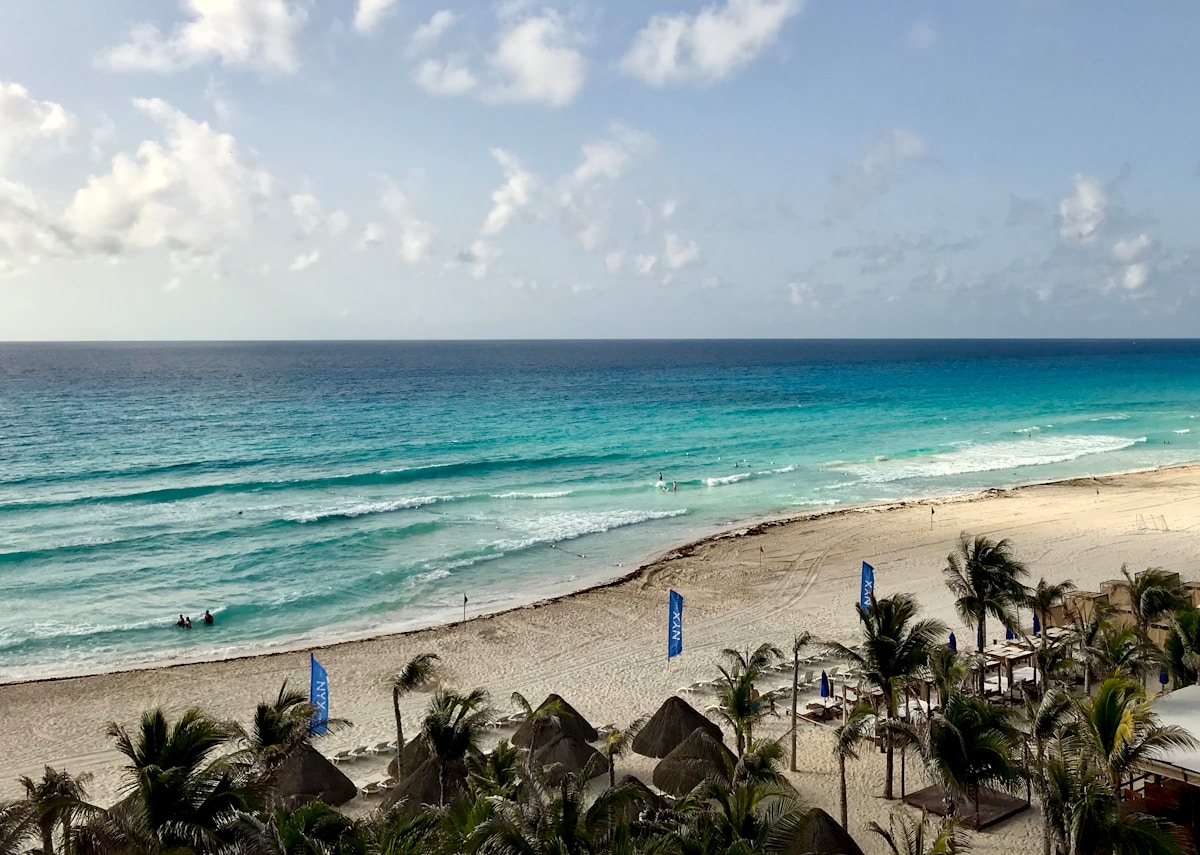
The main beach runs along the north shore for most of the island’s 42 km length. The water is shallow and calm - good for wading, paddleboarding, and floating in hammocks anchored in the shallows (a Holbox signature). The sand is not the white powder of the Caribbean coast - it is finer and mixed with shells - but the water colours are excellent.
Punta Cocos on the western tip has better shallow-water snorkelling, sunset views, and the best chance of seeing flamingos feeding in the shallow water. Accessible by golf cart or bicycle (45 minutes by bike on a dirt track).
Punta Mosquito on the eastern tip has a sandbar where the lagoon meets the sea. Flamingos and other wading birds feed here. The colour change where the Gulf and Caribbean waters meet is visible from the sandbar.
Whale sharks (June–September)
From June to September, whale sharks aggregate in the waters north of Holbox to feed on tuna roe - one of only a handful of reliable gathering sites worldwide. These are the largest fish in the ocean (7–12 m is typical) and are filter feeders, harmless to swim alongside. Tours depart at sunrise for the feeding grounds; you enter the water two at a time with a guide and swim alongside the sharks.
Standard tours run approximately USD $90–130 per person including boat, guide, snorkel gear, and breakfast. Numbers are managed by permit - a maximum of two swimmers in the water per boat at any time. Book 1–2 days ahead in peak season (July–August).
Bioluminescence
On moonless nights in summer, phytoplankton in the lagoon and shallow waters around Holbox bioluminesce when disturbed - the water glows blue-green as you move through it. Evening boat or kayak tours operate from the pier (approximately USD $30–40 per person). The effect requires completely dark conditions - check moon phases before booking. Most pronounced June–November.
Where to stay
| Zone | Budget | Mid-range | Boutique |
|---|---|---|---|
| Town centre | Hostels from ~MXN $400/night | Hotels from ~MXN $1,500/night | - |
| Beach road | - | From ~MXN $2,000/night | From ~MXN $4,000/night |
Named properties: Tribu Hostel (dorms from approximately MXN $400/night, social, near the beach). Hotel Villas Flamingos (beachfront, from approximately MXN $2,500/night, palapa-roofed villas). Casa Las Tortugas (boutique, from approximately MXN $4,000/night, beachfront with hammock-filled garden). Hotel Casa Bárbara (mid-range, from approximately MXN $1,500/night, town centre with pool). Zomay Hotel (eco-boutique, from approximately MXN $3,000/night, off-grid solar power).
Holbox is expensive for Mexico - accommodation and food prices are closer to Tulum than to mainland Yucatán. December–January and whale shark season (July–August) are the most expensive periods. Book well ahead for these windows.
Food
The town has a compact but good restaurant scene along the main pedestrian streets. Roots (pizza and cocktails, mains approximately MXN $150–250) is popular for its beachside setting. Luuma (seafood, mains approximately MXN $200–350) does ceviche and grilled catch of the day. La Isla del Colibri (budget, mains approximately MXN $80–120) serves Yucatecan food at local prices. Los Peleones (tacos and tortas, approximately MXN $40–80) is the best cheap eat. Street food stands near the main square sell marquesitas (crispy rolled crepes with cheese and Nutella, approximately MXN $40–60) - a Yucatecan specialty.
Practical matters
- No cars: Transport is by golf cart, bicycle, or on foot. Golf cart taxis run within town (approximately MXN $20–50 per ride).
- Cash: ATM availability is limited and can run out. Bring cash from the mainland. Some restaurants accept cards but not all.
- Mosquitoes: Significant in summer. Bring repellent.
- Phone signal: Intermittent. WiFi at hotels is adequate but do not expect reliable mobile data everywhere.
- Electricity: The island is supplied by undersea cable but outages occur, especially in storm season.
Getting there
From Cancún: Bus or colectivo to Chiquilá (approximately MXN $150–200, 2–2.5 hours from Cancún bus terminal). ADO runs direct buses. From Chiquilá, passenger ferries to Holbox depart approximately every 30–60 minutes (20-minute crossing, approximately MXN $160–200 each way). The last ferry returns in the evening - check schedules.
From Mérida or Valladolid: Drive or bus to Chiquilá. No direct bus service - change at Cancún or drive via Highway 180.
Private transfer: Shuttle services from Cancún airport direct to Chiquilá (approximately USD $80–120 per vehicle, 2 hours) are available through hotels and online booking.
When to go
June–September: Whale shark season and warmest water. Also the hottest, most humid period with mosquitoes. Book ahead.
December–April: Best weather - dry, warm, less humid. Busiest tourist period, highest prices. Mid-December to mid-January is peak.
October–November: Shoulder season. Fewer visitors, reasonable weather, but tail end of hurricane season. Bioluminescence is still visible.
More Holbox Guides
Plan your trip: tours in Holbox · flights to Mexico · travel insurance · eSIM for Mexico.
See Also
- Cancún Travel Guide - the nearest major airport hub, 2.5 hours by bus and ferry
- Tulum Travel Guide - the other car-free-adjacent Yucatán escape
- Riviera Maya Beaches - how Holbox compares with the Caribbean coast
- 10 Days in the Yucatán - itinerary that combines Holbox, Mérida, and the Riviera Maya
- Best Time to Visit Mexico - when to plan around whale shark season
Book an experience
Top experiences in Isla Holbox
Explore the best tours and activities in Isla Holbox, with instant confirmation and free cancellation on most bookings.
Find hotels in Isla Holbox
Compare rates and availability across hundreds of options, free cancellation on most.
Browse hotels in Isla Holbox →Affiliate link; commission earned at no cost to you.