Tulum Travel Guide
Tulum travel guide: clifftop Maya ruins, cenotes, jungle hotels, and what the Tulum Corridor actually looks like for independent travellers.
Guides for Tulum
Tulum is one of the fastest-growing resort areas in the Americas, which means it is both more developed and more expensive than it was a decade ago, while still being genuinely beautiful. The layout is unusual: the town (Tulum Pueblo) sits on Highway 307, the beach zone (Tulum Corridor / Carretera Tulum-Boca Paila) runs 10+ km south from the ruins along the coast, and the two have almost nothing to do with each other. Where you stay determines your experience and your budget.
Tulum Ruins
The Zona Arqueológica de Tulum sits on a limestone cliff directly above the Caribbean - the most photographed Maya site in Mexico and one of the only ancient cities with a direct ocean view. The site is modest in scale compared to Chichén Itzá or Cobá (a walled port city, not a capital), but the setting is exceptional. The main structure, El Castillo, served as a lighthouse and navigation beacon for Maya trading canoes. The Temple of the Frescoes retains traces of original murals, and the Temple of the Descending God features a carved figure diving headfirst - a motif unique to this region.
Entry: Approximately MXN $100 as of 2026. Open daily 8:00–17:00. Go at opening (8 am) - by 10 am the site reaches capacity, and by noon it is overwhelming. The beach below the ruins is accessible by stairs and is one of the best swimming spots on the coast. Buy tickets online at inah.gob.mx to skip the queue. For a guided tour combining the ruins with a cenote swim, browse Tulum tours on GetYourGuide.
Beaches
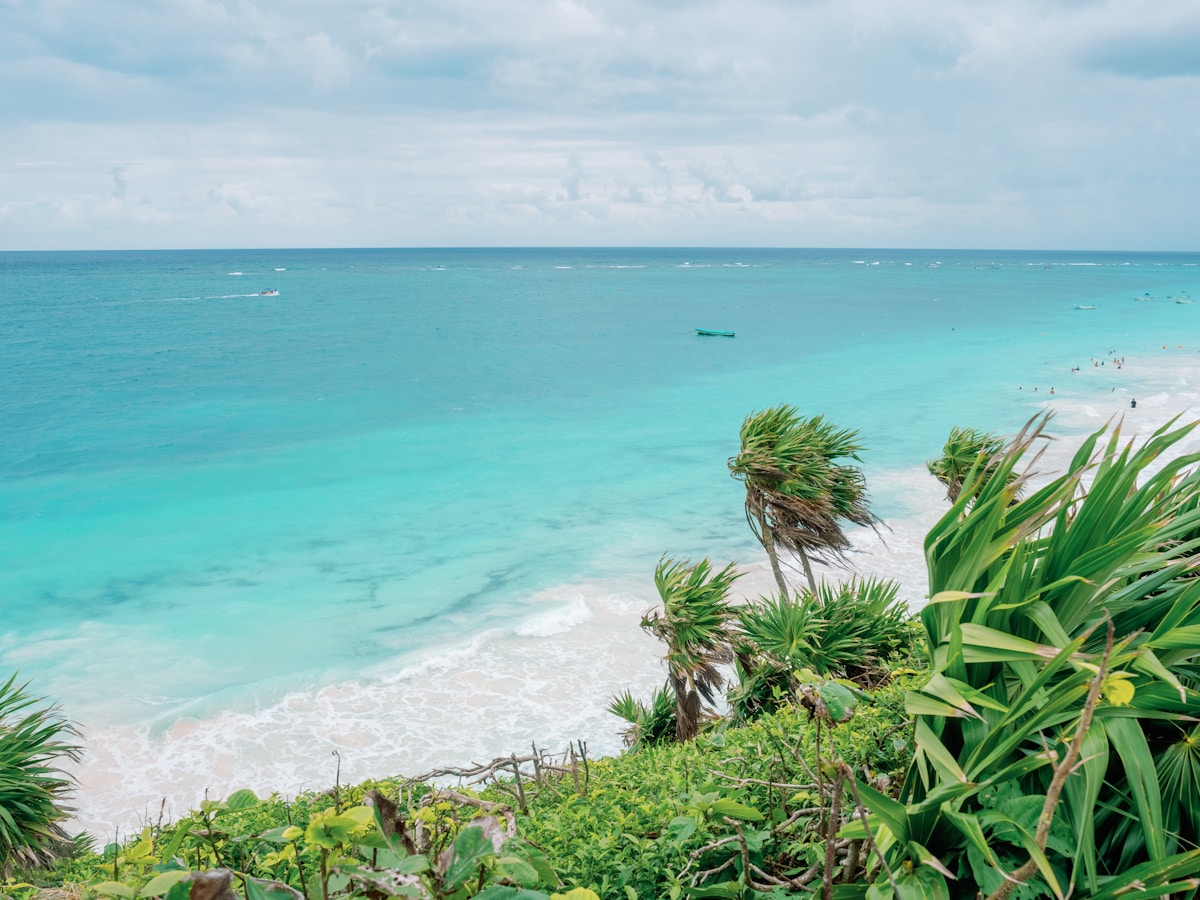
Playa Paraíso (below the ruins) and Playa Ruinas are the most photographed - white sand, turquoise water, ruins on the cliff above. The Corridor south of the ruins has a series of beach clubs that charge day-use fees (approximately MXN $300–800 minimum spend). Independent beach access has become harder as development has accelerated, but you can still reach the waterline via public access points. Playa Pescadores near the town is free and has a more local feel.
Sargassum (seaweed) is a recurring issue from May to September - the extent varies dramatically year to year. Check recent reports before booking a beach-focused trip during these months.
Cenotes
Tulum has the highest density of accessible cenotes in Mexico. The main options within 20 km:
| Cenote | Distance | Entry Fee | Best For |
|---|---|---|---|
| Gran Cenote | 4 km west | ~MXN $500 | Snorkelling, turtles, cave section |
| Dos Ojos | 18 km north | ~MXN $400 | Cave snorkelling, world-class diving |
| Cenote Calavera | 5 km west | ~MXN $250 | Cliff jumping (3–12 m platforms) |
| Aktun Ha (Car Wash) | 8 km west | ~MXN $200 | Deep diving, calm atmosphere |
| Cenote Cristalino | 30 km north | ~MXN $250 | Open-air swimming, family-friendly |
Entry fees approximate, as of 2026. Most cenotes prohibit sunscreen - bring a rash guard instead. For a guided half-day cenote experience with transport from Tulum town, book via GetYourGuide — most tours cover two or three cenotes with a bilingual guide.
Where to stay
| Zone | Budget | Mid-range | Luxury |
|---|---|---|---|
| Tulum Pueblo (town) | Hostels from ~MXN $300/night | Hotels from ~MXN $800/night | Limited options |
| Beach Corridor | Limited budget | Eco-lodges from ~MXN $4,000/night | Azulik from ~MXN $8,000/night |
The price cliff between the two zones is dramatic. Tulum Pueblo has markets, cheap restaurants, bus connections, and most of the budget accommodation. The Corridor has boutique eco-lodges and beach clubs at 3–10x the town prices. Many Corridor properties have no air conditioning (ceiling fans and natural ventilation), outdoor bathrooms, and limited electricity - this is part of the aesthetic, not a failing.
Named properties: In the Pueblo, Mayan Monkey (hostel, dorms from approximately MXN $300) and Hotel Kin Ha (from approximately MXN $1,200/night). On the Corridor, Habitas Tulum (from approximately MXN $5,500/night, breakfast included), Nomade Tulum (from approximately MXN $5,000/night), and Azulik (from approximately MXN $8,000/night, treehouse-style rooms, adults only).
Cobá
45 km northwest - one of the largest Maya cities in the Yucatán, built around two lakes in the jungle interior. The Nohoch Mul pyramid (42 m) is one of the tallest Maya structures and remains climbable as of 2026. Entry approximately MXN $100. Bicycle rental at the entrance approximately MXN $80. The site is spread through jungle - cycling between structures is the efficient way to cover it. Allow 2–3 hours. Colectivos from Tulum Pueblo approximately MXN $60 each way, 45 minutes.
Getting there and around
From Cancún: ADO buses run frequently (approximately MXN $200 each way, 2 hours). Colectivos (shared minivans) are cheaper (approximately MXN $50) but slower and less comfortable.
Between zones: No public transport connects the Pueblo and the beach Corridor. Options: taxi (approximately MXN $80–150), bicycle rental (approximately MXN $150–200/day - the road is flat and there is a dedicated cycle path), or moto-taxi.
Car rental: From approximately MXN $500–800/day. Useful for cenotes and Cobá. Most Pueblo rental agencies are on Avenida Tulum.
When to go
November–April: Dry season, the most comfortable period, but also peak season - prices are at their highest and popular beaches, cenotes, and the ruins are crowded. May–June before the heavy rains is a good-value window. September–October is the peak of hurricane season - some beach hotels close entirely. Sargassum season (May–September) can affect the beaches significantly.
More Tulum Guides
- Cenotes in Tulum
- Food to Try in Tulum
- Things to Do in Tulum
- Where to Stay in Tulum
- Best Tours in Tulum - cenotes, Coba ruins, bioluminescent lagoon and jungle tours
Comparison Guides
Plan your trip: tours in Tulum · flights to Mexico · travel insurance · eSIM for Mexico.
See Also
- Cenote Tours in the Riviera Maya - the best organised cenote tours departing from Tulum and Playa del Carmen
- Riviera Maya Beaches - how Tulum’s beaches compare with the rest of the Caribbean coast
- 10 Days in the Yucatán - a circuit placing Tulum at the southern end of a Yucatán loop
- Valladolid Travel Guide - the colonial town 100 km northwest, often combined with a Chichén Itzá day trip
- Bacalar Travel Guide - 2.5 hours south, the Lake of Seven Colours and the slow-travel alternative to Tulum
- Tulum Airport Transfers - how to get from Cancún airport or the new Tulum airport to the town and corridor
Book an experience
Top experiences in Tulum
Explore the best tours and activities in Tulum, with instant confirmation and free cancellation on most bookings.
Find hotels in Tulum
Compare rates and availability across hundreds of options, free cancellation on most.
Browse hotels in Tulum →Affiliate link; commission earned at no cost to you.