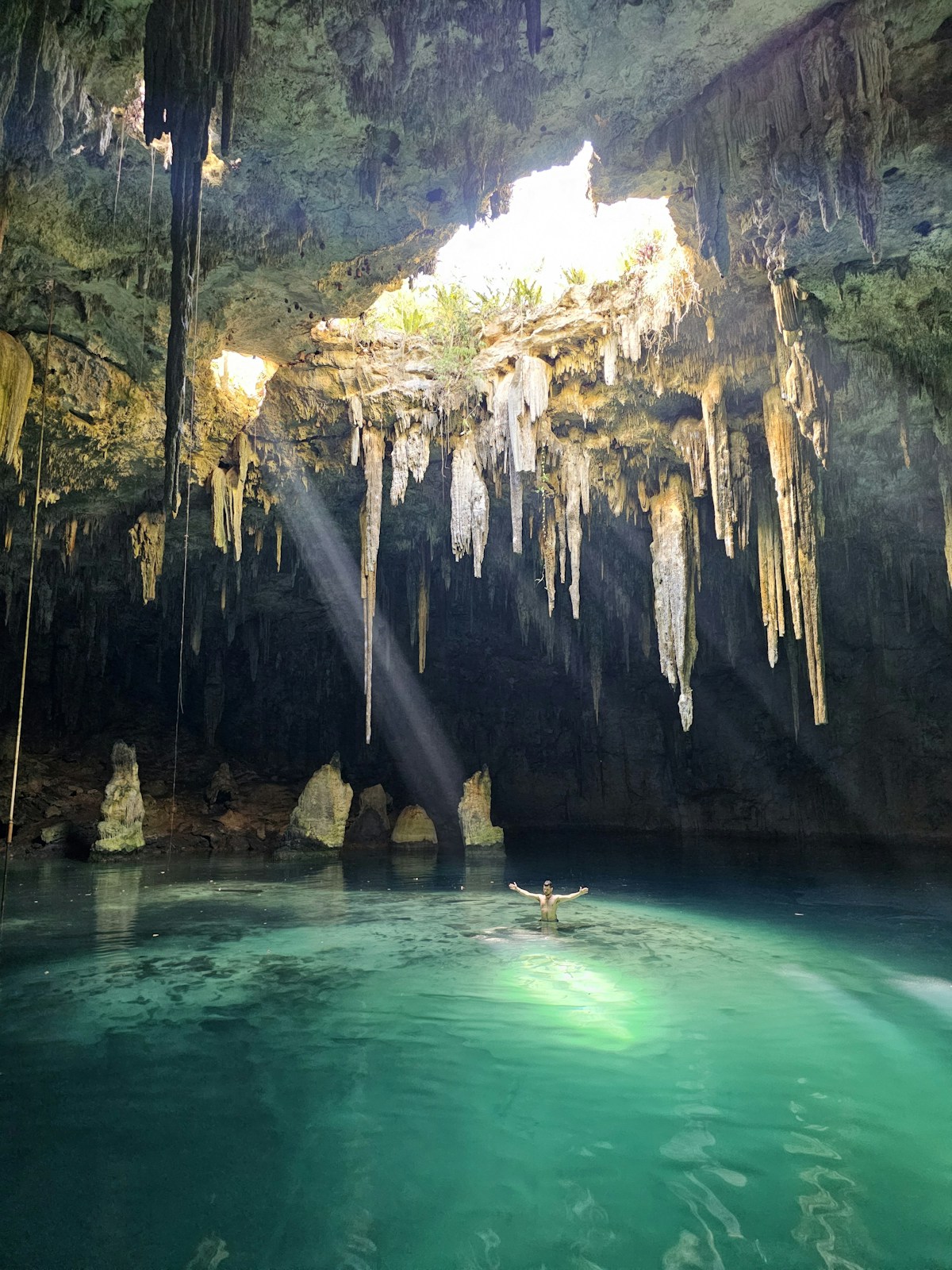
The Yucatán Peninsula sits on a limestone shelf, and the water table below it connects through an enormous network of flooded caves - the world’s largest underground river system. Where the cave ceiling collapses, a cenote is formed. The area around Tulum has the highest density of accessible cenotes in Mexico, with dozens within a 30 km radius.
Top Tours at a Glance
Here’s a quick comparison of top-rated guided tours on GetYourGuide:
| Tour | Duration | Price (from) | Group Size | Highlights |
|---|---|---|---|---|
| Gran Cenote + Dos Ojos Tour from Tulum | Half day | from $55/person | Small group | Two of Tulum’s most famous cenotes, snorkel gear |
| Cenote Route — Ik Kil, Hubiku, Oxman | Full day | from $80/person | Group | 3 cenotes, transport, bilingual guide, Chichén Itzá option |
| Private Cenote Safari from Tulum | 4–5 hrs | from $130/person | Private | Off-road 4x4 to jungle cenotes, guide, snorkel gear |
| Cenote + Ruins Combo — Tulum Archaeological Zone | Half day | from $65/person | Small group | Clifftop ruins entry, cenote swim, guide |
| Aktun-Chen Cenote and Zipline Adventure | 3–4 hrs | from $60/person | Group | Cenote cave swim, ziplines, Mayan village |
Browse all Tulum tours → GetYourGuide
Quick comparison
| Cenote | Distance | Entry Fee | Best For | Type |
|---|---|---|---|---|
| Gran Cenote | 4 km west | ~MXN $500 | Snorkelling, turtles, cave section | Semi-open |
| Dos Ojos | 18 km north | ~MXN $400 | Cave snorkelling, world-class diving | Cave |
| Cenote Calavera | 5 km west | ~MXN $250 | Cliff jumping (3–12 m platforms) | Cave |
| Aktun Ha (Car Wash) | 8 km west | ~MXN $200 | Deep diving, calm atmosphere | Open |
| Cenote Cristalino | 30 km north | ~MXN $250 | Open-air swimming, family-friendly | Open |
| Cenote Angelita | 15 km south | ~MXN $600 (dive) | Advanced diving (60 m depth) | Vertical pit |
| Cenote Escondido | 3 km south | ~MXN $200 | Swimming, quiet, roadside | Open |
| Cenote Zacil-Ha | 4 km west | ~MXN $150 | Kids, platforms, shallow swimming | Open |
Entry fees approximate, as of 2026.
Gran Cenote
The most popular and most convenient - 4 km west of Tulum Pueblo on the road to Cobá. A semi-open cenote with a large swimming area leading into a partially enclosed cave section with stalactite formations. Crystal-clear water, freshwater turtles visible from the surface, and excellent snorkelling. Facilities include lockers (approximately MXN $50), showers, and snorkel gear rental (approximately MXN $100).
Entry: Approximately MXN $500 as of 2026. Open 8 am–5 pm daily. Arrive before 9 am or after 3 pm to avoid the busiest period - by mid-morning the site fills with tour groups. Sunscreen is not permitted (damages the ecosystem and the water clarity). Bring a rash guard instead. Drones are also prohibited.
Getting there: Bicycle from Tulum Pueblo (15–20 minutes on a flat road), taxi (approximately MXN $60), or drive. Bicycle rental from shops on Avenida Tulum approximately MXN $150–200/day.
Dos Ojos (“Two Eyes”)
18 km north of Tulum toward Playa del Carmen. Named for its two sinkholes visible from above. This is the entry point to a section of the Sac Actun cave system - the world’s longest known underwater cave system at over 370 km mapped. The main draw for non-divers is the Bat Cave snorkel tour: guided small groups through stalactite formations with turquoise light filtering through the cave mouths. Snorkel tours run throughout the day (approximately 1.5 hours, included in entry fee).
Entry: Approximately MXN $400 as of 2026. Snorkel gear rental approximately MXN $100 on-site, or bring your own. Cave diving here is world-class - guided dives from approximately MXN $3,000 for a two-tank dive. NAUI or PADI cave certification required for the full system. Book dive guides at least 24 hours in advance.
Getting there: Car or taxi (approximately MXN $250–300 from Tulum Pueblo). No direct colectivo - you can take a Playa del Carmen colectivo and ask to be dropped at the turnoff, then walk 1.5 km to the entrance.
Cenote Calavera (Temple of Doom)
5 km west of Tulum. Three round openings in a limestone slab drop into a dark cave pool below - the dramatic name comes from the skull-like shape formed by the three holes. Cliff jumping from 3, 5, and 12-metre platforms into the pool below. The cave section has stalactites and good snorkelling. One of the most visually dramatic cenotes in the area.
Entry: Approximately MXN $250 as of 2026. Wear water shoes - the rock edges are sharp. The jumping is optional. Guides are present. Not as crowded as Gran Cenote, which makes it a good second or third stop on a cenote circuit.
Aktun Ha (Car Wash)
8 km west on the Cobá road. A large, open cenote - the name comes from its former use by local taxi drivers who washed their cars here. Deep blue-black water at depth with diving visibility exceeding 40 metres. Lily pads on the surface during the rainy season create a distinctive atmosphere. Much calmer than the tour-heavy options - fewer visitors, more space.
Entry: Approximately MXN $200 as of 2026. Popular with divers for its depth and clarity. For snorkellers and swimmers, the edges are shallow enough for comfortable entry. Basic facilities only - bring your own water and gear.
Cenote Cristalino and Cenote Escondido
Cenote Cristalino - 30 km north of Tulum, near the highway between Playa del Carmen and Tulum. A large open-air cenote with platforms for jumping and calm, crystal-clear water. Entry approximately MXN $250. Family-friendly with easy access.
Cenote Escondido - just 3 km south of Tulum Pueblo along the Corridor road. A quiet, open cenote accessible directly from the roadside. Entry approximately MXN $200. No cave section - just a calm, freshwater pool surrounded by vegetation. Fewer visitors than the more famous options, making it a good early-morning or late-afternoon stop.
Cenote Zacil-Ha
4 km west, near Gran Cenote. A shallow, open cenote with wooden platforms, a zipline over the water (approximately MXN $100 extra), and a relaxed atmosphere. Entry approximately MXN $150. Less dramatic than the cave cenotes but ideal for families with children or travellers who prefer calm swimming without cliff jumps or cave navigation. A small palapa serves drinks and snacks.
Cenote Angelita
15 km south of Tulum. A deep vertical cenote (60 metres) with a hydrogen sulphide cloud layer at 29 metres - from below, the cloud looks like a submerged white forest, one of the most surreal diving environments in the world. This is a diving-only cenote; the depth and conditions require advanced open water certification at minimum. Guided dives from approximately MXN $3,500. Not for snorkelling.
Planning a cenote day
A full day can comfortably cover 3 cenotes. Two recommended circuits:
Western circuit (by bicycle or car): Gran Cenote → Zacil-Ha → Cenote Calavera. All within 5 km of Tulum Pueblo. The bicycle route is flat, making this the only circuit doable without a car.
Full circuit (car needed): Dos Ojos (north, 18 km) → Gran Cenote (4 km) → Aktun Ha (8 km). Start early at Dos Ojos for the best light in the cave, then work south.
Practical tips
- No sunscreen: Most cenotes prohibit chemical sunscreen - it damages the fragile ecosystem and clouds the water. Bring a rash guard and reef-safe zinc oxide if you burn easily.
- Cash only: Nearly all cenotes accept cash only for entry fees. Carry small bills - vendors may not have change for MXN $500 notes.
- Bring your own gear: Owning a mask and snorkel saves approximately MXN $100 per cenote and the rental equipment is often worn. Basic sets are available in Tulum Pueblo shops from approximately MXN $200.
- Water shoes: Recommended for cave cenotes (Calavera, Dos Ojos) where rock edges are sharp.
- Arrive early: The most popular cenotes (Gran Cenote, Dos Ojos) fill with tour groups from 10 am onward. Opening time (8 am) gives you 1.5–2 hours of relative quiet.
- Transport: Car rental from Tulum Pueblo approximately MXN $500–800/day from agencies on Avenida Tulum. This is the most flexible option for a full cenote day. Taxis to individual cenotes cost approximately MXN $60–300 depending on distance.
Plan your trip: tours in Tulum.
More Tulum Guides
Search hotels in Tulum on Booking.com