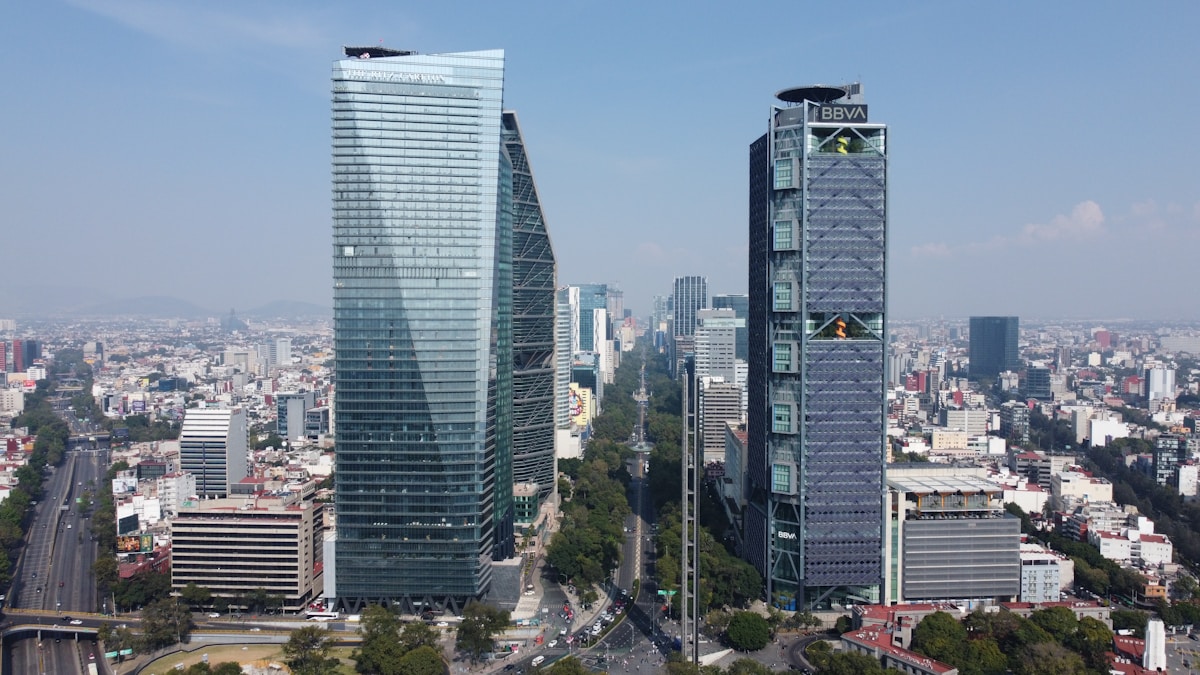
Mexico City Travel Guide
Plan your trip to Mexico City: neighbourhoods, food, museums, day trips, and practical tips for one of the world's great capitals.
Guides for Mexico City
Mexico City (CDMX) is one of the world’s largest metropolises and one of the most rewarding to visit. At 2,240 metres above sea level, the altitude is the first thing you notice. After that: the sheer density of things to do. Over 150 museums, a food scene that consistently ranks among the world’s top ten, Aztec ruins beneath the city streets, and neighbourhoods that each feel like a different city entirely.
Neighbourhoods to know
Roma Norte and Condesa are the go-to areas for first-time visitors - tree-lined streets, Art Deco buildings, good cafes, and most of the city’s international restaurant scene. Roma Norte has the highest density of restaurants and bars; Condesa is slightly calmer with more green space around Parque México and Parque España. Polanco is upmarket, with luxury hotels, designer shopping along Presidente Masaryk, and the Bosque de Chapultepec on its western edge. Centro Histórico holds the Zócalo, the Metropolitan Cathedral, and the ruins of the Templo Mayor - the most sites per square kilometre in the city. Coyoacán is calmer and more residential, with the Frida Kahlo Museum and a strong Sunday artisan market around its main plaza. Xochimilco in the south is where you board a trajinera (flat-bottomed boat) to navigate the ancient canal network - the last remnant of the lake system that once covered the Valley of Mexico.
What to see and do
| Sight | Entry Fee | Hours | Notes |
|---|---|---|---|
| Museo Nacional de Antropología | Approximately MXN $100 | Tue–Sun 9:00–18:00 | Free Sundays. Allow a full morning. Aztec Sun Stone, Maya hall, Olmec heads |
| Templo Mayor | Approximately MXN $100 | Tue–Sun 9:00–17:00 | Free Sundays. Excavated Aztec temple + excellent museum |
| Chapultepec Castle | Approximately MXN $100 | Tue–Sun 9:00–17:00 | Free Sundays. Hilltop views of the entire city |
| Palacio de Bellas Artes | Approximately MXN $80 | Tue–Sun 10:00–18:00 | Rivera, Orozco, Siqueiros murals. Ballet folklórico performances |
| Palacio Nacional | Free | Tue–Sun 9:00–17:00 | Diego Rivera’s monumental mural cycle |
| Museo Jumex | Free | Tue–Sun 10:00–17:00 | Best contemporary art in Mexico. Polanco |
| Museo Frida Kahlo (Casa Azul) | Approximately MXN $250 | Tue–Sun 10:00–17:30 | Book online days ahead - sells out regularly |
All entry fees as of 2026. Most INAH museums offer free admission on Sundays for residents and visitors alike. For skip-the-line tickets to the Frida Kahlo Museum, Ballet Folklórico performances, and guided walking tours of the historic centre, browse Mexico City tours on GetYourGuide.
Food
Mexico City has earned serious culinary credibility. For tacos al pastor, El Vilsito in Narvarte (open until 4 am, tacos from approximately MXN $15–25 each) is the benchmark - a mechanic’s workshop by day, taco stand by night. Los Cocuyos in Centro Histórico does excellent suadero and cabeza tacos for approximately MXN $12–18 each. Contramar in Roma (mains from approximately MXN $250–450) is the city’s most celebrated seafood restaurant. For mole, Expendio de Maíz in Roma Norte serves outstanding Oaxacan-style dishes in a communal setting.
Market food is where the best everyday value lives. Mercado de Medellín in Roma has a food court with Caribbean and Mexican stalls (meals from approximately MXN $60–100). Mercado San Juan in Centro specialises in international and gourmet ingredients. Street food clusters around Metro Insurgentes and along Avenida Álvaro Obregón - expect to pay MXN $10–30 per item.
The city’s best mezcal bars are concentrated in Roma and Condesa: La Clandestina, In Situ, and La Botica all serve single-origin mezcals. A flight of three typically costs approximately MXN $200–350.
Where to stay
| Area | Budget | Mid-range | Luxury |
|---|---|---|---|
| Roma Norte | Hostels from MXN $200/night | Boutique hotels MXN $1,500–4,000/night | La Valise from MXN $6,000/night |
| Condesa | Guesthouses from MXN $800/night | Casa Cuenca from approximately MXN $3,500/night | Casa Cleo from MXN $5,000/night |
| Polanco | Limited budget options | Hotel Habita from approximately MXN $3,500/night | Four Seasons from MXN $10,000/night |
| Centro Histórico | Hostels from MXN $150/night | Hampton Inn & Suites by Hilton from MXN $2,500/night | Downtown México from MXN $4,000/night |
| Coyoacán | Airbnbs from MXN $600/night | B&Bs from MXN $1,500/night | Limited luxury options |
Approximate nightly rates as of 2026. Book two to three weeks ahead for Roma and Condesa; four to six weeks ahead if visiting during Día de Muertos (late October–early November) or December holidays.
Getting there and around
From the airport: Benito Juárez International Airport (MEX) handles most international and domestic flights. Metrobús Line 4 runs from Terminal 1 (Gate 7) and Terminal 2 (Gate 2) to the city centre for approximately MXN $30. Official airport taxis use fixed zone pricing - approximately MXN $250–300 to Roma/Condesa, paid at the kiosk inside the terminal. Uber runs approximately MXN $160–400 depending on destination and surge. For a pre-booked private transfer with a fixed price and meet-and-greet service, Welcome Pickups covers both MEX and NLU terminals. The newer Felipe Ángeles Airport (NLU), 45 km north, handles some budget carriers.
Within the city: The Metro covers 12 lines across the city for approximately MXN $5 per trip - efficient but extremely crowded during rush hour (7–9 am, 6–8 pm). The Metrobús (BRT) is faster for north–south routes at approximately MXN $6–7 per trip. Always use Uber or Cabify rather than street taxis - street hails carry security risks. Altitude (2,240 m) affects some visitors with headaches and fatigue for the first 24–48 hours; stay hydrated and take it easy on arrival.
Day trips
Teotihuacán is 50 km northeast - direct buses leave every 15 minutes from Terminal Norte (approximately MXN $60–70 each way, 45-minute journey). Entry costs approximately MXN $100 as of 2026. Arrive at opening (9 am) to beat the heat and crowds at the Pyramids of the Sun and Moon. Allow 3–4 hours on site. For a guided day tour with transport and archaeological commentary included, browse Teotihuacán tours on GetYourGuide.
Taxco (three hours south by bus from Terminal Sur, approximately MXN $250–350 each way) is a silver-mining colonial town draped across a steep hillside - good for a long day or overnight. Tepoztlán (90 minutes from Terminal Sur, approximately MXN $80–100) is a colonial village below a clifftop pyramid, with one of the best artisan markets in central Mexico on Sundays. Xochicalco (two hours south) is a less-visited hilltop archaeological site with excellent sightlines and few tour groups - entry approximately MXN $90. For the full breakdown of eight day trips - including Puebla, Taxco, Cuernavaca, Valle de Bravo, and Xochimilco - with bus routes and costs, see our day trips from Mexico City guide. If you’re organising activities at short notice, the last-minute tours page shows current availability across popular Mexico City experiences.
When to go
October–April is dry season and the most comfortable period. May–September brings afternoon rain, usually clearing by evening. December is busy around the holidays but atmospheric, with the Zócalo decorated and ice-skating rinks installed. March–April can see poor air quality during temperature inversions. For Día de Muertos (1–2 November), the city fills up weeks in advance - book accommodation and Teotihuacán transport early.
More Mexico City Guides
- Best Cafes to Work From in Mexico City
- Condesa Neighbourhood Guide in Mexico City
- Coyoacán Neighbourhood Guide in Mexico City
- Food to Try in Mexico City
- Polanco Neighbourhood Guide in Mexico City
- Roma Neighbourhood Guide in Mexico City
- Things to Do in Mexico City
- Where to Stay in Mexico City
- World Cup 2026 Guide in Mexico City
- Best Tours in Mexico City - Teotihuacan, Lucha Libre, food tours and day trips
Comparison Guides
Plan your trip: tours in Mexico City · flights to Mexico · travel insurance · eSIM for Mexico.
See Also
- Mexico City Food Tours - market walks, street food routes, and neighbourhood tastings in CDMX
- Teotihuacán Ruins - the Pyramid of the Sun, 50 km northeast - the most visited day trip from CDMX
- 3 Days in Mexico City - a structured itinerary for a short city break
- Mexico City to Oaxaca Route - the most popular overland route south from CDMX
- Vegan Guide to Mexico City - plant-based restaurants, markets, and cafés in Roma and Condesa
- Mexico City Digital Nomad Guide - co-working spaces, internet speeds, and neighbourhood choices for remote workers
- Airport Transfer - Mexico City - getting from NAICM (Felipe Ángeles) and AICM to the city centre
Upcoming Events in Mexico City
Feast of the Virgin of Guadalupe 2026
mexico city
Virgin of Guadalupe Feast Day 2026, 12 December. Millions of pilgrims at the Basilica, with all-night vigils, mariachi masses, and fireworks.
Book an experience
Top experiences in Mexico City
Explore the best tours and activities in Mexico City, with instant confirmation and free cancellation on most bookings.
Find hotels in Mexico City
Compare rates and availability across hundreds of options, free cancellation on most.
Browse hotels in Mexico City →Affiliate link; commission earned at no cost to you.