Mexico City is one of the world’s most culturally dense cities - over 150 museums, pre-Columbian ruins beneath the streets, markets that have operated for centuries, and neighbourhoods worth exploring on foot for days. These are the activities that consistently reward the most.
Top Tours at a Glance
Here’s a quick comparison of top-rated tours on GetYourGuide:
| Tour | Duration | Price (from) | Highlights |
|---|---|---|---|
| Historic Centre Food Tour — 8+ Tastings | 3 hrs | from $45 | Street food, markets, mole and tacos in the old town |
| Teotihuacan Day Trip with Guide + Transport | 7–8 hrs | from $55 | Pyramids, archaeologist guide, CDMX pickup, ruins entry |
| Teotihuacan Hot Air Balloon + Breakfast | 5–6 hrs | from $130 | Sunrise flight over the pyramids, CDMX transport |
| Lucha Libre Wrestling Experience | 3–4 hrs | from $45 | Arena Coliseo ticket, guide, match with cultural context |
| Frida Kahlo + Coyoacán Walking Tour | 4 hrs | from $55 | Casa Azul ticket, neighbourhood guide, local stops |
| Night Food Tour — Tacos & Mezcal | 3 hrs | from $55 | Evening tour, mezcal bar stops, street food circuit |
Browse all Mexico City tours → GetYourGuide
Museums
| Museum | Entry Fee | Hours | Notes |
|---|---|---|---|
| Museo Nacional de Antropología | ~MXN $100 | Tue–Sun 9:00–18:00 | Free Sundays. Aztec Sun Stone, Maya hall, Olmec heads. Allow a full morning |
| Museo Frida Kahlo (Casa Azul) | ~MXN $250 | Tue–Sun 10:00–17:30 | Book online days ahead - sells out. Photography permit extra |
| Templo Mayor | ~MXN $100 | Tue–Sun 9:00–17:00 | Free Sundays. Excavated Aztec temple + museum with jade masks |
| Chapultepec Castle | ~MXN $100 | Tue–Sun 9:00–17:00 | Free Sundays. City views from the hilltop |
| Museo Jumex | Free | Tue–Sun 10:00–17:00 | Contemporary art in Polanco. Rotating international exhibitions |
| Museo de Arte Popular | ~MXN $60 | Tue–Sun 10:00–18:00 | Five floors of Mexican folk art. Rarely crowded |
| Palacio de Bellas Artes | ~MXN $80 | Tue–Sun 10:00–18:00 | Rivera, Orozco, Siqueiros murals. Ballet folklórico performances |
All entry fees approximate, as of 2026. Most INAH museums offer free admission on Sundays.
Museo Nacional de Antropología is the must-do - one of the great museums in the world. The Aztec Sun Stone alone justifies the visit, but the 23 exhibition halls cover every pre-Columbian civilisation in Mexico, from Olmec colossal heads to intricate Maya jade work. The garden courtyard has the reconstructed Temple of Quetzalcóatl. Allow 3–4 hours minimum. Located in the Bosque de Chapultepec, accessible from Metro Chapultepec (Line 1) or Auditorio (Line 7).
Museo Frida Kahlo (Casa Azul) in Coyoacán preserves Kahlo’s blue-painted house exactly as she left it - her studio, wheelchair, painted corsets, and garden. Extremely popular: tickets sell out days in advance online, and the queue without a pre-booked time slot can exceed two hours. Wednesday and Saturday mornings are slightly less crowded. Metro General Anaya (Line 2), then a 15-minute walk.
Templo Mayor is the excavated heart of the Aztec capital Tenochtitlán, sitting directly adjacent to the Zócalo. Ongoing excavations continue to reveal new structures. The site museum holds a scale model of the original city, sacrificial offerings, and the massive circular stone depicting the dismembered goddess Coyolxauhqui.
Architecture and landmarks
Palacio Nacional - on the east side of the Zócalo, with Diego Rivera’s monumental mural cycle covering Mexican history from the Aztecs through the Revolution. Free entry. The murals alone take 30–45 minutes to study properly.
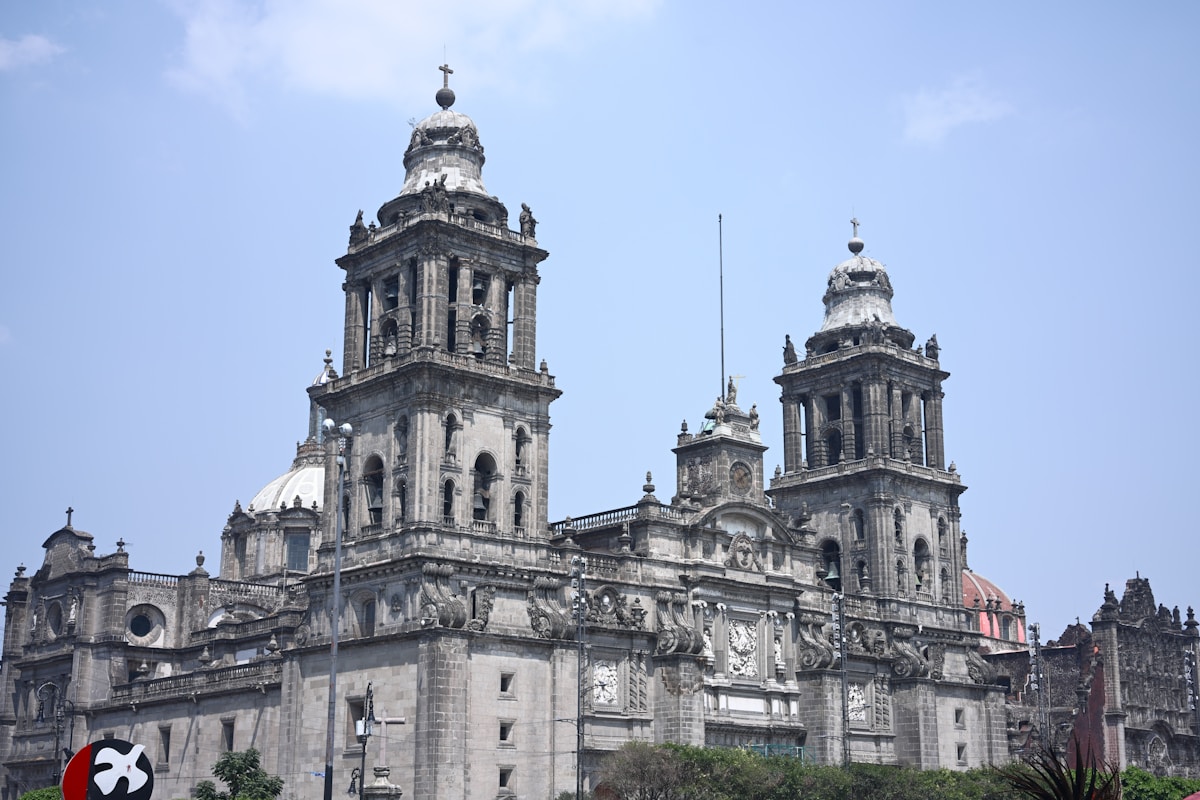
Metropolitan Cathedral - the largest cathedral in the Americas, built over 250 years starting in 1573. Free entry. The interior has 14 chapels and a baroque altar. Note the building’s visible tilt - it sinks slowly into the soft lakebed beneath.
Coyoacán - the neighbourhood around the Frida Kahlo museum. The main plaza (Jardín Centenario) and surrounding streets are calm and lined with bookshops and cafes. The Sunday artisan market sells ceramics, textiles, and jewellery - arrive before 11 am for the best selection.
Roma Norte and Condesa - tree-lined streets, Art Deco apartment buildings, independent cafes and restaurants. The cultural centre of the city’s creative class. Walk the circuit from Parque México through Condesa into Roma Norte along Álvaro Obregón for the best sense of the area.
Archaeological sites
Teotihuacán - the city of pyramids 50 km northeast. Direct buses leave every 15 minutes from Terminal Norte (approximately MXN $60–70 each way, 45-minute journey), or book a guided Teotihuacan tour from Mexico City that includes transport and an archaeologist guide - the context on the murals, the Avenue of the Dead, and the temple alignments is hard to get on your own. Entry costs approximately MXN $100 as of 2026. The Pyramid of the Sun (65 m high, climbable), the Pyramid of the Moon, the Avenue of the Dead, and the Temple of Quetzalcóatl (the feathered serpent carvings are the site’s finest detail). Arrive at opening (9 am) - by midday the heat and crowds are intense. Allow 3–4 hours. Bring water, sunscreen, and a hat - there is almost no shade on site.
Zona Arqueológica de Tlatelolco - in the middle of the city, below the Plaza de las Tres Culturas. Three layers of Mexican history visible from one spot: pre-Columbian pyramid bases, a colonial church built from pyramid stones, and 1960s social housing. The plaza was the site of the 1968 student massacre. Free entry. Metro Tlatelolco (Line 3).
Markets
Mercado de la Merced - the largest traditional market in the city, a sprawling maze of stalls. Not tourist-oriented: real fruit, vegetables, chillies, spices, herbs, and meat. The surrounding streets have excellent budget fondas serving comida corrida (set lunch, approximately MXN $60–80) from noon onwards.
Mercado de Medellín - a smaller market in Roma, good for Caribbean, Central American, and Colombian ingredients. The food court section has stalls serving Cuban sandwiches, empanadas, and fresh juice (approximately MXN $30–60 per item). The taco section is worth a stop.
Mercado de Artesanías de la Ciudadela - the main crafts market in the city. Alebrijes (painted wooden creatures), Oaxacan black pottery, embroidered textiles, and silver. Better prices and more authentic selection than the tourist shops around the Zócalo. Bargaining is expected - start at 60–70% of the asking price.
Mercado San Juan - in the Centro, a covered market known for international and gourmet ingredients (imported cheeses, exotic meats, seafood). Some stalls do prepared food - the ceviche and fresh oyster stands are good.
Day trips
Xochimilco - take the Metro to Tasqueña (Line 2), then the Tren Ligero to Xochimilco station. Rent a trajinera (flat-bottomed boat) to navigate the ancient canal network - boats hold 12–15 people and cost approximately MXN $500–800 per hour for the whole boat, so splitting with a group brings the price down. Sunday mornings are most lively, with food vendors pulling alongside and mariachi boats offering songs. The Isla de las Muñecas (Island of the Dolls), deeper in the canal system, is a genuinely unsettling side trip - arrange it with your boat driver for an extra fee.
Tepoztlán - 90 minutes south by bus from Terminal Taxqueña (approximately MXN $80–100 each way). A colonial village below a clifftop pyramid (Tepozteco) reached by a steep 2 km hike (allow 40–60 minutes up). Entry to the archaeological zone costs approximately MXN $90. The Sunday market in the village centre is one of the best artisan markets within day-trip reach of CDMX - handmade ice cream, herbal remedies, and local crafts.
Puebla - two hours east by ADO bus from the TAPO terminal (approximately MXN $250–350 each way, departures every 20 minutes). A colonial UNESCO city with distinctive Talavera tile architecture, excellent mole cuisine, and the Amparo Museum. Worth a full day or an overnight.
More Mexico City Guides
- Back to Mexico City Guide
- Best Cafes to Work From in Mexico City
- Condesa Neighbourhood Guide in Mexico City
- Coyoacán Neighbourhood Guide in Mexico City
- Day Trips in Mexico City
- Food to Try in Mexico City
- Polanco Neighbourhood Guide in Mexico City
- Roma Neighbourhood Guide in Mexico City
- Where to Stay in Mexico City
Search hotels in Mexico City on Booking.com