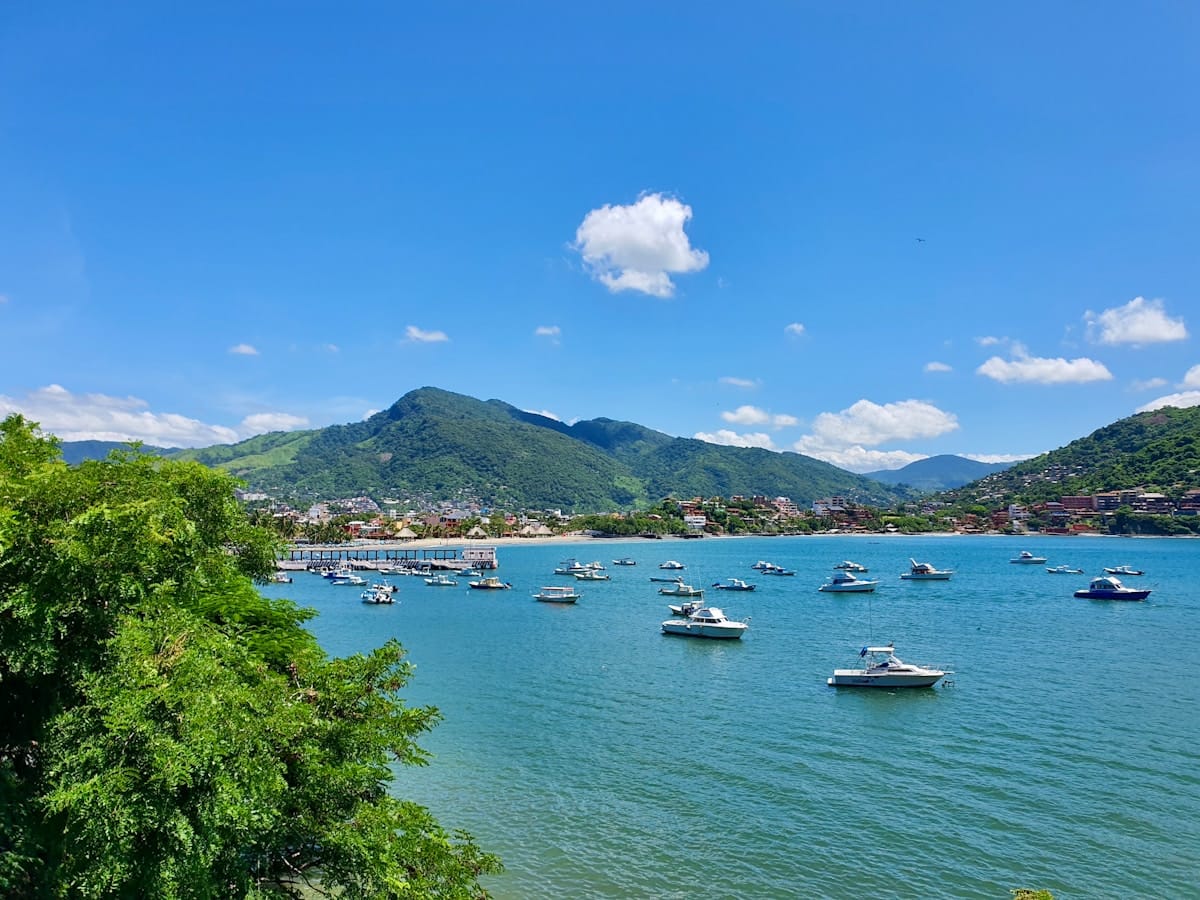
Zihuatanejo’s sheltered bay and low-key fishing town character make it one of Mexico’s most pleasant Pacific bases. The region immediately surrounding it holds a lagoon village that rivals anything in the Yucatán for natural beauty, a cluster of surf beaches south toward Acapulco, and Ixtapa’s resort strip just 15 minutes away for days when a pool bar and calmer water are preferable to the bay’s fishing boats.
Top Tours at a Glance
Here’s a quick comparison of top-rated guided tours on GetYourGuide:
| Tour | Duration | Price (from) | Group Size | Highlights |
|---|---|---|---|---|
| Ixtapa Resorts + Isla Ixtapa Day Trip | Full day | from $50/person | Group | Butterfly beach, snorkel, resort strip, iguana island |
| Petatlán Colonial Town Day Trip | Half day | from $40/person | Group | Craft market, gold jewellery, riverside church |
| Troncones Beach — Surf and Yoga Day | Full day | from $75/person | Small group | Quiet beach, beginner surf lesson, lunch |
Browse all Zihuatanejo tours → GetYourGuide
Quick comparison
| Day Trip | Distance | Transport (each way) | Entry/Cost | Time Needed |
|---|---|---|---|---|
| Ixtapa | 6 km | Microbus ~MXN $15 | Free (beach clubs extra) | Half day |
| Barra de Potosí | 25 km | Colectivo ~MXN $30 | Free | Half–full day |
| Playa Blanca | 30 km | Car or taxi ~MXN $350 return | Free | Half day |
| Petatlán | 48 km | Colectivo ~MXN $40 | Free | Half day |
| Palma Sola petroglyphs | 18 km | Car or taxi ~MXN $200 | Free | Half day |
| Whale watching | Bay (boat) | Tour ~MXN $700 | Included | Half day |
| Troncones | 30 km north | Car ~30 min | Free | Half–full day |
All costs approximate, as of 2026.
Ixtapa - 6 km northwest, 15 minutes
Ixtapa was purpose-built as a resort town in the 1970s on what was then empty Pacific coastline north of Zihuatanejo. The contrast between the two is sharp: Zihuatanejo retains a working fishing town feel with narrow streets and family restaurants; Ixtapa has international hotel chains, a golf course, and a shopping mall.
Playa Palmar (Ixtapa’s main beach, in front of the hotel strip) is a long crescent of sand with gentler surf than the open ocean beaches south of Zihuatanejo. The beach clubs attached to the main hotels sell day passes (approximately MXN $200–400 including a sun bed and drink credit). Ixtapa Island (Isla Ixtapa), just offshore, has four coves with calm water and snorkelling - water taxis from the Ixtapa pier (approximately MXN $80 return, 10 minutes).
Getting there: microbus from Zihuatanejo market (approximately MXN $10–15, every 15 minutes) or taxi (MXN $60–80).
Barra de Potosí - 25 km south, 35 minutes
The single best natural day trip from Zihuatanejo. Barra de Potosí is a small fishing village on a freshwater lagoon where a narrow sandbar separates still, bird-filled water from the open Pacific beach. The ambiance is completely uncommercialised - a few seafood palapa restaurants, fishing boats, and a lagoon bordered by mangroves.
Bird-watching on the lagoon is the main draw - over 120 species recorded, including roseate spoonbills, boat-billed herons, wood storks, and dozens of migratory warblers in winter. Lanchas cross the lagoon to the Pacific beach side (approximately MXN $20 return). The Pacific beach at Barra de Potosí has powerful surf and is not generally swimmable - the lagoon’s calm channel near the sandbar is the swimming spot.
Fresh seafood at the village restaurants is excellent: whole fried fish (approximately MXN $150–200), ceviche de camarón (MXN $80–120), and grilled lobster when in season (approximately MXN $400–600). Restaurant La Colmena is one of the longest-established and most reliable.
Getting there: colectivo from Zihuatanejo market toward Petatlán - alight at the Barra de Potosí turnoff (approximately MXN $25–30, 40 minutes) then walk 1 km to the village. Car (30 minutes on Highway 200 then 3 km on a good dirt road). Taxi from Zihuatanejo approximately MXN $200–300 each way.
Troncones - 30 km north, 30 minutes
A small surf and yoga community north of Zihuatanejo that stays quiet even during high season. Playa Troncones is a long beach with consistent break that attracts intermediate surfers. The beach itself is calm at the southern end near the village - swimmable year-round. A handful of boutique guesthouses and surf camps have created a small expat community here.
Majahua (a smaller cove 5 km further north from Troncones) has even more protected water. Both beaches are accessible by car on a good road off Highway 200.
Getting there: car (30 minutes north on Highway 200, then 3 km on the access road). No direct colectivo - taxi from Zihuatanejo approximately MXN $200–300 each way.
Palma Sola petroglyphs - 18 km northeast, 20 minutes
One of the least-publicised archaeological sites on the Pacific coast. Palma Sola has over 600 ancient petroglyphs carved into smooth river boulders - human figures, animals, abstract spirals, and astronomical symbols. The site is in a dry riverbed in the hills above the coast and is entirely free, unstaffed, and requires a short walk from the road.
The carvings date roughly to 1500 BC–800 AD and were likely associated with water ritual in a region where the dry season is severe. Getting there: car or taxi (approximately MXN $150–200 return with wait time from Zihuatanejo). Take the turnoff toward Palma Sola village on Highway 200 northeast.
Petatlán - 48 km southeast, 45 minutes
A modest agricultural town most notable for the Santuario de San Francisco de Asís - a shrine containing what is claimed to be a miraculous statue of Christ that pilgrims visit throughout the year, particularly during the feast of San Francisco (October 4). The surrounding market has good regional produce and traditional crafts from inland Guerrero communities.
Petatlán is rarely on the tourist circuit but gives a grounded view of everyday Guerrero life away from the resort zone. Colectivos from Zihuatanejo market run frequently to Petatlán (approximately MXN $35–45, 1 hour). Allow 2–3 hours for the market and sanctuary.
Playa Blanca - 30 km southeast, 35 minutes
A wild, undeveloped beach of white sand and coconut palms, approximately 30 km southeast on the Guerrero coast. No facilities, no crowds, and strong surf - this is swimming for confident ocean swimmers only. The coconut palm plantations bordering the beach give the approach road a tropical appeal.
Getting there requires a car or taxi (approximately MXN $300–400 return from Zihuatanejo, negotiate for the driver to wait). The turnoff from Highway 200 is approximately 25 km southeast of Zihuatanejo; the dirt road continues 5 km to the beach. Bring everything you need for the day.
Whale watching - November to March
Humpback whales pass the Guerrero coast during winter months, and Zihuatanejo’s bay operators offer morning boat trips (approximately MXN $600–900 per person, 3–4 hours). The boats leave from the Muelle Municipal (municipal pier) early morning. Cooperative de Lancheros at the pier can arrange tours on the day or the evening before. Dolphins are visible year-round from the pier and from water taxis crossing the bay.
Planning tips
- Barra de Potosí first. It is the most unique experience accessible from Zihuatanejo and the combination of lagoon, birds, and seafood lunch is hard to beat.
- Ixtapa as a half-day. Go in the morning when the beach is quieter, eat lunch at one of the hotel beach clubs, and take the microbus back to Zihuatanejo for the afternoon.
- Rent a car for anything south of Zihuatanejo - Playa Blanca, Barra de Potosí, and the coast road require flexibility that buses and colectivos cannot provide.
- November–February is the best overall time for boat-based day trips - calmer seas, whale watching possible, and the bay water is clear after the rainy season.
Plan your trip: car hire in Mexico · tours in Mexico · travel insurance.
More Zihuatanejo Guides
Search hotels in Zihuatanejo on Booking.com