Southern Mexico - Oaxaca and Chiapas - is a different country from the beach resorts and the capital city. Indigenous cultures with continuous traditions stretching back millennia, Zapotec and Maya ruins in highland settings, and food traditions that predate the Spanish conquest. This 10-day route covers the essential stops and involves some long overland stretches - it is best for travellers comfortable with slower, more engaged travel.
Route overview
| Days | Destination | Nights | Transport from previous |
|---|---|---|---|
| 1–4 | Oaxaca City | 4 | Fly from CDMX (1 hour) |
| 5–7 | San Cristóbal de las Casas | 3 | Fly to Tuxtla (1 hour) + bus (1.5 hours) |
| 8 | Transit to Palenque | 1 | Bus 5–6 hours (~MXN $350) |
| 9 | Palenque ruins | 1 | - |
| 10 | Departure | 0 | Fly from Villahermosa or continue east |
Internal flights: Oaxaca–Tuxtla approximately MXN $1,000–2,000 (or overnight bus approximately MXN $700 for budget travellers). Return from Villahermosa approximately MXN $800–1,500 to CDMX.
Days 1–4: Oaxaca City
Fly into Oaxaca from Mexico City (1 hour, several daily flights on Aeromexico, Volaris, VivaAerobus, approximately MXN $800–1,500 booked in advance). Taxi from the airport approximately MXN $200. Base in the historic centre - everything is walkable.
Day 1: Arrival and the centre
Walk the Andador Turístico (the pedestrian street from Santo Domingo to the Zócalo). Visit the Mercado 20 de Noviembre - the covered market with its famous pasillo de humo (smoke corridor) where vendors grill tasajo, cecina, and chorizo over charcoal. A plate with handmade tortillas and salsa approximately MXN $80–120. Continue to Mercado Benito Juárez for mole pastes, chocolate, and chapulines (grasshoppers - try them on a mezcal).
Evening: mezcal tasting at In Situ (flights approximately MXN $150–300, the most knowledgeable mezcal bar in the city), Los Amantes (on Alcalá), or Mezcaloteca (guided educational tastings approximately MXN $250 - advance booking recommended).
Search hotels in Oaxaca on Booking.com
Day 2: Monte Albán and Santo Domingo
Morning at Monte Albán - buses depart from Calle Mina near the second-class terminal every 30 minutes from 8 am (approximately MXN $70 return, 30-minute ride), or join a guided tour from Oaxaca City that combines Monte Alban with a mezcal distillery visit on the return. The Zapotec capital built on a levelled hilltop above the valley: the Gran Plaza, the Danzantes carved stone slabs (depicting captive rulers - among the earliest carved narratives in Mesoamerica), the astronomical Observatory (Building J), the Ball Court, and 360-degree views over the Oaxaca valley. Entry approximately MXN $90. Allow 2–3 hours.
Return by noon. Afternoon at the Santo Domingo de Guzmán complex: the church (free entry - one of the most ornate Baroque interiors in Mexico, covered in gilded stucco), the Museo de las Culturas de Oaxaca inside the former monastery (MXN $85 - the Mixtec gold treasures from Tomb 7 at Monte Albán are the centrepiece), and the Ethnobotanical Garden (guided tours only, approximately MXN $100 - check the schedule at the entrance).
Dinner: mole negro at Los Danzantes (mains approximately MXN $200–350) - the definitive Oaxacan dining experience. Or La Biznaga (mains approximately MXN $150–250) for a less formal setting.
Day 3: Tlacolula Valley day trip
Full day through the valley east of Oaxaca City. By colectivo (approximately MXN $20–40 per leg from the second-class terminal) or hired taxi (approximately MXN $800–1,200 for the full day loop):
- Teotitlán del Valle - the weaving village where families produce Zapotec-design rugs on floor looms. Watch the process (natural dyes from cochineal, indigo, and pomegranate), and buy directly from weavers. Rugs from approximately MXN $500 for small pieces to MXN $5,000+ for large tapestries
- Santiago Matatlán - the self-proclaimed “world capital of mezcal.” Visit small-batch palenques (distilleries) - most offer free tastings. The production process (roasting agave in pit ovens, stone-grinding, fermenting, distilling in copper) is visible at family operations
- Mitla - Zapotec ruins with the most intricate geometric stone mosaics in Mesoamerica. Thousands of individually cut stone pieces fitted without mortar into interlocking patterns on the palace walls. Entry approximately MXN $75. Allow 1 hour
- Hierve el Agua - petrified mineral waterfalls on a clifftop 2,000 m above the valley. Two cascading mineral formations resemble frozen waterfalls; natural infinity pools at the top have views across the sierra. Entry approximately MXN $25. The drive up is steep and winding - colectivos run from Mitla (approximately MXN $50, 45 minutes)
Day 4: Free day - cooking, crafts, or deeper exploration
Options depending on your interests:
- Cooking class: Half-day classes including a market visit to buy ingredients, then hands-on preparation of mole, tlayudas, and other Oaxacan dishes. La Casa de los Sabores (approximately MXN $1,500–2,000) and Seasons of my Heart (approximately MXN $2,000–2,500) are well-established
- Craft villages: San Bartolo Coyotepec (black pottery - watch the burnishing technique), San Martín Tilcajete (carved and painted alebrijes), and Atzompa (green-glazed ceramics). Colectivos from the second-class terminal (approximately MXN $15–30 each way)
- Textile Museum (free, on Hidalgo) - excellent rotating exhibitions on Oaxacan textile traditions
- Coyoacán market shopping - buy mole paste (approximately MXN $50–150 per portion), chocolate (Mayordomo brand approximately MXN $40–80), and vanilla
Where to stay in Oaxaca:
- Budget: Casa Angel Youth Hostel (dorms approximately MXN $250), Hostal de las Américas (dorms approximately MXN $280, private rooms approximately MXN $500)
- Mid-range: Hotel Casa de Sierra Azul (approximately MXN $1,200–1,800), Hotel Parador de Alcalá (approximately MXN $1,500–2,200)
- Boutique: Casa Oaxaca (approximately MXN $3,500–5,000), Hotel Quinta Real Oaxaca (approximately MXN $3,000–4,500)
Where to eat:
- Breakfast: Boulenc (bakery and breakfast, approximately MXN $100–180) or market fondas (approximately MXN $50–80)
- Lunch: Mercado 20 de Noviembre smoke corridor (approximately MXN $80–120) or comida corrida at Mercado de Abastos (approximately MXN $60–80)
- Dinner: Los Danzantes (approximately MXN $200–350), Criollo (tasting menu approximately MXN $1,200–1,800 for a splurge), Tlayudas stands on Calle de las Casas (approximately MXN $40–80)
Days 5–7: San Cristóbal de las Casas
Fly Oaxaca → Tuxtla Gutiérrez (1 hour, approximately MXN $1,000–2,000), then ADO bus or colectivo to San Cristóbal (1.5 hours, approximately MXN $60–100). Budget alternative: overnight ADO bus from Oaxaca (10 hours, approximately MXN $700–1,000) saves the flight cost and a night’s accommodation.
San Cristóbal sits at 2,200 m - noticeably cooler than Oaxaca (bring a jacket for evenings). The town is compact and entirely walkable.
Day 5: Arrive and explore the centre
Walk Real de Guadalupe (the traveller street - cafés, bookshops, tour operators). The Catedral de San Cristóbal on the main plaza. Santo Domingo church (1547 - the most elaborate Baroque facade in Chiapas; the textile and amber market outside). Coffee at Cafeología (Chiapas single-origin, approximately MXN $50–80) or Café Museo Café (approximately MXN $40–60, with exhibits on Chiapas coffee production). Evening: try pox (pronounced “posh” - the Tzotzil Maya sugarcane spirit) at La Viña de Bacco or Poxería.
Day 6: Chamula and Zinacantán villages
The most important day trip from San Cristóbal - accessible independently by colectivo or with a guide.
San Juan Chamula (colectivo from Mercado de Abastos, approximately MXN $20, 20 minutes): The church of San Juan Chamula operates outside the Catholic hierarchy. The interior: pine needles cover the floor, hundreds of candles line the walls, iloles (Tzotzil healers) perform rituals with incense, live chickens, eggs, pox, and Coca-Cola - Tzotzil cosmology overlaid on Catholic saints. Photography inside is strictly forbidden - enforcement is serious. Entry approximately MXN $30. Sunday morning is market day - surrounding communities trade produce, live animals, and textiles.
Zinacantán (colectivo from Chamula, approximately MXN $15, 10 minutes): A textile-producing community known for woven and embroidered fabrics in pinks, purples, and reds. Women’s cooperatives sell at the church. Home visits with backstrap loom demonstrations approximately MXN $20–30 (ask at the church entrance). Textiles from approximately MXN $100 for small woven pieces to MXN $1,500+ for elaborate huipiles.
Guided vs independent: The trip is straightforward independently by colectivo. Guided tours from San Cristóbal (approximately MXN $300–500 per person, half day) add significant value - the religious and cultural significance of the Chamula church rituals is not self-evident without explanation.
Day 7: Cañón del Sumidero
The dramatic canyon of the Grijalva River, approximately 80 km northwest via Tuxtla Gutiérrez.
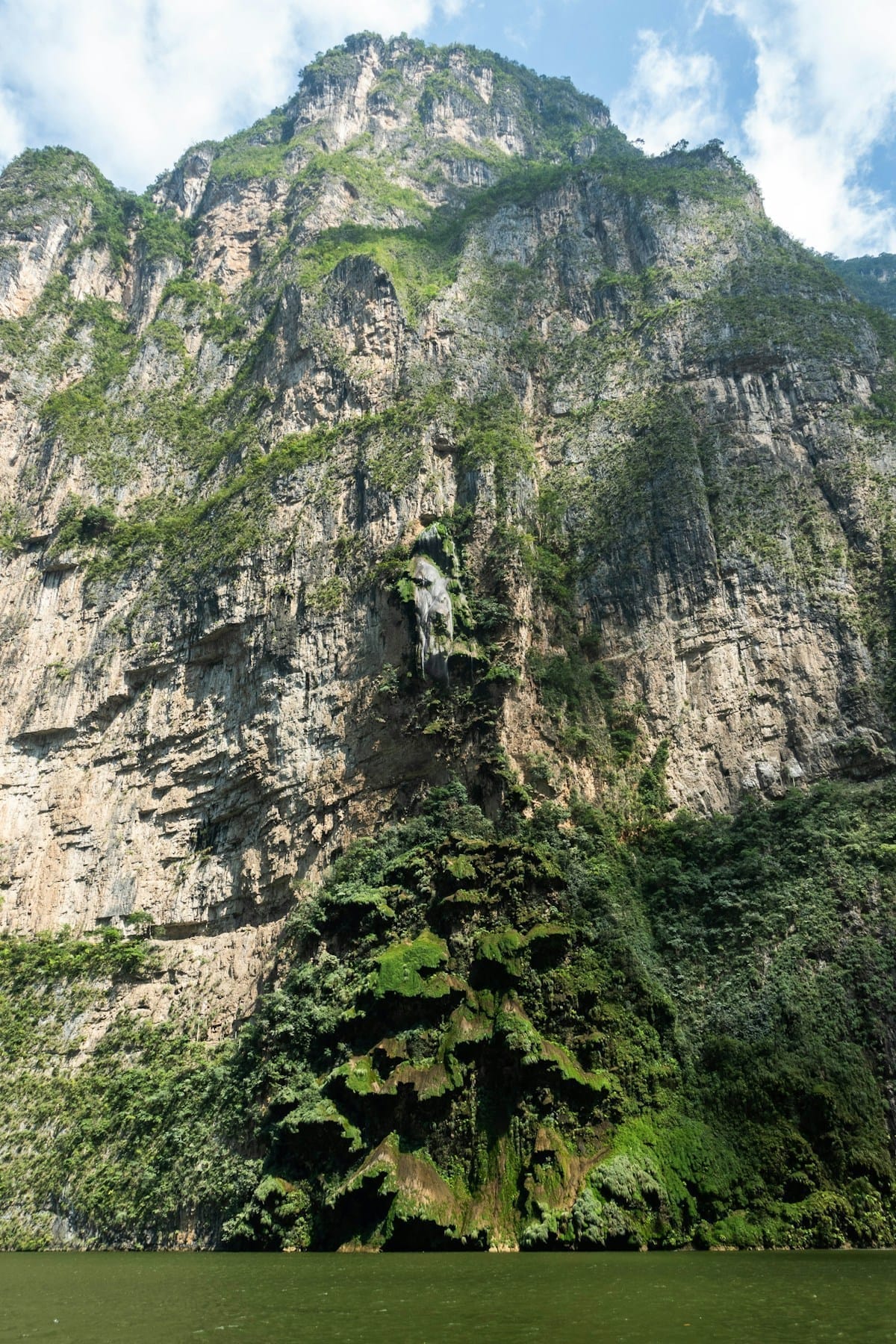
Boat tour from Chiapa de Corzo (2 hours, approximately MXN $250 per person): the canyon walls rise 1,000 m on either side - the scale is difficult to comprehend until you are on the water. Watch for crocodiles (commonly sunning on the banks), spider monkeys, herons, and the “Christmas tree” moss formation on the canyon wall.
Chiapa de Corzo is worth an hour before or after the boat - the main plaza has the La Pila fountain (16th-century Mudéjar brick, unique in Mexico) and restaurants serving Chiapas cuisine.
Options: Organised tour from San Cristóbal approximately MXN $400–600 per person (bus + boat, full day). Independent: colectivo to Chiapa de Corzo (approximately MXN $60, 1.5 hours), boat at the dock (approximately MXN $200–250 per person - boats depart when they have 10–12 passengers).
Where to stay in San Cristóbal:
- Budget: Posada del Abuelito (approximately MXN $350), Rossco Backpackers (dorms approximately MXN $200)
- Mid-range: Casa Felipe Flores (approximately MXN $1,500–1,800), Hotel Casa Mexicana (approximately MXN $1,200–1,600)
- Boutique: Hotel Bo (approximately MXN $2,500–3,500)
Search hotels in San Cristóbal on Booking.com
Where to eat:
- TierrAdentro (contemporary Chiapas cuisine, mains approximately MXN $120–200)
- El Caldero (cocido chiapaneco - Chiapas beef stew, approximately MXN $100–140)
- Mercado Municipal (tamales de chipilín approximately MXN $15–30, comida corrida approximately MXN $50–70)
- La Casa del Pan (vegetarian/organic, mains approximately MXN $80–140)
Day 8: Transit to Palenque
ADO bus from San Cristóbal to Palenque (5–6 hours via Ocosingo - the more scenic route through highland Chiapas, or 7 hours via the highway, approximately MXN $300–400). Depart in the morning, arrive early afternoon. The descent from 2,200 m to near sea level is dramatic - the temperature and humidity increase with every hour.
Settle in to your accommodation. Walk Palenque town. Dinner at El Huachinango Feliz (seafood and regional cuisine, mains approximately MXN $80–150) or at El Panchán - the backpacker jungle camp 15 minutes from the ruins, where Don Mucho’s serves cheap food (approximately MXN $60–120) and the evening atmosphere includes live music and fire performances.
Where to stay: Budget: El Panchán jungle cabañas (approximately MXN $250–400, basic but atmospheric) | Mid-range: Chan-Kah Resort Village (approximately MXN $1,000–1,500, pool, jungle setting) | Boutique: Quinta Chanabnal (approximately MXN $1,800–2,500)
Search hotels in Palenque on Booking.com
Day 9: Palenque archaeological zone
The site opens at 8 am - arrive early as the jungle heat builds rapidly by mid-morning. Entry approximately MXN $90. Allow 3–4 hours.
Templo de las Inscripciones: Pakal the Great ruled Palenque for 68 years (615–683 AD). His tomb, discovered in 1952, contained the most elaborate royal burial ever found in the Maya world - the carved sarcophagus lid, depicting Pakal descending into the underworld, is one of the masterpieces of Maya art. The temple is not currently open for climbing, but the exterior is imposing.
The Palace: The central complex with courtyards, galleries, and the distinctive four-storey observation tower (the only one of its kind in Maya architecture). Carved panels and stucco reliefs throughout.
Grupo de las Cruces: Three temples - the Temple of the Cross, Temple of the Foliated Cross, and Temple of the Sun - each containing carved panels depicting cosmic mythology and royal ritual. The interior panels are among the finest examples of Maya relief sculpture.
Jungle path: A trail from the main site through the forest to additional structures. Howler monkeys (you will hear them before you see them), toucans, blue morpho butterflies, and the atmosphere of ruins emerging from jungle.
On-site museum: Houses the finest carved panels and artefacts recovered from the site - visit after the ruins for context. Book a guided Palenque tour if you want expert interpretation of the Maya mythology and royal iconography throughout the site.
Afternoon: Misol-Há waterfall (35 km southwest, approximately MXN $40 entry - a 35 m cascade into a turquoise pool with a path behind the curtain of water). Colectivo or taxi approximately MXN $100–200 each way. Alternatively, Roberto Barrios falls (approximately MXN $50, less visited, natural swimming pools - approximately MXN $150–250 by taxi each way).
Day 10: Departure
Three options from Palenque:
- Fly from Villahermosa: Bus to Villahermosa (1.5 hours, approximately MXN $200). Flights to CDMX approximately MXN $800–1,500. The most time-efficient exit
- Continue to the Yucatán: Bus from Palenque to Mérida or Campeche (8–10 hours, approximately MXN $600–900 via ADO) to continue into the Yucatán Peninsula circuit
- Waterfalls combo + drop-off: Some tour operators run a one-way combo: Agua Azul + Misol-Há + Palenque drop-off - covering the waterfalls and delivering you to Palenque (or vice versa). Check operators on Real de Guadalupe in San Cristóbal
Budget estimate (10 days)
| Category | Budget | Mid-range | Boutique |
|---|---|---|---|
| Accommodation (9 nights) | MXN $2,700 (~$150 USD) | MXN $12,000 (~$665 USD) | MXN $27,000 (~$1,500 USD) |
| Food (10 days) | MXN $2,500 (~$140 USD) | MXN $5,000 (~$280 USD) | MXN $9,000 (~$500 USD) |
| Internal flight (1: Oaxaca–Tuxtla) | MXN $1,500 (~$85 USD) | MXN $1,500 (~$85 USD) | MXN $2,000 (~$110 USD) |
| Buses | MXN $1,000 (~$55 USD) | MXN $1,000 (~$55 USD) | MXN $1,000 (~$55 USD) |
| Activities + entry fees | MXN $1,500 (~$85 USD) | MXN $3,500 (~$195 USD) | MXN $6,000 (~$335 USD) |
| Total per person |
All prices approximate, per person, as of 2026. Excludes international flights and return from Palenque/Villahermosa.
Plan your trip: tours in Oaxaca · flights to Mexico · airport transfers · car hire · travel insurance · Mexico eSIM.
Related City Guides
- Oaxaca City Travel Guide
- Palenque Travel Guide
- Mexico City Travel Guide
- San Cristóbal de las Casas Travel Guide
- Monte Albán Ruins - the Zapotec capital above Oaxaca City, essential on day 1–2
- Palenque Ruins - the jungle Maya site at the route’s end
- Oaxacan Mole Guide - the food highlight of the Oaxaca segment
- Oaxaca Mezcal Tours - palenque visits to include in the Oaxaca leg
Ready to Plan Your Trip?
See our itineraries for inspiration:
- Mexico City To Oaxaca - the Mexico City to Oaxaca route
- 1 Week Mexico - one week covering Mexico City, Oaxaca and the beach
- 2 Weeks Mexico - the two-week Mexico circuit
Book Your Trip
- Flights - Find the best fares to Mexico
- Travel Insurance - Get covered before you go
- eSIM - Stay connected from landing
- Airport Transfers - Pre-book your transfer from Mexico City or Cancun
- Car Rental - Compare prices across providers
- Tours & Activities - Browse Mexico tours on GetYourGuide