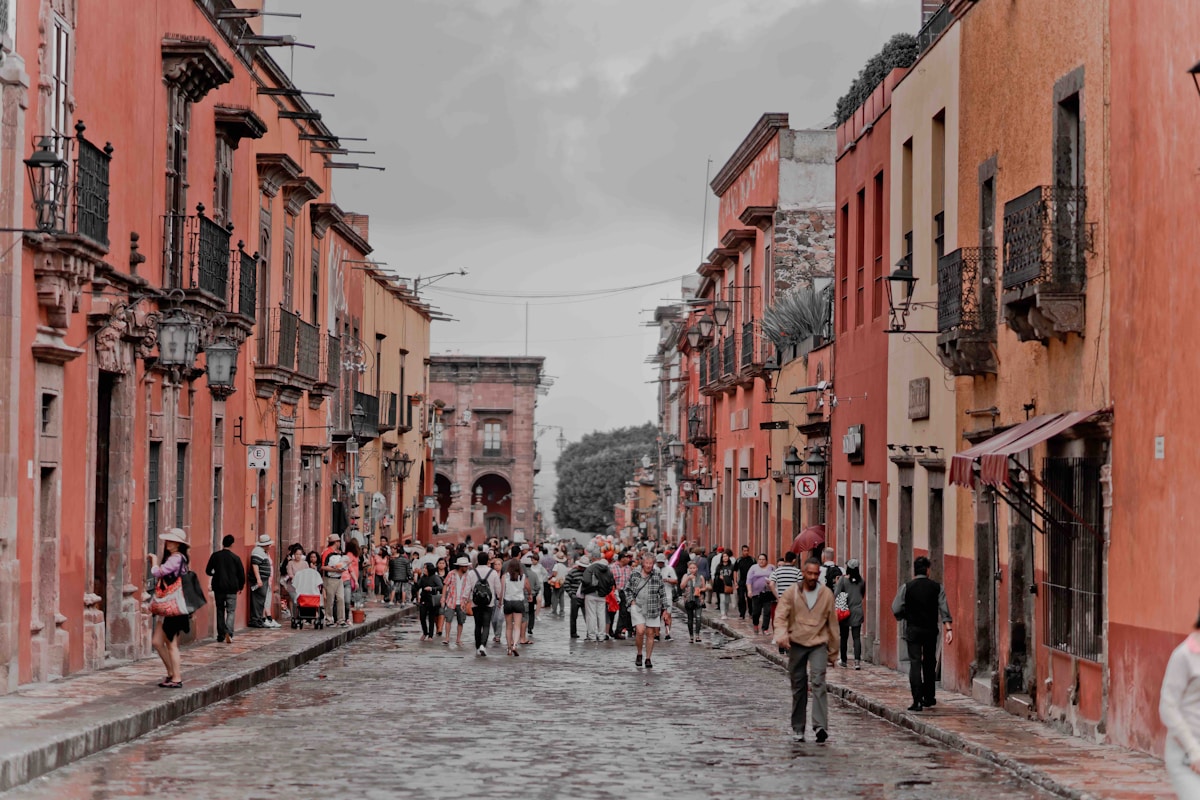
February is dry and sunny across Mexico, with Cancún at 29°C by day, Mexico City at 23°C with the coldest nights of the year (around 7°C), and almost no rain on the Pacific coast. It adds Carnaval, one of the country’s most exuberant festival seasons, while Monarch butterflies are at their peak and grey whales in Baja California are at their most interactive.
Mexico City Nights Below 7°C and Caribbean Coast at Its Driest
| City | Avg High °C | Avg Low °C | Rainfall mm | Humidity | Notes |
|---|---|---|---|---|---|
| Mexico City | 23 | 7 | ~5 | Low | Coldest nights of the year, warm days |
| Cancún | 29 | 20 | ~55 | Low | Dry season, excellent beach conditions |
| Guadalajara | 27 | 10 | ~8 | Low | Dry, warm afternoons |
| Oaxaca | 27 | 10 | ~5 | Low | One of the best months for the city |
| Mérida | 30 | 18 | ~25 | Low | Warm, best cenote visibility |
| Puerto Vallarta | 28 | 19 | ~5 | Low | Peak dry season on the Pacific |
| San Cristóbal | 18 | 5 | ~10 | Low | Cool but often sunny by midday |
| La Paz (Baja) | 25 | 12 | ~10 | Low | Peak grey whale season |
Regional variation note: February is Mexico’s driest month across almost all regions. Mexico City (2,240 m) sees less than 10 mm - virtually no rain - while Cancún at sea level still receives around 55 mm from residual northeast trade winds. Oaxaca (1,550 m) is drier still at under 10 mm. The altitude gap between highland cities and the Caribbean coast is most pronounced in February, with overnight lows around 7°C in Mexico City versus 20°C in Cancún.
Dry season holds across the Caribbean coast, Pacific, and central highlands. February is often the coldest month in highland areas - Mexico City averages daytime highs of 22 C but nights can drop to 7-10 C, and frost is not unknown in the higher-elevation neighbourhoods. The Yucatan Peninsula and Pacific coast are warm and comfortable at 27-30 C with little rainfall. Chiapas highlands (San Cristobal) remain cool at 14-20 C during the day.
Cenote visibility is at its best during this dry period. The underground rivers feeding the cenotes carry less sediment when there has been no recent rainfall, making February excellent for snorkelling and diving in cenotes like Dos Ojos, Gran Cenote, and Cenote Azul.
Mazatlán and Veracruz Carnaval: Six Nights of Floats, Brass Bands, and Fireworks
Carnaval falls in the week before Ash Wednesday, with the exact dates shifting between February and early March depending on the year. Two cities dominate:
Mazatlan: One of the largest Carnavals in Mexico and the third largest in the world by some measures. The Malecon fills with floats, brass bands, queen coronations, and fireworks over six days. The city’s population effectively doubles. Accommodation books out months in advance - reserve by November for the best options. Expect significant price surcharges at hotels and restaurants.
Veracruz: The most traditional Carnaval in Mexico, with deep Caribbean and Afro-Mexican musical roots. The port city’s proximity to Cuba historically brought Caribbean rhythms that remain central to the celebration. Son jarocho music and comparsas (dance troupes) fill the streets.
Merida and Ensenada also have significant Carnaval celebrations, though smaller in scale. Merida’s Carnaval has a distinct Yucatecan character with jarana dance and traditional dress.
Día de la Candelaria and the Tlacotalpan Bull Run
This religious holiday marks the end of the Christmas season. Whoever found the figurine in the rosca de reyes bread on 6 January is expected to host a tamale party on this day. Churches across Mexico hold candle-lit ceremonies and blessing of seeds. In Tlacotalpan (Veracruz), the Candelaria celebrations are particularly large, with a running of the bulls through the town streets and a procession of the Virgin along the river.
El Rosario and Sierra Chincua: Peak Monarch Butterfly Season
Peak season in the Michoacan sanctuaries (El Rosario and Sierra Chincua). February is typically the clearest month for seeing the butterfly colonies - the trees are covered in a dense orange blanket of millions of butterflies, and on warm afternoons they take flight in swarms that fill the sky. The sanctuaries sit at approximately 3,000 m altitude - mornings are cold (often below 5 C), and the hike up to the colonies takes 30-60 minutes on steep trails. Local guides are available at the sanctuary entrances and are worth hiring. Our monarch butterfly migration guide covers sanctuary access and guides.
San Ignacio Lagoon Grey Whales: The Friendliest Wildlife Encounter in Baja
Grey whales are at their peak in Baja California Sur’s lagoons. San Ignacio Lagoon and Magdalena Bay offer the most intimate encounters - the whales are famously “friendly” here, approaching small pangas and allowing visitors to touch them. This is one of the world’s premier wildlife experiences, and February is the best month for it. Our whale watching in Baja California guide covers operators and lagoon access.
Humpback whales continue in Banderas Bay off Puerto Vallarta through February. Sighting rates remain high, with mothers and calves increasingly visible.
Cancún Hotel Zone Party Atmosphere Arrives in the Final Week
The last week of February sees early spring break arrivals in Cancun, particularly from US universities. The Hotel Zone takes on a party atmosphere that intensifies through March. If this is not what you are looking for, travel in the first three weeks of February or choose a Caribbean base outside the Hotel Zone - Isla Mujeres, Holbox, or Bacalar are all alternatives with a different pace. Peak-week buyers often choose all-inclusive resorts in Cancún, and you can compare all-inclusive rates.
San Miguel de Allende and Guanajuato Peak for Valentine’s Weekend
Mexican Valentine’s Day (Dia de San Valentin) is also celebrated as Dia del Amor y la Amistad (Day of Love and Friendship), broadening the occasion beyond romantic couples. Restaurants in tourist areas add set menus and prices reflect demand. Some colonial cities - San Miguel de Allende, Guanajuato - are particularly popular for Valentine’s weekends and hotels charge accordingly.
What to Pack for Mexico in February
- Light clothing for coastal areas, warm layers for highland evenings
- Earplugs and patience if visiting a Carnaval city - the music runs late
- Binoculars for whale watching in Baja or butterfly viewing in Michoacan
For a closer look at the Caribbean coast this month, see our Cancún in February guide with weather, crowds and prices for the Hotel Zone.
Plan your trip: tours across Mexico · flights to Mexico · travel insurance.
Related City Guides
Plan Your Trip
Carnaval defines February - Mazatlán and Veracruz host Mexico’s biggest celebrations, with the seafront parade along Mazatlán’s Olas Altas Malecón as the visual highlight. Book Carnaval accommodation by November. Valentine’s weekend inflates Riviera Maya and Los Cabos prices; arriving after the 16th saves 20–30%. Grey whale season peaks in Baja’s San Ignacio Lagoon and Magdalena Bay, with February offering the best chance of seeing mothers and calves up close from a panga. Combine a Baja whale-watching tour with La Paz for a route that avoids the crowded Caribbean coast entirely.
Related guides we recommend: Mexico Weather in March and Mexico Weather in April.
- 1 Week Mexico - highlands and Pacific coast routing
- 2 Weeks Mexico - the full circuit
- Budget Mexico Itinerary