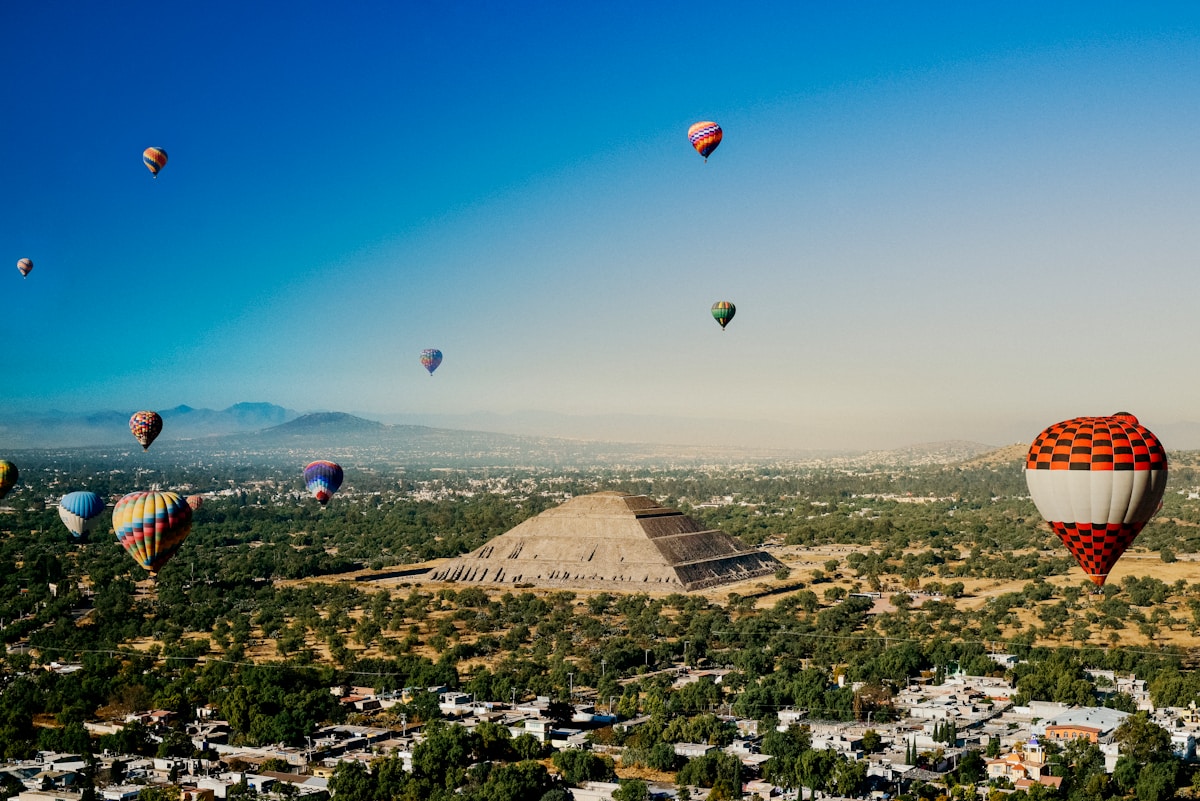
November is dry and warm across Mexico, with Cancún at 29°C, Mexico City at 22°C by day and almost no rain in the highlands. It is also one of the best months to visit: Día de Muertos at the start of the month is one of the most moving cultural events in the Americas, and prices stay below the December peak. The wildlife calendar also shifts, with whale watching and monarch butterflies beginning their seasons.
Oaxaca Cemetery Vigils and Janitzio Candlelit Boats: Día de Muertos on November 1–2
The Day of the Dead is not a Mexican Halloween. It’s a pre-Columbian celebration of the deceased, merged with Catholic All Saints’ and All Souls’ Days. Families build elaborate home altars (ofrendas) with photos, favourite foods, and marigolds for deceased relatives. Cemetery vigils on the night of 1-2 November - particularly in Oaxaca’s cemeteries and the island of Janitzio (Lake Pátzcuaro) - are deeply atmospheric. Our Day of the Dead guide explains the traditions, and Oaxaca City tours cover the cemetery vigils.
Oaxaca: the celebrations here are among the most extensive. Cemetery vigils at Xoxocotlán cemetery attract visitors from around the world. Neighbourhood comparsas (costumed parades) wind through the streets. Restaurants serve special Día de Muertos menus featuring mole negro and hot chocolate.
Pátzcuaro and Janitzio island: the candle-lit boat processions to the island cemetery and the vigils through the night are among the most photographed and moving events in the country. The lake communities maintain traditions with minimal commercial overlay.
Mexico City: the Zócalo hosts massive Day of the Dead installations and public altars. The city now runs an actual Día de Muertos parade through Paseo de la Reforma - an event that didn’t exist before the James Bond film Spectre featured a fictionalised version.
San Andrés Mixquic (near Mexico City): a smaller, more traditional celebration in a village 40 km from CDMX. The cemetery vigils are more intimate and less tourist-oriented than Oaxaca.
Caribbean Coast Clears by Mid-Month While Highlands Enter Best Dry Season Conditions
| City | Avg High °C | Avg Low °C | Rainfall mm | Humidity | Crowd Level | Best For |
|---|---|---|---|---|---|---|
| Mexico City | 22 | 9 | ~15 | Low–Moderate | Moderate (Día de Muertos) | Cultural exploration, Día de Muertos parade |
| Cancún | 29 | 21 | ~85 | Moderate | Moderate | Beach shoulder season, good value |
| Guadalajara | 26 | 10 | ~15 | Low | Low | Colonial city touring, no crowds |
| Oaxaca | 26 | 12 | ~12 | Low | High (1–2 Nov) | Día de Muertos, mezcal, food scene |
| Mérida | 30 | 18 | ~45 | Low–Moderate | Low | Yucatán ruins, cenotes, comfortable heat |
| Puerto Vallarta | 30 | 22 | ~15 | Low | Moderate | First dry weeks, whale watching from mid-Nov |
| San Cristóbal | 20 | 8 | ~40 | Low | Low | Chiapas highlands, crisp dry air |
| La Paz | 29 | 18 | ~12 | Low | Low | Baja beach, sea lion snorkelling, calm seas |
Regional variation note: November marks the clearest altitude split of the year. Mexico City (2,240 m) and Guadalajara (1,560 m) drop to around 15 mm rainfall each - effectively entering dry season - with overnight lows of 9°C and 10°C. San Cristóbal (2,100 m) is noticeably cooler still, with overnight lows around 8°C and the occasional brief shower fading by mid-month. Cancún (sea level) still receives approximately 85 mm influenced by northeast trade winds, nights staying around 21°C. Oaxaca (1,550 m) is down to around 12 mm and in its best-weather period of the year - optimal for the Día de Muertos crowds that fill the city on 1–2 November. La Paz and Puerto Vallarta are transitioning sharply from humid to dry: both are below 15 mm by late November, with calm Pacific seas and good whale-watching conditions. Mérida (sea level, Yucatán) drops to its most bearable temperatures around 30°C, finally comfortable for extended outdoor exploration.
Dry season is beginning or established across most of Mexico.
Caribbean coast: early November still has some rain, but the pace slows quickly. By mid-to-late November, conditions are excellent - warm, sunny, and far less humid than the summer months. Sargassum seaweed recedes in most years.
Mexico City: the rains have ended. Highs of 20-24°C, cool evenings. Excellent for city exploration. The air quality tends to decline as dry season sets in - worth noting for sensitive travellers.
Oaxaca: very pleasant (22-26°C), dry. One of the best months for the city and the surrounding valleys.
Pacific coast: dry season arriving. Puerto Vallarta, Sayulita, and Los Cabos transition to dry, sunny conditions. Water visibility improves for snorkelling and diving.
Humpbacks Return to Banderas Bay and Grey Whales Enter Baja Lagoons
Humpback whales arrive in Banderas Bay (Puerto Vallarta) from November, staying through March. Boat tours from Puerto Vallarta and Sayulita offer sightings from mid-November onwards. Our whale watching in Baja California guide covers operators and lagoon access.
Grey whales begin entering the lagoons of Baja California Sur (San Ignacio, Ojo de Liebre, Magdalena Bay) in late November, though the season peaks in January-February. Early arrivals can sometimes be seen from shore.
Michoacán Sanctuaries Open: First Monarchs Settling on Oyamel Firs Near Angangueo
The Michoacán sanctuaries (El Rosario, Sierra Chincua) officially open in November. Monarch butterflies arrive in massive numbers, clustering on oyamel fir trees at altitude. November visits show the butterflies in their early settling phase - they become more active and spectacular in December-February as temperatures fluctuate. Our monarch butterfly migration guide covers sanctuary access.
Oaxaca and Pátzcuaro Book Out Months Ahead for the First Week of November
Oaxaca and Pátzcuaro require bookings 3-6 months in advance for 30 October-3 November. Mexico City requires earlier bookings than the rest of the year but is not as constrained as Oaxaca. Outside the first week of November, accommodation across Mexico is straightforward to book.
Shoulder Month Pricing Until US Thanksgiving Triggers the December Climb
November is a shoulder month before the Caribbean coast’s December high season. Prices are notably lower in early-to-mid November than post-Thanksgiving. The exception is Día de Muertos accommodation in Oaxaca and Pátzcuaro, which commands peak rates. From the last week of November (US Thanksgiving), prices on the Caribbean coast begin their climb toward December highs.
Cenotes Approaching Dry-Season Clarity as Rains End in the Yucatán
November marks the return of improving cenote clarity as the rains end and runoff decreases. By late November, the cenotes around Valladolid and the Ruta de los Cenotes near Puerto Morelos are approaching their dry-season best - clear blue water with excellent visibility.
Plan your trip: tours across Mexico · flights to Mexico · travel insurance.
Related City Guides
- Oaxaca City Travel Guide
- Mexico City Travel Guide
- Pátzcuaro Travel Guide
- Puerto Vallarta Travel Guide
- Sayulita Travel Guide
Plan Your Trip
Día de Muertos on November 1–2 is one of Mexico’s defining cultural events. Oaxaca is the most visited: the historic centre fills with elaborate ofrendas on the nights of October 31 to November 2. Janitzio island on Lake Pátzcuaro offers the most ceremonially authentic version, with candlelit overnight vigils. Mixquic in Mexico City’s southern boroughs is the most accessible from the capital. Book all three by September at the latest - prices spike 3x in the surrounding days. After the 2nd, November offers excellent whale watching in Banderas Bay and the first monarch butterflies arriving in Michoacán’s forests near Angangueo.
Related guides we recommend: Mexico Weather in December and Mexico Weather in July.
- Oaxaca–Chiapas Itinerary - Oaxaca as a cultural base
- 3 Days Mexico City - visit Mixquic from CDMX
- Budget Mexico Itinerary