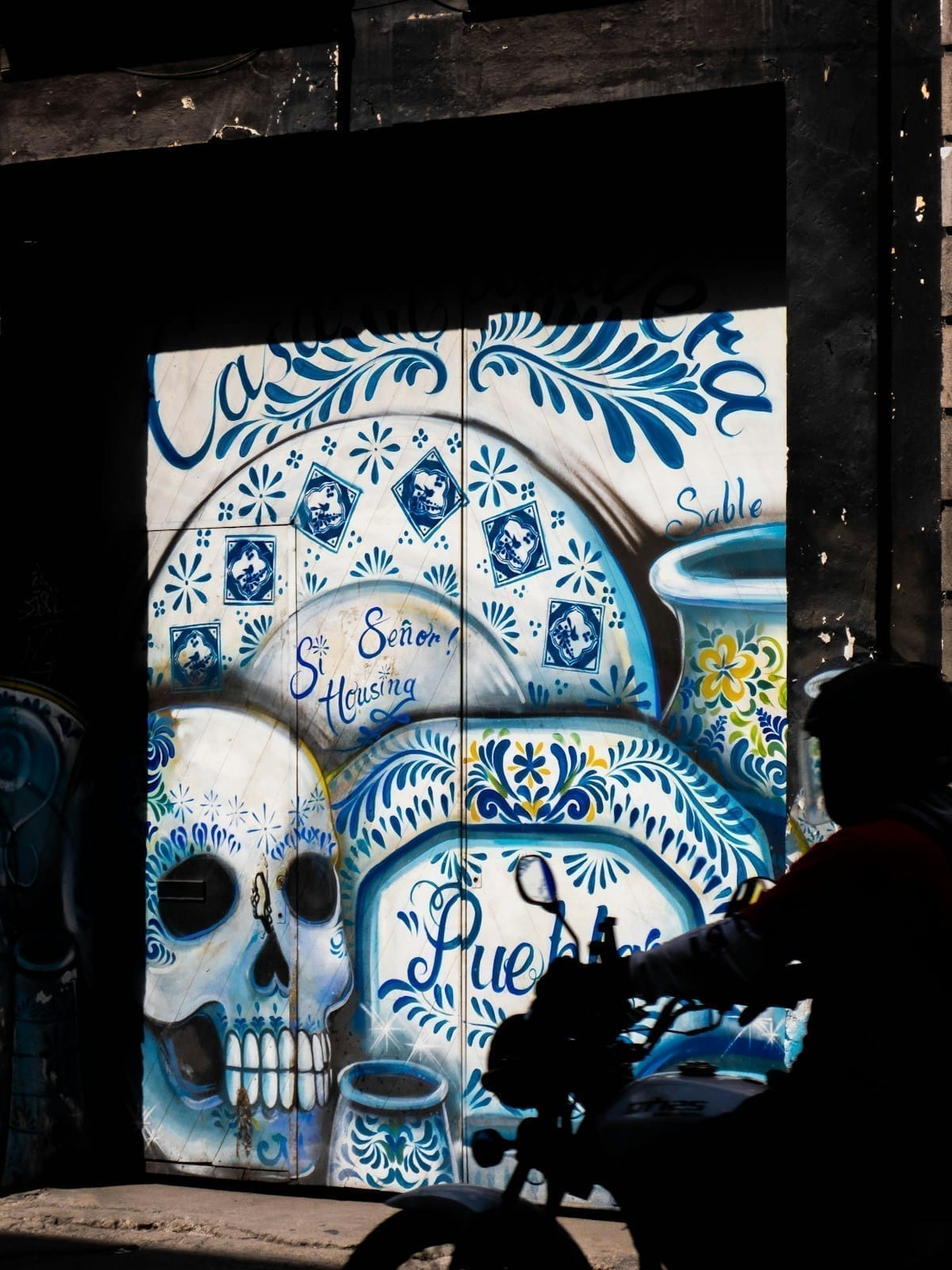
Puebla sits two hours southeast of Mexico City in a high valley flanked by two volcanoes: Popocatépetl (active) and La Malinche. It is a UNESCO World Heritage city with one of the best-preserved colonial centres in Mexico - and the birthplace of mole poblano and chiles en nogada.
Top Tours at a Glance
| Tour | Duration | Price (from) | Group Size | Highlights |
|---|---|---|---|---|
| Puebla Historic Centre Walking Tour | 2.5 hrs | from $20 | Small group | Cathedral, Talavera tiles, Zócalo, Barrio del Artista |
| Cholula Pyramid & Churches Tour | 3 hrs | from $30 | Up to 15 | Great Pyramid tunnels, Nuestra Señora de los Remedios |
| Mole & Mexican Cooking Class | 4 hrs | from $65 | Up to 10 | Mole poblano, market tour, hands-on cooking |
| Puebla & Cholula Day Trip from Mexico City | 9 hrs | from $55 | Small group | Colonial centre, pyramid, Talavera factory, transport |
| Talavera Workshop & Ceramics Tour | 2 hrs | from $25 | Small group | Certified factory, hand-painting demo, history |
Browse all Puebla tours → GetYourGuide
Key sights
| Sight | Entry Fee | Hours | Notes |
|---|---|---|---|
| Catedral de Puebla | Free | Daily 7:00–20:00 | Tallest cathedral towers in Mexico |
| Museo Amparo | ~MXN $80 | Tue–Sun 10:00–18:00 | Pre-Hispanic + colonial art. Free Sundays |
| Biblioteca Palafoxiana | ~MXN $45 | Tue–Sun 10:00–17:00 | UNESCO Memory of the World library |
| Museo Internacional del Barroco | ~MXN $60 | Tue–Sun 10:00–19:00 | Toyo Ito building, baroque art |
| Uriarte Talavera factory | Free (tour) | Mon–Fri 10:00–14:00 | Live Talavera production |
| Great Pyramid of Cholula | ~MXN $85 | Tue–Sun 9:00–17:30 | Largest pyramid by volume in the world |
All prices approximate, as of 2026.
The historic centre
The Zócalo is the logical starting point. The Catedral de la Inmaculada Concepción on its south side is one of the most elaborate in Mexico - construction ran from 1575 to 1649, and the towers (at 69 metres) are the tallest of any Mexican cathedral. Inside, the onyx altar and the carved wooden choir stalls are highlights. Free entry. Open daily 7 am–8 pm.
The streets radiating from the Zócalo are lined with Talavera-tiled facades - the distinctive blue-and-white ceramic style is specific to Puebla and has been produced here since the 16th century. Calle 6 Oriente has the highest concentration. The Callejón de los Sapos (Alley of the Frogs) is a compact antiques and crafts district - most active on weekends, when vendors set up stalls along the alley. Free to browse.
The Barrio del Artista is a small pedestrian zone where local painters work from open-air studios and sell directly. Not touristy in the usual sense - more a genuine working artists’ quarter with a few cafés.
Museums
Museo Amparo (2 de Oriente 203) - Puebla’s best museum, housed in two connected colonial buildings. The ground floor covers pre-Hispanic artefacts from Mesoamerica (Olmec, Maya, Aztec), while the upper floors display colonial and contemporary Mexican art. The building itself is beautifully restored. Entry approximately MXN $80. Free on Sundays. Allow 1.5–2 hours.
Biblioteca Palafoxiana (5 de Oriente 5, inside the Casa de la Cultura) - a 17th-century library founded in 1646, with original floor-to-ceiling carved wooden shelving holding approximately 45,000 volumes. Designated a UNESCO Memory of the World document. Entry approximately MXN $45. Allow 30 minutes.
Museo Internacional del Barroco (Atlixcáyotl 2501) - a striking modern building designed by Japanese architect Toyo Ito, opened in 2016. The museum covers baroque art, architecture, and music with interactive exhibits. Located on the city outskirts - taxi from the centre approximately MXN $80–100. Entry approximately MXN $60. Allow 1–1.5 hours.
Casa de los Muñecos (2 Norte 2, on the Zócalo) - an 18th-century mansion with a facade covered in blue-and-white Talavera tiles depicting satirical human figures. Now houses the university museum. Entry approximately MXN $40.
Talavera workshops
Puebla is the centre of certified Talavera ceramic production in Mexico, protected by a denominación de origen. The Uriarte Talavera factory (founded 1824, at 4 Poniente 911) offers free tours showing the entire process - moulding, hand-painting with natural pigments, and firing at high temperatures. Tours run on weekdays, no booking needed. The factory shop sells certified Talavera at factory prices: tiles from approximately MXN $50, plates from approximately MXN $200, serving sets from approximately MXN $1,500+.
Talavera de la Reyna (Camino a la Carcaña 2419) is another certified workshop offering tours. Look for the official certification mark on any Talavera purchase - much of what is sold as “Talavera” elsewhere in Mexico is uncertified imitation.
Cholula (15 minutes west)
The Great Pyramid of Cholula (Tlachihualtepetl) is the largest pyramid by volume in the world - its base measures 450 metres per side, larger than the Great Pyramid of Giza. The exterior looks like a natural hill because the Spanish built the Iglesia de Nuestra Señora de los Remedios directly on top in 1594. Entry approximately MXN $85. Open Tuesday–Sunday 9 am–5:30 pm.
Explore the excavated tunnels (approximately 4 km of passages through the pyramid’s interior) and climb to the church at the summit. On clear days - especially winter mornings - Popocatépetl and Iztaccíhuatl volcanoes are visible from the top. Allow 1.5–2 hours for the tunnels and climb.
Cholula town has a lively student atmosphere (home to UDLAP university), good restaurants, and a weekend craft market on the main square.
Getting there: Colectivos from Puebla run frequently (approximately MXN $15, 20 minutes). Taxi approximately MXN $80–120.
Cinco de Mayo sites
Puebla is where the Battle of Puebla was fought on 5 May 1862 - when a Mexican force defeated a larger French army. The Fuertes de Loreto y Guadalupe (the hilltop forts where the battle took place) are now a museum and park. Entry approximately MXN $50. The Cinco de Mayo celebration on 5 May is the biggest event of the year in Puebla, with parades, re-enactments, and concerts.
Walking and exploring
The colonial centre is compact and walkable - most sights are within a 20-minute walk of the Zócalo. The Paseo de San Francisco is a pedestrianised zone east of the centre with restaurants, shops, and the repurposed Barrio de los Sapos warehouses. The Puente de Ovando area has a cluster of restaurants and bars popular in the evening.
Practical tips
- Best days: Weekdays for museums and Talavera factory tours. Weekends for Cholula market and Callejón de los Sapos antiques.
- Altitude: 2,135 m - similar to Mexico City. No adjustment needed if arriving from CDMX.
- Temperature: Mild year-round. Highs 20–28°C, lows 5–10°C in winter. Bring a jacket for evenings.
- Transport: The centre is walkable. Uber is available and affordable. Taxis are metered.
- From Mexico City: Estrella Roja and ADO buses from TAPO terminal, every 20–30 minutes (approximately MXN $200–300, 2 hours). ADO GL is the most comfortable class.
More Puebla Guides
Plan your trip: tours in Puebla · travel insurance.
See Also
- Mexico City Travel Guide - 2 hours northwest by bus, the most common departure point for Puebla
- Taxco Travel Guide - the silver city reachable on a loop from Mexico City via Puebla
- Oaxacan Mole Guide - Puebla and Oaxaca share the mole tradition; this guide covers the styles and where to try them
Search hotels in Puebla on Booking.com
- Street Food Guide to Mexico - where Poblano dishes (cemitas, chalupas, mole) sit in Mexico’s wider street food culture