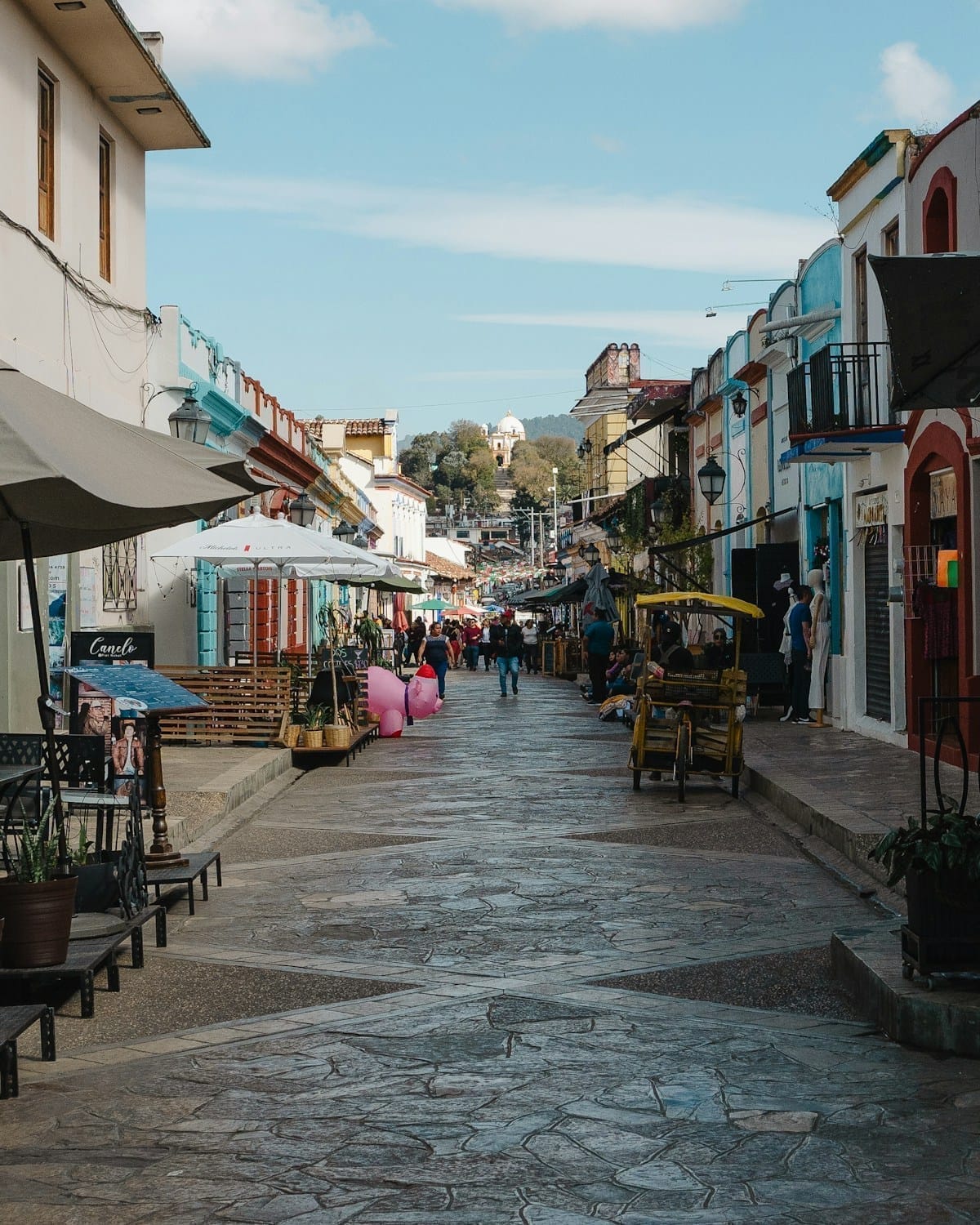
San Cristóbal’s food scene sits at the intersection of highland Tzotzil-Tzeltal indigenous cuisine, Mexican regional cooking, and a surprisingly well-developed café culture fed by Chiapas’s excellent coffee crop. The altitude and cool climate also support a different pantry from lowland Mexico - chayote, fresh herbs (chipilín, hierba santa, chepiche), highland corn, and cool-climate vegetables feature prominently.
Top Food Experiences at a Glance
| Tour | Duration | Price (from) | Group Size | Highlights |
|---|---|---|---|---|
| San Cristóbal Market & Street Food Tour | 3 hrs | from $35 | Up to 12 | Mercado Municipal, jovel tamales, pozol, local guide |
| Cooking Class: Chiapas Cuisine | 3 hrs | from $60 | Up to 8 | Chiapas ingredients, jovel cheese, traditional tamales |
| Chiapas Coffee & Amber Tour | 2.5 hrs | from $40 | Small group | Specialty coffee tastings, amber workshop visit, chocolate |
| San Cristóbal Mezcal & Pox Tasting | 2 hrs | from $40 | Small group | Chiapas pox (sugarcane spirit), mezcal, local food pairings |
Browse all San Cristóbal food experiences → GetYourGuide
Where to eat
| Restaurant | Location | What to order | Approx. price |
|---|---|---|---|
| TierrAdentro | Centro | Chiapas regional (chipilín, hierba santa) | Mains MXN $120–200 |
| Namandi | Real de Guadalupe | Coffee, cheese boards, light meals | MXN $80–150 |
| Café Museo Café | Near Real de Guadalupe | Chiapas single-origin coffee | MXN $40–60/cup |
| Cafeología | Centro | Specialty coffee, chocolate | MXN $50–80 |
| La Casa del Pan | Real de Guadalupe | Organic bakery, vegetarian | MXN $60–120 |
| El Caldero | Centro | Cocido chiapaneco, traditional | MXN $80–140 |
| Mercado Municipal | East of centro | Tamales, cheap breakfasts, produce | Meals MXN $40–70 |
| Cocoliche | Andador | Italian-Mexican fusion | Mains MXN $120–180 |
All prices approximate, as of 2026.
Chiapas tamales
Distinctly different from the masa tamales of central Mexico. Chiapas tamales are wrapped in banana leaves (not corn husks), giving a softer, more moist texture and a faintly sweet, vegetal aroma. The masa is lighter and the fillings are typically:
- Tamal de chipilín - the regional speciality, made with the chipilín herb (a leguminous plant with a distinctive earthy-green flavour). The herb is mixed into the masa itself, giving the tamal a pale green colour
- Tamal de mole - pork or chicken in Chiapas-style mole, wrapped in banana leaf
- Tamal de bola - a round tamal from the Chiapas lowlands, filled with pork and vegetables
Found at the Mercado Municipal from morning onwards (approximately MXN $15–30 each), and at traditional fondas around the historic centre. The best tamales sell out by mid-morning - arrive before 10 am for the full selection.
Cocido chiapaneco
A slow-cooked meat and vegetable broth - the Chiapas version of a pot-au-feu. Beef, pork, or chicken simmered with chayote, corn on the cob, plantain, carrots, cabbage, and herbs. Filling, warming at altitude, and deeply satisfying on a cold highland evening. A Sunday lunch tradition at traditional restaurants.
El Caldero (centro, approximately MXN $100–140) serves a reliable version. Market fondas also serve it, particularly on weekends.
Pox (posh)
The traditional Tzotzil sugarcane-based spirit of Chiapas - pronounced “posh.” Fermented and distilled from sugarcane with corn, wheat, and local herbs. Traditionally used in Maya ceremonies (the Chamula church rituals involve offerings of pox), it has been secularised and bottled for commercial sale.
The flavour is raw and herbal - less refined than mezcal, more vegetal, with an underlying sweetness from the sugarcane. Three styles: original (clear, unaged), infused (with herbs, fruits, or cacao), and añejo (aged, smoother).
Where to try: La Viña de Bacco (mezcalería-style bar, pox copas approximately MXN $60–100). The artisan spirit stalls in the Mercado Municipal sell bottles for approximately MXN $100–250 depending on the producer and style. Poxería near the Andador is a dedicated pox bar with a curated selection.
Chiapas coffee
Chiapas produces some of the most internationally acclaimed Mexican coffee - the highlands around San Cristóbal (1,200–1,800 m) are at ideal elevation for arabica varietals. The volcanic soil, altitude, and shade-grown conditions produce beans with bright acidity, chocolate notes, and floral complexity.
Several cafés in the historic centre source directly from local cooperatives and can explain the terroir in detail:
Café Museo Café (near Real de Guadalupe, approximately MXN $40–60 per cup) - the most thorough in explaining the regional varieties. A small museum covers Chiapas coffee history, from colonial-era haciendas to modern cooperative farming. The pour-over and chemex preparations are excellent.
Cafeología (centro, approximately MXN $50–80) - specialty coffee and Chiapas chocolate (cacao has been cultivated in the Soconusco region since the pre-Hispanic period). Their mocha-style drinks use local cacao.
La Casa del Pan (Real de Guadalupe, approximately MXN $60–120 for meal + coffee) - an organic bakery and café with homemade sourdough bread, vegetarian food, and good coffee. The baked goods are the best in the city.
Chiapas chocolate
Chiapas is one of the original regions of cacao cultivation - the Soconusco coast has produced cacao since the Maya period. Traditional Chiapas hot chocolate is prepared with roasted cacao, cinnamon, and sugar - ground on a metate (stone grinding tool) and whisked into a froth with a molinillo (wooden whisk).
Kakaw (near the Andador, approximately MXN $40–70 per cup) specialises in Chiapas drinking chocolate in traditional and modern preparations. The tasting flights allow comparison between varieties. Tablets of artisan chocolate make good gifts (approximately MXN $50–100).
Chiapas cheese
The highland climate supports dairy farming, and Chiapas produces distinctive cheeses:
- Queso de bola - a round, semi-aged cheese with a wax coating, similar to Edam (introduced by Dutch traders)
- Queso crema de Chiapas - a soft, spreadable cream cheese, used as a topping for beans and tamales
- Queso doble crema - richer, almost butter-like
Namandi (Real de Guadalupe, approximately MXN $80–150) serves Chiapas cheese boards with local honey, membrillo (quince paste), and bread. The Mercado Municipal has cheese vendors selling direct.
Markets
Mercado Municipal - the essential budget eating option. Ground floor: fresh produce, meat, and fish. Upper level: cooked food counters (comida corrida approximately MXN $40–70), breakfast stalls (huevos, tamales, café de olla), and the best Chiapas tamales in the city. Textile and craft vendors are mixed in with the food - it is a genuine working market rather than a tourist attraction.
Mercado de Santo Domingo (weekends) - craft and food market around the Santo Domingo church. Food vendors sell elotes (grilled corn), tlayudas, and Chiapas sweets alongside the textile stalls.
Indigenous ingredients
Several ingredients in San Cristóbal’s food are specific to highland Chiapas and rarely found elsewhere:
- Chipilín - a leguminous herb with an earthy, slightly nutty flavour. Used in tamales, soups, and egg dishes
- Hierba santa - a large-leaved herb (also called hoja santa) with an anise-like flavour. Used to wrap tamales and fish
- Chepiche - a wild herb used in bean dishes and soups
- Tascalate - a traditional cold drink made from ground toasted corn, cacao, achiote (annatto), and cinnamon. Pink-red in colour, served cold. Found at market stalls (approximately MXN $20–30)
TierrAdentro (centro, mains approximately MXN $120–200) is the best restaurant for exploring these ingredients in a sit-down setting - the menu explicitly focuses on indigenous Chiapas ingredients and preparations.
Plan your trip: tours in San Cristóbal.