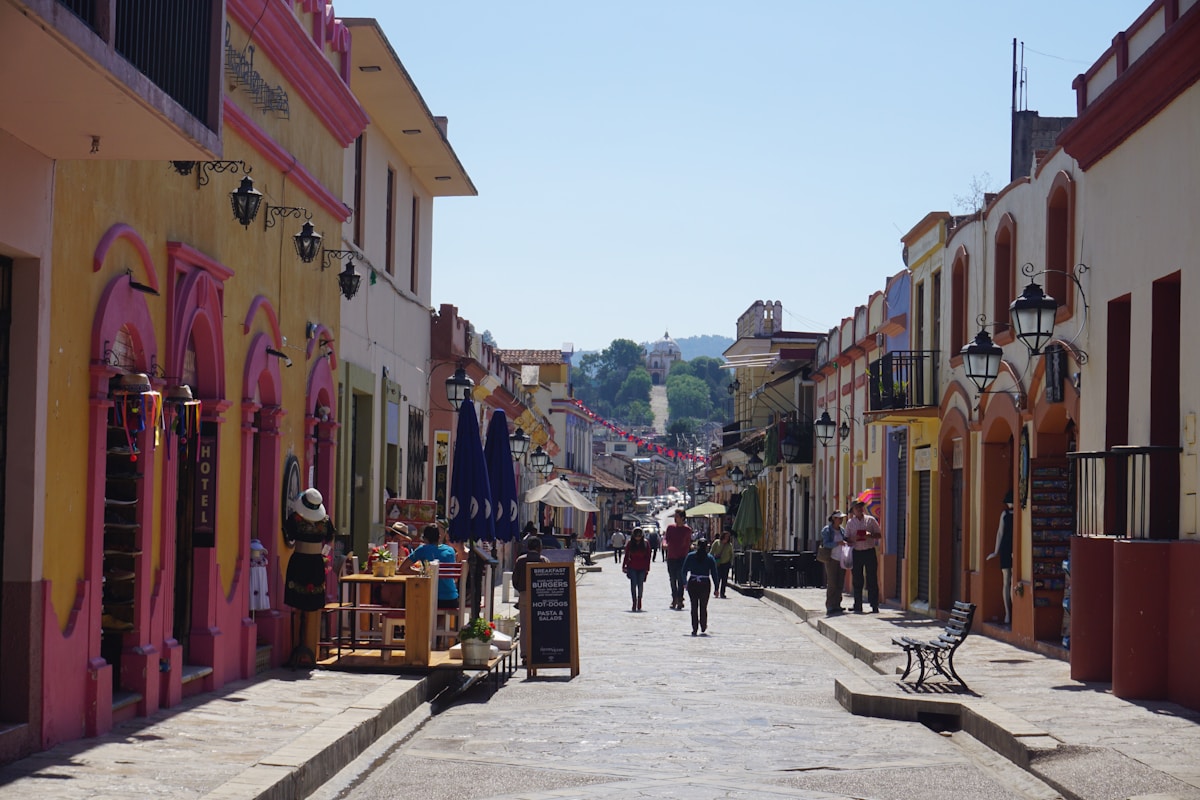
San Cristóbal de las Casas is a colonial city at 2,200 m in the Chiapas highlands - the coolest city covered in this guide (temperatures rarely exceed 20°C even in summer) and one of the most ethnically and culturally distinct in Mexico. The large indigenous Tzotzil and Tzeltal population, the visible craft tradition, and the lively university-town atmosphere give it a character unlike any other Mexican city. It is the logical base for exploring highland Chiapas and for day trips to the Sumidero Canyon and Palenque.
Top Tours at a Glance
| Tour | Duration | Price (from) | Group Size | Highlights |
|---|---|---|---|---|
| Chamula & Zinacantán Indigenous Village Tour | 4 hrs | from $25 | Small group | Tzotzil church, backstrap loom demos, markets |
| Cañón del Sumidero Boat Tour | 5 hrs | from $35 | Up to 15 | 1,000 m canyon walls, crocodiles, Chiapa de Corzo |
| San Cristóbal City Walking Tour | 2 hrs | from $20 | Small group | Colonial history, Santo Domingo, Andador Eclesiástico |
| Palenque Ruins Day Trip | Full day | from $55 | Small group | Maya jungle ruins, waterfalls, guide included |
| Coffee Plantation & Chiapas Highlands Tour | 5 hrs | from $40 | Small group | Working finca, highland scenery, tastings |
Browse all San Cristóbal de las Casas tours → GetYourGuide
Activity overview
| Activity | Cost | Duration | Notes |
|---|---|---|---|
| Santo Domingo church + textile market | Free | 1–2 hours | Best textiles in Chiapas |
| Andador Eclesiástico walk | Free | 1 hour | Pedestrianised street, cafés, shops |
| San Juan Chamula | ~MXN $30 | Half day | Syncretic Tzotzil church, no photos inside |
| Zinacantán | Free (textiles for sale) | 2 hours | Weaving community, backstrap loom demos |
| Na Bolom museum | ~MXN $50 | 1 hour | Lacandón Maya cultural centre |
| Museo del Ámbar | ~MXN $30 | 45 min | Chiapas amber collection |
| Cañón del Sumidero | Boat ~MXN $250/person | Full day | 1,000 m canyon walls, crocodiles |
| Mercado Municipal | Free (food from ~MXN $30) | 1 hour | Produce, tamales, cheap breakfasts |
All prices approximate, as of 2026.
Santo Domingo and the textile market
The Templo de Santo Domingo (1547–1574) has one of the most elaborate baroque facades in Mexico - a gold-and-plaster exterior densely carved with saints, angels, double-headed eagles, and the Dominican emblem. The interior has gilded altarpieces and colonial-era paintings.
The textile market in the church’s atrium is the main attraction for many visitors - handwoven huipiles (traditional blouses), rebozos (shawls), embroidered blouses, woven bags, and table runners, sold directly by Tzotzil women from surrounding villages. The quality is high and the prices are fair (huipiles from approximately MXN $200–2,000 depending on complexity and weaving time). This is the best place in Chiapas to buy traditional textiles.
The market operates daily but is busiest on weekends. Bargaining is accepted but not aggressive - the weavers know the value of their work.
Chamula and Zinacantán
The two most-visited Tzotzil Maya communities near the city, combinable as a half-day trip.
San Juan Chamula (10 km northwest) - the church of San Juan Chamula is one of the most remarkable religious spaces in Mexico. The interior is covered in pine needles on the floor and lined with hundreds of burning candles. Catholic saints line the walls but the religious practices are Tzotzil Maya - ritual healers (iloles) perform ceremonies involving candles, eggs, live chickens, pox (sugarcane spirit), and Coca-Cola. The atmosphere is intense, smoky, and serious - this is an active spiritual practice, not a display.
Photography is strictly prohibited inside the church. Enforcement is serious - cameras and phones have been confiscated. Remove hats on entry. Entry approximately MXN $30. The village market surrounding the church is lively, especially on Sundays - produce, textiles, and live animals.
Zinacantán (12 km west, 10 minutes from Chamula by colectivo) - a textile-producing community known for embroidered fabrics in distinctive pinks, purples, and reds. The women’s cooperative at the church sells directly. Home visits with backstrap loom demonstrations are available - watch the entire process from raw thread to finished fabric. The village is calmer and more welcoming to visitors than Chamula. Textiles from approximately MXN $100 for small items to MXN $1,500+ for elaborate pieces.
Getting there: Colectivos depart from the Mercado de Abastos terminal in San Cristóbal throughout the day (approximately MXN $20 each, 20 minutes). Take the colectivo to Chamula first, spend 1–2 hours, then take another to Zinacantán, and return to San Cristóbal. The combined trip is easy without a guide, though guided tours (approximately MXN $300–500 per person) provide cultural context.
Cañón del Sumidero
A dramatic gorge 30 km northwest of San Cristóbal where the Grijalva River flows between walls rising 1,000 m on either side. Boat tours from Chiapa de Corzo travel the canyon floor (approximately 2 hours, approximately MXN $250 per person). The sheer scale is impressive - the walls dwarf the boats. Watch for herons, crocodiles (in the lower, wider sections), spider monkeys, and cascading side waterfalls.
The colonial town of Chiapa de Corzo (1.5 hours from San Cristóbal by road) is worth an hour’s wander - the 16th-century La Pila fountain (a Mudéjar-style brick structure) in the main plaza is unique in Mexico.
Tour options: Operators in San Cristóbal run combined bus-and-boat packages (approximately MXN $400–600 per person, full day). Alternatively, take a colectivo to Chiapa de Corzo (approximately MXN $60, 1.5 hours) and negotiate a boat directly at the dock - independent boats depart when they have 10–12 passengers (approximately MXN $200–250 per person, shorter wait on weekends).
Viewpoints: For those who prefer seeing the canyon from above rather than below, a road from Tuxtla Gutiérrez runs along the canyon rim with five miradores (viewpoints). The combination of boat tour plus rim viewpoints covers both perspectives.
The city centre
Andador Eclesiástico - the pedestrianised main street connecting the cathedral to Santo Domingo. Cafés, bookshops, amber jewellery shops, craft stores, and restaurants line both sides. The evening paseo (stroll) here is the city’s social event.
Real de Guadalupe - a parallel street with a more bohemian character: hostels, international restaurants, yoga studios, and live music bars. The longest-stay travellers congregate here.
Na Bolom (approximately MXN $50, guided tours) - the former home of Swiss anthropologist Gertrude Duby Blom and her archaeologist husband Frans Blom. The house is now a cultural centre and museum focused on the Lacandón Maya - the last group of Maya to maintain traditional lifeways in the Chiapas jungle. The photographic archive of Lacandón life (1950s–1990s) is exceptional. The garden is peaceful.
Museo del Ámbar (approximately MXN $30) - Chiapas produces some of the world’s finest amber, mined from Miocene-era deposits near Simojovel. The museum displays exceptional pieces including amber with perfectly preserved insect inclusions millions of years old. Worth 30–45 minutes.
Centro Cultural El Carmen - a former convent with rotating art exhibitions and cultural events. Free or nominal entry.
Markets
Mercado Municipal José Castillo Tielemans (behind the central bus terminal) - the working market. Fresh produce, Chiapas tamales (banana-leaf wrapped, achiote pork filling), breakfast counters, cheap comida corrida (approximately MXN $40–70), and textiles. The food section is the most authentic budget eating in the city.
Santo Domingo atrium market - daily textile and craft market. The best source for handwoven goods (see Santo Domingo section above).
Sunday markets - indigenous communities from surrounding villages come to sell in the city on Sundays. The Mercado de Abastos and the streets around Santo Domingo are busiest.
Climate and packing
San Cristóbal is cool year-round - bring a jacket regardless of when you visit. Morning and evening temperatures of 5–10°C are common in winter. Rain is frequent May–October, often in afternoon downpours. The colonial centre is entirely walkable - no transportation needed for city sights. Good walking shoes for the cobblestone streets.
More San Cristóbal de las Casas Guides
- Back to San Cristóbal de las Casas Guide
- Day Trips in San Cristóbal de las Casas
- Food to Try in San Cristóbal de las Casas
Plan your trip: tours in San Cristóbal · travel insurance.
See Also
- Palenque Travel Guide - 5 hours north through the mountains, the Maya ruins in the lowland jungle
- Oaxaca City Travel Guide - 12 hours west by overnight bus, the highland cultural capital most often compared with San Cristóbal
- Oaxaca–Chiapas Itinerary - the classic southern Mexico route connecting both cities
Search hotels in San Cristóbal de las Casas on Booking.com
- Oaxaca vs San Cristóbal de las Casas - which highland colonial city fits your trip better