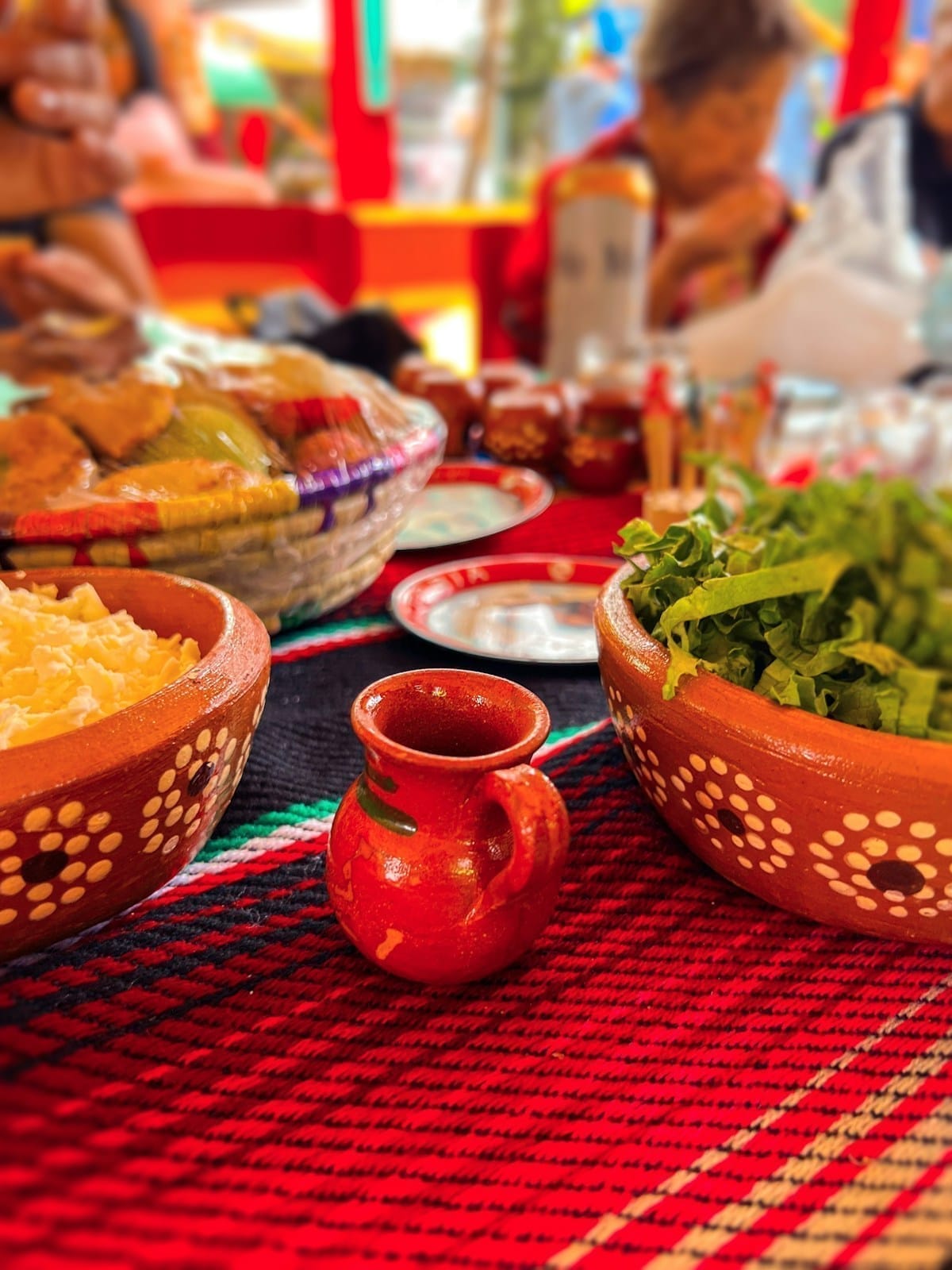
Mexican cuisine isn’t one thing - it’s a collection of regional food cultures as distinct from each other as French and Italian cooking. The Spanish colonial period introduced livestock, wheat, dairy, and new spices onto an existing foundation of corn, chiles, beans, squash, chocolate, and vanilla. What emerged in each region was shaped by local ingredients, indigenous traditions, and the colonial economy.
Oaxaca
The most complex and internationally celebrated regional cuisine. Key characteristics: the seven moles (negro, rojo, coloradito, amarillo, verde, chichilo, manchamanteles), extensive use of dried and fresh chiles, indigenous corn varieties for tlayudas and memelas, and a strong tradition of insect consumption (chapulines/grasshoppers are a salsa and taco topping).
Oaxacan cheese (quesillo, similar to string cheese; also queso fresco) is produced locally and used throughout the state’s cooking. The chocolate tradition (stone-ground cacao with cinnamon and sugar, available at market molinos) predates the Spanish conquest.
Mezcal production - made from multiple agave varieties using traditional pit-roasting - is the defining drink.
Yucatán
The Mayan culinary tradition is the most continuous in Mexico - achiote (recado rojo, a paste of annatto, citrus, spices), bitter orange, and habanero chile are the foundations. Key dishes: cochinita pibil (achiote pit-roasted pork), sopa de lima (chicken lime broth), panuchos and salbutes (tortilla preparations), and papadzules (egg-stuffed tortillas in pumpkin seed sauce).
The food is influenced by the Caribbean (citrus, tropical fruits) and by the relative isolation of the peninsula - less mestizo blending than central Mexico, with more direct continuity from Mayan cooking.
Jalisco and the Bajío
Jalisco is birria country (slow-braised goat or beef in chile broth), tequila’s home state, and the origin of tortas ahogadas (sandwiches drowned in chile sauce). The surrounding Bajío states (Guanajuato, Michoacán, Querétaro) produce the enchiladas mineras, carnitas from Michoacán, and the goat cheese traditions of the high valleys.
The north of Jalisco and the Pacific coast contribute seafood traditions: Pacific-style ceviche and pescado zarandeado (wood-fire grilled achiote fish).
Mexico City (CDMX)
The capital absorbs and transforms regional traditions from across the country - and adds its own. Tacos al pastor (Lebanese-influenced, adapted to local chiles), tacos de suadero (brisket crisped on a comal), tacos de canasta (basket tacos sold from bicycles), tlayudas from visiting Oaxacans, and the full range of Mexican regional food available within a few city blocks.
CDMX is also where the international market has most influenced Mexican cooking - the best fine-dining in Mexico is here, combining regional ingredients with contemporary technique.
Puebla
Mole poblano (the most internationally famous mole, made with chocolate, multiple dried chiles, and 20+ ingredients) and chiles en nogada (the Sept–Oct seasonal dish with walnut cream and pomegranate) are Puebla’s main contributions to Mexican food history. Also: cemitas (sesame-bread sandwiches), chalupas, and memelas.
The North (Sonora, Sinaloa, Baja California)
Northern Mexican food is distinct from the south: flour tortillas instead of corn, beef-focused, and reflecting proximity to the US. Sonoran beef is famous for its quality; the carne asada (grilled beef) tradition here is the benchmark. Baja California contributes the fish taco canon, Baja wine (Valle de Guadalupe), and aguachile (raw shrimp in citrus-chile).
Veracruz
The port city’s food reflects Caribbean and Spanish influences: seafood is the focus. Huachinango a la veracruzana (red snapper with tomatoes, olives, capers, and herbs) is the region’s most famous dish. Vanilla is produced in the state’s highlands; the coffee-growing region of Xico produces some of Mexico’s finest beans.
Chiapas
Chiapas food is closely related to Mayan and Central American traditions: tamales in banana leaf, chilate (a corn and chile drink), and an abundance of coffee and cacao. San Cristóbal’s altitude makes it a coffee-producing area. The food is less internationally known but genuinely distinct.
Explore Mexico’s Regional Food on a Guided Tour
Reading about Mexico’s regional cuisines and tasting them side-by-side are different experiences. Oaxaca cooking classes are the most direct way to understand why seven moles exist rather than one — a half-day class that takes you through market ingredient selection and preparation makes the distinctions between mole negro, coloradito, and amarillo concrete rather than abstract. In Yucatán, guided food tours around Mérida’s market circuit introduce cochinita pibil, salbutes, and sopa de lima in the context of the Mayan ingredients that define the peninsula’s cooking. Mexico City’s diversity tour format, which samples antojitos from three or four different regional stalls in a single market, is the most efficient way to grasp how distinct regional Mexican food actually is from one another. Browse guided food tours in Mexico City or tours across Mexico for current options.
Plan your trip: tours in Mexico City · tours across Mexico · travel insurance for Mexico · Mexico eSIM.
Related City Guides
-
Oaxacan Mole Guide - the seven moles in depth
-
Mezcal and Tequila Guide - the drinks that define Mexican food culture
-
Street Food Guide to Mexico - the nationwide street food culture from tacos to tlayudas
-
Coffee in Mexico - Chiapas and Oaxacan coffee regions, specialty café scenes, and the molino chocolate-coffee tradition
-
Vegan Guide to Mexico - navigating plant-based eating across Mexico’s regional cuisines