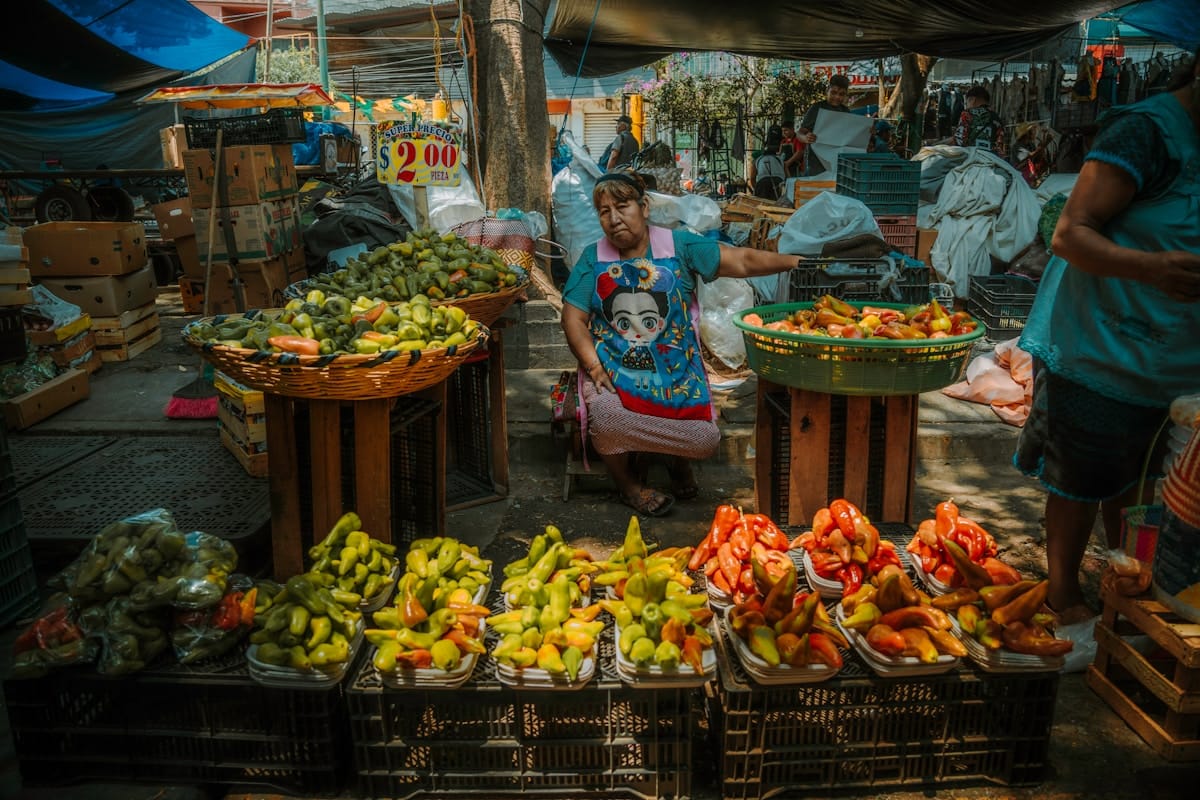
Mexico is more vegan-navigable than it initially appears. The foundation of Mexican cooking - corn, beans, chillies, squash, tomatoes, avocados, herbs - is inherently plant-based. Pre-Hispanic Mexican cuisine was largely vegetarian by necessity (domesticated meat animals were limited to turkey, dog, and small game), and many traditional preparations remain plant-based by default. The challenges are animal fat in modern preparations (lard in refried beans, in tortillas, in tamale masa), hidden meat stock in sauces, and the default addition of cheese and cream to almost everything.
What is naturally vegan (or can be)
Always vegan
Corn tortillas: Masa prepared traditionally requires only ground nixtamalised corn (corn treated with lime), water, and occasionally a pinch of salt. No animal products. This is the foundation of Mexican eating - a naturally vegan staple consumed at every meal across the country. Flour tortillas (more common in northern Mexico and in burritos) sometimes contain lard - always check.
Guacamole: Avocado, lime, onion, coriander, chilli, salt. No animal products. Safe at virtually every restaurant and market stall. Served with totopos (fried tortilla chips) that are fried in vegetable oil at the vast majority of establishments.
Agua fresca: Fresh fruit waters - jamaica (hibiscus), tamarindo (tamarind), limón (lime), sandía (watermelon), melón (cantaloupe) - blended with water and sugar. Entirely vegan and available at every market, comedor, and juice stand. Horchata (rice drink) is traditionally vegan (made from rice, cinnamon, and sugar) but some commercial versions add dairy - ask.
Nopales (cactus): Cooked cactus paddles - grilled, in salads, scrambled, or in tacos. Very common in central and southern Mexican cooking. Rich in fibre and nutrients. No animal products in the nopales themselves, though they are sometimes prepared with eggs or cheese - specify “nopales solos” or “sin huevo.”
Salsas: The vast majority of Mexican salsas (salsa roja, salsa verde, pico de gallo, habanero salsa) are vegan - made from chillies, tomatoes or tomatillos, onion, garlic, and herbs. The exception is some cream-based salsas and occasional addition of chicken stock to restaurant salsas.
Fresh fruit: Mexico’s street fruit vendors sell cups and bags of mango, papaya, watermelon, pineapple, coconut, and jicama with lime and chile powder. Always vegan, always excellent, and available on virtually every commercial street.
Vegan with modifications
Frijoles (beans): Whole beans cooked in a pot with onion, garlic, and herbs (frijoles de olla) are vegan. Refried beans (frijoles refritos) are traditionally fried in lard - in traditional restaurants and market fondas, assume they contain lard unless confirmed otherwise. In modern restaurants, tourist-oriented establishments, and health-conscious cafés, vegetable oil is increasingly standard.
Esquites and elotes: Corn kernels in cups (esquites) or on the cob (elotes), typically served with mayonnaise, cheese, lime, and chilli. Order “sin mayonesa, sin queso, sin crema” - with lime and chile only. Many vendors will accommodate this.
Tamales: Corn masa tamales come with many fillings - rajas (chilli strips), frijoles (beans), hongos (mushrooms), verduras (vegetables). However, traditional tamale masa almost always contains lard. Ask “¿La masa tiene manteca?” Some vendors and restaurants now make lard-free masa, particularly in tourist areas and cities with a vegan-aware food culture.
Tlayudas: The Oaxacan flatbread - a large, partially crisped tortilla typically topped with beans, meat, and quesillo (cheese). Order “sin carne, sin queso” and confirm the beans are lard-free for a vegan version.
City-by-city overview
Mexico City
The strongest vegan scene in Mexico, with multiple dedicated restaurants, vegan taco stands, and market stalls serving entirely plant-based comida corrida. Roma Norte and Condesa have the highest concentration. Por Siempre Vegana Taquería (Roma Norte) is the most celebrated vegan taquería. Market tamale and nopal options are naturally vegan. The size of the city means you can eat exclusively vegan for weeks without repeating restaurants.
Oaxaca
More challenging - traditional Oaxacan cooking is very meat-centric (tasajo, chorizo, mole with animal broth and lard). But the pre-Hispanic Zapotec diet was largely plant-based, and many base products work: tlayudas without meat, beans, corn, memelas with salsa and avocado. Several cafés in the historic centre cater explicitly to plant-based diets. Itanoní serves heirloom corn preparations that are largely vegan. Tejate (traditional Zapotec drink of corn, cacao, and sapodilla) is naturally vegan and available at market stalls.
Mérida
Yucatecan cooking centres on pork (cochinita pibil, poc chuc) and uses achiote and sour orange as primary flavourings. Beans and tortillas work; most signature dishes do not. Mérida’s restaurant scene has expanded to include several vegan-friendly options, particularly along Paseo Montejo and in the Santa Ana neighbourhood. Ki’Xocolatl has vegan options.
Tulum
The highest concentration of dedicated plant-based restaurants outside Mexico City, driven by the health-conscious tourism market. Burrito Amor (vegan burritos), Raw Love (raw vegan), and Encanto Garden are reliable options. Prices are high relative to the rest of Mexico - expect to pay 2–3× what equivalent food costs in Oaxaca or Mérida.
Cancún and the Riviera Maya
The coast from Cancún through Playa del Carmen to Tulum has an internationally-developed plant-based scene driven by wellness tourism and foreign visitors. Cancún’s downtown offers far better value than the Hotel Zone - Yerba Buena del Sidar is the most established vegan restaurant. Playa del Carmen’s Bio Natural and La Cueva del Chango serve reliable plant-based comida. For a full restaurant breakdown, ordering phrases, and budget comparison across all three towns, see the Vegan Guide to Cancún and the Riviera Maya.
Guadalajara
A growing vegan scene concentrated in Chapultepec and Colonia Americana. Gracias Madre serves vegan birria (jackfruit-based). The Tianguis Orgánico Chapultepec (Sunday market) is the best source of artisan vegan products (cashew cheese, plant-based charcuterie).
San Cristóbal de las Casas
A surprisingly strong vegetarian and vegan food culture for its size - several dedicated restaurants and health food shops in the centro. The indigenous food culture includes many corn-based preparations that are naturally vegan.
Navigating restaurants
Key phrases in Spanish
| Spanish | English | When to use |
|---|---|---|
| ”Soy vegano/vegana” | I’m vegan | Opening statement |
| ”¿Tiene manteca?” | Does it contain lard? | For beans, tamales, tortillas |
| ”¿Lleva caldo de pollo?” | Does it contain chicken broth? | For soups, moles, rice |
| ”Sin queso, sin crema” | Without cheese, without cream | For almost everything |
| ”Sin manteca” | Without lard | For beans specifically |
| ”¿Las tortillas son de maíz o harina?” | Corn or flour tortillas? | Corn is safer |
| ”Sin productos animales” | Without animal products | Comprehensive catch-all |
| ”¿Tiene opciones veganas?” | Do you have vegan options? | At any restaurant |
Understanding what contains animal products
| Dish/ingredient | Animal product risk | Safe alternative |
|---|---|---|
| Frijoles refritos | Lard | Frijoles de olla (whole beans) |
| Tamales | Lard in masa | Ask for lard-free masa |
| Mole | Chicken stock, lard | Ask for vegan version (some restaurants offer) |
| Arroz (rice) | Sometimes cooked in chicken stock | Ask “¿El arroz lleva caldo?” |
| Flour tortillas | Sometimes lard | Corn tortillas instead |
| Sopes/gorditas | Masa sometimes has lard | Ask “¿La masa tiene manteca?” |
Market eating
Markets are simultaneously the most challenging and most rewarding vegan eating environment in Mexico. The challenge: most cooked food stalls use lard, and language barriers can make clarification difficult. The reward: the freshest, cheapest, most authentic food available.
Safe market choices:
- Fruit stands and juice bars: always vegan, always excellent. Fresh juices (naranja, zanahoria, piña, verde) approximately MXN $20–40
- Agua fresca stands: jamaica, horchata, tamarindo - approximately MXN $15–25
- Tostada stalls: tostadas topped with guacamole, nopales, or salsa - specify no cream or cheese
- Corn stands: esquites or elotes - ask for lime and chile only
- Produce vendors: seasonal fruit (mangos, tunas, tejocotes, guanábana) at the lowest prices in Mexico
More challenging:
- Comida corrida stalls: the set lunch menus typically centre on meat. Ask if there is an option “sin carne” - some will accommodate with extra rice, beans, and salad
- Taco stalls: some offer tacos de nopales, tacos de frijoles, or tacos de papas - ask what fillings are available beyond the displayed meats
Supermarket and self-catering options
For nomads or longer-stay travellers preparing their own food:
- Chedraui, Soriana, La Comer: large supermarket chains with produce sections, canned beans, tortillas, and increasingly a “saludable” (health) aisle with plant milks (approximately MXN $40–60/litre for soy, almond, or oat), tofu, and veggie burgers
- OXXO: convenience stores with limited but useful options - fruit, nuts, plain tortilla chips, some bean products
- Tianguis (weekly street markets): the best source of cheap, fresh produce - seasonal fruits and vegetables at approximately 30–50% less than supermarket prices
- Organic markets: available in Mexico City (Mercado el 100), Oaxaca, San Cristóbal, Guadalajara (Tianguis Orgánico Chapultepec), Mérida - artisan vegan products, plant milks, nut cheeses
Plan your trip: tours across Mexico · eSIM for Mexico.