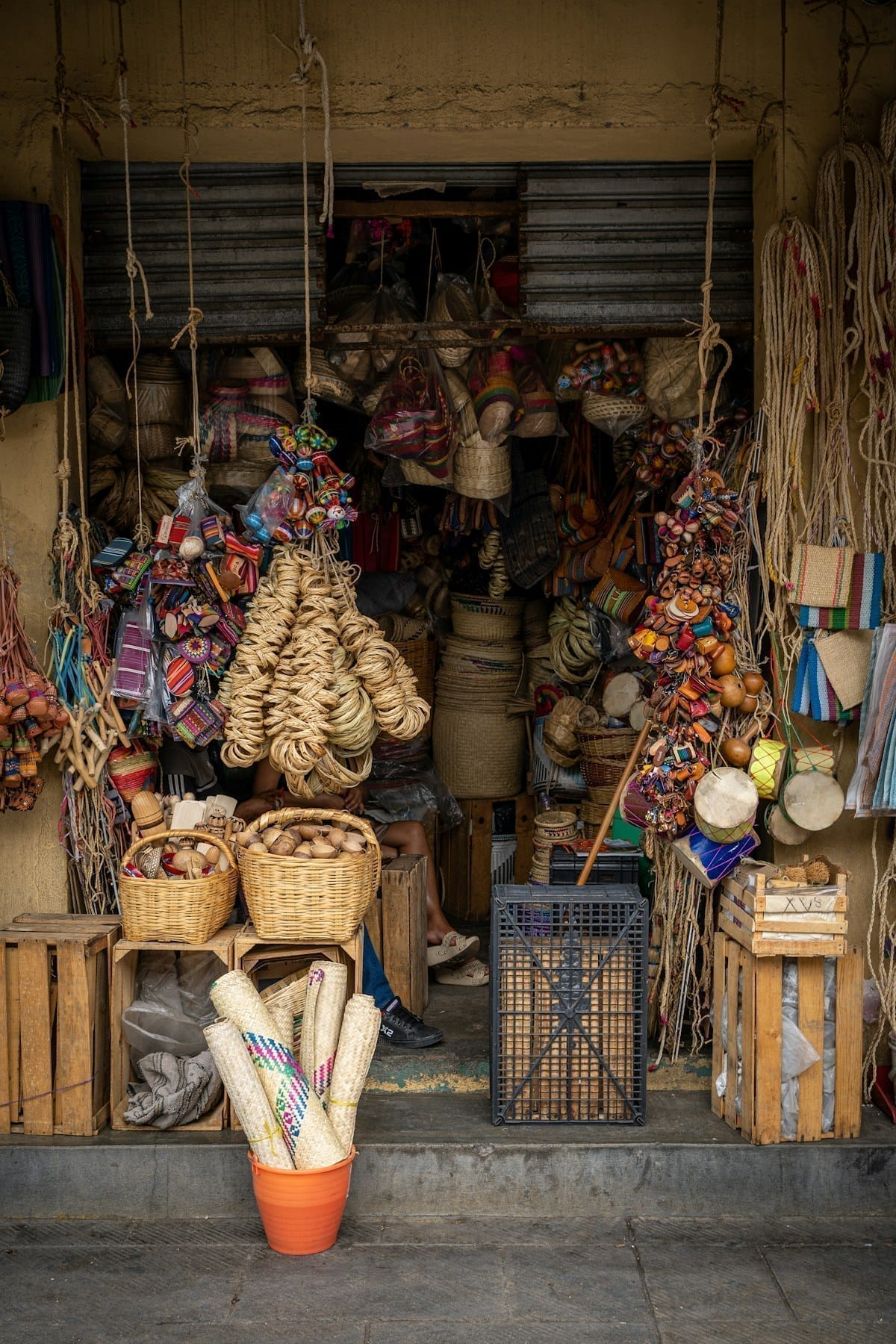
Oaxaca has a paradox at its core for vegan travellers. The pre-Hispanic Zapotec diet was largely plant-based - corn, beans, squash, chillies, herbs, cactus, and insects formed the foundation of the cuisine for thousands of years. Many of these preparations survive in traditional cooking. At the same time, modern Oaxacan cuisine is intensely meat-centric: mole negro is made with turkey or chicken in animal stock and lard, tasajo (dried beef) and chorizo are grilled at every market stall, and quesillo (Oaxacan string cheese) appears on virtually everything. The trick is knowing which thread of the tradition to follow.
Naturally vegan Oaxacan dishes
The staples
Memelas sin carne: Oval masa cakes cooked on a comal - order them topped with black beans (frijoles negros), salsa, and avocado rather than meat or cheese. Common at market comedores, approximately MXN $20–40 each. The masa is traditionally prepared without lard at most stalls (confirm by asking “¿La masa tiene manteca?”).
Tlayuda sin carne y sin quesillo: The Oaxacan flatbread - a large (30 cm+), partially crisped tortilla spread with asiento (rendered pork fat) and topped with beans, meat, and quesillo. For a vegan version, specify “sin asiento, sin carne, sin quesillo” - a tlayuda with black beans and salsa only. Many restaurants in the tourist centre will accommodate this; at market stalls, it may require more explanation. Some restaurants offer a dedicated vegetarian tlayuda - confirm it is also dairy-free.
Tamales de rajas or frijoles: Corn masa tamales wrapped in banana leaf with chilli strip or bean fillings. The filling is vegan, but the masa traditionally contains lard. Market vendors who make lard-free tamales exist - ask specifically. At dedicated vegan-friendly restaurants, lard-free options are available.
Nopales (cactus): Grilled, in salads, or as taco fillings - very common in Oaxacan markets. No animal products in the nopales themselves. A reliable vegan option at most food stalls.
Traditional drinks
Tejate: A traditional Zapotec drink made from toasted corn, fermented cacao, cacao flowers (rosita de cacao), and mamey seed - mixed with water and served cold in a jícara (gourd bowl). The foam on top (produced by the mamey seed fat) is distinctive. Found at market stalls in Oaxaca City, particularly in the Mercado de Abastos and around the Mercado 20 de Noviembre area. Traditionally vegan. Approximately MXN $20–40 per serving.
Agua de chilacayota: A sweet drink made from the chilacayota squash - served cold, sweetened with piloncillo. Seasonal and not always available, but vegan and distinctly Oaxacan.
Chocolate de agua: Oaxacan hot chocolate made with water rather than milk - ground cacao, sugar, and cinnamon dissolved in hot water and frothed with a molinillo. Specify “de agua” (with water) rather than “de leche” (with milk). Available at market stalls and traditional chocolate shops. Approximately MXN $20–35.
Agua de Jamaica and tamarindo: Hibiscus and tamarind waters - naturally vegan, available everywhere. Approximately MXN $15–25.
Best vegan-friendly restaurants
Dedicated or primarily vegan
| Restaurant | Location | Specialty | Price range |
|---|---|---|---|
| La Olla | Reforma 402 | Vegetarian/vegan Oaxacan food | MXN $80–160 |
| Hierba Dulce | Porfirio Díaz | Vegan café, creative Oaxacan plant-based | MXN $100–180 |
| Boulenc | Porfirio Díaz 207 | French bakery/café, vegan pastries, good coffee | MXN $60–130 |
| Origen | Hidalgo 820 | Plant-forward fine dining, tasting menus with vegan options | MXN $400–800 |
La Olla is the most practical daily option for vegan eating in Oaxaca - the menu centres on traditional Oaxacan dishes with animal products removed or replaced. Vegan mole verde (using mushroom or vegetable stock), tlayudas sin carne, and bean-based antojitos. The restaurant is explicitly accommodating of dietary restrictions and staff are accustomed to vegan requests.
Strongly vegan-friendly
| Restaurant | Location | Vegan offering | Price range |
|---|---|---|---|
| Itanoní | Belisario Domínguez 513 | Heirloom corn preparations, many plant-based antojitos | MXN $60–120 |
| La Biznaga | García Vigil 512 | Extensive plant-forward menu, Oaxacan ingredients | MXN $120–220 |
| Casa Oaxaca | García Vigil 407 | Upscale Oaxacan, accommodates vegan requests | MXN $200–350 |
| Cabuche | Porfirio Díaz | Creative Oaxacan, mushroom and vegetable dishes | MXN $100–200 |
Itanoní is essential eating for anyone interested in corn culture - the tortillas are made from heirloom corn varieties (bolita, zapalote chico, mushito) ground on a stone metate. The antojo menu includes many naturally plant-based options: memelas with bean and salsa, tetelas (triangular stuffed tortillas) with beans, and tostadas with nopales. Not everything is vegan (some items include cheese or egg), but the staff will identify which items are plant-based. The quality of the corn itself is remarkable - flavours that industrial tortillas cannot approach.
Market eating
Mercado Benito Juárez
The central tourist market - compact, busy, and meat-heavy in its prepared food section. Vegan options:
- Fruit stands: Mangos, papayas, zapotes, tunas (prickly pear fruit), fresh coconut - abundant and cheap (approximately MXN $15–30 per cup)
- Jugos (juice bars): Fresh orange, carrot, green, and mixed juices. Several stands, approximately MXN $25–40
- Mole paste vendors: For taking home and cooking yourself (the mole paste itself is not vegan in most preparations due to lard, but some vendors sell vegan-compatible versions - ask)
- Chocolate vendors: The chocolate-grinding stalls sell chocolate de agua ingredients (cacao, sugar, cinnamon) - all vegan
Mercado 20 de Noviembre
The food market adjacent to Benito Juárez - famous for the pasillo de humo (smoky corridor) where meats are grilled over charcoal. This section is not useful for vegans. However:
- Tejate stalls: Look for the women serving tejate from large clay bowls - this area has the best tejate in the city
- Tlayuda stalls: Several vendors make tlayudas to order - specify your vegan requirements
- Fruit and agua fresca stalls: scattered throughout
Mercado de Abastos
The wholesale market on the south side of the city - enormous, chaotic, and primarily used by locals. The produce section has the cheapest fruits, vegetables, and dried chillies in Oaxaca. Tejate is available from market stalls here. Less tourist-friendly than Benito Juárez but significantly cheaper. Good for self-catering supplies.
The mole question
Traditional Oaxacan moles (negro, coloradito, amarillo, verde, rojo, chichilo, manchamanteles) present a challenge for vegans:
- Mole negro and coloradito: Traditional recipes use chicken broth, lard, and sometimes chocolate containing dairy. The chilli and spice components are vegan; the base is not
- Mole verde: The lightest mole - made with fresh herbs, tomatillos, and pumpkin seeds. The most easily veganised (using vegetable stock instead of chicken broth). Some restaurants offer this explicitly
- Mole amarillo: Uses animal broth and sometimes lard. Veganisable but not commonly offered plant-based
Where to find vegan mole: La Olla and some cooking class providers offer vegan versions. At traditional restaurants, vegan mole is rare - ask, but do not expect it. If you want to experience mole flavours, the mole paste sold at markets can theoretically be prepared at home with vegetable stock, though the paste itself may contain lard.
Mezcal (vegan)
Mezcal production uses agave, water, and natural fermentation - no animal products at any stage. The mezcal bars of Oaxaca are fully vegan-compatible, and a mezcal tasting is one of Oaxaca’s essential experiences regardless of dietary preferences.
| Bar | Location | Notes | Flight price |
|---|---|---|---|
| In Situ | Morelos 511 | Most knowledgeable staff, extensive collection | ~MXN $150–300 |
| Mezcaloteca | Reforma 506 | Educational tastings, appointment recommended | ~MXN $250 guided |
| El Cortijo | Reforma 512 | Casual, local crowd, great value | ~MXN $100–200 |
Sal de gusano (worm salt - ground dried maguey larva mixed with chile and salt) is traditionally served alongside mezcal and is obviously not vegan. Request your mezcal without it, or with plain salt and orange slices instead.
Cooking classes
Several Oaxaca cooking classes now offer vegetarian/vegan options - a worthwhile way to learn traditional techniques applied to plant-based ingredients:
- La Casa de los Sabores (approximately MXN $1,500–2,000): offers vegetarian classes on request. Market visit included. Book ahead and specify vegan requirements
- Seasons of My Heart (approximately MXN $2,000–2,500): can accommodate vegan students with advance notice
- Casa de las Bugambilias (approximately MXN $1,200–1,800): some classes focus on corn-based preparations that are naturally vegan
Specify “vegano” when booking, not just “vegetariano” - Mexican cooking classes default to using lard and animal broth unless explicitly told otherwise.
What to watch for
- Asiento: Rendered pork fat used as a spread on tlayudas. This is a default step in traditional preparation - specify “sin asiento” when ordering
- Quesillo on everything: Oaxacan string cheese is the default topping on tlayudas, memelas, empanadas, and many other dishes. Always specify “sin quesillo”
- Mole: Contains chicken stock and lard in all traditional recipes. Ask for vegan versions explicitly - do not assume a vegetable-based version is available
- Tamales: Traditional Oaxacan tamales are made with lard in the masa and contain meat or cheese. Vegan tamales exist but are not the default
- Chapulines (grasshoppers): The iconic Oaxacan snack - toasted grasshoppers seasoned with chile, lime, and garlic. Technically insect protein, not plant-based. They appear as toppings on guacamole and other dishes in tourist-oriented restaurants - confirm with your server if you see unidentified toppings
Plan your trip: tours across Mexico · eSIM for Mexico.
Related City Guides
-
Oaxacan Mole Guide - the full mole tradition including which varieties can be made vegan
-
Oaxaca Digital Nomad Guide - neighbourhood breakdown for longer stays in Oaxaca City
-
Vegan Guide to Mexico City - how Oaxaca’s plant-based scene compares with CDMX
-
Monte Albán Archaeological Site - the Zapotec ruins accessible as a day trip from Oaxaca City