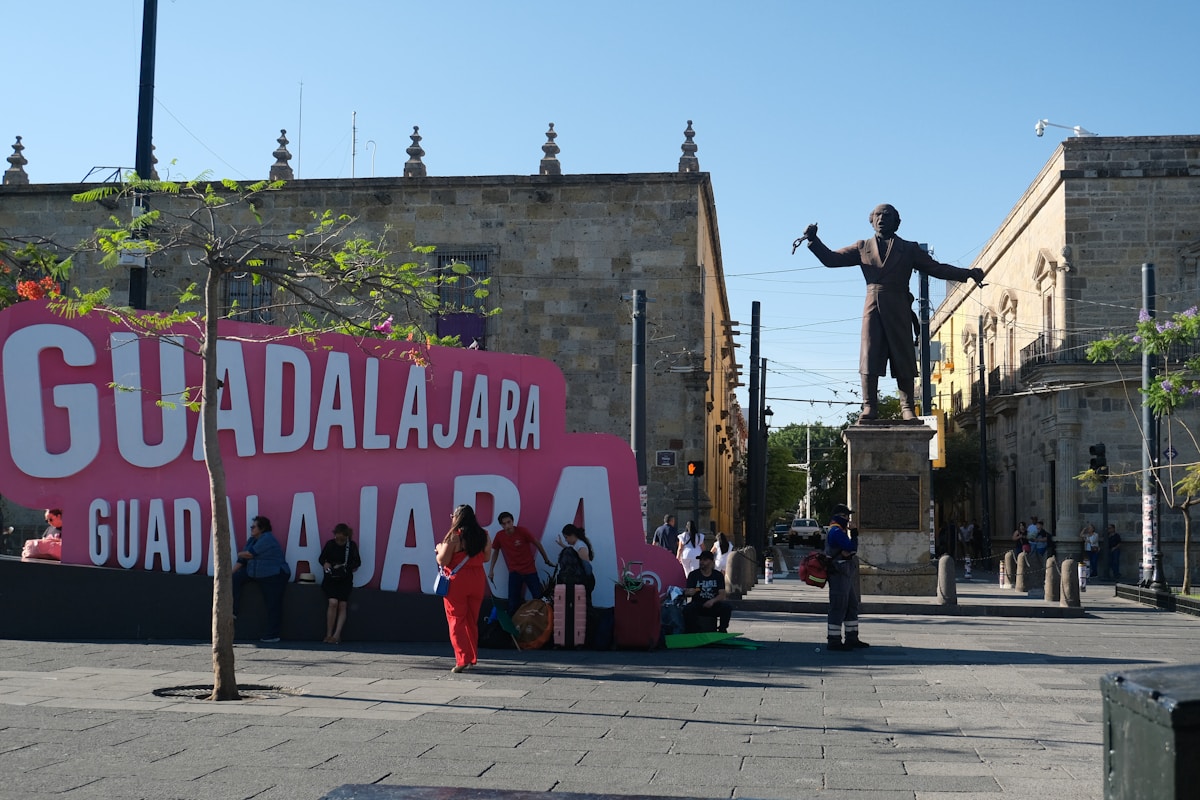
Guadalajara Travel Guide
Guadalajara guide: mariachi music, tequila country, colonial architecture, and a thriving food and arts scene in Mexico's second city.
Guides for Guadalajara
Guadalajara is the birthplace of mariachi music, tequila, and the Mexican hat dance - three things that have come to define Mexico’s image internationally. The city itself is far more complex than that shorthand suggests: Mexico’s second-largest city is a major business hub, the country’s largest tech cluster, and home to a food scene that rivals Mexico City and Oaxaca in quality if not reputation.
Key sights
| Sight | Entry Fee | Hours | Notes |
|---|---|---|---|
| Instituto Cultural Cabañas | ~MXN $80 | Tue–Sun 10:00–18:00 | Orozco murals, UNESCO World Heritage Site. Free on Tuesdays |
| Catedral de Guadalajara | Free | Daily 8:00–20:00 | Twin towers, neo-Gothic interior |
| Teatro Degollado | ~MXN $50 (tour) | Guided tours Mon–Sat | Neoclassical theatre, home of the state orchestra |
| Mercado Libertad | Free | Daily 6:00–20:00 | Largest covered market in Latin America |
| Museo Regional de Guadalajara | ~MXN $75 | Tue–Sun 9:00–17:30 | Jalisco history from mammoth bones to independence |
| Basílica de Zapopan | Free | Daily 7:00–20:00 | Major pilgrimage site, colonial church |
All prices approximate, as of 2026.
Neighbourhoods
Centro Histórico - the colonial core clustered around the Plaza de Armas, the Cathedral, and the Teatro Degollado. The pedestrianised streets between these landmarks and the Mercado Libertad make for a good half-day walk.
Chapultepec and Colonia Americana - the neighbourhoods for restaurants, cafés, bars, and nightlife. Avenida Chapultepec is the main strip. This is where most independent travellers base themselves.
Tlaquepaque (technically a separate municipality, 15 minutes southeast) - pedestrianised streets lined with artisan workshops: ceramics, blown glass, furniture, and silver jewellery. The El Parián square has mariachi performances and good food.
Zapopan - the Basílica de Zapopan is a major pilgrimage site. The surrounding area has become Guadalajara’s modern commercial centre with malls and corporate offices.
Where to stay
| Zone | Budget | Mid-range | Luxury |
|---|---|---|---|
| Chapultepec / Americana | Hostels from ~MXN $250/night | Hotels from ~MXN $800/night | Boutique from ~MXN $3,000/night |
| Centro Histórico | Hostels from ~MXN $200/night | Hotels from ~MXN $500/night | From ~MXN $2,500/night |
| Tlaquepaque | Limited | Boutique from ~MXN $900/night | From ~MXN $3,000/night |
| Providencia | None | Hotels from ~MXN $1,200/night | From ~MXN $4,000/night |
Named properties: In Chapultepec, Hotel Antré Chapultepec (boutique, from approximately MXN $1,500/night) and Hotel Olá Chapultepec (from approximately MXN $800/night). In Centro, Hotel Morales (historic, from approximately MXN $1,800/night, rooftop bar overlooking the Cathedral). In Tlaquepaque, Quinta Don José (boutique, from approximately MXN $1,500/night, colonial courtyard).
Food
Guadalajara’s signature dish is birria - goat or beef slow-braised in a guajillo-chile broth until falling apart. The best is at Birriería El Chololo (Calle Independencia, approximately MXN $80–120 per bowl) and the morning market stands at the Mercado Libertad. Torta ahogada - a crusty birote roll filled with carnitas and drowned in spicy tomato-chile sauce (approximately MXN $40–60) - is the local street food staple. El Güero de la 8 at Mercado Medrano is the classic spot.
The Chapultepec neighbourhood has the city’s highest concentration of modern restaurants, with mains from approximately MXN $150–400.
Tequila
The town of Tequila is 65 km northwest - a half-day trip through the blue agave fields that form a UNESCO World Heritage landscape. La Rojeña (José Cuervo, the oldest operating distillery in the Americas) and Herradura offer tours. The José Cuervo Express train from Guadalajara runs on weekends - a scenic all-inclusive day trip through the agave fields with distillery tours, tasting, and food (from approximately MXN $1,200–3,250 per person depending on class). By road, buses from the old bus terminal take 1.5 hours (approximately MXN $80 each way).
Getting there and around
Airport: Miguel Hidalgo y Costilla International Airport (GDL) has direct connections to most Mexican cities and several US and Canadian gateways. Taxi to Chapultepec approximately MXN $250–350. Uber approximately MXN $150–250.
Within the city: Guadalajara is large and spread out. Uber is the most practical way to get between neighbourhoods. The light rail (Tren Ligero) connects the centre to the south. The BRT system (SITEUR macrobús) runs north-south along Calzada Independencia. Individual rides approximately MXN $10–15.
Between cities: First-class ADO/ETN buses to Mexico City (approximately MXN $800–1,200, 6–7 hours), Puerto Vallarta (approximately MXN $500–700, 4–5 hours), and Guanajuato (approximately MXN $400–600, 3.5 hours).
When to go
Guadalajara is a year-round destination at 1,566 m elevation - warm days (25–30°C), cool evenings, and a distinct rainy season from June to October (afternoon showers). October brings the International Film Festival (FICG), one of Latin America’s most important. The Feria Internacional del Libro (FIL) in late November is the largest book fair in the Spanish-speaking world. Fiestas de Octubre fills the city with concerts, food, and cultural events for 30 days.
More Guadalajara Guides
- Day Trips in Guadalajara
- Food to Try in Guadalajara
- Things to Do in Guadalajara
- Where to Stay in Guadalajara
- World Cup 2026 Guide in Guadalajara
- Best Tours in Guadalajara - tequila distilleries, Tlaquepaque and Chapala day trips
Comparison Guides
Plan your trip: tours in Guadalajara · flights to Mexico · travel insurance · eSIM for Mexico.
See Also
- Sayulita Travel Guide - 3 hours northwest, the Pacific surf village on the Riviera Nayarit
- Puerto Vallarta Travel Guide - 5 hours southwest, the nearest beach city on the Pacific coast
- Mezcal and Tequila Guide - tequila’s heartland is the valleys surrounding Guadalajara
- Vegan Guide to Guadalajara - plant-based eating in Jalisco’s capital
- Guadalajara Digital Nomad Guide - working remotely in Mexico’s second city
Book an experience
Top experiences in Guadalajara
Explore the best tours and activities in Guadalajara, with instant confirmation and free cancellation on most bookings.
Find hotels in Guadalajara
Compare rates and availability across hundreds of options, free cancellation on most.
Browse hotels in Guadalajara →Affiliate link; commission earned at no cost to you.