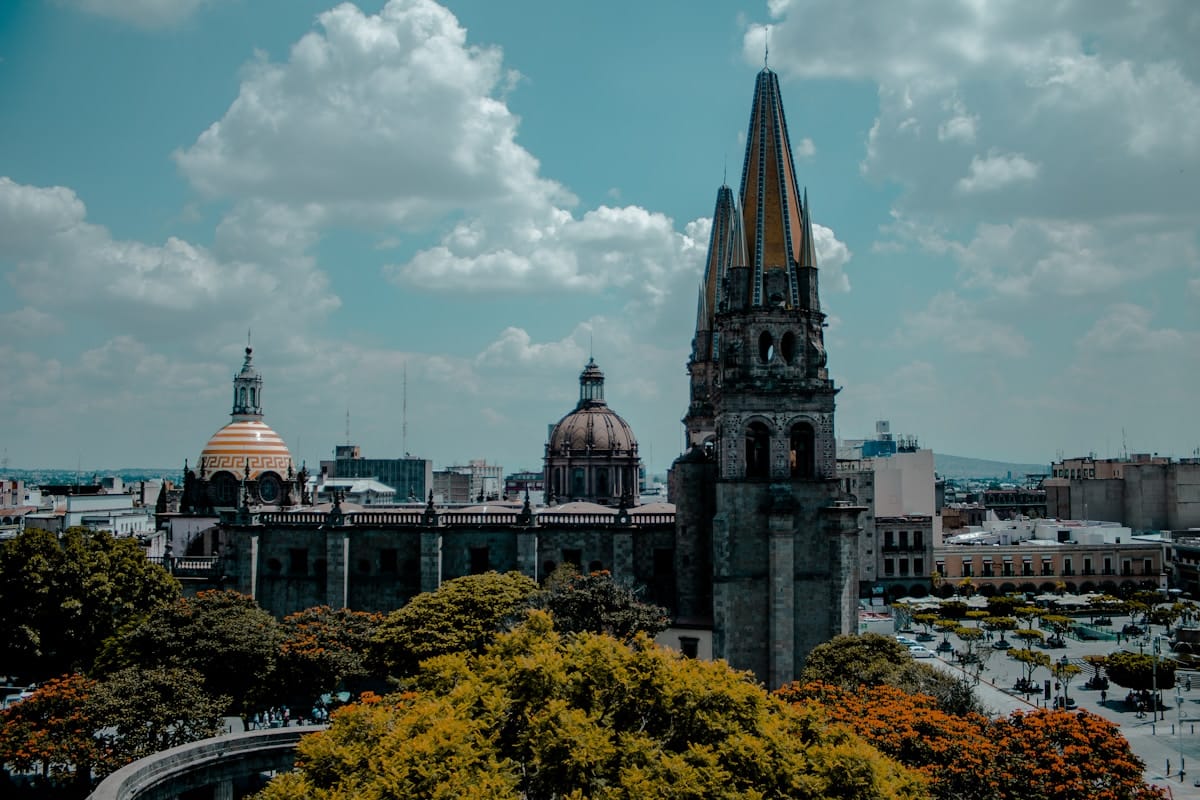
Guadalajara rewards more than a single day. The city proper has several excellent cultural sites, world-class markets, and a strong nightlife scene; the surrounding area includes tequila country, Mexico’s largest lake, and the artisan hub of Tlaquepaque.
Top Tours at a Glance
Here’s a quick comparison of top-rated tours on GetYourGuide:
| Tour | Duration | Price (from) | Group Size | Highlights |
|---|---|---|---|---|
| Tequila Town Day Trip from Guadalajara | Full day (7–8 hrs) | from $55/person | Group | José Cuervo distillery, tequila train option, tastings |
| Guadalajara Historic Centre Walking Tour | Half day (3 hrs) | from $30/person | Small group | Cabañas murals, Teatro Degollado, Mercado San Juan |
| Tlaquepaque + Tonalá Artisan Shopping Tour | Half day (4 hrs) | from $40/person | Small group | Blown glass, talavera pottery, local craft workshops |
| Lake Chapala + Ajijic Day Trip | Full day (7 hrs) | from $50/person | Group | Mexico’s largest lake, expat village, local lunch |
| Mariachi & Nightlife Tour: Plaza Garibaldi | Evening (3 hrs) | from $45/person | Group | Live mariachi, cantinas, tequila culture |
Browse all Guadalajara tours → GetYourGuide
Museums and landmarks
| Sight | Entry Fee | Hours | Notes |
|---|---|---|---|
| Instituto Cultural Cabañas | ~MXN $80 | Tue–Sun 10:00–18:00 | Orozco murals, UNESCO. Free Tuesdays |
| Museo Regional de Guadalajara | ~MXN $75 | Tue–Sun 9:00–17:30 | Pre-Columbian to independence era |
| Teatro Degollado | ~MXN $50 (tour) | Tours Mon–Sat | Neoclassical interior, state orchestra |
| Rotonda de los Jaliscienses Ilustres | Free | Open-air | Monument circle with city views |
| Catedral de Guadalajara | Free | Daily 8:00–20:00 | Twin towers, 16th-century origins |
All prices approximate, as of 2026.
Instituto Cultural Cabañas - the most important cultural site in Guadalajara: an 18th-century hospice complex (UNESCO World Heritage Site) containing the frescoes of José Clemente Orozco. The centrepiece is the Man of Fire on the chapel dome - Orozco’s vision of humanity’s relationship with industrial power, painted from below so the figure appears to rotate as you walk beneath it. Among the most powerful public art in the Americas. The complex also houses rotating contemporary exhibitions. Entry approximately MXN $80. Free on Tuesdays. Allow 1–1.5 hours.
Mercado Libertad (San Juan de Dios) - the largest covered market in Latin America: a multi-storey building of food stalls, clothing, electronics, crafts, and household goods. The food court on the ground floor has the city’s best birria (approximately MXN $80–120 per bowl) and tortas ahogadas (approximately MXN $40–60). Crowded and chaotic - the real Guadalajara rather than the tourist-facing version. Open daily 6 am–8 pm. Free entry.
Mercado Corona - in the Centro Histórico, smaller and calmer than Libertad. Good for prepared food (comida corrida from approximately MXN $60–80), fresh juices (approximately MXN $20–40), and dried chillies.
Tlaquepaque
15 minutes southeast of the city centre (taxi approximately MXN $80–120, or colectivo from the Centro). Pedestrianised streets lined with artisan workshops and shops: hand-blown glass, talavera ceramics, traditional furniture, silver jewellery, and leather goods. Quality ranges from mass-produced to genuine high-craft - the better workshops are further from the main plaza.
The El Parián square has mariachi bands playing for diners at the surrounding restaurants. Good food and a lively atmosphere, especially on weekends. Worth a half-day - combine with Tonalá (the neighbouring craft town, larger and more raw, with a Thursday and Sunday street market covering much of the town centre).
Tequila town (65 km northwest)
The town of Tequila and the surrounding blue agave fields form a UNESCO World Heritage agave landscape - rows of spiny blue-green agave stretching to the horizon. Most distilleries offer tours:
- La Rojeña (José Cuervo) - the oldest operating distillery in the Americas. Tour from approximately MXN $200. Tourist-oriented but historically significant.
- Herradura - a more complete picture of the artisan production process. Tour from approximately MXN $250.
- Smaller artisan distilleries in the surrounding villages offer more intimate experiences with less polished marketing - ask locally.
José Cuervo Express train - runs on weekends from Guadalajara. A scenic all-inclusive day trip through the agave fields with distillery tours, tasting, music, and food. From approximately MXN $1,200 (standard) to MXN $3,250 (premium class). Book at least a week in advance.
By road: Local buses from the old bus terminal (approximately MXN $80, 1.5 hours). Car rental (approximately MXN $500–800/day) gives you flexibility to stop along the agave landscape.
Mariachi and nightlife
Plaza de los Mariachis (near the Mercado Libertad) is the traditional gathering point for mariachi bands - they play for diners at the surrounding restaurants, table by table. It is touristy but genuine: the musicians are professional and the performances are good. Tip approximately MXN $100–200 per song.
Avenida Chapultepec (Chapultepec neighbourhood) has the city’s most concentrated bar and restaurant scene - craft cocktail bars, live music venues, mezcalerías, and clubs. The scene is most active Thursday through Saturday evenings.
Lake Chapala (50 km southeast)
At 1,100 km², Lake Chapala is Mexico’s largest natural lake, in the high valley of the Trans-Volcanic Belt. The lakeside town of Ajijic (pronounced “ah-hee-HEEK”) has a significant North American expat community, a walkable malecón, and good restaurants. Buses from Guadalajara’s old bus terminal run hourly (approximately MXN $60, 1 hour). Boat trips on the lake from Chapala town (approximately MXN $100–200). A day trip or weekend trip.
Barranca de Huentitán
One of the deepest canyons in North America runs through the northern edge of greater Guadalajara - 600 m deep at its most dramatic point. The Parque Mirador Independencia has the best viewpoint - accessible by city bus from the Centro (approximately MXN $10). For the adventurous, hiking to the canyon floor takes 3–4 hours return on a steep trail. The Zoológico Guadalajara (entry approximately MXN $100) sits on the canyon rim with views into the gorge.
Plan your trip: tours in Guadalajara · travel insurance.
More Guadalajara Guides
- Back to Guadalajara Guide
- Day Trips in Guadalajara
- Food to Try in Guadalajara
- Where to Stay in Guadalajara
Search hotels in Guadalajara on Booking.com