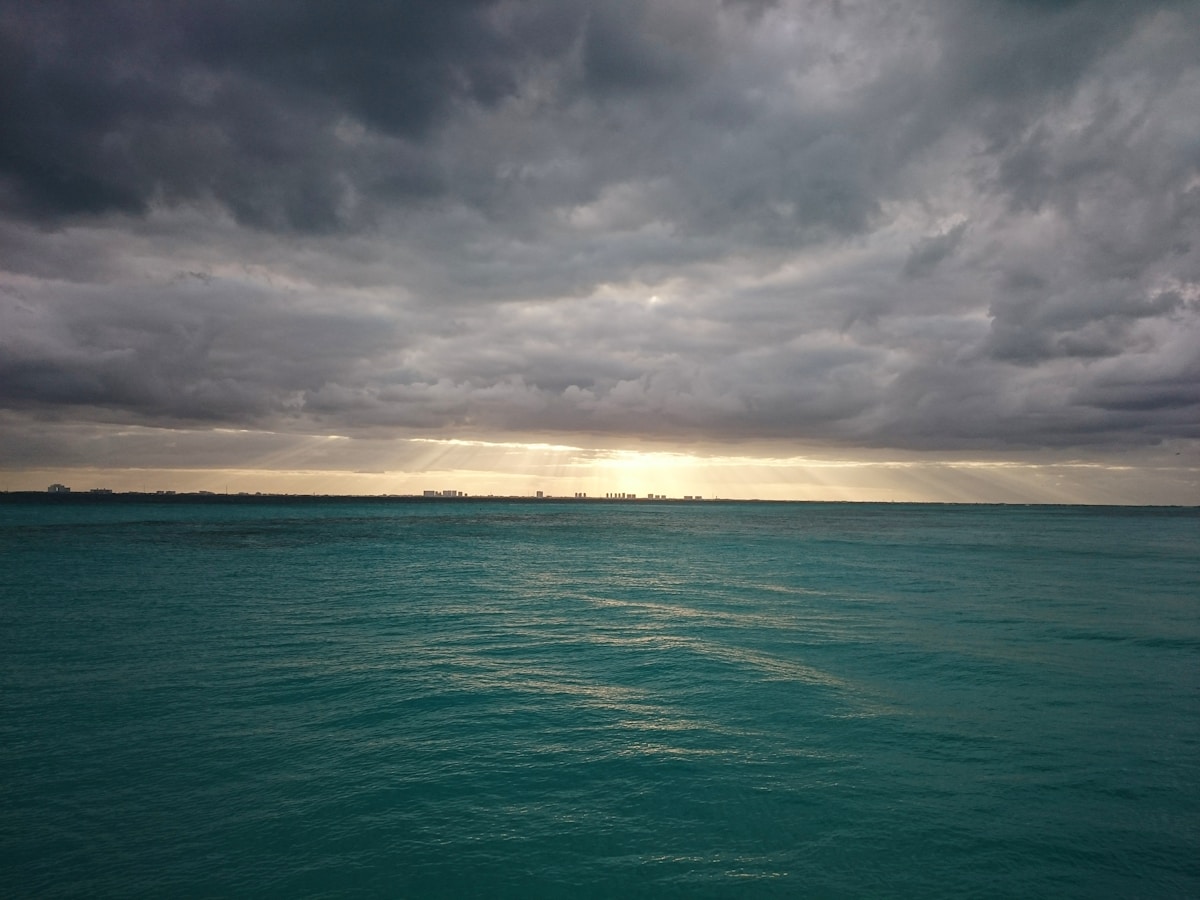
Isla Mujeres sits at one of the Caribbean’s best-connected crossroads. The mainland is 15 minutes by ferry. The Yucatán Channel — where whale sharks aggregate in summer — starts minutes offshore. And one of Mexico’s most strictly protected nature reserves, Isla Contoy, is 25 km to the north. Day trips from here range from a paddleboard session on a deserted bird island to a full-day drive to the world’s most famous Maya pyramid.
Quick comparison
| Day Trip | Distance | Transport | Entry | Time Needed |
|---|---|---|---|---|
| Isla Contoy | 25 km north | Boat tour ~MXN $1,400 | ~USD $12 conservation fee | Full day |
| Whale shark tour | 30–50 km offshore | Boat tour ~MXN $1,600 | — | Full morning |
| Garrafon Reef Park | 7 km south (island) | Taxi ~MXN $80 | ~USD $60–100 (package) | Half day |
| Punta Sur | 7 km south (island) | Taxi ~MXN $80 | Free | 1–2 hours |
| Cancún + snorkelling | 8 km (water) | Ferry ~MXN $100 | Free (city) | Half or full day |
| Isla Holbox | ~200 km overland | Ferry + bus + water taxi | Free (island) | Full day or overnight |
| Tulum ruins | 130 km south | Car ~1.5 hrs | ~MXN $90 | Full day |
| Cobá ruins | 145 km southwest | Car ~2.5 hrs | ~MXN $90 | Full day |
| Chichen Itza | 200 km southwest | Car ~2.5 hrs | ~MXN $700 | Full day |
All costs approximate, as of 2026.
Top Day Trip Tours at a Glance
| Tour | Duration | Price (from) | Group Size | Highlights |
|---|---|---|---|---|
| Isla Contoy full-day tour from Isla Mujeres | Full day | from $80 | Up to 20 | Protected bird island, reef snorkel, lunch included |
| Whale shark swimming from Isla Mujeres | 5 hrs | from $110 | Up to 10 | Swim with whale sharks, Jun–Sep, gear & guide |
| Chichén Itzá day trip with ferry transfer | Full day | from $85 | Up to 20 | El Castillo pyramid, Ball Court, Sacred Cenote |
| Tulum ruins & cenote day trip from Isla Mujeres | Full day | from $75 | Up to 20 | Cliff-top ruins, Caribbean beach, Gran Cenote |
| Cobá pyramid climb from Isla Mujeres | Full day | from $70 | Up to 15 | Last climbable pyramid, jungle setting |
Browse all Isla Mujeres tours → GetYourGuide
Isla Contoy — Mexico’s most protected island reserve
If you do one day trip from Isla Mujeres, make it Isla Contoy. This 8-kilometre island 25 km to the north is a federally protected national park and one of the Mexican Caribbean’s last genuinely wild places — no hotels, no restaurants, no permanent infrastructure of any kind. It was declared a nature reserve in 1961 and a national park in 1998, and the rules are strict by design.
What makes it exceptional: Only 200 visitors are permitted on the island each day — total. By contrast, Isla Mujeres itself receives thousands of tourists per day at peak season. The visitor cap, the absence of development, and the island’s role as the primary nesting site for nine Caribbean seabird species (magnificent frigatebird, brown booby, red-footed booby, olivaceous cormorant, and five others) mean the experience is closer to a wildlife expedition than a beach excursion.
The logistics: Access is exclusively through licensed tour operators based on Isla Mujeres — tours from Cancún or other ports are not permitted under the park’s concession rules. The boat journey takes 45–60 minutes; operators typically stop at a reef for snorkelling on the way out or on the return. On the island itself, two wooden observation towers overlook the mangrove lagoon where sea turtles and rays are routinely visible from above. A visitor centre has bilingual displays on the park’s ecology and nesting cycles. The covered dining area serves lunch (included in most tour packages).
Conservation fee: Tours include a park entry fee of approximately USD $12 per person as of 2026 — a contribution to the conservation management fund that keeps the island in its current state. This is above and beyond the tour price (approximately MXN $1,200–1,600 per person for the full day including boat, snorkelling gear, and lunch).
Book through the authorised Cooperativa de Isla Mujeres operators or via licensed tour companies on the island — availability goes quickly in nesting season (April–September). The 200-person daily limit means late bookings often find the island full.
Whale shark snorkelling — mid-May to mid-September
Isla Mujeres is among the best-positioned bases in the world for whale shark encounters. The aggregation area lies in the Yucatán Channel, approximately 30–50 km from the island — reaching it takes 45–60 minutes by speedboat. Whale sharks (up to 12 m, filter feeders, entirely harmless) feed at the surface on fish spawn, making them accessible to snorkellers without any diving qualification.
Tour boats carry 8–16 passengers and deploy swimmers in groups of 8 maximum alongside each shark. Time in the water is typically 30–45 minutes. The experience — finning at the surface while a 10-metre fish moves beneath you — is one of Mexico’s genuinely unmissable wildlife encounters.
Operators on the main beach road charge approximately MXN $1,400–1,800 per person. Check Isla Mujeres whale shark tours to compare operators and confirm availability — book 1–2 days ahead during July–August. Life jackets and snorkelling equipment are included. Whale shark tours are sometimes combined with an Isla Contoy visit in a single long day.
Garrafon Natural Reef Park — snorkelling, kayaking, zip lines
Garrafon is at the southern end of Isla Mujeres, about 7 km from the main town — a short taxi ride (approximately MXN $80) or a rental golf cart run along the coastal road. The park occupies a shallow reef bay where the coral formations are close enough to the surface that snorkellers hover directly above them without any diving qualification.
The reef at Garrafon was heavily damaged by Hurricane Gilbert in 1988 and has been undergoing managed restoration since the mid-1990s. Visibility is generally 10–20 m; the marine life includes sergeant major fish, parrotfish, angelfish, and occasional sea turtles. Kayaks and paddle boards are available for use within the protected bay.
Entry and packages: Garrafon is run as an all-inclusive day park. Packages range from approximately USD $60 (snorkelling + kayak access) to USD $100+ (all activities plus food and drink). The higher-tier packages include use of the cliff-side infinity pool, hammocks above the water, zip lines across the bay, and lounge chairs. Book Garrafon via tours-isla-mujeres or purchase directly at the park entrance. Open daily, approximately 9 am–5 pm as of 2026.
Garrafon pairs naturally with Punta Sur (see below) — both are at the same end of the island and easily visited in a single half-day.
Punta Sur — sculpture garden at the island’s tip
Punta Sur is the southernmost point of Isla Mujeres, where the Caribbean Sea meets the Gulf of Mexico in a stretch of cliff and exposed ironshore rock. There is no beach here — just the dramatic meeting of two bodies of water, a lighthouse, and one of the island’s more quietly rewarding viewpoints.
The sculpture garden at Punta Sur is an outdoor collection of bronze and stone figures installed by artists from across Mexico and internationally. The pieces are spread along the cliff path with views east and west — most of the island’s sunsets are best watched from here, though the site is accessible all day. Entry is free; the taxi from town is approximately MXN $80.
The Maya temple at Punta Sur (locally called Templo de Ixchel, a small post-Classic shrine to the goddess of medicine and the moon) is modest in scale but occupies the highest point of the island — views from the base cover the full length of Isla Mujeres to the north, with Cancún’s hotel zone visible across the channel. A 15-minute walk connects the lighthouse, temple ruins, and sculpture garden.
Isla Holbox — no cars, flamingos, bioluminescence
Holbox is a different kind of day trip: slower, rawer, and more logistically involved. The island has no cars, no paved roads, and streets of white sand. The reasons to make the effort are flamingo sightings at Yalahau lagoon (a freshwater sinkhole where the birds feed year-round), things to do on Holbox including paddleboard yoga and kitesurfing, and one of the Yucatán’s most reliable bioluminescent bays after dark.
Getting there: Ferry from Isla Mujeres to Puerto Juárez (15 min), then a bus or shared colectivo from Cancún to Chiquila port (approximately 3 hours, MXN $200–250), then a water taxi from Chiquila to Holbox (30 min, approximately MXN $150 each way). Total journey: around 4 hours each way. That makes it a very long day trip — a 5 am start and midnight return is realistic. Most visitors who want to experience Holbox properly stay one or two nights.
If you only have a day, aim to arrive by 10–11 am, rent a golf cart (MXN $500–600 for a half day), visit Yalahau by mid-afternoon, then catch the 6 pm water taxi back to Chiquila in time for the last buses south. Summer visitors can add a bioluminescence tour before leaving — but this commits you to a late departure.
Cancún — snorkelling, underwater art, and the city beyond
Cancún is the easiest half-day from Isla Mujeres: 15 minutes by passenger ferry from the main pier to Puerto Juárez (approximately MXN $90–100 each way). But beyond the hotel zone’s shopping malls, there are better reasons to cross the channel.
MUSA underwater museum: The Museo Subacuático de Arte is a collection of over 500 life-size sculptures sunk in 4–8 m of water off Punta Nizuc in southern Cancún and off Isla Mujeres in Manchones reef. The sculptures are designed as artificial reef habitats — coral has colonised most of them over the last decade. Snorkellers can visit the shallower Manchones site (near Isla Mujeres) without leaving the island, but the Cancún sites are accessible by snorkel tour from Puerto Juárez. Tour operators bundle MUSA snorkelling with reef stops for approximately MXN $800–1,200 per person. See our snorkelling guide for the Riviera Maya for the full breakdown.
Playa Delfines: When Playa Norte on Isla Mujeres gets crowded, Playa Delfines on Cancún’s hotel zone is one of the few stretches of public beach with open surf and no resort gate — a longer, wilder alternative. Take a local bus (Ruta 1) from Puerto Juárez south along Boulevard Kukulcán.
Downtown Cancún: A working Mexican city with none of the hotel zone’s resort prices. Mercado 28 (craft market, haggling expected), Mercado 23 (food market with locals at lunch), and the Museo Maya de Cancún on Boulevard Kukulcán — free on Sundays, two floors of Maya artefacts plus the San Miguelito outdoor ruins.
Tulum ruins — clifftop archaeology, 130 km south
The most visually dramatic archaeological site in the Yucatán. The Tulum ruins occupy a 12 m limestone cliff directly above the Caribbean, with the Temple of the Frescoes and El Castillo pyramid framed by turquoise water — one of Mexico’s most-photographed settings. The site was a late-Classic Maya trading port (900–1500 AD), one of the last inhabited when the Spanish arrived.
Entry approximately MXN $90 as of 2026; open 8 am–5 pm daily. The ruins are compact — 30–45 minutes on foot. Go early; tour buses from Cancún arrive from 10 am. Playa Paraíso below the cliffs allows swimming after the site visit.
Getting there: ferry to Puerto Juárez, car rental (agencies near the terminal), then south on Highway 307 — 1.5 hours, toll approximately MXN $60. ADO buses from Cancún’s main terminal to Tulum pueblo run every 30–60 minutes (approximately MXN $150, 2 hours), then taxi or colectivo to the ruins.
Cobá ruins — jungle pyramid you can still climb, 145 km southwest
Cobá is worth the longer drive if you want elevation. The Nohoch Mul pyramid (42 m) is the tallest Maya pyramid in the Yucatán and — as of 2026 — still open to climbers, unlike Chichen Itza’s El Castillo. The 360° view from the top extends across unbroken jungle canopy in every direction. Cobá’s ruins spread across 70 sq km connected by ancient stone causeways (sacbés) — rent a bicycle at the entrance (approximately MXN $50) to cover the site efficiently.
Entry approximately MXN $90 as of 2026. The site opens at 8 am; arrive before 9 am to beat the tour groups. Car route from Isla Mujeres: ferry to Puerto Juárez, south on Highway 307, then inland via Tulum junction. Combining Tulum and Cobá in one very long day is feasible if you leave the island by 6 am.
Chichen Itza — two hours west, worth every kilometre
The most famous Maya site in Mexico and a UNESCO World Heritage Site. The Temple of Kukulcán (El Castillo) is one of the New Seven Wonders of the World — a 30 m step pyramid with 365 steps and four stairways, aligned precisely to cast a serpent-shadow during the spring and autumn equinoxes.
Entry approximately MXN $700 as of 2026 (includes state fee). The site is large — plan 2–3 hours minimum. Other highlights: the Sacred Cenote (used for ritual offerings), the Great Ball Court (the largest in Mesoamerica), and the Temple of the Warriors. Arrive before 10 am; the site fills dramatically by midday.
Getting there from Isla Mujeres: early ferry, car rental, then west on Highway 180 toll road (approximately MXN $200–250 in tolls, 2.5 hours). Car rental return to Cancún airport rather than the ferry terminal simplifies logistics if you are departing the same evening.
Planning from Isla Mujeres
All mainland day trips begin with the passenger ferry from the main Isla Mujeres pier to Puerto Juárez — not the car ferry (the island has no cars). Ferries run approximately 5 am to midnight, every 30–60 minutes; frequency increases in peak season. Buy a return ticket for your target last ferry when you arrive at Puerto Juárez.
Search hotels in Isla Mujeres on Booking.com
Car hire near Puerto Juárez gives maximum flexibility for Maya site trips. For island excursions — Contoy, whale sharks — book through operators on the beach road or compare tours online a day or two ahead in high season. Isla Contoy tours in particular fill the 200-person daily limit quickly from June to August.