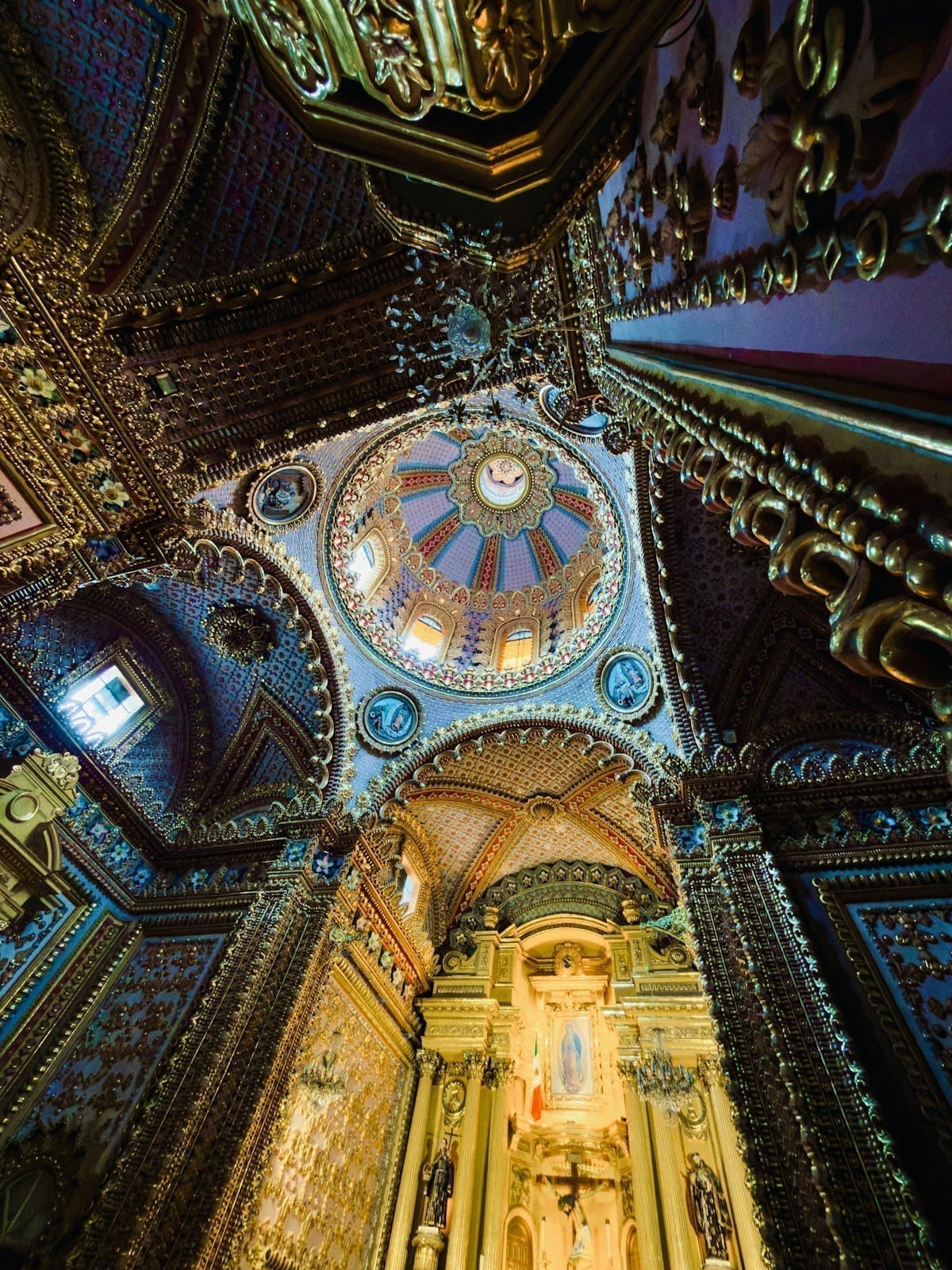
Morelia is the capital of Michoacán state and one of Mexico’s finest colonial cities - a UNESCO World Heritage Site (1991) with a centro histórico built almost entirely in a distinctive pinkish-grey quarry stone (cantera rosa) that gives the city a unified and unusually elegant appearance. It is less visited than Guanajuato or San Miguel de Allende but offers comparable colonial architecture with fewer tourists and better food.
Top Tours at a Glance
| Tour | Duration | Price (from) | Group Size | Highlights |
|---|---|---|---|---|
| Morelia Historic Centre Walking Tour | 2.5 hrs | from $20 | Small group | Cathedral, aqueduct, Palacio de Gobierno murals |
| Monarch Butterfly Sanctuary Day Trip | 8 hrs | from $55 | Small group | El Rosario or Cerro Pelón sanctuary, Nov–Mar |
| Pátzcuaro & Janitzio Lake Day Trip | 7 hrs | from $45 | Up to 15 | Colonial lakeside town, island village, P’urhépecha culture |
| Morelia Food & Michoacán Cuisine Tour | 3 hrs | from $35 | Small group | Carnitas, uchepos, local markets, cooking demo |
| Tequila & Mezcal Distillery Tour | 4 hrs | from $40 | Small group | Michoacán spirits, artisan producers, tastings |
Browse all Morelia tours → GetYourGuide
Activity overview
| Activity | Cost | Duration | Notes |
|---|---|---|---|
| Cathedral and Plaza de Armas | Free | 1 hour | Twin 64 m towers, pipe organ |
| Aqueduct walk | Free | 45 min | 1.5 km, 253 arches, illuminated at night |
| Museo Regional Michoacano | ~MXN $65 (free Sun) | 1 hour | Pre-Hispanic to colonial, Diego Rivera mural |
| Museo de Arte Colonial | ~MXN $50 | 45 min | Colonial religious art |
| Colegio de San Nicolás | Free | 30 min | Oldest university in Americas (1540) |
| Palacio de Gobierno | Free | 30 min | Alfredo Zalce murals |
| Mercado San Juan | Free (food from ~MXN $30) | 1–2 hours | Carnitas, uchepos, budget food |
| Monarch butterfly reserve | ~MXN $60 entry | Full day | Nov–Mar, 2 hours from Morelia |
| Pátzcuaro day trip | Colectivo ~MXN $60 | Full day | Colonial lakeside town, 45 min |
All prices approximate, as of 2026.
The cathedral and centro
The Catedral de Morelia dominates the main plaza - twin 64-metre baroque towers built in phases from 1640 to 1744 in the local pink cantera stone. The facade is restrained baroque; the interior has a magnificent pipe organ (1905, 4,600 pipes) that is still used for concerts - the cathedral hosts a regular programme of organ recitals (check the posted schedule, some events are free). The 4,500-piece crystal chandelier is a later addition but visually impressive.
The Plaza de Armas is the social centre of the city - the arcades around it have cafés, restaurants, and shoe-shine stands. Evening concerts (often brass bands) play from the bandstand on weekends.
Walking from the cathedral east along Calle Madero (the main commercial street) to the Colegio de San Nicolás de Hidalgo (founded 1540, the oldest continuously operating university in the Americas) passes the city’s finest colonial facades - continuous pink-stone buildings with ironwork balconies and carved doorways.
The aqueduct
The Acueducto de Morelia - 1.5 km of arched stone construction completed in 1789 with 253 arches - runs along Calzada Fray Antonio de San Miguel, a pedestrian boulevard flanked by cafés, restaurants, and shade trees. The aqueduct is illuminated at night and the calzada is the city’s best evening paseo (stroll). The combination of pink stone arches, warm lighting, and café tables makes this one of the most pleasant urban walks in Mexico.
Museums
Museo Regional Michoacano (Allende 305, approximately MXN $65, free Sundays) - the regional museum occupies a neoclassical palace with collections spanning pre-Hispanic artefacts (including Purépecha ceramics and masks), colonial art, and local history. A Diego Rivera mural in the upstairs gallery is worth seeking out. The building itself is well-preserved.
Museo de Arte Colonial (Avenida Juárez 240, approximately MXN $50) - a dedicated collection of colonial-period religious art from the Michoacán region. Strong in 17th and 18th-century painting and polychrome sculpture (carved wooden saints with original paint and gilding). Worth 45 minutes for anyone interested in colonial art.
Palacio de Gobierno (on the main plaza, free) - the state government palace contains murals by Alfredo Zalce depicting Michoacán history - from the Purépecha empire through independence. The building is open to visitors during business hours.
Casa de la Cultura (former Carmelite convent, free) - rotating exhibitions, cultural events, and a bookshop. The cloister and courtyard are peaceful.
Mercado San Juan
The central market deserves its own section. Located near the Colegio de San Nicolás, this is where Morelia eats:
- Carnitas stalls (ground floor) - Michoacán-style carnitas cooked in copper vats. Sold by the quarter, half, or full kilo. Arrive before 1 pm - the premium cuts (maciza, buche, cueritos) sell out. Weekend mornings are peak carnitas time.
- Tamale vendors - uchepos (sweet fresh corn tamales) and corundas (triangle tamales) from morning onwards
- Breakfast counters - huevos al gusto, café de olla, fresh juices
- Budget comida corrida - full lunches from approximately MXN $50–80
The market is the best-value and most authentic eating in the city.
Monarch butterfly reserves (November–March)
The Reserva de la Biosfera Mariposa Monarca is approximately 100–120 km northeast of Morelia. Between November and March, tens of millions of monarch butterflies overwinter in the oyamel fir forests - the concentration of orange-and-black wings covering entire trees, with clouds rising when the sun hits them mid-morning, is one of Mexico’s most extraordinary natural spectacles.
El Rosario (near Angangueo, 2 hours from Morelia) - the largest and most visited sanctuary. A moderate uphill walk (approximately 30–45 minutes through the forest, at 3,000 m altitude) leads to the overwintering colonies. Go mid-morning (10–11 am) for the best butterfly activity. Entry approximately MXN $60.
Sierra Chincua (also near Angangueo) - slightly smaller, often less crowded, with a longer hike.
Peak season: January–February has the highest butterfly numbers. Tour operators in Morelia run day trips (approximately MXN $800–1,200 per person including transport and guide). Alternatively, take a bus to Zitácuaro (2 hours) and a colectivo to the sanctuary.
Día de Muertos (late October–early November)
Morelia hosts one of Mexico’s most significant Día de Muertos celebrations. Events run across the last week of October and first days of November - altars in the main plaza, processions to the Guadalupe cemetery, skull face-painting, music, and marigold-decorated streets. The city hosts the Festival Internacional de Cine de Morelia around the same time.
Pátzcuaro (45 minutes away) has the most famous vigils - particularly the overnight ceremony on Janitzio island. Morelia serves as the base for many visitors attending both cities’ celebrations. Book accommodation months in advance.
Practical tips
- Walking: The centro is entirely walkable. Most sights are within a 1 km radius of the cathedral.
- Evening: The aqueduct calzada and the Plaza de Armas are the best evening destinations. The Barrio de Capuchinas (west of the centre) has a growing scene of restaurants, mezcal bars, and cafés.
- Climate: Mild year-round at 1,920 m. Cool evenings, warm afternoons. Rain May–October.
More Morelia Guides
Plan your trip: tours in Morelia · travel insurance.
See Also
- Monarch Butterfly Migration - the El Rosario and Sierra Chincua sanctuaries, accessible from Morelia as a day trip
- Pátzcuaro Travel Guide - 45 minutes west, the lakeside town with Janitzio island and the most celebrated Día de Muertos in Mexico
- Pueblos Mágicos - Morelia and several surrounding Michoacán towns feature on Mexico’s heritage network
Search hotels in Morelia on Booking.com
- Day of the Dead in Mexico - full guide to Día de Muertos celebrations, centred on the Michoacán lake district