Oaxaca City sits in the Valley of Oaxaca - a high-altitude basin at 1,550 m, ringed by mountains and dotted with Zapotec archaeological sites, mezcal distilleries, artisan villages, and some of the most spectacular landscape in southern Mexico. Every day trip listed here is within two hours of the city centre.
Top Tours at a Glance
Here’s a quick comparison of top-rated tours on GetYourGuide:
| Tour | Duration | Price (from) | Group Size | Highlights |
|---|---|---|---|---|
| Monte Albán Ruins + City Tour | Half day (4–5 hrs) | from $40/person | Group | Zapotec capital, bilingual guide, panoramic views |
| Hierve el Agua + Mezcal Distillery Tour | Full day (9 hrs) | from $65/person | Group | Petrified waterfalls, swimming pool, 3 mezcal stops |
| Tlacolula Valley Mezcal & Villages Tour | Full day (8 hrs) | from $60/person | Small group | Palenques in Santiago Matatlán, Mitla ruins, El Tule |
| Oaxaca Mezcal + Chocolate Tasting Tour | Half day (3 hrs) | from $45/person | Small group | City-based: 2 mezcaleras, cocoa workshop, market snacks |
| Full-Day Oaxacan Valley Archaeology Tour | Full day (8 hrs) | from $70/person | Small group (max 8) | Monte Albán + Mitla + El Tule, deep historical context |
Browse all Oaxaca tours → GetYourGuide
Quick comparison
| Day Trip | Distance | Transport | Entry Fee | Time Needed |
|---|---|---|---|---|
| Monte Albán | 9 km | Shuttle MXN $120 return | ~MXN $209 | 2–3 hours |
| Hierve el Agua | 75 km | Colectivos ~MXN $150, or tour | ~MXN $30 | Half day |
| Mitla | 45 km | Colectivo ~MXN $40 | ~MXN $75 | 1–2 hours |
| El Tule | 10 km | Colectivo ~MXN $15 | ~MXN $20 | 30 minutes |
| Teotitlán del Valle | 31 km | Colectivo ~MXN $25 | Free | 2–3 hours |
| Tlacolula market | 30 km | Colectivo ~MXN $25 | Free | 2–3 hours (Sundays) |
| Mezcal distilleries | 30–50 km | Tour or car | Free (most) | Half day |
All prices approximate, as of 2026.
Monte Albán (9 km west, 20–30 minutes)
The Zapotec city that controlled the Valley of Oaxaca from around 500 BCE to 700 CE - built on a hilltop artificially levelled at 1,940 m. The site is laid out around a vast central plaza (300 m × 150 m) with pyramids, a ball court, an astronomical observatory (Building J, aligned to star positions), and the carved Danzantes stelae - over 300 stone carvings depicting figures in contorted positions, possibly sacrificed prisoners or medical subjects. The debate continues.
The view over the three converging valleys from the hilltop platform is reason enough to visit. On a clear morning, the mountain ranges frame every direction.
Entry: Approximately MXN $209 as of 2026 (doubled from 2025 levels). Free for Mexican residents on Sundays; children under 13 free. The fee includes the on-site museum, which has carved stelae and ceramics.
Getting there: Shuttle buses depart from Calle Mina (behind the second-class bus terminal) every 30–60 minutes (approximately MXN $120 return, 20-minute ride). Taxis cost approximately MXN $150–250 one way. Open 8:00–17:00 daily. Allow 2–3 hours - the site is large enough to walk for longer if you explore the peripheral structures beyond the main plaza.
Tips: Arrive at opening (8 am) for the best light and fewest visitors. Bring water, sunscreen, and a hat - there is minimal shade. The café at the entrance sells drinks and snacks at inflated prices; bring your own.
Hierve el Agua (75 km southeast, 2 hours)
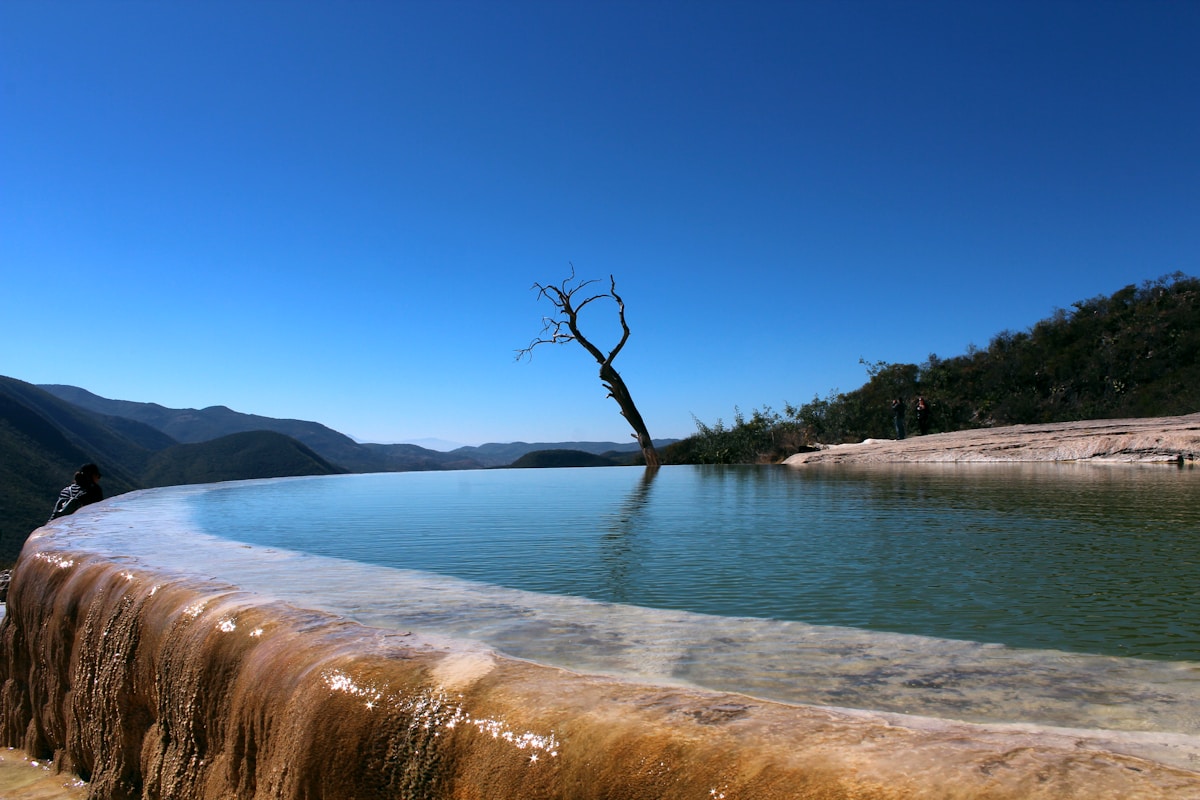
One of the most unusual landscapes in Mexico: mineral-rich spring water has calcified over centuries into cliff-edge formations that resemble frozen waterfalls - the “petrified waterfalls.” The main formation drops 30 m down a cliff face. At the top, two natural infinity pools are swimmable (the water is lukewarm and mineral-rich, with a light sulphur smell). The views over the Oaxacan sierra are exceptional - on clear days you can see the mountain ridges layered to the horizon.
Entry: Approximately MXN $30. There are basic changing facilities and a food stall at the site.
Getting there independently: Take a colectivo from Oaxaca to Mitla (approximately MXN $40, 1 hour), then a second colectivo or shared truck from Mitla to Hierve el Agua (approximately MXN $60–80, 45 minutes - the road is unpaved and winding). Return colectivos from Hierve el Agua stop running by mid-afternoon, so arrive early.
Organised tours: Most Oaxaca agencies combine Hierve el Agua with Mitla ruins and a mezcal distillery stop for approximately MXN $400–600 per person, including transport and guide. This is the easier option and allows you to see three sites in a single day.
Tlacolula Valley mezcal distilleries (30–50 km southeast)
The valley is the heartland of Oaxacan mezcal production. The villages of Santiago Matatlán (the self-proclaimed mezcal capital of the world), San Baltazar Guelavila, Santa Catarina Minas, and Miahuatlán all have distilleries (palenques) open to visitors.
What to look for: distilleries using traditional pit-roasting (agave hearts roasted in an underground stone-lined pit for 3–5 days) and clay-pot distillation rather than industrial copper stills. These methods produce more complex, terroir-specific mezcal at lower volumes. Real Minero (Santa Catarina Minas) is one of the most respected artisan producers - their ensamble and pechuga mezcals are exceptional. Vino de Mezcal Benemérito nearby is another high-quality operation.
Most palenque visits are free and include tasting. Bottles purchased directly from the producer cost approximately MXN $200–800 depending on the agave variety and production method - significantly less than city retail prices.
Tours with a specialist guide who speaks both Spanish and English and can explain the production process in depth are worth arranging in advance - approximately MXN $800–1,500 per person for a half-day guided tour covering 2–3 distilleries.
In-city mezcal and chocolate tasting: For visitors who prefer a city-based introduction before venturing to the valley, several Oaxaca City operators offer half-day tasting tours covering two or three neighbourhood mezcalerías combined with a cocoa or chocolate workshop — Oaxaca is also a major chocolate-producing region, with dozens of artisan chocolate makers using native cacao varieties. These city-based tours run approximately MXN $600–900 per person and take 2–4 hours; they pair well as a first evening activity before a fuller valley day trip.
Mitla ruins (45 km east, 1–1.5 hours)
The most important Zapotec religious centre and the last major Zapotec city to function before the Spanish arrival. Mitla is distinctive for its geometric stone mosaic friezes - intricate patterns assembled from thousands of individually cut stone pieces fitted together without mortar. No other site in Mesoamerica has comparable decorative stonework. The technique is closer to textile weaving translated into stone than to conventional masonry.
Entry: Approximately MXN $75 as of 2026. Open 8:00–17:00 daily. The main palace compound (Grupo de las Columnas) is intact and walkable. Allow 1–1.5 hours.
Getting there: Colectivos from Oaxaca’s second-class terminal run frequently (approximately MXN $40, 1 hour). Often combined with Hierve el Agua (a further 45 minutes by colectivo) on the same day trip.
The town of Mitla itself has good food stalls near the ruins - try the barbacoa tacos and mezcal from the shops on the main road.
El Tule and Teotitlán del Valle
El Árbol del Tule (Santa María del Tule, 10 km east): a Montezuma cypress tree that is the widest in the world - 14 m in diameter, with a circumference of 42 m, estimated at 1,500–3,000 years old. The trunk is so massive it has shapes that locals have named (jaguar, elephant, lion). A 15–30-minute stop; entry approximately MXN $20. The churchyard setting is pleasant. Colectivo from Oaxaca approximately MXN $15.
Teotitlán del Valle (31 km east): a Zapotec weaving village where most families maintain traditional backstrap and pedal looms. The rugs and blankets use natural dyes - cochineal (red, from dried insects), indigo (blue), pomegranate (yellow), and marigold. Designs range from traditional geometric Zapotec patterns to contemporary interpretations. Buying directly from the weavers saves 40–60% over Oaxaca city shops and supports the families directly. Small rugs from approximately MXN $500; large, complex pieces MXN $3,000–10,000+.
The Sunday market is most active, but workshops are open most days - ask any family with a loom sign outside. Colectivo from Oaxaca approximately MXN $25.
Tlacolula Sunday market
The tianguis (open-air market) in Tlacolula de Matamoros (30 km east, colectivo approximately MXN $25) is one of the largest indigenous markets in southern Mexico. Vendors from across the valley bring produce, mezcal, textiles, pottery, and food. The market food section has some of the best barbacoa (pit-roasted lamb) in Oaxaca state - approximately MXN $60–90 per serving with handmade tortillas and consomé. Fresh pulque (fermented agave sap) is sold from buckets. The market runs from early morning to mid-afternoon on Sundays only.
Combining day trips
The eastern valley sites combine naturally: El Tule → Teotitlán del Valle → Mitla → Hierve el Agua makes a full-day circuit by car or by colectivos (start early). Adding a mezcal distillery stop near Matatlán makes it a comprehensive day covering archaeology, crafts, landscape, and mezcal. Monte Albán is in the opposite direction (west) and is best done as a separate half-day trip.
Plan your trip: tours in Oaxaca · car hire · travel insurance.
More Oaxaca City Guides
- Back to Oaxaca City Guide
- Best Restaurants in Oaxaca City
- Cooking Classes in Oaxaca City
- Food to Try in Oaxaca City
- Things to Do in Oaxaca City
Search hotels in Oaxaca on Booking.com