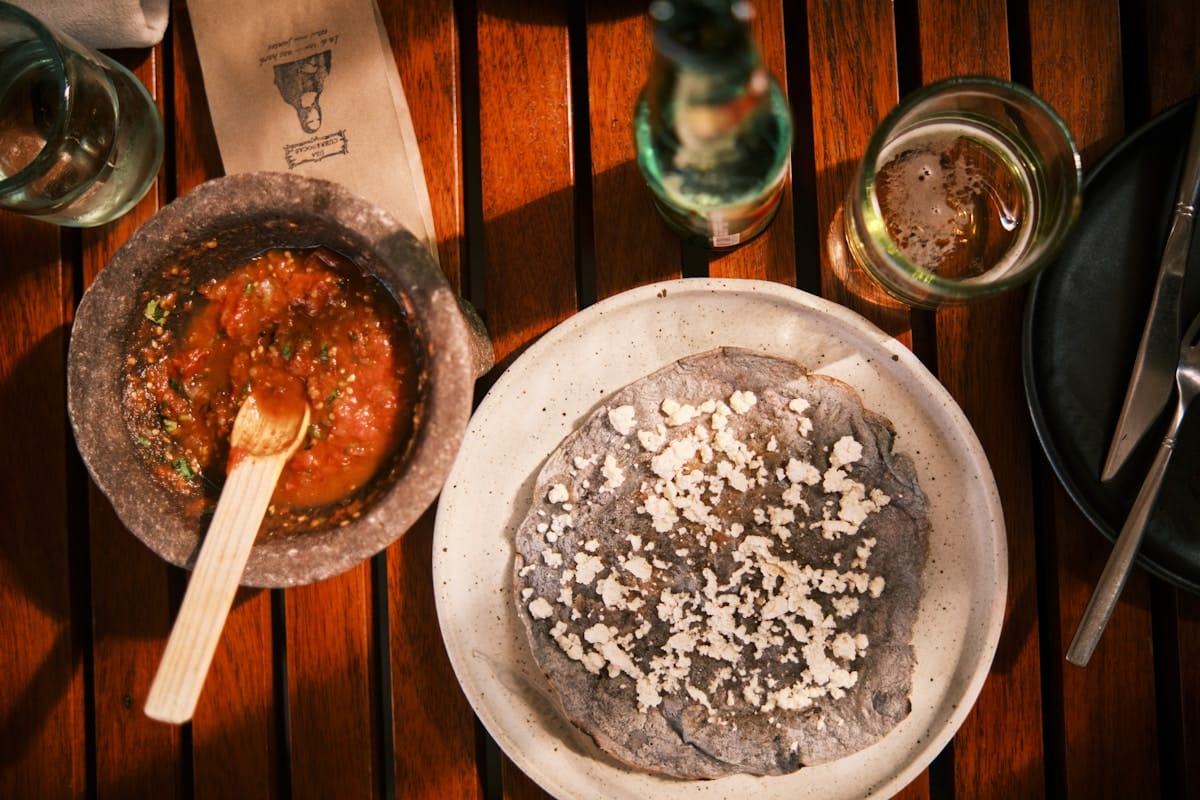
Oaxacan cuisine is one of the most complex and regionally distinct in Mexico - rooted in Zapotec and Mixtec traditions, shaped by ingredients that exist nowhere else (specific dried chillies, wild herbs, aged cheeses, stone-ground chocolate), and centred on the mole tradition that takes days to prepare properly. The best of it is in the markets and family-run fondas, not the tourist-facing restaurants.
Top Food Experiences at a Glance
| Tour | Duration | Price (from) | Group Size | Highlights |
|---|---|---|---|---|
| Oaxaca Food & Mezcal Tour | 3 hrs | from $45 | Up to 12 | Tlayudas, chapulines, mezcal stops, Benito Juárez market |
| Cooking Class: Oaxacan Mole | 4 hrs | from $75 | Up to 8 | Market visit, mole negro, black beans, tortilla pressing |
| Oaxaca Mezcal Distillery Tour | 4 hrs | from $65 | Small group | Artisan palenques, agave types, hands-on tasting |
| Oaxaca Street Food & Chocolate Walk | 2.5 hrs | from $40 | Up to 12 | Tejate, chocolate caliente, tlayudas, local guide |
Browse all Oaxaca City food experiences → GetYourGuide
The seven moles
Oaxaca is known as the “Land of Seven Moles” - the city’s defining culinary signature. Each mole is a different sauce with distinct ingredients, colours, and flavour profiles. The most eaten: mole negro (the complex black standard - 30+ ingredients, dark and bitter-sweet), mole coloradito (reddish, slightly sweet), mole verde (green, herb-forward), mole amarillo (yellow, delicate), and mole chichilo (dark and smoky). A serving at a market fonda costs approximately MXN $60–90.
The best are at market fondas and traditional family restaurants. The Tlacolula Sunday market (30 km east of the city) has exceptional examples from village cooks who bring their family recipes. For a detailed breakdown of all seven moles - what goes in each, preparation methods, and where to eat them - see our Oaxacan Mole Guide.
Tlayuda
A large (30–40 cm), slightly crisp corn tortilla brushed with black bean paste and asiento (unrefined pork fat, essential to the flavour), topped with tasajo or other meats and quesillo (Oaxacan string cheese). Served open-face, folded in half, or rolled. Available throughout the day; the street vendors near the Zócalo sell them from approximately MXN $40–80 in the evenings. The Pasillo de los Humos in Mercado 20 de Noviembre grills them to order for approximately MXN $60–100.
Tasajo and the meat tradition
Tasajo - thin-cut, air-dried beef with a slightly salty, concentrated flavour. Grilled to order at the 20 de Noviembre market charcoal stands (approximately MXN $50–80 per portion) and eaten in tacos, on tlayudas, or alongside rice and beans. Cecina - thin pork, lightly seasoned with chilli. Chorizo negro - a dark, spice-heavy pork sausage distinctive to Oaxaca. At the Pasillo de los Humos, you choose your cut from the display, specify the weight, and it is grilled on open charcoal while you wait - served with handmade tortillas, nopales, and salsa.
Chapulines
Toasted grasshoppers, typically small or medium size, seasoned with lime, chilli, and salt. Sold by the scoop at the markets - approximately MXN $20–40 for a small bag. Strong, earthy, and crunchy; commonly eaten as a snack, as a taco topping, or mixed into guacamole. This is real food, not a tourist novelty - Zapotec communities have eaten chapulines for thousands of years. The best come from the field season (June–October); off-season specimens are often smaller and drier.
Oaxacan cheese (quesillo / queso Oaxaqueño)
A pulled-curd string cheese that melts beautifully - used on tlayudas, in quesadillas, and melted over meats. The best is handmade in the valleys around Etla. The markets sell it wound into balls (from approximately MXN $30–60 per ball); some vendors let you taste before buying. The fresh version has a milky, slightly tangy quality lost in the commercial versions sold elsewhere in Mexico.
Chocolate
Oaxacan chocolate is stone-ground with cinnamon and sugar on a metate (stone grinding surface). The result is a coarse, grainy paste used to make hot chocolate (dissolved in hot water or milk, whisked with a molinillo until frothy) or as a mole ingredient. The chocolate-grinding shops on Calle Mina near the central market let you choose your cacao, sugar, and cinnamon ratio and grind it to order - approximately MXN $80–150 per kilo. El Mayordomo and La Soledad are the best-known.
Mezcal
Matatlán (30 minutes southeast) is the self-proclaimed world capital of mezcal - dozens of small palenques (distilleries) using traditional pit-roasting and clay-pot distillation. Visits are informal and usually free, with tasting included.
In the city, mezcal bars serve bottles from producers rarely exported. Start with joven espadín (the baseline agave, approximately MXN $60–80 per pour) to understand the category, then explore rarer varieties: tobalá (floral, complex, from approximately MXN $120), tepeztate (herbal, smoky, takes 25–35 years to mature), and arroqueño (earthy, rich). A flight of three costs approximately MXN $200–350.
Where to eat
| Spot | What to order | Approximate price |
|---|---|---|
| Mercado 20 de Noviembre (Pasillo de los Humos) | Grilled tasajo, chorizo, tlayuda | MXN $50–100 per portion |
| Mercado Benito Juárez fondas | Mole negro, comida corrida | MXN $50–90 per meal |
| Tlayuda street stands (near Zócalo, evenings) | Tlayuda with tasajo | MXN $40–80 |
| Boulenc (García Vigil 304) | Sourdough breakfast, pastries | MXN $100–200 |
| Los Danzantes (Macedonio Alcalá 403) | Modern Oaxacan, mezcal cocktails | Mains MXN $200–400 |
| Itanoni (Belisario Domínguez 513) | Handmade tortillas, tetelas, memelas | MXN $30–80 per item |
| Tlacolula Sunday market | Village mole, barbacoa, pulque | MXN $40–80 per serving |
The market fondas are the cheapest and most authentic eating in the city. For sit-down modern Oaxacan cuisine, Los Danzantes and Origen (Hidalgo 820, tasting menus from approximately MXN $1,200) are the most celebrated. For breakfast, Boulenc serves excellent sourdough bread and pastries in a courtyard near Santo Domingo. Itanoni is a tortillería-restaurant dedicated to heirloom corn varieties - the tetelas (triangular stuffed tortillas) are outstanding.
Practical notes
Tlacolula Sunday market transport: From Oaxaca city, take a colectivo (shared minivan) from the second-class bus terminal (Terminal de Autobuses de Segunda Clase, near Mercado de Abastos) for approximately MXN $20–30 each way, 30–40 minutes. Colectivos run from around 6 am on Sundays and return throughout the day. Alternatively, taxis from the Centro cost approximately MXN $200–300 each way. The market is at its busiest 8 am–1 pm - leave the city by 8 am to arrive before the peak crowd.
Matatlán mezcal distilleries: 30 minutes southeast by taxi (approximately MXN $150–200 each way) or colectivo from the second-class terminal. Some operators combine a Matatlán distillery visit with a half-day tour including other artisan villages (Teotitlán del Valle for weavings, San Bartolo Coyotepec for black clay pottery). A full-day combined tour from the city typically costs approximately MXN $600–1,000 per person.
Mercado 20 de Noviembre vs Mercado Benito Juárez: The two markets are side-by-side on 20 de Noviembre street, a 10-minute walk from the Zócalo. The 20 de Noviembre market has the famous Pasillo de los Humos (charcoal grill corridor) for meat - the Benito Juárez market has the daily fresh ingredient stalls, chocolate shops, and fonda lunches. Both are walkable from all central accommodation.
Chocolate shop timing: El Mayordomo and La Soledad (Calle Mina) open around 8 am and run through the day. Arrive in the morning when the grinding machines are freshest and the scent of toasted cacao fills the street.
Plan your trip: tours in Oaxaca.