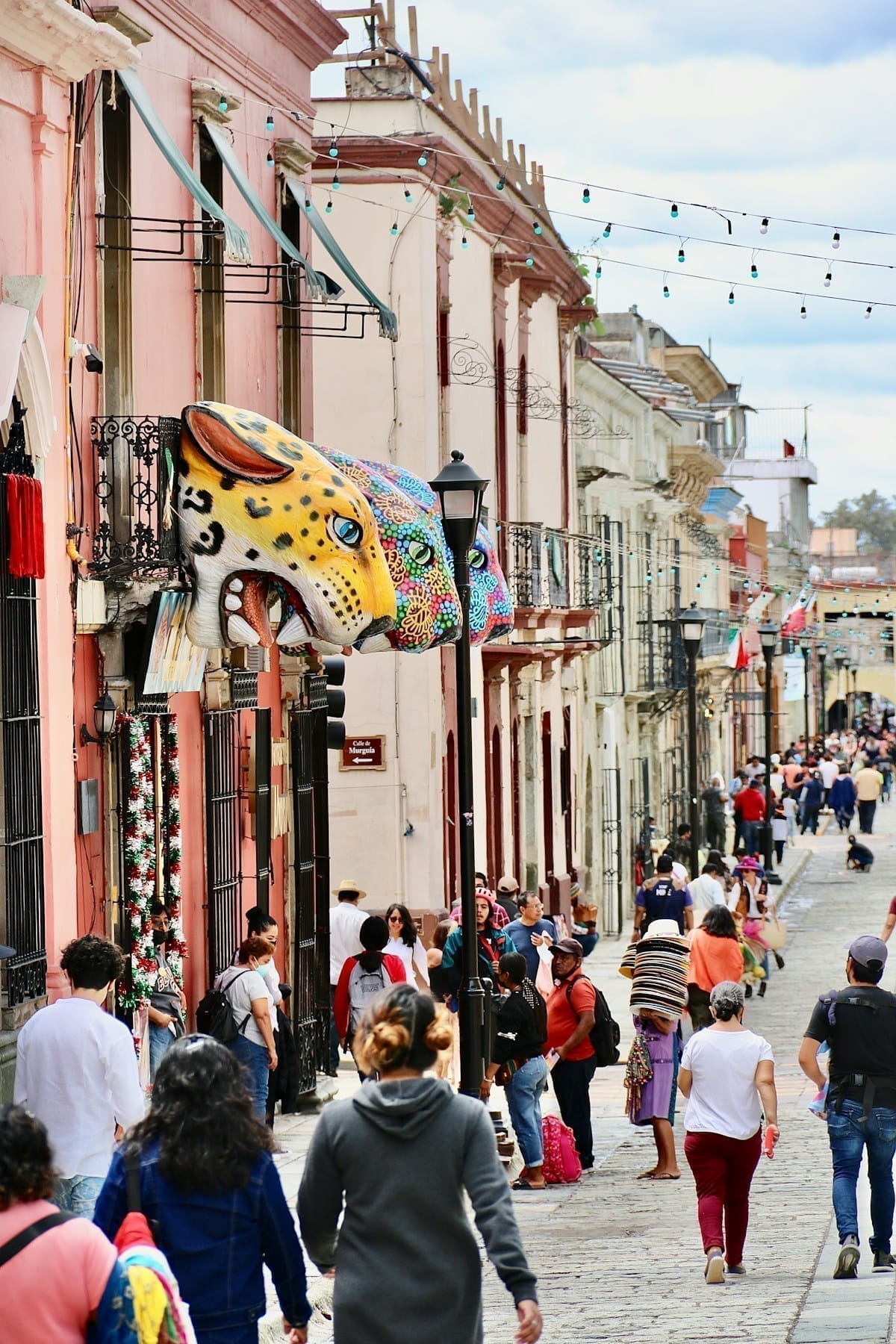
Oaxaca City is compact enough to walk everywhere in the centre, and there is enough within a two-hour radius to fill a week easily. The city itself has world-class museums, markets, and mezcal bars; the surrounding valley holds archaeological sites, craft villages, petrified waterfalls, and mezcal distilleries. Here is what to prioritise.
Top Tours at a Glance
Here’s a quick comparison of top-rated tours on GetYourGuide:
| Tour | Duration | Price (from) | Highlights |
|---|---|---|---|
| Oaxaca Food & Markets Tour | 2.5 hrs | from $40 | Mercado 20 de Noviembre, tastings of tasajo and chapulines |
| Evening Street Food Tour — 14+ Tastings | 3 hrs | from $55 | Night market circuit, tlayudas, mole negro, mezcal |
| Mezcal Tasting with Expert | 2 hrs | from $38 | 6+ agave varieties, education session, cocktail included |
| Mezcal Palenque Day Tour — Santiago Matatlán | 5–6 hrs | from $81 | Distillery visit, production demo, 8+ tastings, lunch |
| Monte Albán + Craft Villages Day Tour | 7–8 hrs | from $55 | Zapotec ruins, Teotitlán rugs, San Bartolo pottery |
| Hierve el Agua + Mitla + Mezcal Day Tour | 8 hrs | from $65 | Petrified waterfalls, Zapotec mosaics, distillery visit |
Browse all Oaxaca City tours → GetYourGuide
Museums and landmarks
| Sight | Entry Fee | Hours | Notes |
|---|---|---|---|
| Museo de las Culturas de Oaxaca | ~MXN $90 | Tue–Sun 10:00–18:00 | Tomb 7 gold assemblage. Inside Santo Domingo complex |
| Templo de Santo Domingo | Free | Daily 7:00–20:00 | Baroque masterpiece. Gilded genealogical tree ceiling |
| Museo Textil de Oaxaca | Free | Mon–Sat 10:00–20:00, Sun 10:00–18:00 | Weaving traditions of Oaxaca’s indigenous communities |
| MACO (Museo de Arte Contemporáneo) | ~MXN $30 | Wed–Mon 10:30–20:00 | Contemporary Oaxacan art in a colonial mansion |
| Jardín Etnobotánico | ~MXN $50 (guided tour only) | Tours at 11:00 (Spanish), 12:00 (English) | Cacti and native plants in former monastery gardens |
Entry fees approximate, as of 2026.
Museo de las Culturas de Oaxaca - inside the Ex-Convento de Santo Domingo complex, this is one of the best regional museums in Mexico. The ground floor covers pre-Hispanic Oaxacan civilisations through the colonial era. The undisputed highlight: the complete Tomb 7 assemblage from Monte Albán - gold, jade, turquoise, and carved bone jewellery from a Mixtec burial, displayed intact exactly as found. Allow 90 minutes.
Templo de Santo Domingo - the church itself, adjacent to the museum, has one of the most extraordinary baroque interiors in the Americas. The gilded stucco ceiling above the entrance depicts a genealogical tree of the Dominican order in three dimensions - vines, angels, and saints reaching across the vault. Free entry, but donations accepted.
Calle Macedonio Alcalá - the main pedestrianised street connecting the Zócalo to Santo Domingo. Art galleries, mezcal bars, chocolate shops, and bookshops line both sides. Good for an evening stroll after dinner.
Markets
Mercado 20 de Noviembre - the essential Oaxaca eating experience. The Pasillo de los Humos (Smoky Corridor) is a row of charcoal grills where you choose your cut of meat (tasajo, chorizo, cecina) from a display and it is grilled to order, served with handmade tortillas, nopales, and salsa. Approximately MXN $50–100 per portion. The market also has chocolate-grinding stalls, cheese vendors, and fruit juice stands. Open daily from 7 am.
Mercado Benito Juárez - adjacent to 20 de Noviembre, focused on groceries, dried chillies, mole paste, chapulines (grasshoppers), flowers, and everyday goods. The dried chilli section alone has dozens of varieties. Good for buying mole paste (from approximately MXN $50–100 per half-kilo) and Oaxacan chocolate to take home.
Mercado de Abastos - the massive wholesale market on the western edge of the city. Overwhelming in scale, primarily for locals. The Saturday tianguis (open-air market) draws vendors from surrounding villages and is worth the trip for the spectacle and the indigenous food stalls.
Mezcal
The best mezcal in the world is made in Oaxaca state, and the city’s bars serve single-village, single-agave bottles from producers rarely exported. A pour of joven espadín (the baseline agave) costs approximately MXN $60–80; rarer varieties like tobalá, tepeztate, and arroqueño run MXN $100–200 per pour. A flight of three for comparison costs approximately MXN $200–350.
Good bars include Mezcaloteca (Calle Reforma 506, by appointment - a serious tasting room), In Situ (Morelos 511 - wide selection, knowledgeable staff), and La Mezcalerita (Macedonio Alcalá - casual, good for an evening drink).
Day trips from the city
Monte Albán (9 km west) - the ancient Zapotec capital on a levelled mountaintop at 1,940 m. Entry approximately MXN $209 as of 2026. Shuttle from Calle Mina approximately MXN $120 return. Open 8:00–17:00 daily. Allow 2–3 hours. The site is often less crowded than you might expect - mornings before 10 am are quietest.
Hierve el Agua (75 km southeast) - petrified waterfalls where mineral-rich springs have calcified into cliff-edge formations with swimmable pools at the top. Entry approximately MXN $30. Getting there independently: colectivo to Mitla then a second colectivo (~2 hours total, MXN $100–150). Tours from the city combine this with Mitla and a mezcal distillery for approximately MXN $400–600 per person.
Mitla (45 km east) - the most important Zapotec religious centre, distinctive for geometric stone mosaic friezes unlike anything else in Mesoamerica. Entry approximately MXN $75. Often combined with Hierve el Agua on the same day trip.
Craft village circuit
A full day covers several specialised craft villages, each within an hour of the city:
- Teotitlán del Valle (31 km) - Zapotec rug weaving on traditional looms using natural dyes (cochineal, indigo, pomegranate). Buying directly from weavers saves 40–60% over city shops. Rugs from approximately MXN $500 for small pieces to MXN $10,000+ for large, complex designs.
- San Bartolo Coyotepec (20 km) - barro negro pottery, the distinctive burnished black clay unique to this village. Small pieces from approximately MXN $50.
- Arrazola (25 km) - alebrijes, the painted wooden fantasy creatures. Prices range widely: small souvenir pieces from approximately MXN $100, detailed work from master carvers MXN $2,000–10,000+.
- Atzompa (8 km) - green-glazed ceramics. Less visited than the others, with a good mirador (viewpoint) over the valley.
- San Martín Tilcajete - larger-scale alebrije workshops with more contemporary designs.
Rent a car (from approximately MXN $500–800/day) or join a guided day tour (approximately MXN $500–800 per person including transport).
Guelaguetza (late July)
Oaxaca’s most important festival fills the city with traditional dance, music, and food from 16 indigenous communities across the state. The formal performances in the hillside amphitheatre (Auditorio Guelaguetza) require tickets - free sections fill by 6 am; paid seats from approximately MXN $200. The street celebrations, parades, and food markets are free and run for two weeks. Accommodation books up 2–3 months ahead.
Plan your trip: tours in Oaxaca · travel insurance.
More Oaxaca City Guides
- Back to Oaxaca City Guide
- Best Restaurants in Oaxaca City
- Cooking Classes in Oaxaca City
- Day Trips in Oaxaca City
- Food to Try in Oaxaca City
Search hotels in Oaxaca on Booking.com