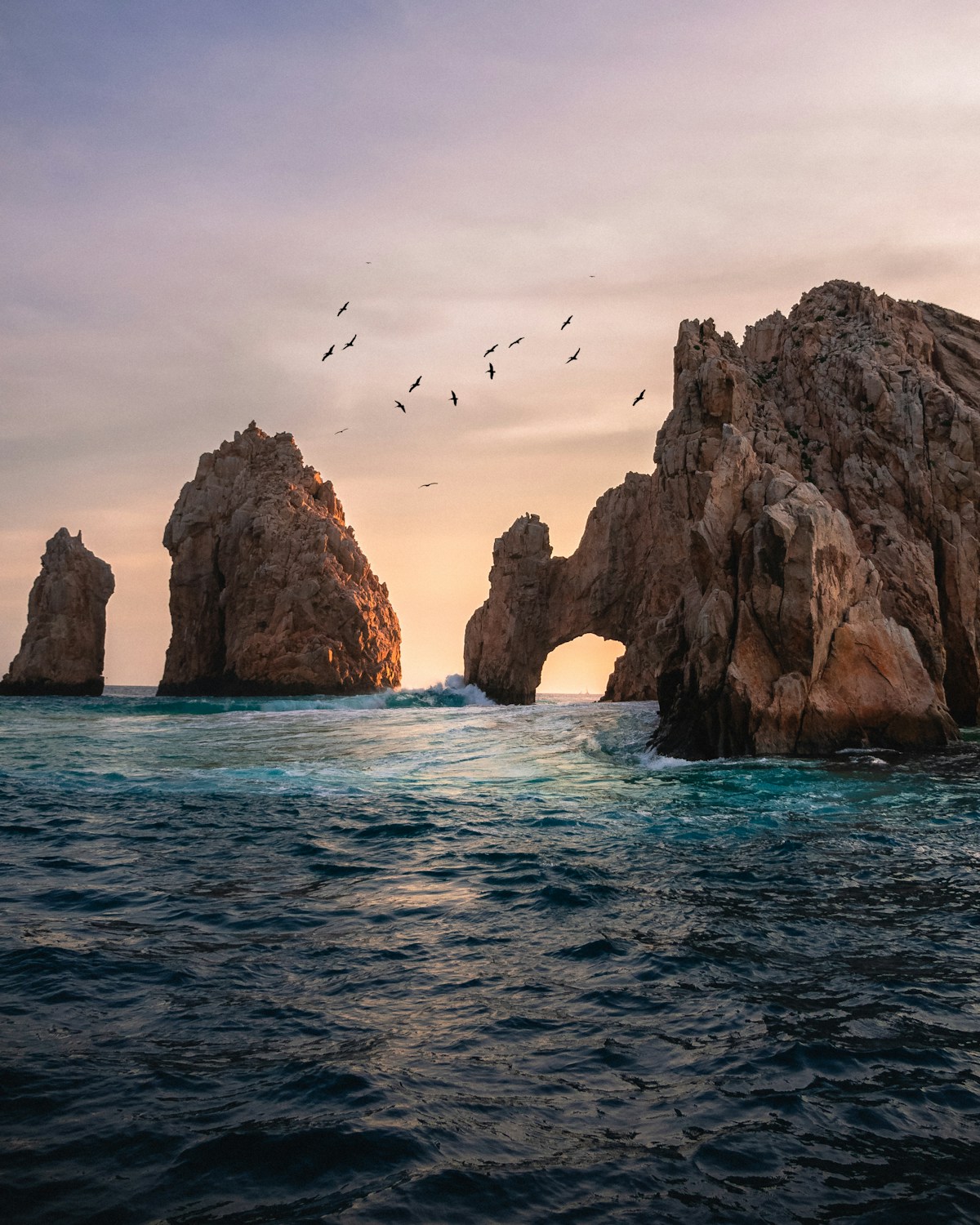
Los Cabos and Puerto Vallarta are Mexico’s two premier Pacific coast destinations - both attract significant international tourism, both have luxury hotel markets, and both face the Pacific Ocean. The similarities end there. Los Cabos is at the southern tip of the Baja California Sur desert, with stark rock formations and world-class sport fishing. Puerto Vallarta is in the lush jungle-meets-bay environment of Jalisco, with a historic colonial centre and one of Mexico’s finest resort-city food scenes. Here’s how to choose between them.
Quick Verdict
| Los Cabos | Puerto Vallarta | |
|---|---|---|
| Location | Southern Baja California Sur | Northern Jalisco, Banderas Bay |
| Landscape | Desert, rock, Pacific drama | Jungle, bay, colonial city |
| Character | Luxury resort corridor | Historic city + resort hybrid |
| Beach swimming | El Médano good; others rough | Banderas Bay, generally swimmable |
| Food scene | Good, growing | Outstanding, strong local scene |
| Sport fishing | World-class (marlin, dorado) | Good but not world-class focus |
| Golf | Excellent (scenic courses) | Available but fewer top courses |
| Daily budget | MXN $1,500–10,000+ | MXN $800–4,000 |
| Best for | Luxury couples, fishers, golfers | Foodies, couples, LGBTQ+ visitors |
Getting There
Los Cabos International Airport (SJD) has excellent US and Canadian direct connections, with frequent flights from Los Angeles, Phoenix, Dallas, Houston, and Toronto. European direct routes are limited. From the US West Coast: 2.5–3 hours. From the East Coast: 5–6 hours. The Tourist Corridor hotels are 30–45 minutes from the airport by transfer (approximately MXN $400–700 by shared shuttle, approximately MXN $800–1,400 by private transfer as of 2026).
Puerto Vallarta’s Licenciado Gustavo Díaz Ordaz International Airport (PVR) is similarly well-connected from North America - strong direct service from Los Angeles, San Francisco, Chicago, and Houston. From the US West Coast: 2.5–3 hours. From Canada: 4–5 hours. The Romantic Zone and Centro are 10–15 minutes from the airport; Marina Vallarta is essentially adjacent to it.
Both are roughly equidistant for most US travellers. From the US East Coast, Los Cabos may have a slight advantage in direct flight availability; from Canada’s West Coast, both are equally accessible.
The Two Destinations
Los Cabos is actually two distinct towns connected by the 33 km Tourist Corridor:
- Cabo San Lucas: The party town at Land’s End - Marina, beach clubs, nightlife, and the famous Arch (El Arco) accessible by boat. More commercial, noisier, and geared toward high-energy tourism.
- San José del Cabo: The quieter, colonial town with an Art District, a weekly Thursday Art Walk, and the better restaurant scene. More refined than Cabo San Lucas; preferred by return visitors.
The Tourist Corridor between them is where the luxury hotel market concentrates - unbroken desert cliff-edge views, large resort properties, and golf courses. Read more on the Los Cabos city hub.
Puerto Vallarta is a working Mexican city that grew a resort around an existing colonial town. This means it has neighbourhoods with genuine local character:
- Romantic Zone (Zona Romántica): South of the Cuale River, the most atmospheric part of the city - independent restaurants, bars, gay-friendly venues, and beach clubs.
- Centro Histórico: The original city with the iconic parish church (Iglesia de Nuestra Señora de Guadalupe), the Malecón seafront promenade, and the founding neighbourhood character.
- Marina Vallarta: North of the airport, a more modern marina development with luxury hotels and golf. Read more on the Puerto Vallarta city hub.
Beaches and Water
Los Cabos beach highlights:
- Playa El Médano (Cabo San Lucas): The main swimming beach, sheltered in Cabo’s bay, with beach clubs and watersports. Busy, social, and the safest Pacific-side swimming in the area.
- Playa Chileno and Playa Santa María (Corridor, free public beaches): Beautiful for snorkelling in calm coves, not recommended for open swimming.
- Lover’s Beach (Playa del Amor): Accessible only by boat - accessed from the Cabo Marina, approximately MXN $300–500 return. Dramatically beautiful setting at the Arch.
The Sea of Cortez is one of the world’s most biodiverse marine environments - Jacques Cousteau called it “the world’s aquarium.” Snorkelling, diving, whale watching (December–March), and whale shark encounters (September–November) are all available from Cabo or nearby La Paz.
Puerto Vallarta beach highlights:
- Playa Los Muertos (Romantic Zone): The city’s most popular urban beach with a pier, beach clubs (Mantamar, Wax, La Palapa), and full-service amenities.
- Sayulita (60 km north): One of Mexico’s most beloved surf towns - Cobblestone streets, hippy-chic restaurants, and a consistent beach break. 1.5 hours north by bus (approximately MXN $30).
- Las Ánimas, Quimixto, Yelapa: South coast villages accessible only by water taxi from Los Muertos Pier - deserted beaches and waterfall hikes.
- Marietas Islands: Protected biosphere with the famous Playa del Amor (hidden beach), excellent snorkelling, accessible by regulated tour only.
Food
Puerto Vallarta has meaningfully better food than Los Cabos for independent restaurant dining.
Puerto Vallarta standouts: La Palapa (Pulpito 103, seafood mains approximately MXN $250–500 as of 2026), El Arrayan (Allende 344, traditional Mexican, approximately MXN $200–380), Mariscos Cisneros (Insurgentes, fish tacos approximately MXN $40–60 each) for exceptional value seafood. The Thursday Farmer’s Market (October–April, Parque Lazaro Cárdenas) draws specialty producers from the surrounding region. See our street food guide for more on Mexican taco and street food culture.
Los Cabos dining: San José del Cabo’s Art District has the better restaurant scene of the two towns. La Lupita Taco & Mezcal (San José, tacos approximately MXN $120 each as of 2026), Acre Baja (San José, farm-to-table, mains approximately MXN $300–550), and Flora Farms (private farm restaurant, pre-booking required, approximately MXN $400–700/main) are the destination dining highlights. Cabo San Lucas has sportier bars and grills around El Médano beach; the quality ceiling in San José is higher.
Activities
| Activity | Los Cabos | Puerto Vallarta |
|---|---|---|
| Sport fishing | World-class | Good |
| Whale watching | Excellent (Dec–Mar) | Some (Banderas Bay, Nov–Mar) |
| Snorkelling/diving | Sea of Cortez, Land’s End | Marietas Islands, Los Arcos |
| Golf | 9+ championship courses | Several courses |
| Surfing | Good (East Cape) | Excellent (Sayulita) |
| Desert hiking/ATV | Excellent (Baja desert) | Limited |
| Jungle zip-lining | Limited | Excellent (Sierra Madre) |
| Day trips | Baja wine country (Valle de Guadalupe) | Sayulita, Yelapa, Riviera Nayarit |
Cabo wins for fishing, golf, and desert-based adventures. Puerto Vallarta wins for jungle activities, surfing at Sayulita, and broader day-trip variety to Pacific coast communities.
Accommodation
Los Cabos luxury leaders: One&Only Palmilla (Corridor, approximately MXN $12,000–25,000+/night as of 2026), Las Ventanas al Paraíso (Corridor, approximately MXN $10,000–20,000/night), Esperanza Auberge (Punta Ballena, approximately MXN $8,000–15,000/night). Mid-range: Hyatt Place San José del Cabo (approximately MXN $1,500–2,800/night), El Ganzo (San José Marina, approximately MXN $2,500–4,000/night).
Puerto Vallarta luxury: Casa Kimberly (Zaragoza 445, approximately MXN $3,500–6,000/night as of 2026), Grand Velas Riviera Nayarit (Nuevo Vallarta, all-inclusive, approximately MXN $5,000–9,000/person/night), Hotel Mousai (adults-only, approximately MXN $3,500–5,500/night). Mid-range: Hotel Básico (5th Avenue Norte, approximately MXN $1,800–3,000/night), Hotel Buen Ayre (approximately MXN $1,000–1,800/night). Budget guesthouses in the Romantic Zone: approximately MXN $600–1,200/night.
When to Visit
Los Cabos: November–May is the prime season - dry, sunny, comfortable. June–October brings summer heat (32–37°C), higher humidity, and Pacific hurricane risk. Winter whale watching (December–March) is a major draw. Christmas and spring break are peak pricing periods.
Puerto Vallarta: December–April is peak season - cool evenings, minimal rain, ideal beach weather. May–June is a pleasant shoulder period. July–October is rainy season - afternoons see Pacific squalls, but mornings are often sunny. Hurricane risk exists June–November on the Pacific coast. Read our Mexico hurricane season guide for specific guidance.
Verdict
Choose Los Cabos if luxury resort amenities, world-class sport fishing, championship golf, and the dramatic desert-Pacific landscape are priorities. The Cabo experience is defined by the Sea of Cortez, the Arch, and the Baja Peninsula’s unique natural environment.
Choose Puerto Vallarta if you want a city with genuine character beyond the hotel corridor, a food scene worth travelling for, and easy access to Pacific surf communities like Sayulita. Puerto Vallarta also offers better mid-range value and is one of Mexico’s most welcoming destinations for LGBTQ+ travellers.
For a Pacific Mexico trip that shows both sides of the coast, flying into Cabo and out of Puerto Vallarta (or vice versa) makes an excellent one-way itinerary.
Plan your trip: tours in Puerto Vallarta · tours in Los Cabos · flights to Mexico · travel insurance.
Related City Guides
Ready to Plan Your Trip?
See our itineraries for inspiration:
- 2 Weeks Mexico - the two-week Mexico circuit
- 3 Weeks Mexico - the three-week grand tour of Mexico
- 1 Week Mexico - one week covering Mexico City, Oaxaca and the beach
- 10 Days Mexico - ten days from the capital to the Caribbean