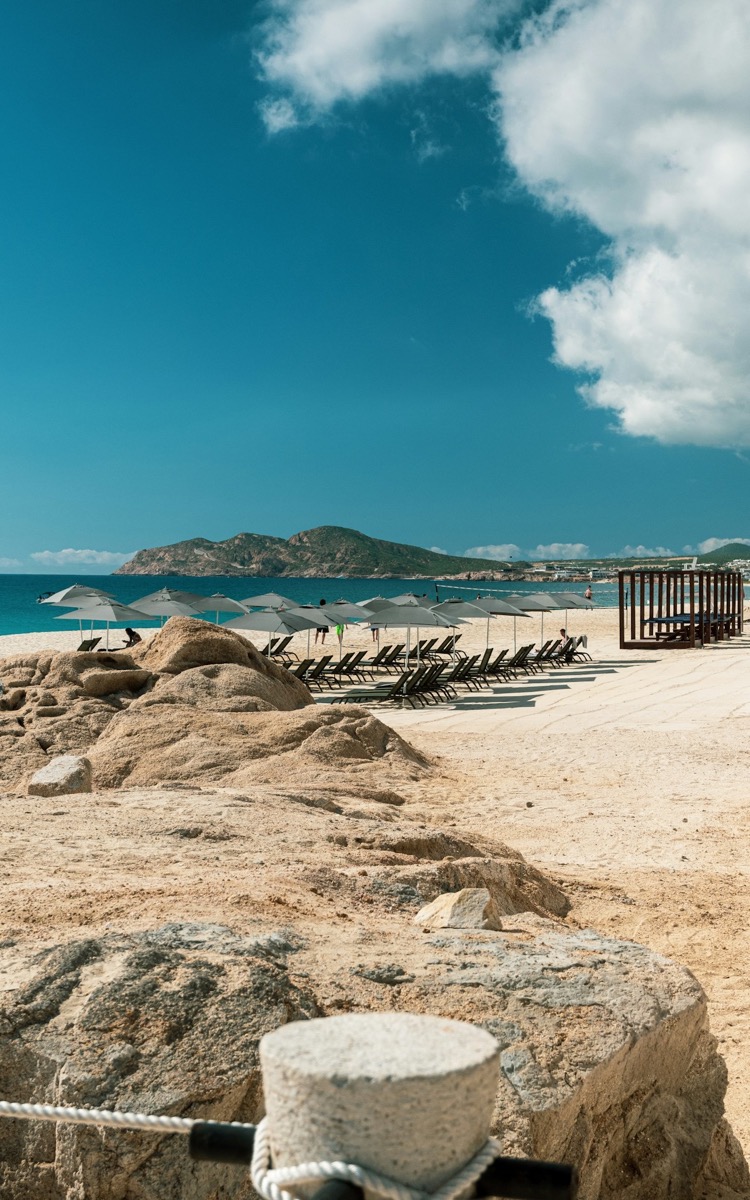
Cancún and Los Cabos are Mexico’s two most internationally known beach resort destinations, yet they’re as different as the seas they face. Cancún looks east over the Caribbean; Cabo faces the Pacific and the Sea of Cortez. The differences go well beyond geography.
Location and Getting There
Cancún is on the Caribbean coast of the Yucatán Peninsula. Cancún International Airport (CUN) is one of Mexico’s busiest, with direct routes from dozens of US, Canadian, and European cities. Flight times from the US East Coast are 3–4 hours; from the UK, 10–11 hours with direct service on British Airways and TUI.
Los Cabos is at the southern tip of Baja California, 2,000 km northwest of Cancún. Los Cabos International Airport (SJD) has strong US and Canadian connections but fewer European direct routes. Flight times from the US West Coast are 2.5–3 hours; from the East Coast, 5–6 hours.
If you’re flying from Europe or the US East Coast, Cancún is typically easier and cheaper to reach. From the US West Coast, Cabo is often the more direct option.
Beaches
Cancún beaches face the Caribbean and are calm, flat, and turquoise. The Hotel Zone beach strip is wide, well-maintained, and backed by resort properties. Playa Delfines (free, public) is one of the finest public beaches in Mexico. Sargassum seaweed can affect some beaches April–September, though the city manages this actively.
Cabo San Lucas has Playa El Médano - the town’s main swimming beach - which is sheltered in the bay and suitable for families and casual swimmers. However, the Pacific-side beaches are rougher and known for dangerous currents. The appeal of Cabo’s coastline is the drama: massive rock formations, the famous Arch (El Arco) at Land’s End, and a raw Pacific energy. It’s more visually striking than Cancún’s beaches but less reliably swimmable.
Edge: Cancún for flat-water swimming and beach-day reliability; Cabo for scenery and dramatic coastline.
Accommodation
Both destinations have abundant luxury and mid-range resort options. The character differs significantly.
Cancún is dominated by large all-inclusive resorts along the Zona Hotelera - Riu, Barceló, Hard Rock, Moon Palace, and others hold 500–2,000 rooms each. All-inclusive pricing can represent strong value for those who stay within the resort. There are also boutique and non-AI options, plus affordable accommodation in Cancún Centro for those who want to explore the city.
Approximate Cancún nightly rates as of 2026:
- All-inclusive (per person, including meals/drinks): MXN $2,500–6,000
- Mid-range Hotel Zone room: MXN $2,000–4,500
- Budget guesthouse in Centro: MXN $500–1,200
Los Cabos has both large all-inclusives (Pueblo Bonito, Riu Palace, Barceló) and an exceptionally strong luxury boutique sector - Las Ventanas al Paraíso, Esperanza Auberge, and One&Only Palmilla are among the most expensive hotels in Mexico. The Tourist Corridor between San José del Cabo and Cabo San Lucas concentrates the high-end properties.
Approximate Los Cabos nightly rates as of 2026:
- All-inclusive (per person, including meals/drinks): MXN $3,500–8,000
- Tourist Corridor luxury resort: MXN $5,000–20,000+
- San José del Cabo boutique hotel: MXN $1,500–3,500
Food and Dining
Cancún food is heavily resort-centric in the Hotel Zone - international buffets, chain restaurants, and beach clubs. The local food scene is in Cancún Centro, with tacos, seafood, and Mexican street food at a fraction of hotel zone prices.
Los Cabos has a food culture that punches well above its size. San José del Cabo’s Art District has an excellent dining scene; Cabo San Lucas itself has a mix of sports bars and upmarket restaurants. Standouts include La Lupita Taco & Mezcal (San José del Cabo, tacos from approximately MXN $120 as of 2026), Sunset Monalisa (Cabo San Lucas, sunset dining, mains approximately MXN $450–900), and the Thursday Art Walk evening in San José which combines galleries and outdoor food stalls.
Edge: Los Cabos for food quality; Cancún for value.
Activities and Day Trips
| Activity | Cancún | Los Cabos |
|---|---|---|
| Cenote swimming | Excellent (dozens nearby) | Not available |
| Mayan ruins | Chichén Itzá, Tulum, Cobá nearby | None nearby |
| Whale watching | Not common | Excellent (Dec–Mar) |
| Sea of Cortez snorkelling | No | Cabo Pulmo, Land’s End |
| Caribbean snorkelling | Cozumel (ferry+boat) | No |
| Nightlife | Extensive club district | Active but smaller scale |
| Fishing | Good (Caribbean) | World-class (Baja marlin) |
| Golf | Multiple courses | More courses, higher quality |
| ATV/desert tours | Limited | Excellent (Baja desert) |
Cancún wins on cultural day trips by a significant margin - the Yucatan’s Maya ruins, cenotes, and colonial cities (Mérida, Valladolid) are within 2–3 hours. Cabo wins on marine activities in the Sea of Cortez, one of the most biodiverse marine environments on the planet.
Best For
Choose Cancún if:
- You’re flying from the US East Coast or Europe
- You want easy access to Mayan sites and cenotes
- All-inclusive is your preferred travel style
- You’re travelling with a group that wants big nightlife
Choose Cabo if:
- You’re flying from the US West Coast
- You want dramatic Pacific scenery over flat Caribbean
- You’re focused on marine activities, sport fishing, or desert adventure
- You prefer boutique hotels over mega-resorts
- You have more budget to spend
Can You Do Both?
Cancún and Los Cabos are 2,500 km apart overland and require a connecting flight via Mexico City or Guadalajara. Doing both on one trip is possible but impractical for shorter visits - the logistics eat into beach time. Most travellers choose one. If you have 2+ weeks and a connecting flight is in the budget, Los Cabos as the second leg of a Cancún-Riviera Maya trip works well.
Plan your trip: tours in Cancún · flights to Mexico · travel insurance.
Related City Guides
- Cancún Travel Guide
- Los Cabos Travel Guide
- Riviera Maya Beaches - the Caribbean coastline around Cancún in detail
- Pacific Coast Beaches - the Los Cabos corridor on Mexico’s Pacific
- All-Inclusive Resorts in Mexico - resort options at both destinations
Ready to Plan Your Trip?
See our itineraries for inspiration:
- 10 Days Yucatan - ten days through the Yucatán Peninsula
- Yucatan Road Trip - a ten-day Yucatán road trip
- 10 Days Mexico - ten days from the capital to the Caribbean
- 2 Weeks Mexico - the two-week Mexico circuit