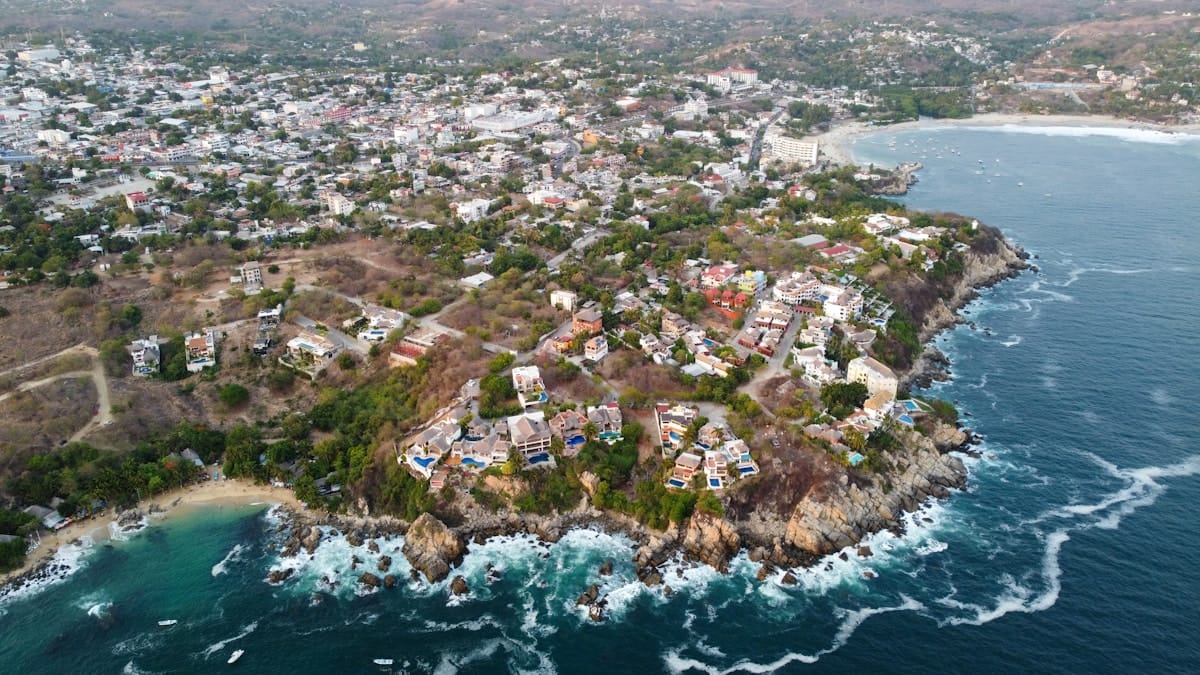
Mexico’s Pacific coast stretches over 7,000 km from the tip of Baja California to the Guatemala border. It is a fundamentally different beach experience from the Caribbean: more surf, cooler water (18–29°C depending on location and season), dramatic scenery where the Sierra Madre meets the ocean, and fewer all-inclusive resorts dominating the better stretches. The Pacific coast rewards exploration - some of Mexico’s finest beaches require a boat ride, a dirt road, or at least knowing where to turn off the highway.
Pacific vs Caribbean: what to expect
The Pacific coast has significantly more wave action - excellent for surfing, dramatic for scenery, less ideal for calm swimming with small children. Water temperatures are cooler than the Caribbean (though very swimmable from Nayarit southward). Visibility for snorkelling is generally lower than the Caribbean’s clear waters, though the Sea of Cortez (Baja’s east coast) is a notable exception. The dry season on the Pacific mirrors the Caribbean: November–April is optimal for most areas, with calmer seas, less rain, and lower humidity.
Best beaches by region
Nayarit and Jalisco (Puerto Vallarta corridor)
Playa de los Muertos, Puerto Vallarta: The main beach of the Zona Romántica - a wide crescent of golden sand with good swimming conditions, lively beach bar scene, and vendors selling everything from fresh ceviche to jewellery. Gets crowded by mid-morning. Beach chairs approximately MXN $100–200/day with a minimum food/drink purchase. Best early morning or late afternoon.
Sayulita (45 minutes north of Puerto Vallarta): A consistent, friendly beach break suitable for learning and intermediate surfing. The beach itself is compact but attractive, with several surf schools offering 90-minute lessons (approximately MXN $500–800 including board). Board rental approximately MXN $200–300/hour. The town has a strong café and restaurant scene - Don Pedro’s (beachfront, mains approximately MXN $150–300) is the anchor. Sayulita is busiest December–March and on weekends year-round.
Playa Las Ánimas and Yelapa (by boat from Puerto Vallarta): Accessible only by water taxi from Boca de Tomatlán pier (approximately MXN $180–250 return, 20–30 minutes). No road access, which keeps both beaches quieter than the mainland. Las Ánimas has beach restaurants and basic palapa shade. Yelapa is a small village with a waterfall hike (approximately 30 minutes each way), overnight options, and a more remote atmosphere. Day-trippable from PV, but the evening without crowds is worth staying overnight if time allows.
San Pancho (San Francisco) (50 minutes north of Puerto Vallarta): Quieter and more upscale than Sayulita - a long, straight beach with moderate waves and fewer services. Popular with a more laid-back crowd. Limited vendors and beach services, which is part of the appeal.
Punta Mita / Playa Litibú: North of Sayulita, the Punta Mita headland has several protected beaches with calmer water. Hotel access dominates the best stretches, but Playa Litibú remains public and relatively uncrowded.
Oaxacan coast (Puerto Escondido to Huatulco)
Zicatela, Puerto Escondido: The Mexican Pipeline - one of the top surf breaks in the Americas. A powerful beach break producing long barrels during the May–October south swell season. Strictly for experienced surfers during large swells (waves regularly reach 3–5 metres). The southern end of Zicatela (La Punta) is significantly gentler and suitable for beginners. Board rental approximately MXN $200–300/hour at La Punta; surf lessons approximately MXN $500–700.
Carrizalillo, Puerto Escondido: A sheltered cove below a cliff, accessed by approximately 170 steps. Calm and clear water even when Zicatela is dangerous - the best swimming beach in the Puerto Escondido area. Beach chairs and umbrellas available (approximately MXN $100–150 with food purchase). Snorkelling is decent on the rocky edges.
Playa Bacocho, Puerto Escondido: West of town, a long open beach with strong currents (not ideal for swimming). Good for sunset walks. Several beach clubs (Coco Loco, Bacocho Beach Club) offer pools and food.
Playa San Agustín, Huatulco: The quietest of Huatulco’s nine bays - very clear water, good snorkelling, minimal development. Accessible by boat from Santa Cruz bay (approximately MXN $200–300 return) or by a rough dirt road. Bring your own food and water, or eat at the basic palapa restaurant on the beach.
Bahía de Cacaluta, Huatulco: An undeveloped bay within the Huatulco National Park - accessible by boat or a 20-minute hike from the road. Turquoise water, white sand, no services. Protected as part of the national park (entry approximately MXN $50).
Guerrero coast (Zihuatanejo and Acapulco)
Playa La Ropa, Zihuatanejo: One of the Pacific coast’s best swimming beaches - a protected bay with calm, warm water, golden sand, and a line of casual seafood restaurants. The name (“clothes beach”) supposedly comes from silk that washed ashore from a shipwrecked Manila galleon. Water is swimmable year-round. Beach chairs approximately MXN $100–200 with food purchase.
Playa Las Gatas, Zihuatanejo: Accessible by water taxi from the pier (approximately MXN $60 return). A small beach with a natural reef that creates calm snorkelling conditions. Restaurants and dive operators on the beach. More sheltered than La Ropa.
Troncones (20 km north of Zihuatanejo): A point break and beach break combination, quieter than Sayulita, popular with intermediate and advanced surfers. The village is small and mellow - a handful of guesthouses, a few restaurants, and surf. A genuine escape.
Baja California
Playa El Médano, Cabo San Lucas: The main swimming beach in Los Cabos - located in the bay rather than on the open Pacific side, so calmer than most Pacific beaches in the area. Lively beach club scene (Mango Deck, The Office), water sports, and vendors. Can be loud and crowded during spring break and holidays.
Playa Balandra, La Paz: A shallow turquoise lagoon approximately 30 minutes north of La Paz by car. The water is warm, calm, and waist-deep far from shore - resembling a Caribbean beach more than a typical Pacific one. The iconic mushroom-shaped rock formation is heavily photographed. Protected as a natural area; no food vendors, so bring everything you need. Arrive early - the small car park fills by mid-morning.
Playa del Amor (Lover’s Beach), Cabo San Lucas: At the tip of the Baja peninsula near El Arco - accessible only by water taxi (approximately MXN $200–300 return from the marina). The Pacific side (Divorce Beach) has dangerous currents and is not swimmable; the Sea of Cortez side is calm and suitable for swimming and snorkelling.
East Cape beaches (Sea of Cortez): Between La Paz and Cabo Pulmo, the eastern coast of Baja has exceptionally clear, calm water and largely deserted beaches. Cabo Pulmo is a national marine park with some of the best snorkelling and diving on Mexico’s Pacific coast - a recovered reef system with large schools of fish, sea lions, and occasional whale sharks (November–March).
Surf conditions
The Pacific coast receives two primary swell types:
| Season | Swell direction | Best locations | Wave size |
|---|---|---|---|
| Winter (Nov–Mar) | Northwest | Sayulita, Troncones, San Pancho | Medium (1–2 m) |
| Summer (May–Oct) | Southwest/South | Puerto Escondido (Zicatela), Barra de la Cruz | Large (2–5+ m) |
| Year-round | Mixed | Sayulita (most consistent), La Punta (PE) | Variable |
Puerto Escondido’s Mexican Pipeline is primarily a summer south swell phenomenon - the biggest waves arrive June–August. Sayulita works in both swell directions but is more consistent in winter. Troncones picks up both swells and is less crowded than Sayulita year-round.
Water temperature by region
| Region | Winter (Dec–Mar) | Summer (Jun–Sep) |
|---|---|---|
| Northern Baja (Pacific) | 16–18°C | 19–22°C |
| Southern Baja (Sea of Cortez) | 20–23°C | 27–30°C |
| Nayarit/Jalisco (PV area) | 23–25°C | 27–29°C |
| Guerrero (Zihuatanejo) | 26–28°C | 28–30°C |
| Oaxacan coast (PE, Huatulco) | 26–28°C | 27–29°C |
A wetsuit is advisable for northern Baja year-round and for early morning sessions in Nayarit during winter. From Guerrero south, the water is warm enough for board shorts or a bikini year-round.
Practical notes
- Rip currents: Pacific beaches have stronger currents than Caribbean beaches. Swim at lifeguarded beaches where possible. If caught in a rip, swim parallel to the shore rather than against the current
- Sun intensity: The Pacific coast receives intense UV, particularly November–April. Reef-safe sunscreen is increasingly required at marine parks and recommended everywhere
- Rainy season (June–October): Afternoon thunderstorms are common but usually clear by evening. Tropical storms and hurricanes are possible September–November on the Pacific coast south of the Tropic of Cancer
- Beach access: All beaches in Mexico are federal property (zona federal) - legally public. Some resort developments restrict access in practice; if challenged, the legal right to beach access is established in Mexican law
Plan your trip: tours across Mexico · travel insurance · flights to Mexico.
Related City Guides
- Sayulita Travel Guide
- Puerto Escondido Travel Guide
- Huatulco Travel Guide
- Puerto Vallarta Travel Guide
- Zihuatanejo Travel Guide
- Los Cabos Travel Guide
Search hotels in Mexico on Booking.com