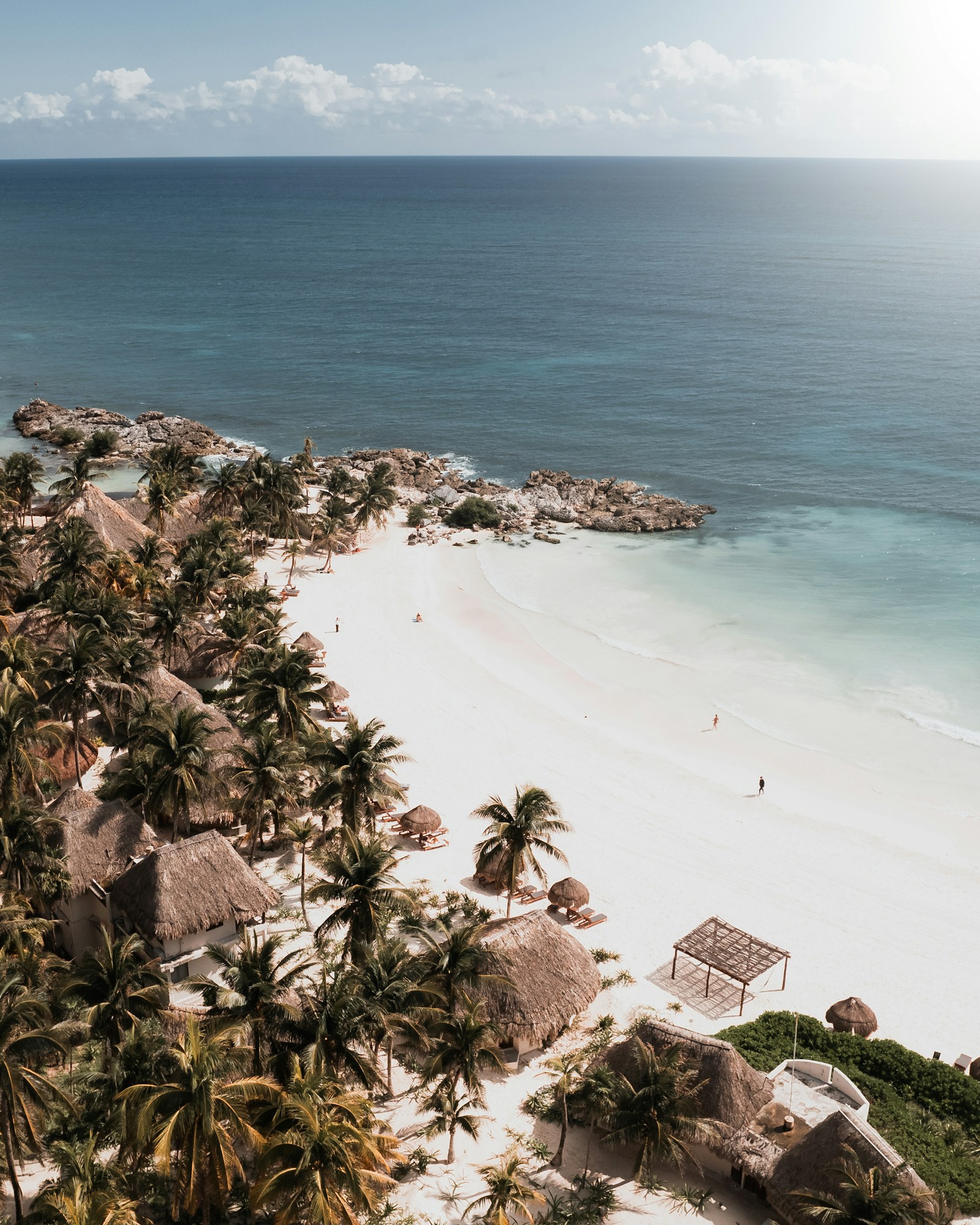
Mexico is one of the world’s great beach countries - and one of the most underrated by travellers who think “Mexican beach” means one resort corridor. The country holds over 11,000 km of coastline across two fundamentally different seas: the Caribbean to the east, warm and calm and turquoise, and the Pacific to the west, cooler, more powerful, and dramatically scenic. Then there is Baja California, a peninsula stretching 1,200 km into the sea with coastline on both sides, and the Oaxacan coast, where the Mexican Pipeline shares a shoreline with some of the country’s most relaxed and least-developed beach towns.
No other country in the Americas gives you this range. A week in the Caribbean, a week on the Pacific - same country, completely different experience.
For deeper regional coverage, we have two dedicated guides: our Riviera Maya beach guide covers the Caribbean coast from Cancún to Tulum in detail, and our Pacific coast beach guide covers Puerto Vallarta, Puerto Escondido, Los Cabos, and Zihuatanejo. This article takes the national overview - fourteen specific beaches across four regions, with honest notes on what each one actually delivers.
Caribbean Coast
Mexico’s Caribbean coast is what most people picture when they think of Mexican beaches: white sand, postcard-blue water, coral reefs close to shore. The warmth (26–29°C year-round) and the absence of strong currents on most beaches make this the most accessible coastline for families and first-time visitors.
Playa Norte, Isla Mujeres
The finest beach within reach of Cancún - a 700-metre arc of powdery white sand where the turquoise water stays shallow and calm for fifty metres or more from shore. Isla Mujeres is a 30-minute ferry ride from Puerto Juárez (approximately MXN $300 return on Ultramar), and the town is compact enough to explore on a golf cart or bicycle. Playa Norte has beach clubs with chairs and umbrellas (approximately MXN $100–200/day with food purchase), but the public sections are equally good. For the full Isla Mujeres guide, including overnight options, see our city hub.
Vibe: Relaxed, family-friendly. Best for: calm swimming, snorkelling on the northern reef. Sargassum impact: minimal (geography protects it).
Tulum Beach
The stretch running north from the Tulum ruins is one of the most photographed beaches in Mexico - and it earns it. The limestone cliff topped by the ruins, turquoise Caribbean water, and white sand form a combination that is difficult to beat visually. The beach below the ruins is a public zone; the beach clubs begin north of there. The clubs are expensive (expect to pay MXN $300–600 in minimum spend for a lounger) but the scenery justifies the splurge once. Our Tulum city hub covers the full beach access situation, including the best budget approach.
Vibe: Scenic, upscale. Best for: photography, beach clubs, snorkelling near the reef. Sargassum impact: moderate in peak season (May–September).
Akumal Bay
Thirty-five kilometres south of Playa del Carmen, Akumal is where wild sea turtles feed on the seagrass close to shore. Guided snorkelling tours are required (approximately MXN $500–800/person, 1–1.5 hours) and are well-run. Half Moon Bay, a 10-minute walk north, is quieter with excellent independent snorkelling. Colectivos from Playa del Carmen cost approximately MXN $40 to the highway turnoff. The bay itself is calm, clear, and warm - genuinely good swimming outside of the turtle tour circuit.
Vibe: Wildlife-focused, family-friendly. Best for: turtle snorkelling, calm swimming. Best time: December–April (clearest water).
Playa del Carmen
The town beach at Playa del Carmen offers a completely different experience from the isolated coves above - this is a proper working beach town. The ferry pier for Cozumel sits at the north end, beach clubs alternate with open public sections, and the water is clear and calm. The Fifth Avenue strip runs parallel two blocks back. It is not the most pristine beach in Mexico, but the combination of beach, restaurants, nightlife, and Cozumel day trips makes Playa del Carmen one of the most practical bases on the coast.
Vibe: Social, town beach. Best for: a full-service base with beach access. Sargassum impact: variable.
Holbox
Holbox sits at the northwestern tip of the Yucatán Peninsula on a shallow lagoon - no cars, no coral reef, and water that is a distinctive milky turquoise rather than Caribbean clear. The beach is wide and natural, with no beach clubs dominating the frontage. Holbox is best known for whale shark encounters (June–September, roughly MXN $1,800–2,500 per tour), but the beach works any time of year. Getting there requires a 45-minute bus from Cancún to Chiquilá, then a 30-minute ferry (approximately MXN $200 return).
Vibe: Low-key, bohemian. Best for: budget stays, whale sharks, a break from the resort corridor. Sargassum impact: low.
Pacific Coast
Mexico’s Pacific side is a different proposition - cooler water, bigger waves, and scenery where mountains meet the ocean rather than flat coastal plain. This coast rewards surfers, divers, and anyone who finds the Caribbean coast too manicured. For the full breakdown, see our Pacific coast beach guide.
Playa de los Muertos, Sayulita
Sayulita is forty-five minutes north of Puerto Vallarta and the Pacific coast’s best-known surf and beach town. Playa de los Muertos is a compact beach with a consistent, approachable wave that has made it a surf school hub. Lessons run approximately MXN $500–800 for 90 minutes including board. The town has a strong café and restaurant scene. It is busiest December–March and on weekends year-round; weekday mornings in low season are significantly quieter.
Vibe: Surfer-bohemian. Best for: learn-to-surf, beach cafés, a lively town scene. Water: 23–28°C depending on season.
Hidden Beach, Marietas Islands
One of Mexico’s most unusual beaches - a circular beach inside a collapsed sea cave, accessible only by swimming through a 50-metre tunnel at low tide. Day-trip boats depart from Punta Mita and La Cruz de Huanacaxtle (approximately MXN $1,200–1,800/person including permits). Entry is capped to protect the biosphere reserve, so book several days in advance during high season. The surrounding islands also have excellent snorkelling and possible whale sightings (December–March).
Vibe: Adventure, bucket-list. Best for: a genuinely unusual beach experience. Book early.
Playa Carrizalillo, Puerto Escondido
Puerto Escondido has multiple distinct beaches and Carrizalillo is the best for swimming - a sheltered cove below a cliff (approximately 170 steps down) with calm, clear water even when Zicatela is pumping heavy surf. Beach chairs and umbrellas approximately MXN $100–150 with a food purchase. Snorkelling on the rocky edges is decent. The famous Mexican Pipeline at Zicatela beach is a ten-minute walk away, worth watching from shore during south swell season (May–October) even if you have no intention of paddling out.
Vibe: Calm cove amid a surf town. Best for: swimming, snorkelling, contrast with big-wave Zicatela.
Baja California
The Baja Peninsula is Mexico’s most geographically distinct region - a long finger of desert and mountain pointing into the ocean, with very different beaches on each side. The Pacific west coast is cold and wild; the Sea of Cortez east side is warm, calm, and clear.
Playa del Amor (Lover’s Beach), Cabo San Lucas
Accessible only by water taxi from Los Cabos marina (approximately MXN $200–300 return), Playa del Amor sits at the tip of the Baja peninsula beside the famous El Arco rock formation. The Sea of Cortez side is calm and swimmable; the Pacific side (informally called Divorce Beach) has dangerous currents and is not for swimming. The setting - turquoise water, dramatic rock arch, sea lions hauled out on nearby rocks - is extraordinary. Best visited early morning before the boat tour crowds arrive.
Vibe: Scenic, photogenic. Best for: landmark visit, snorkelling. Access: water taxi only.
Balandra Bay, La Paz
Thirty minutes north of La Paz by car, Balandra is one of Mexico’s most surprising beaches - a shallow turquoise lagoon where the water stays waist-deep far from shore, resembling a Caribbean beach more than a typical Pacific one. The iconic mushroom-shaped rock formation is one of the most photographed spots in Baja. The bay is protected as a natural area - no food vendors, so bring everything you need. The small car park fills by mid-morning; arrive before 9 am or take a guided kayak tour from La Paz.
Vibe: Serene, family-friendly. Best for: calm wading, kayaking, picnics.
Playa Cerritos, Todos Santos
Todos Santos, a small arts town an hour north of Los Cabos on the Pacific side, has Playa Cerritos - a consistent beach break popular with intermediate surfers and surf lessons. The Pacific coast water here is cooler than the Sea of Cortez side (17–21°C in winter, 23–26°C in summer). Surf lessons approximately MXN $700–1,000; board rental approximately MXN $300–400/hour. The beach is long and relatively uncrowded outside of peak winter weeks.
Vibe: Low-key surf town. Best for: intermediate surfing, escaping Los Cabos crowds.
Oaxacan Coast
The coast of Oaxaca is Mexico’s quietest major beach destination - a combination of dramatic waves, laid-back beach towns, and almost no major resort development. Prices are the lowest of any Mexican beach region.
Zipolite
Mexico’s only official nude beach is also one of its most atmospheric. Zipolite is a long open strand divided informally into sections: the east end (near the town) is clothed and lively; the western end is the traditional nudist zone. The surf here is powerful - open Pacific swells with a strong shore break. Swimming requires caution and many people simply don’t - they come for the vibe rather than the water. La Punta, the cluster of hostels and cafés on the eastern headland, is the social hub.
Vibe: Countercultural, bohemian. Best for: low-budget beach life, sunsets. Not for swimming unless experienced.
Mazunte
A 15-minute walk (or MXN $30 mototaxi ride) west of Zipolite, Mazunte is quieter and slightly more upscale, with a beach that curves between two headlands. The Centro Mexicano de la Tortuga (Mexico’s sea turtle research centre) is here - entry approximately MXN $50. The beach has better swimming conditions than Zipolite most of the year. Budget accommodation from approximately MXN $300–500/night. For the Zihuatanejo area guide (different coast, but useful for Pacific Oaxacan planning), see our hub.
Vibe: Quiet, community-oriented. Best for: turtle centre, calmer swim than Zipolite.
Huatulco Bays
The nine bays of Huatulco sit within a national park - limited development is a policy condition rather than an accident. The bays range from busy (Santa Cruz, Chahué) to nearly deserted (Cacaluta, San Agustín). The clearest water and best snorkelling is at San Agustín, reachable by boat from Santa Cruz (approximately MXN $200–300 return) or a rough dirt road. Entry to Huatulco National Park costs approximately MXN $50 at the protected bays. Fly into Huatulco airport or take the ADO bus from Oaxaca City (approximately 6 hours, MXN $400–600).
Vibe: Range from resort-lite to deserted national park. Best for: snorkelling, national park swimming.
Practical tips for all Mexican beaches
Biodegradable sunscreen is not optional in many areas. All cenotes, the Huatulco National Park, Holbox, and many coral reef zones require biodegradable sunscreen under law. Bring it from home - local availability is inconsistent outside of major resort towns.
Beach vendor etiquette. On public beaches in Mexico, vendors approach frequently. A simple “no gracias” said clearly and once is enough - repeated engagement signals continued interest. Many vendors sell genuinely excellent food (elotes, fresh coconuts, ceviche tostadas) at fair prices and are worth stopping for.
Beach clubs vs public beaches. Mexico law establishes all beaches as federal property - legally public to the waterline. Beach clubs rent chairs and umbrellas as a commercial service, not as an access fee. You are not required to use a club to access any beach in Mexico, though on some urban beaches the public sections are smaller. The legal right exists even when it is not practically enforced.
Water safety on the Pacific. Rip currents are a genuine hazard on open Pacific beaches. If caught in a rip, swim parallel to shore rather than against it. Lifeguards are present at most resort beaches; at less-developed beaches like Zipolite and open Oaxacan strands, you are swimming at your own discretion. The Caribbean coast is significantly calmer and safer for casual swimmers.
Sargassum (Caribbean coast). Brown seaweed accumulates on Caribbean beaches most heavily from May to September, with significant year-to-year variation. Isla Mujeres (Playa Norte), Holbox, and Cozumel’s western side are the most reliably clean options. Resort hotels mechanically clear sargassum from their frontages daily during peak periods.
These fourteen beaches span three climate zones, two seas, and approximately 3,000 km of coastline. The variety is the point. Mexico is not one beach experience - it is several distinct ones, reachable on the same trip if you plan the geography correctly.
Plan your trip: tours across Mexico · travel insurance · flights to Mexico.
Related City Guides
Search hotels in Mexico on Booking.com