Mexico City is one of the best-connected urban bases in Latin America for day trips. Within 3 hours in any direction you can reach pre-Columbian pyramid complexes, UNESCO colonial cities, silver-mining towns, natural swimming holes, and one of the country’s most important cooking regions. This guide covers eight of the best options with bus routes, costs, and what to prioritise.
Top Tours at a Glance
Here’s a quick comparison of top-rated guided tours on GetYourGuide:
| Tour | Duration | Price (from) | Group Size | Highlights |
|---|---|---|---|---|
| Teotihuacán Pyramids Day Tour + Guided Climb | Full day (7–8 hrs) | from $45/person | Group | Sun & Moon pyramids, Avenue of the Dead, bilingual guide |
| Puebla + Cholula Day Trip from CDMX | Full day (10 hrs) | from $65/person | Group | UNESCO Puebla centre, Great Pyramid of Cholula, talavera |
| Teotihuacán Hot Air Balloon Ride | Half day (4–5 hrs) | from $150/person | Small group | Sunrise flight over the pyramids, champagne landing |
| Taxco Silver Town + Cuernavaca Day Trip | Full day (10 hrs) | from $70/person | Group | Silver jewellery quarter, Cathedral of Cuernavaca |
| Xochimilco Trajinera + Frida Kahlo House Combo | Half day (5 hrs) | from $55/person | Small group | Canal boat ride + Blue House, Coyoacán neighbourhood |
Browse all Mexico City day tours → GetYourGuide
Quick Comparison
| Destination | Terminal | Approx. Cost (return) | Journey Time | Best For |
|---|---|---|---|---|
| Teotihuacán | Terminal del Norte | ~MXN $120–140 as of 2026 | 1–1.5 hr | Pyramids |
| Puebla + Cholula | TAPO | ~MXN $400–560 as of 2026 | 2 hr | Colonial city, pyramids |
| Taxco | Terminal del Sur | ~MXN $560–700 as of 2026 | 3 hr | Silver, colonial streets |
| Cuernavaca | Terminal del Sur | ~MXN $300–400 as of 2026 | 1.5 hr | Gardens, history |
| Tepoztlán | Terminal del Sur | ~MXN $160–200 as of 2026 | 1.5 hr | Village, clifftop pyramid |
| Valle de Bravo | Terminal Poniente | varies | 2.5 hr | Lake, paragliding |
| Malinalco | Terminal Poniente | varies | 2 hr | Aztec temple, craft market |
| Xochimilco | Metro Line 2 | ~MXN $20–30 | 1 hr | Canal boats, floating gardens |
All costs approximate as of 2026.
Teotihuacán (50 km northeast, 1–1.5 hrs)
The largest pre-Columbian city in the Americas and one of the most impressive archaeological sites in the world. At its peak around 450 AD, Teotihuacán had a population of 125,000–200,000 - larger than any contemporary European city. The scale is only apparent once you’re walking the Avenue of the Dead.
Getting there: Direct buses from Terminal del Norte (Metro station Autobuses del Norte, Line 5). Buses run every 15 minutes from around 6 am. Journey approximately 1–1.5 hours. Approximately MXN $60–70 each way as of 2026. Tell the driver “pirámides” to be dropped at the main entrance (Entrance 1 or 3) rather than the town of San Juan Teotihuacán.
Entry: Approximately MXN $85 as of 2026 (INAH federal fee). The site opens at 9 am. Arrive at opening - tour groups from Mexico City arrive en masse between 10:30 am and noon, and the difference in experience is significant. The site closes at 5 pm.
Pyramid of the Sun: 65 metres tall, the third-largest pyramid in the world by volume. You can climb it via the wide central staircase - approximately 248 steps. Do this first, before the heat and crowds build.
Pyramid of the Moon: Smaller but set at the northern end of the Avenue of the Dead with a better compositional view back down the main axis. Climbable partway.
Avenue of the Dead (Calzada de los Muertos): 2.4 km long, aligned to a precise compass point. Walking the full length is essential to understand the urban scale.
Arrival by balloon: Hot air balloon tours over Teotihuacán depart at dawn from nearby, approximately USD $120–180 per person as of 2026. These sell out weeks ahead in high season - book through an operator before your trip. The pre-dawn departure and balloon flight over the site before crowds arrive is one of the more memorable experiences in Mexico.
Guided Teotihuacán tours from Mexico City typically combine the site with the Guadalupe Basilica or the town of Tepoztlán.
Puebla & Cholula (130 km east, 2 hrs)
Puebla is a UNESCO World Heritage colonial city and the birthplace of two of Mexico’s most important dishes - mole poblano and chiles en nogada. A full day is barely enough.
Getting there: ADO buses from TAPO (Terminal de Autobuses de Pasajeros de Oriente, Metro Zaragoza, Line 1). Multiple departures from 6 am. Approximately MXN $200–280 each way as of 2026. Journey 2 hours. The bus drops you at the Puebla CAPU terminal, then a short taxi or colectivo to the centro histórico.
Catedral de Puebla: Twin towers dominating the main Zócalo - the 69-metre bell towers are among the tallest in Mexico. The interior is elaborate 17th-century baroque, the floor plan a forest of marble columns. Free entry.
Cholula: 8 km from Puebla centre. The Great Pyramid of Cholula is the largest pyramid in the world by volume (larger than the Pyramid of the Sun at Teotihuacán) - though you’d never know it from the outside, as it looks like a natural hill with a Spanish church on top. The Spanish built the Iglesia de Nuestra Señora de los Remedios directly on the pyramid’s summit in 1594 as a deliberate act of religious replacement. The effect - coloured dome visible above the pyramid’s hillside profile - is unlike anything else in Mexico. Entry approximately MXN $100 as of 2026 including tunnel tours inside the pyramid. The views from the church terrace extend to Popocatépetl volcano.
Food in Puebla: The city is one of Mexico’s great food destinations. Mole poblano (dark, complex sauce with chillies, chocolate, and spices) and chile en nogada (in season August–October: poblano chile stuffed with picadillo and topped with walnut cream and pomegranate seeds, representing the Mexican flag’s colours) are the signature dishes. Look for restaurants around the Plazuela de los Sapos and Calle 6 Oriente. Budget approximately MXN $150–300 per main course at mid-range restaurants as of 2026.
Talavera pottery: Puebla is the production centre for Mexico’s most distinctive ceramic style - blue-and-white painted pottery with pre-Columbian and Islamic visual elements. Workshops and showrooms throughout the centro sell direct.
Taxco (150 km south, 3 hrs)
Taxco is Mexico’s silver capital - a steep colonial town built on the profits of silver mining that has sold silver jewellery for five centuries. The streets are too narrow for most motor vehicles; the town climbs improbably up a hillside, and the views from above are photogenic.
Getting there: Flecha Roja or Estrella de Oro buses from Terminal Central del Sur (Metro Tasqueña, Line 2). Multiple departures from 6 am. Approximately MXN $280–350 each way as of 2026. Journey 3 hours.
Santa Prisca Church (Catedral de Santa Prisca y San Sebastián): The defining landmark - a mid-18th-century baroque church funded by a single silver baron (José de la Borda) as a thank-offering. Pale pink stone towers rising above the main Plaza Borda. The interior is an exceptional example of Churrigueresque baroque, with gilded altarpieces. Free entry.
Silver shopping: There are estimated to be over 300 silver shops in Taxco’s centro histórico. Quality varies considerably - look for the “925” or “Hecho en Taxco” stamps on pieces. Silver rings from approximately MXN $100–300 as of 2026; bracelets MXN $300–800; more elaborate pieces MXN $1,000+. The central market and the streets immediately off Plaza Borda have the most concentrated selection.
Getting around: Most of Taxco is pedestrian by necessity - the streets are steep, cobbled, and too narrow for anything larger than a VW Beetle (the local taxis of choice). Walk or take a shared mototaxi from the bus station.
Budget for shopping: MXN $500–2,000 for silver purchases is a reasonable starting estimate for anyone seriously interested. Prices are lower than Mexico City silver shops and the selection is far greater.
Cuernavaca (80 km south, 1.5 hrs)
The “City of Eternal Spring” - Cuernavaca sits at 1,512 metres, 600 metres lower than Mexico City but shaded by the mountains, giving it a consistently mild climate that has made it a weekend escape for capitalinos (Mexico City residents) for centuries.
Getting there: Pullman de Morelos buses from Terminal Central del Sur, approximately MXN $150–200 each way as of 2026. Multiple departures from early morning. Journey 1.5 hours.
Palacio de Cortés: Hernán Cortés had his palace built here in 1526 - one of the oldest surviving European civil buildings in the Americas. It now houses the Regional History Museum of Morelos, with murals by Diego Rivera commissioned in 1929 depicting the conquest and colonial history. Entry approximately MXN $70 as of 2026.
Jardín Borda: 18th-century botanical gardens commissioned by the Borda family (of Taxco mining wealth). Emperor Maximilian I and Empress Carlota used them as their summer estate. Entry approximately MXN $40 as of 2026.
Cathedral: One of the oldest cathedrals in the Americas (begun 1529), with a severe exterior and a remarkable recently-discovered series of 17th-century murals inside depicting the Japanese Christian martyrs.
Food: Cuernavaca has a good mid-range restaurant scene around the Jardín Juárez and along Avenida Hidalgo - generally cheaper than Mexico City for similar quality.
Tepoztlán (75 km south, 1.5 hrs)
A small colonial village below steep volcanic cliffs, with a celebrated Sunday market and a clifftop Aztec pyramid reachable by a steep 45-minute hike.
Getting there: Buses from Terminal Central del Sur, approximately MXN $80–100 each way as of 2026. Journey 1.5 hours.
Tepozteco Pyramid: A small but dramatically sited Aztec pyramid dedicated to Tepoztécatl, the god of pulque, perched on a ridge 400 metres above the village. Entry approximately MXN $90 as of 2026. The hike up takes 45–60 minutes on a steep rocky path; wear proper shoes. The view from the summit across the Tepoztlán valley and the distant volcanoes is outstanding. Go early in the morning before the heat sets in - the exposed climb in afternoon summer sun is genuinely unpleasant.
Sunday market: Tepoztlán’s tianguis (open-air market) on Sundays is one of the most celebrated artisan markets in central Mexico - textiles, ceramics, mezcal, street food, organic produce. The town is extremely busy on Sundays; arriving by 9 am is advisable.
Pulque: As the home of the pulque deity, Tepoztlán takes its fermented agave drink seriously. Curado (flavoured) pulques in varieties like guava, celery, and strawberry are available at several pulquerías and market stalls.
Valle de Bravo (2.5 hrs)
A lakeside mountain town in the State of Mexico, surrounded by forested hills and a man-made reservoir. A weekend escape for wealthy Mexico City residents that’s worth knowing about for its paragliding, sailing, and markets.
Getting there: Buses from Terminal Poniente (Metro Observatorio, Line 1), approximately MXN $150–200 each way as of 2026. Journey about 2.5 hours.
Paragliding: Valle de Bravo’s thermal conditions make it one of Mexico’s best paragliding sites. Tandem flights with a qualified pilot launch from the hills above town. Approximately USD $60–80 per person as of 2026 for a 20–30-minute tandem flight. Several operators offer this; book a day ahead.
Lake: The Avándaro reservoir provides sailing, kayaking, and lakeside restaurants. The town waterfront is good for a walk and lunch.
Market: Saturday and Sunday tianguis in the town centre with good craft and food stalls.
Xochimilco (1 hr by Metro - within CDMX)
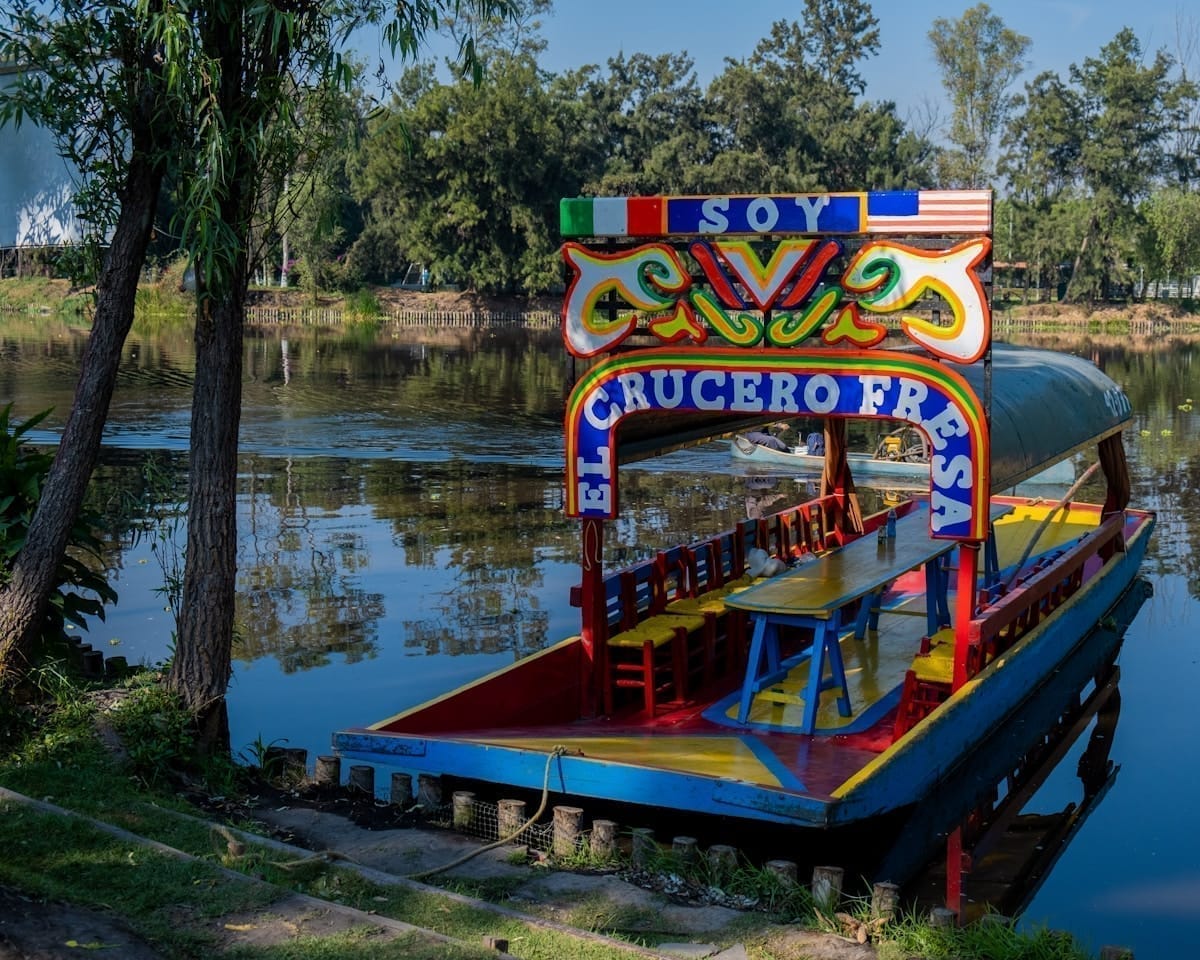
Xochimilco is not technically a day trip - it’s within Mexico City - but it feels like one. The network of pre-Columbian canals is the last remnant of the lake system that once covered the Valley of Mexico, and the experience of drifting through the chinampas (floating gardens) on a painted trajinera boat is completely unlike anything else in the city.
Getting there: Metro Line 2 to Tasqueña, then the tren ligero (light rail) to Xochimilco. Total approximately MXN $15–20 as of 2026. Takes about 1 hour from central CDMX. Taxis from Roma or Condesa approximately MXN $150–200 as of 2026.
Trajinera hire: Flat-bottomed boat hire from the main embarcadero (Embarcadero Nuevo Nativitas is the most central). Approximately MXN $500–800 per boat for 2 hours as of 2026 for a boat holding up to 10 people. Prices are per boat, not per person. Negotiate at the dock; weekend prices are higher.
What happens: You hire the boat with a poler who navigates the canals. Other boats come alongside selling food, drinks, flowers, and music (mariachi boats are a staple). The chinampas alongside the canals are still actively farmed. On weekend mornings the canals are busy and festive; weekday mornings are calmer and more atmospheric.
Timing: Arrive before 11 am on weekends; after that the main canals become heavily congested. Weekday mornings are significantly less crowded.
Combine with Coyoacán and the Frida Kahlo Blue House: Xochimilco sits adjacent to Coyoacán, the bohemian neighbourhood where Frida Kahlo was born and lived. The Casa Azul (Blue House) — Kahlo’s electric blue family home at Calle Londres 247 — is now the Museo Frida Kahlo, displaying her personal art collection, studio, and possessions. Entry approximately MXN $250–300 as of 2026; timed tickets must be booked online in advance (same-day availability is rare). The museum is 10 minutes from the Xochimilco embarcadero by taxi (approximately MXN $60–80). The Coyoacán neighbourhood around the Jardín Centenario plaza has good cafés and craft shops and is pleasant to walk.
Practical Notes
- Bus terminals: Mexico City has four main long-distance bus terminals corresponding to compass direction. TAPO (east/southeast, Metro Zaragoza) for Puebla; Terminal del Norte (north, Metro Autobuses del Norte) for Teotihuacán; Terminal del Sur (south, Metro Tasqueña) for Taxco, Cuernavaca, Tepoztlán; Terminal Poniente (west, Metro Observatorio) for Valle de Bravo and Malinalco.
- Book ADO online: ADO (the main intercity bus company) allows online booking at ado.com.mx - useful for Puebla in peak weekends.
- Car rental: For destinations like Teotihuacán (where you want to leave at 7 am) or Tepoztlán (where flexibility is valuable), a rental car can be worth it. Several agencies operate from the airport and Paseo de la Reforma. Budget approximately MXN $600–1,200/day as of 2026 including basic insurance.
- Altitude at Teotihuacán: Teotihuacán is at 2,300 metres - similar to Mexico City - so altitude sickness is not an additional concern for most visitors already acclimatised to the capital.
For more on Mexico City itself, see the Mexico City travel guide and things to do in Mexico City. For the best Mexico City day tours with transport, see Mexico City tours.
More Mexico City Guides
- Best Cafes to Work From in Mexico City
- Condesa Neighbourhood Guide in Mexico City
- Coyoacán Neighbourhood Guide in Mexico City
- Food to Try in Mexico City
- Polanco Neighbourhood Guide in Mexico City
- Roma Neighbourhood Guide in Mexico City
- Where to Stay in Mexico City
Search hotels in Mexico City on Booking.com