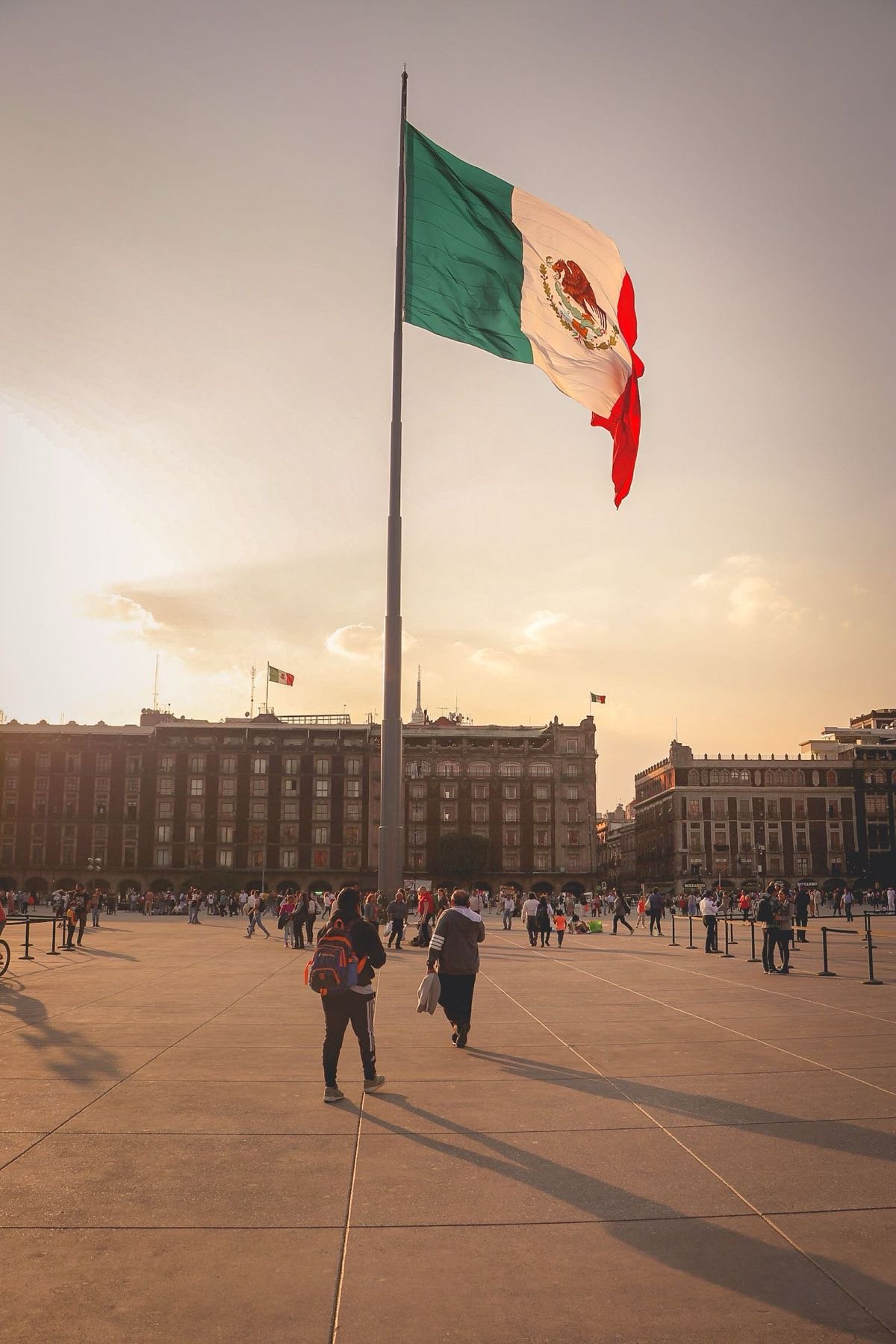
The best free things to do in Mexico City are the Zócalo and Palacio Nacional murals, the Metropolitan Cathedral, Chapultepec Park, Coyoacán’s plazas, the UNAM campus, Tlatelolco’s ruins and La Merced market. None needs a ticket, and together they fill three easy days.
Mexico City is one of the best-value capitals in the Americas, and some of its best sights cost nothing. We list seven below, with the practical detail we would want before heading out. Prices for nearby food and transport are approximate, as of 2026. For paid sights and a broader plan, see our things to do in Mexico City guide and the Mexico City hub.
1. The Zócalo and the Palacio Nacional murals
The Zócalo (officially Plaza de la Constitución) is one of the largest public squares in the world, with the Metropolitan Cathedral on the north side and the Palacio Nacional on the east. The square is free and open around the clock. Inside the Palacio Nacional, Diego Rivera’s mural cycle covers Mexican history from the Aztecs through the Revolution. Entry is free and the murals take 30 to 45 minutes to study properly.
Local tip: Bring a passport or other photo ID and go early in the day, when queues at the security check are shortest. Opening days can change around official events, so check before you travel.
The Zócalo also sits on top of the Aztec capital’s ceremonial centre. If you want context, join a guided Mexico City historic centre walking tour.
2. The Metropolitan Cathedral
The largest cathedral in the Americas was built over roughly 250 years, starting in 1573. Entry is free. Inside are 14 chapels and a baroque altar, and the building visibly tilts because it is sinking slowly into the soft lakebed beneath it.
Local tip: Visit right after the Palacio Nacional, since both are on the same square. Dress modestly, because it is an active church.
3. Chapultepec Park
Bosque de Chapultepec is the city’s largest park, and walking its paths, lakes and tree-lined avenues costs nothing. The castle, the Museo Nacional de Antropología and other museums inside the park charge admission, but the grounds themselves do not. The Chapultepec castle is the only royal castle in continental North America, once used by Emperor Maximilian I in the 1860s, and you can see its hilltop from many paths.
How to get there: Metro Chapultepec (Line 1) or Auditorio (Line 7). See our Polanco guide for the neighbourhood on the park’s northern edge.
Local tip: Come on a weekday morning for quiet paths. Weekend afternoons fill with families, vendors and music.
4. Coyoacán’s plazas and Sunday market
Coyoacán feels like a separate town, with cobblestone streets, low colonial buildings and two linked plazas, Hidalgo and Centenario. Walking the plazas and the 16th-century Iglesia de San Juan Bautista is free. Weekend crowds bring street performers and craft vendors, and the Sunday artisan market sells ceramics, textiles and jewellery.
Local tip: Arrive before 11 am on Sundays for the best selection at the artisan market, then eat tostadas at the Mercado de Coyoacán (approximately MXN 60 to 100 per plate). Our Coyoacán guide covers the rest of the neighbourhood.
5. UNAM Ciudad Universitaria
The main campus of Mexico’s national university is a UNESCO World Heritage Site, and entry is free and open daily. The 1950s modernist buildings carry large murals by Diego Rivera, Juan O’Gorman and David Alfaro Siqueiros. The standout is the Biblioteca Central, whose entire exterior is covered in O’Gorman’s mosaic tiles. The campus is a 15-minute walk or short bus ride south of Coyoacán, so the two combine well in a single day. Read more about the UNESCO listing for the campus.
Local tip: Library hours are approximately 09:00 to 18:00, so photograph the mosaic in the morning and head to Coyoacán for lunch.
6. Tlatelolco archaeological zone
Tlatelolco is the city’s most layered free site. The Plaza de las Tres Culturas shows pre-Columbian pyramid bases, a colonial church built partly from pyramid stones, and 1960s social housing in one view. It was also the site of the 1968 student massacre. Entry is free, and the site is on Metro Tlatelolco (Line 3).
Local tip: Read the memorial plaques in the plaza before you walk the ruins. They give the site’s history in Spanish.
7. La Merced market and its streets
Mercado de la Merced is the largest traditional market in the city, a sprawling maze of fruit, vegetables, chillies, spices, herbs and meat. Browsing is free, and the surrounding streets have budget fondas serving comida corrida set lunch, approximately MXN 60 to 80 from noon.
Local tip: Go in the morning for the full range of produce and plan your lunch for noon, when the fondas open the set menu. The market is not aimed at tourists, so keep your phone and bag close.
Free Sunday admission: read the small print
Most INAH-run museums and sites, including the Museo Nacional de Antropología and Templo Mayor, run a free Sunday. As of 2026, that benefit is generally aimed at Mexican citizens and residents with identification, so foreign visitors should budget for entry unless the ticket office confirms otherwise. Approximate normal prices for these sites are around MXN 100 each, which is still modest.
A free day, planned
A simple route is Zócalo, Palacio Nacional and the cathedral in the morning, a market lunch at La Merced, then Tlatelolco in the afternoon. Chapultepec, Coyoacán and UNAM fill a second day. If you want a bed in a walkable area, browse our hotels in Mexico City and the Mexico City hostel deals, and check the official Mexico City tourism site for events.