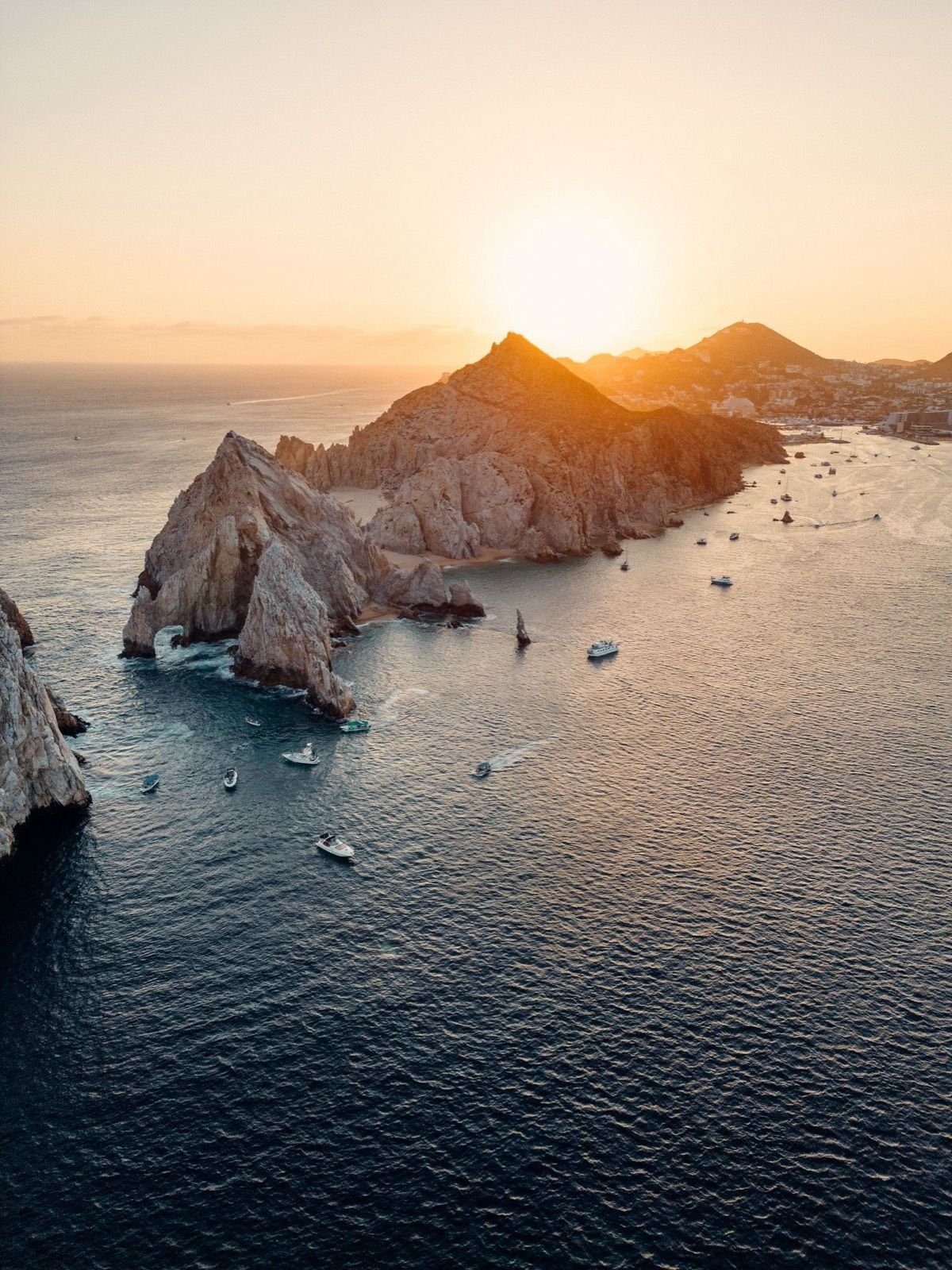
Los Cabos has some of the most dramatic beaches in Mexico and some of the most dangerous. The peninsula tip is where the Pacific and the Sea of Cortez collide, so one stretch of coast can hold a bathtub-calm bay and a beach with a lethal shore break only a few kilometres apart. Most visitors who get into trouble simply assume that every pretty beach is a swimming beach. This guide sorts the coast into beaches where we would swim, beaches where we would snorkel from a boat, and beaches that are for looking at only.
For the wider resort picture see our Los Cabos travel guide, and for beaches elsewhere on this coast see the Pacific coast beach guide.
The golden rule: read the flags
Lifeguards and beach flags are inconsistent in Los Cabos, and resort pools are no guide to the sea beyond them. A red flag, or no flag on an open Pacific beach, means stay out of the water above knee depth. Mexico’s health regulator publishes beach water-quality results on the COFEPRIS site, which is worth a look after heavy rain, when runoff can affect bay beaches.
Beaches where you can swim
Playa El Medano, Cabo San Lucas
The longest and most reliable swimming beach in Cabo, sheltered inside Cabo San Lucas Bay. Water is typically calm and the slope is gentle. The trade-off is the crowd: beach clubs, jet skis, banana boats and vendors run the length of the sand, so keep swimmers away from the marked watersports lanes. Loungers at the clubs generally run approximately MXN $200-400 with a drink or food minimum (as of 2026). The quieter end is toward the Hotel Hacienda side, away from the marina. See the full strip in our Cabo San Lucas guide.
Santa Maria Bay
A horseshoe cove on the Corridor with calm, clear water and rocks at both ends where fish gather. It is protected as a natural area, there are no hotels on the sand itself, and facilities are minimal, so bring water, shade and snacks. Snorkelling is easy from shore on the rocks. Public access is via a signed road off Highway 1 and a small parking area, and it fills by late morning in high season, so arrive early.
Chileno Bay
A short drive east of Santa Maria and the better of the two for families: sand sloping gently into calm water, a good reef at the north end, and public access with parking and a few basic facilities. Mornings are the clearest. A luxury resort sits on the bay, but the beach is public. Bring your own mask and fins or rent in Cabo San Lucas beforehand, because rental on the sand is limited.
Playa Palmilla
On the Corridor close to San Jose del Cabo, Palmilla has a sheltered bay, a wide beach and calmer water than the beaches around it. It is quieter than Medano and a good pick if you are staying in San Jose del Cabo. Surf lessons are sometimes run on the western end where small waves roll in, so check which section is being used for what.
Lover’s Beach (Sea of Cortez side)
Reached only by water taxi from the Cabo San Lucas marina (approximately MXN $200-300 return as of 2026), Lover’s Beach sits directly beside the Arch. The bay side facing the Sea of Cortez is calm enough for paddling and snorkelling. The Pacific side, known as Divorce Beach, is not. Go early before the glass-bottom boat crowds. A boat tour from Cabo that includes the Arch and a snorkel stop is the easiest way to combine both.
Beaches that are for looking at, not swimming
- Divorce Beach (Playa del Divorcio): Pacific side of Land’s End, powerful undertow, no swimming.
- Monuments Beach (Playa Monumento) and Costa Azul: Surf breaks. Experienced surfers only, and even they check conditions first.
- Open Corridor beaches outside the protected bays: steep sand and shore break. Pretty, tempting, and the source of most rescues.
- Playa Solmar: Pacific swell directly in front of hotels. Watch, wade, do not swim.
East Cape and Cabo Pulmo
If you have a car and a day, the Sea of Cortez side north of San Jose del Cabo is quieter and calmer. Cabo Pulmo is a protected national marine park with some of the best snorkelling in Baja, about 1.5 to 2 hours’ drive from the airport. Entry and snorkel boats are run by local operators within the park rules, and the official protected-area information is on the CONANP site.
When to go
October to June is the comfortable window. Sea of Cortez water is warmest in September and October, but that is also peak hurricane season, so follow our Los Cabos best time to visit guide and hurricane season guide. Between December and March humpback whales are in the bay, and swimming is cooler on the Pacific side.
Where to stay for beach access
For protected-water swimming, stay near Cabo San Lucas Bay or on the Corridor close to Chileno or Santa Maria, and avoid hotels on open Pacific frontage if you want to swim from the sand. Compare hotels in Los Cabos or search Los Cabos stays on Booking.com, and read our all-inclusive Los Cabos guide if you plan to stay put.
Quick pick table
| Beach | Swimming | Best for |
|---|---|---|
| Playa El Medano | Good, busy | Activities, beach clubs |
| Santa Maria Bay | Very good | Snorkelling from shore |
| Chileno Bay | Very good | Families, snorkelling |
| Playa Palmilla | Good | Quieter swim near San Jose |
| Lover’s Beach (Cortez side) | Good | Arch visit by boat |
| Divorce Beach | No | Photos |
| Monuments / Costa Azul | No | Surf, experts only |
Prices are approximate and as of 2026; confirm locally.
Plan your trip: Los Cabos tours · Los Cabos hotels · travel insurance.