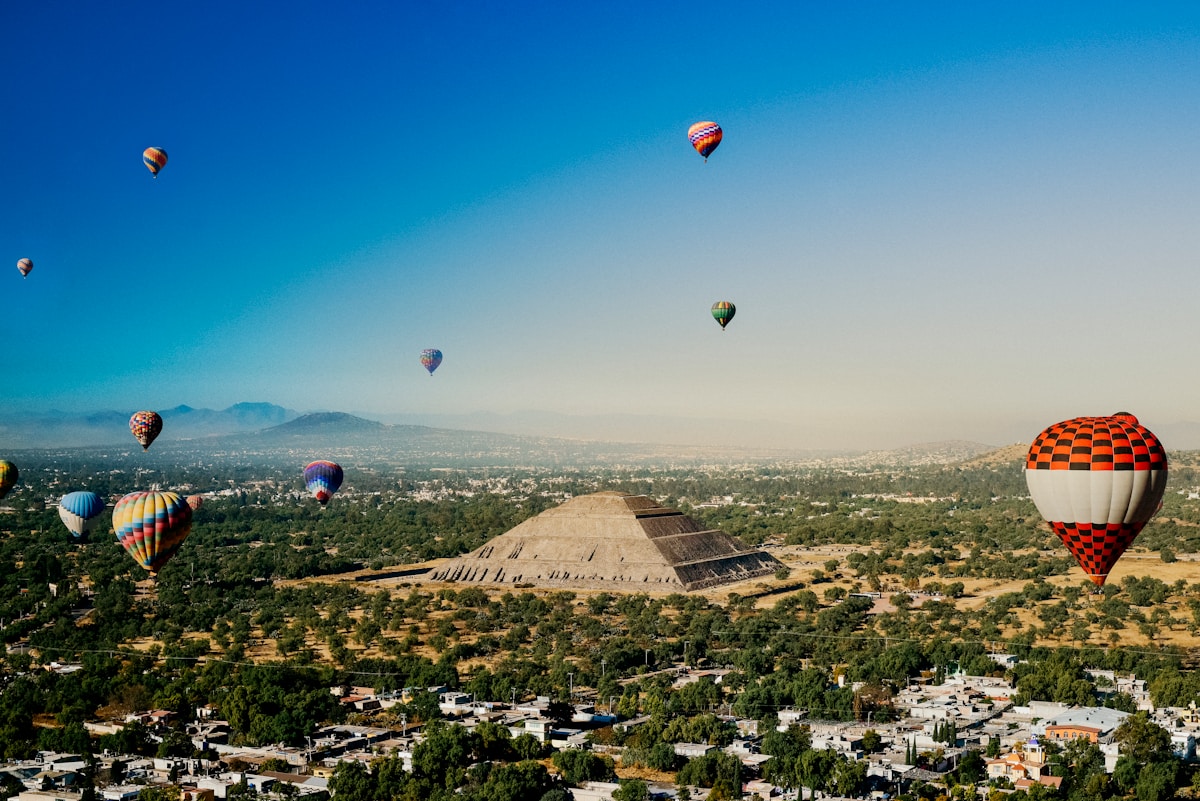
Chichén Itzá is a New Wonder of the World and the most visited archaeological site in Mexico. It was a major Maya city for over a thousand years and shows evidence of multiple cultural influences - Terminal Classic Maya, Toltec, and others. The main pyramid (El Castillo) is one of the most recognisable structures in the Americas.
History
Chichén Itzá was occupied from at least the 7th century CE and reached its peak influence in the 9th–12th centuries CE during the Terminal Classic and Early Postclassic periods. The city controlled the northern Yucatán Peninsula, extracting tribute from a wide area.
The site shows unusual architectural and cultural diversity compared to other Maya cities. The Osario (High Priest’s Grave), the Temple of Warriors with its Chac Mool figure, and the Toltec-style serpent columns show strong similarities to architecture at Tula (the Toltec capital in Hidalgo). Debate continues over whether this represents conquest, alliance, migration, or direct cultural exchange.
The city was abandoned before the Spanish conquest, though the cenote continued to receive ritual use.
Key structures
El Castillo (Pyramid of Kukulcán): the 24-metre pyramid at the site’s centre. Each face has 91 steps plus one shared top step - 365 total, representing the solar year. During the spring and autumn equinoxes (21 March, 21 September), the angle of the sun creates a shadow pattern on the north balustrade that resembles a serpent descending the staircase. The shadow equinox is not actually the most dramatic on the exact equinox date - the full effect occurs over several days around it. El Castillo is no longer climbable.
Great Ball Court: the largest ball court in Mesoamerica - 166 metres long, with vertical stone rings at the midpoint. Acoustic properties are extraordinary: whispers at one end of the court are clearly audible at the other. The carved panels show post-game scenes that researchers have interpreted as ritual sacrifice - debate continues over whether winners or losers were sacrificed.
Temple of Warriors: similar to the Temple of the Morning Star at Tula. A Chac Mool figure sits at the top. The Thousand Columns complex adjacent was an open-air assembly space.
El Caracol (Observatory): a domed round structure with openings aligned to Venus rise and set points and to the spring equinox sunrise. One of the most sophisticated astronomical structures in Mesoamerica.
Sacred Cenote: a natural sinkhole 60 metres in diameter, used for ritual deposits over 1,000+ years. Dredging in the 20th century recovered gold, jade, pottery, and human remains - now in the site museum and in Cambridge (UK), where a large proportion of the early collection was taken.
Visiting practically
Getting there: from Cancún - ADO buses (daily), or organised tours. Journey time 2–2.5 hours. From Mérida - 1.5–2 hours by car or bus.
Opening hours: 8 am–5 pm daily.
Timing: arrive at opening (8 am). By 10 am the site becomes crowded; by 11 am it’s at capacity with large tour groups. A 3-hour early morning visit covers everything comfortably.
Crowds and vendors: the path from the car park to the main entrance is lined with souvenir vendors who can be persistent. Polite but firm refusals work. Prices are negotiable but inflated compared to markets in Mérida or Valladolid.
Nearby: Valladolid (45 km east) is the best overnight base for an early morning Chichén Itzá visit - far cheaper than staying near the site itself. Cenote Ik Kil (near the site entrance) is a large, well-touristed open cenote - good for a post-ruins swim, though crowded.
Equinox visits
The spring equinox (21 March) brings enormous crowds to see the serpent shadow. If you want to see the effect with fewer people, visiting 3–5 days before or after the equinox produces nearly identical results.
Plan your trip: Chichén Itzá tours · tours in Mérida.
Related City Guides
- Mérida Travel Guide
- Valladolid Travel Guide
- Cancún Travel Guide
- Chichén Itzá Day Trip - organised tour options from Cancún and Playa del Carmen
- Cenotes in the Yucatán - Cenote Ik Kil (adjacent to the site) and the wider Yucatán cenote network
Search hotels in Mexico on Booking.com
- 10 Days in the Yucatán - a circuit combining Chichén Itzá with Mérida, the cenotes, and the Riviera Maya