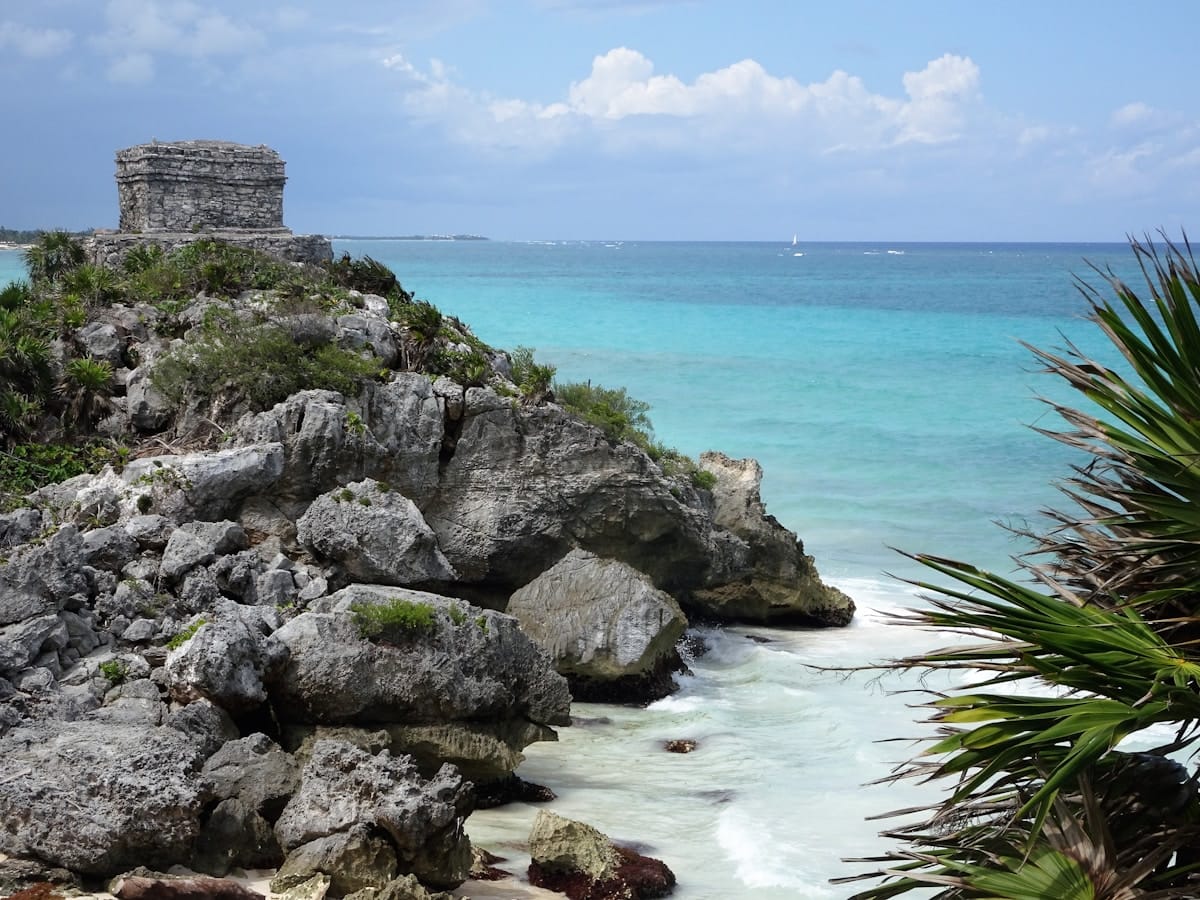
Tulum is Mexico’s most-visited archaeological site after Chichén Itzá - a fact that surprises visitors who know the site well, because the ruins themselves are modest compared to Palenque, Uxmal, or Monte Albán. What makes Tulum unmissable is its setting: a walled city perched on a 12m cliff above the turquoise Caribbean Sea, with a small beach accessible from within the site. No other Mayan site in Mexico offers this combination.
Background
Tulum (classical name: Zama, “City of Dawn”) was one of the last Mayan cities built and one of the few still occupied when the Spanish arrived in 1517. It functioned primarily as a trading port from around 1200 to 1550 AD, positioned to control maritime trade routes along the Caribbean coast. The walls (up to 4m high, 7m wide) enclosed the civic and ceremonial core; the surrounding town extended outside the walls.
Unlike the highland Mayan cities (Palenque, Yaxchilán, Bonampak), Tulum was built after the Classic period collapse - in the Postclassic era, with different architectural priorities: compact buildings, bright painted facades (traces of red, blue, and yellow paint are still visible on some structures), and highly pragmatic port-city layout.
Key structures
El Castillo
The largest and most prominent structure: a multi-phase pyramid on the cliff edge that also served as a lighthouse. A notch in the upper temple door is positioned so that two candles visible through the gap would guide canoes safely through the reef gap below. The physical alignment has been verified; whether this was the original intention or a later modification is debated. Visitors cannot climb El Castillo.
Templo del Dios Descendente (Temple of the Descending God)
The most unusual iconography at Tulum: a deity shown diving downward (head first, wings extended) in the relief panels above the doorway. The same figure appears at several other Late Postclassic sites in the Yucatán. The figure is variously interpreted as a bee god (important in Yucatec honey production), the setting sun, or the planet Venus at superior conjunction. The small temple is well-preserved.
Templo de las Pinturas (Temple of the Frescoes)
The most complex structure at the site - a two-storey building with carved figures and painted murals on the interior walls. The frescoes (protected from the elements by the building’s overhang) show Mayan deities, celestial symbols, and offerings. The most intact paintings are visible through the iron fence; direct access to the interior is restricted.
El Palacio and smaller structures
The Palace is a residential/administrative complex adjacent to El Castillo with good views across the sea. The small temples scattered around the interior are easier to examine up close.
The beach
A ramp from within the archaeological zone leads down to a small beach at the base of the cliff. The water is clear and usually calm; this is one of the only swimmable beaches directly within an archaeological site in Mexico. The beach gets crowded by 10am - arrive at opening (8am) to swim before the tour buses arrive.
Practical information
- Opening hours: 8am–5pm daily
- Entry: ~MXN 100
- Parking: ~MXN 100 (large lot at the site entrance)
- Getting there from Tulum town: taxis (~MXN 60–80) or bicycle (the ruins are 4 km from the town centre; flat road). Colectivos from the town also pass the entrance.
- Crowds: the site handles 2–4 million visitors annually. Arrive at 8am to avoid the worst. By 10am, conditions are uncomfortable; most tour buses have arrived by then.
- Best season: November to April avoids the rainy season and peak humidity. Avoid Semana Santa (Easter week) and Christmas week when crowds are extreme.
- Photography: the best light on El Castillo is in the morning when the sun is behind you (facing west). Drones are prohibited inside the archaeological zone. The cliff-beach angle (shooting up from the beach toward El Castillo) is the classic shot but requires arriving early before the beach fills up.
- Combined visit: the Tulum ruins + beach + a cenote (Gran Cenote or Dos Ojos, 10–15 minutes by taxi) is the standard half-day sequence.
Plan your trip: tours in Tulum.
Related City Guides
- Tulum Travel Guide
- Things to Do in Tulum - cenotes, beach clubs, and activities beyond the ruins
- Cenotes in the Yucatán - the best cenotes to combine with a Tulum ruins visit
- Riviera Maya Beaches - the Caribbean coastline around the Tulum archaeological zone
Search hotels in Tulum on Booking.com
- Palenque Travel Guide - the other major Maya site in the southern Yucatán circuit