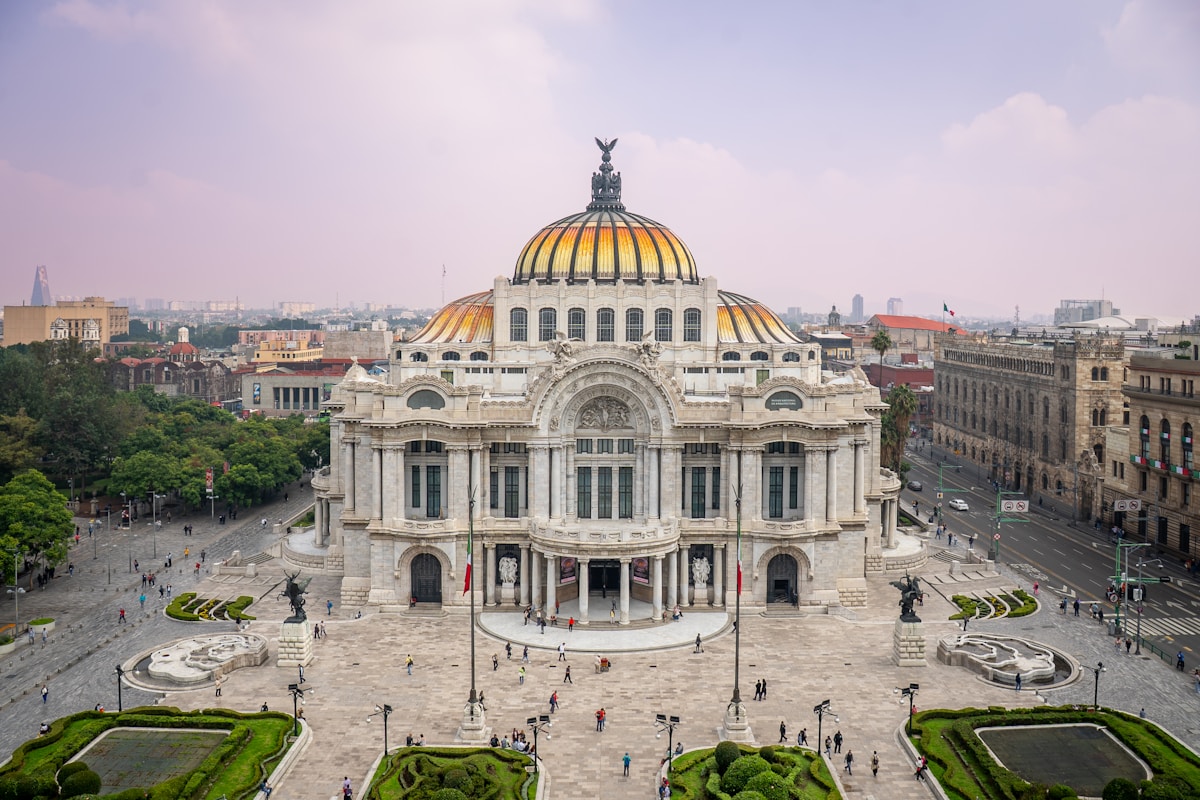
Three days in Mexico City is tight but workable. The route below covers the historic centre, Coyoacan, Xochimilco, and a day trip to the Teotihuacan pyramids - the four experiences most first-time visitors prioritise. We have arranged the days geographically to reduce unnecessary back-and-forth across the city.
Where to Stay
Budget: Hostal Centro Historico Zocalo - from approximately MXN 400 per night (around USD 23) for a private room. Basic but clean, five minutes from the Zocalo.
Mid-range: Hotel Histórico Central - from approximately MXN 1,800 per night (around USD 100). Colonial building with a rooftop terrace overlooking the cathedral. Rooms include breakfast.
Upscale: Hotel Downtown Mexico - from approximately MXN 4,500 per night (around USD 255). A 17th-century palace converted into a boutique hotel in the Centro Historico, with a rooftop pool and mezcal bar.
If you prefer Roma Norte or Condesa, Casa Cometa offers mid-range rooms from approximately MXN 2,200 per night (around USD 125) in a quiet Roma Norte street, with easy metro access to the centre.
Search hotels in Mexico City on Booking.com
Day 1: Centro Historico and Chapultepec
Morning: Zocalo, Templo Mayor, and Palacio Nacional
Start at the Zocalo (officially Plaza de la Constitución), one of the largest public squares in the world. The 16th-century Metropolitan Cathedral dominates the north side - entry is free, and we recommend 30 minutes inside to see the Altar de los Reyes and the tilting pillars that reveal the sinking foundations.
Walk to the Templo Mayor Museum on the northeast corner of the square. This is the excavated base of the Aztec capital Tenochtitlan’s main temple, destroyed by the Spanish in the 1520s. The museum displays the massive Coyolxauhqui stone disc and thousands of Aztec artefacts. Entry costs approximately MXN 90 (around USD 5) as of 2026. Open Tuesday to Sunday, 9am–5pm. Allow 1.5–2 hours.
Cross back to the east side of the Zocalo and enter the Palacio Nacional (National Palace). The main attraction is Diego Rivera’s mural cycle on the staircase - a sweeping visual history of Mexico from pre-Hispanic civilisations to the post-revolution era. Entry is free but you need a government-issued ID. Open Tuesday to Sunday, 9am–5pm. Allow 45 minutes.
Lunch
Walk 10 minutes northwest to Café de Tacuba on Calle Tacuba 28. This restaurant has operated since 1912 and serves classic Mexican dishes - enchiladas suizas, chiles en nogada (in season, August–September), and tamales. Main courses run MXN 180–350 (approximately USD 10–20). Alternatively, for a budget option, grab tacos de canasta from the vendors around the Zocalo - four tacos cost approximately MXN 30–40.
Afternoon: Chapultepec Castle and Park
Take the metro from Zocalo (Line 2) to Chapultepec (Line 1) - one transfer at Pino Suárez, approximately 20 minutes total. Metro fare is MXN 5.
Chapultepec Castle sits on a hill inside Bosque de Chapultepec, the largest urban park in the Western Hemisphere. The castle served as the residence of Emperor Maximilian in the 1860s and later as the presidential palace. The interior has period furniture, murals by David Alfaro Siqueiros, and panoramic views of Paseo de la Reforma and the city skyline. Entry costs approximately MXN 90 (around USD 5) as of 2026. Open Tuesday to Sunday, 9am–5pm. The walk up the hill from the park entrance takes 15–20 minutes.
If you have energy remaining, the Museo Nacional de Antropología is at the base of Chapultepec Park, a 15-minute walk from the castle. It houses the Aztec Sun Stone and the finest collection of pre-Columbian artefacts in the Americas. Entry approximately MXN 90. Allow 2–3 hours for a thorough visit - or save it for a future trip if time is short.
Dinner
Head to Roma Norte for dinner at Contramar (Calle de Durango 200) - the tuna tostadas and red-and-green grilled fish are famous. Main courses MXN 250–450 (approximately USD 14–26). Arrive before 2pm for lunch or after 7pm for dinner to avoid long waits; no reservations for walk-ins.
Day 2: Coyoacan, Frida Kahlo Museum, and Xochimilco
Morning: Coyoacan and the Frida Kahlo Museum
Take the metro to Coyoacán station (Line 3) and walk 15 minutes to the Museo Frida Kahlo (Casa Azul) on Londres 247.
Booking is essential. Tickets must be purchased online in advance at museofridakahlo.org.mx - walk-ups are turned away. General admission costs approximately MXN 270 on weekdays, MXN 320 on weekends (around USD 15–18) as of 2026. The museum opens at 10am (11am on Wednesdays); we recommend the earliest slot to beat the crowds.
The blue house where Frida Kahlo was born, lived, and died contains her personal belongings, artwork, and the studio where she painted from her bed during periods of illness. Allow 1–1.5 hours. Photography is permitted in the garden and courtyard but not inside the galleries.
After the museum, walk 10 minutes to the Jardín Centenario and Plaza Hidalgo - the twin squares at the centre of Coyoacan. The neighbourhood has a distinctly slower pace than the rest of the city. Browse the Mercado de Coyoacán for tostadas de tinga and marquesitas (crispy crepes with Edam cheese).
Lunch
Los Danzantes Coyoacán on the Plaza del Jardín Centenario serves contemporary Mexican cuisine with mezcal cocktails. Main courses MXN 220–380 (approximately USD 12–22). For a cheaper option, the market stalls inside Mercado de Coyoacán serve full plates for MXN 60–120.
Afternoon: Xochimilco
From Coyoacán, take an Uber or taxi south to Xochimilco (approximately 30 minutes, MXN 150–250 by Uber). Alternatively, take metro Line 2 to Tasqueña then the Tren Ligero to Xochimilco station - approximately 50 minutes total.
Xochimilco’s canal network is the last remnant of the lake system that covered the Valley of Mexico before the Spanish drained it. Colourful flat-bottomed boats called trajineras cruise the canals past chinampas (floating gardens). Hire a trajinera at Embarcadero Nuevo Nativitas - the official rate is approximately MXN 500 per hour per boat (as of 2026), and boats hold up to 15 people. Two hours is a good duration.
Food and drink vendors in smaller boats pull alongside - expect to pay MXN 50–100 for elotes (corn), MXN 80–120 for micheladas, and MXN 150–250 for a mariachi set.
Dinner
Return to Roma-Condesa for dinner. Pujol (Tennyson 133, Polanco) is one of the world’s top-ranked restaurants - the mole madre with 2,600+ days of aging is the signature dish. Tasting menu from approximately MXN 3,500 (around USD 200) per person. Book weeks in advance. For a more accessible option, El Vilsito on Petén 248 in Narvarte operates as a mechanic shop by day and a taco stand by night - pastor tacos from MXN 15 each, open 9pm–2am.
Day 3: Teotihuacan and Roma-Condesa Food Tour
Morning: Teotihuacan Pyramids
Teotihuacan lies 50km northeast of Mexico City. The most practical transport options:
- Autobuses Teotihuacán from Terminal Central del Norte (metro Autobuses del Norte, Line 5). Buses depart every 15 minutes from 7am. Round trip costs approximately MXN 120 (around USD 7). Journey time: 50–60 minutes each way.
- Guided tour via GetYourGuide - from approximately USD 35–50 per person including transport, guide, and sometimes lunch. Tours depart 7–8am and return by 2pm.
- Private transfer/Uber - approximately MXN 800–1,200 each way.
Arrive early to beat the heat and the tour bus crowds. The site opens at 8am and entry costs approximately MXN 90 (around USD 5) as of 2026.
Walk the Avenue of the Dead from the Ciudadela to the Pyramid of the Moon, passing the Pyramid of the Sun - the third-largest pyramid in the world. Climbing the Pyramid of the Sun takes 15–20 minutes and rewards with views across the entire ancient city. The Pyramid of the Moon is shorter but steeper; only the lower levels are open to climbing. Allow 3–4 hours for the full site.
Bring water, sunscreen, and a hat - there is almost no shade. The on-site restaurant near Gate 1 serves decent food at tourist prices (MXN 150–250 for a main course).
Afternoon and Evening: Roma-Condesa Food Walk
Return to the city by early afternoon. Spend the remaining hours exploring Roma Norte and Condesa - the two neighbourhoods with the densest concentration of restaurants, cafes, and bars in the city.
Start at Mercado Roma (Querétaro 225) - an indoor food hall with stalls selling everything from craft beer to oysters to oaxaqueño chocolate. Most dishes MXN 80–180.
Walk south along Avenida Amsterdam, the tree-lined oval boulevard that defines Condesa. Stop at Café Villarias or Cardinal Casa de Café for single-origin Mexican coffee (MXN 60–90).
For a final dinner, try Máximo Bistrot in Roma Norte (Tonalá 133). Chef Eduardo García sources directly from small farms and the menu changes daily. Tasting menu from approximately MXN 1,200 (around USD 68). Alternatively, Tacos Orinoco on Insurgentes Sur serves birria tacos from MXN 25 each - the consommé for dipping is included.
Budget Summary
| Category | Budget | Mid-Range | Upscale |
|---|---|---|---|
| Accommodation (3 nights) | MXN 1,200 (USD 68) | MXN 5,400 (USD 307) | MXN 13,500 (USD 768) |
| Food (3 days) | MXN 900 (USD 51) | MXN 3,000 (USD 170) | MXN 7,500 (USD 426) |
| Transport | MXN 300 (USD 17) | MXN 1,500 (USD 85) | MXN 3,500 (USD 199) |
| Activities & entries | MXN 600 (USD 34) | MXN 1,500 (USD 85) | MXN 3,000 (USD 170) |
| Total | MXN 3,000 (USD 170) | MXN 11,400 (USD 647) | MXN 27,500 (USD 1,563) |
Prices are approximate as of 2026. Exchange rate used: 1 USD ≈ 17.6 MXN.
Getting Around
Mexico City’s metro covers most tourist areas and costs MXN 5 per ride. The Metrobús (bus rapid transit) runs along Insurgentes and other main avenues - fare is MXN 7 per ride using a rechargeable card.
Uber and DiDi operate throughout the city and are generally more convenient for trips between neighbourhoods. A typical ride from Roma Norte to the Centro Historico costs MXN 50–80. From the centre to Xochimilco, expect MXN 150–250.
Taxis: Use only official Sitio taxis or app-based services. Avoid hailing taxis on the street.
Practical Tips
- The Frida Kahlo Museum requires advance online booking - do not show up without tickets.
- Altitude: Mexico City sits at 2,240m above sea level. Drink extra water on your first day and take it easy with alcohol and stairs until you have acclimatised.
- Best months: October–April offers dry weather and comfortable temperatures. June–September is the rainy season - showers typically arrive in late afternoon and clear by evening.
- Mexico City tap water is not drinkable. Buy filtered water or use a refillable bottle with a filter.
- Connectivity: Pick up a Mexico eSIM before you fly - data coverage across CDMX is strong and avoids the airport SIM queue.
Plan your trip: tours in Mexico City · flights to Mexico · airport transfers · car hire · travel insurance · Mexico eSIM.
Related City Guides
- Mexico City Travel Guide
- Mexico City Food Tours - guided tours to cover markets and street food in a structured way
- Things to Do in Mexico City - full activity guide beyond this 3-day framework
- Mexico City Digital Nomad Guide - for longer stays including co-working spaces
- Mexico City to Oaxaca Route - the natural next leg after CDMX
Ready to Plan Your Trip?
See our itineraries for inspiration:
- Mexico City To Oaxaca - the Mexico City to Oaxaca route
- 1 Week Mexico - one week covering Mexico City, Oaxaca and the beach
- 2 Weeks Mexico - the two-week Mexico circuit
Book Your Trip
- Flights - Find the best fares to Mexico
- Travel Insurance - Get covered before you go
- eSIM - Stay connected from landing
- Airport Transfers - Pre-book your transfer from Mexico City or Cancun
- Car Rental - Compare prices across providers
- Tours & Activities - Browse Mexico tours on GetYourGuide