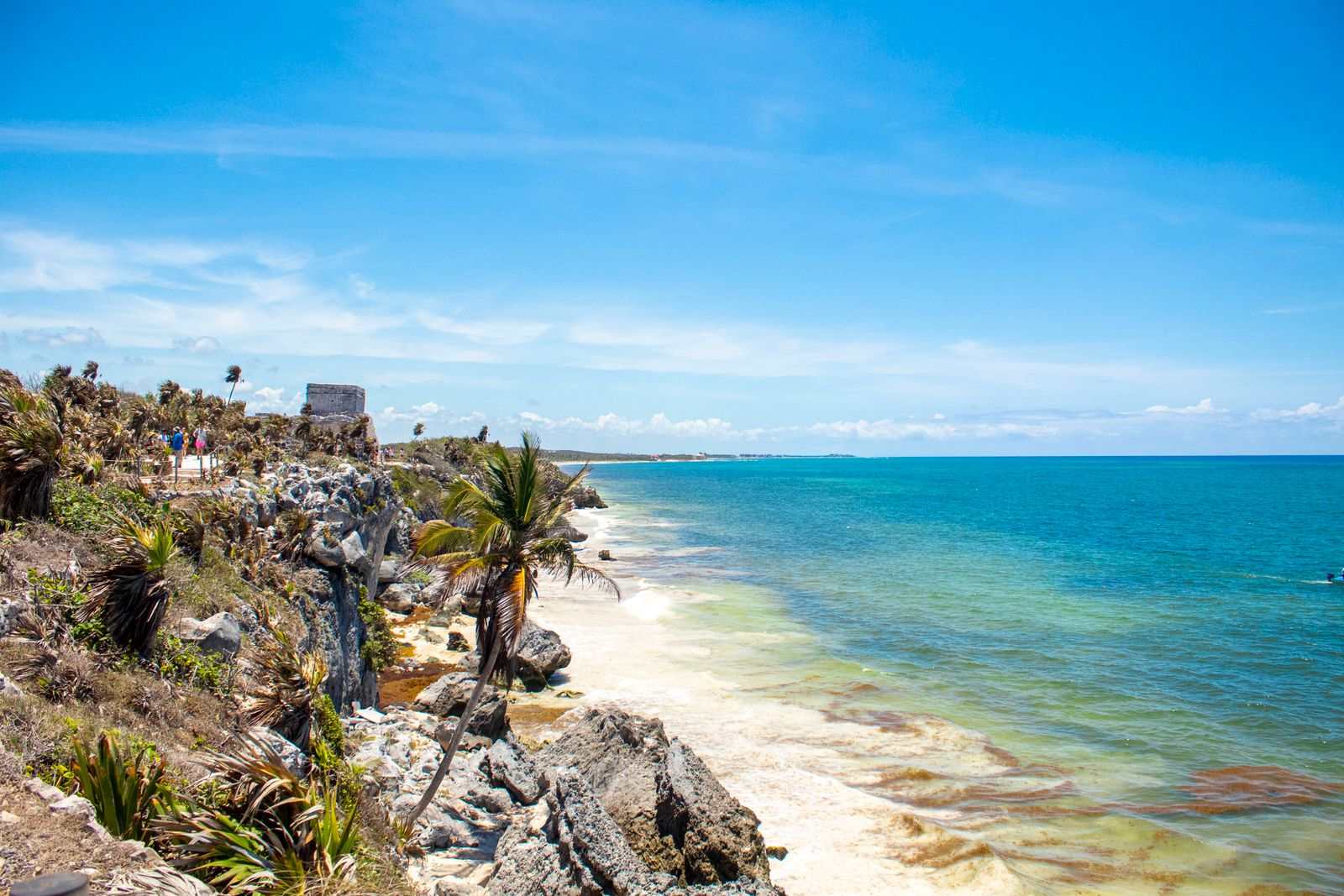
Quick Answer
December through April is Tulum’s prime window for ruins visits, cenote diving, and beach relaxation. November sits just outside the holiday pricing peak and delivers outstanding conditions. See what Tulum has to offer and secure accommodation early - boutique jungle properties book up months ahead for peak season.
Season Overview
Tulum has a tropical climate strongly influenced by Caribbean weather systems. Sargassum seaweed - which can arrive on beaches in large quantities - is a separate issue from rain season but affects roughly May through October.
| Month | Weather | Crowds | Cost | Notes |
|---|---|---|---|---|
| January | Dry, 24–28°C | Very High | Very High | Peak season; top cenotes fully booked |
| February | Dry, 25–29°C | Very High | Very High | Best cenote visibility |
| March | Dry, 26–31°C | Very High | Very High | Spring Break adds to peak |
| April | Dry, 27–32°C | High | High | Spring Break fades; still peak |
| May | Transitional, 28–33°C | Moderate | Mid | Value month; sargassum may appear |
| June | Humid, 29–33°C | Low | Low | Hurricane season; sargassum high |
| July | Humid, 29–34°C | Low–Moderate | Low | Storm risk; sargassum typically worst |
| August | Hot, humid, 30–34°C | Low | Low | Peak hurricane risk |
| September | Hottest, 30–33°C | Very Low | Very Low | Highest storm probability |
| October | Improving, 28–32°C | Low | Low | Sargassum easing; good from mid-month |
| November | Dry, 25–29°C | Moderate | Mid | Outstanding shoulder month |
| December | Dry, 24–28°C | Very High | Very High | Christmas prices; very busy |
Peak Season: December to April
Tulum’s transformation into one of Mexico’s most fashionable destinations has compressed peak season into a premium experience. Hotels along Carretera Tulum - the jungle road connecting the beach zone to the ruins - book out months ahead for December and January. Boutique eco-lodges and design hotels charge rates that rival major international cities during Christmas and New Year.
Cenote conditions are at their finest from December to March. The region’s cenote systems - Gran Cenote, Dos Ojos, Car Wash (Aktun-Ha), and Casa Cenote - have exceptional visibility in the dry season, often exceeding 60–80 metres in cave sections. Snorkelling and freediving tours in Dos Ojos are particularly popular.
The Tulum ruins - a compact Mayan coastal fortification from the Post-Classic period - are best visited early morning (gates open at 8am) to beat the tour groups that arrive from Cancún and Playa del Carmen from around 10am. In peak season, the ruins can feel overcrowded by midday.
Shoulder Season: November and May
November is arguably the most underrated month in Tulum’s calendar. The rainy season has cleared, cenotes are in great condition, temperatures are comfortable (25–29°C), and Christmas crowds haven’t arrived. Hotel rates are noticeably lower than December - sometimes 30–40% less for the same property. The beach at Playa Paraíso (near the ruins) is clean and uncrowded.
May works well if you’re budget-conscious and flexible about beach swimming. Sargassum seaweed can appear on Tulum’s beaches from May onward, though coverage varies dramatically year to year - some years see minimal accumulation, others see thick mats. Cenote swimming is unaffected by sargassum.
Off Season / Rainy Season: June to October
Rain season and sargassum overlap to make June through October the most challenging period. Daily showers are manageable (usually afternoon only), but the combination of humidity, storm risk, and potential sargassum on beaches reduces the beach experience significantly. Some cenotes temporarily close when water levels rise after heavy rain.
July and August see a partial recovery in domestic tourism - Mexican school holidays bring families from Mexico City and Monterrey - but international visitor numbers remain low. Some of Tulum’s restaurants and boutique hotels operate reduced hours or close entirely in September.
Month-by-Month Guide
| Month | Weather | Crowds | Cost | Notes |
|---|---|---|---|---|
| January | Clear and dry | Very High | Very High | Book ruins entry in advance |
| February | Clear and dry | Very High | Very High | Best cenote visibility of the year |
| March | Warm and dry | Very High | Very High | Spring Break contributes |
| April | Hot and dry | High | High | Good conditions persist |
| May | Warm, transitional | Moderate | Mid | Check sargassum reports before booking |
| June | Humid, showers | Low | Low | Sargassum peaks; cenotes still excellent |
| July | Hot and humid | Low–Moderate | Low | Domestic tourism; ruins less crowded |
| August | Very hot, storm risk | Low | Low | Peak hurricane risk period |
| September | Hottest, storms possible | Very Low | Very Low | Cheapest month; minimal facilities |
| October | Improving | Low | Low | Conditions recover from mid-month |
| November | Clear and pleasant | Moderate | Mid | Best value for quality conditions |
| December | Clear, festive | Very High | Very High | Highest prices of the year |
Key Events and Festivals
- November 1–2 - Día de los Muertos: Quieter than Oaxaca but local ceremonies take place near the Tulum Pueblo market area.
- December 21 - Winter Solstice at Tulum Ruins: Crowds gather at the El Castillo pyramid for the solstice sunrise alignment. Significant for Mayan heritage.
- Late December – early January - New Year celebrations: Tulum’s beach clubs and jungle hotels run ticketed events; prices are very high.
- March - Spring Break overlap with Playa del Carmen: The Tulum beach road gains energy from visitors spreading south from Playa.
- June–September - Turtle nesting season: Leatherback and loggerhead turtles nest on Tulum’s beaches. Night-time nesting tours available through certified guides.
Plan Your Trip
✈️ Book your flights to Mexico 🎫 Find tours in Tulum 🛡️ Get travel insurance 📱 Stay connected with an eSIM 🚗 Hire a car in Mexico