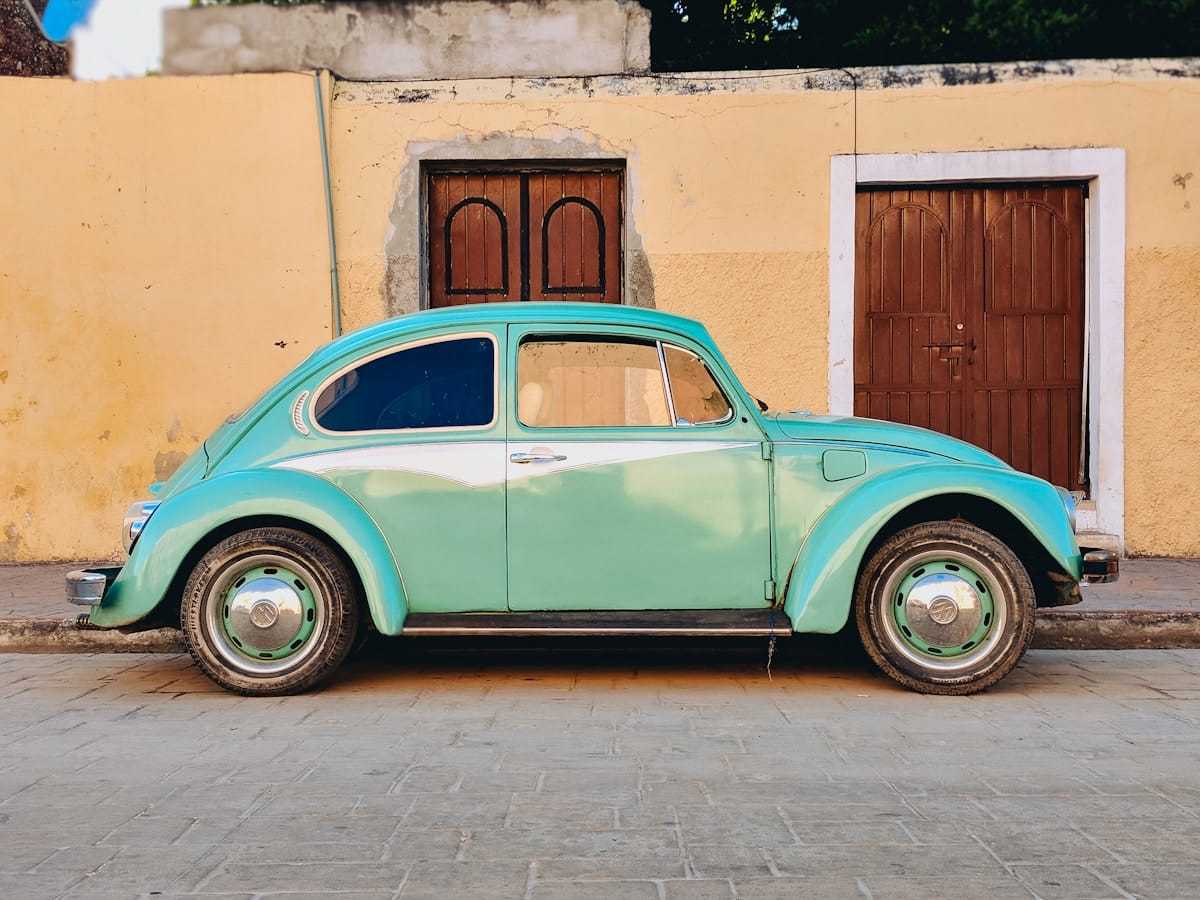
A rental car transforms the Yucatan Peninsula. Public transport covers the main corridors well, but the cenotes, haciendas, village markets, and ruins that make the region exceptional are often reachable only by private vehicle. A car lets you visit Chichen Itza before the tour buses arrive, reach Valladolid’s lesser-known cenotes by 08:30, and explore the Puuc Route’s Uxmal, Kabah, and Labná on a single relaxed day.
This guide covers everything you need to know before you pick up the keys - from the insurance fine print (which catches many visitors off guard) to the best cenote loops to plan your route around.
Renting a Car in Yucatan: The Basics
Where to pick up: Cancun International Airport is the main pickup hub. Merida airport is a good alternative if you’re starting or ending there. Playa del Carmen has rental offices but fewer vehicle options. Avoid pickup from hotel-zone car rental kiosks in Cancun - prices are typically higher and vehicle quality variable.
Companies: Major international brands (Hertz, Avis, Budget, Europcar) operate at Cancun airport alongside Mexican nationals (Localiza, Alamo Mexico). Prices from the Mexican national chains can be significantly lower. Check several aggregators - GetRentaCar compares prices across suppliers and is a useful starting point for Yucatan pickup locations.
Booking: Book online at least 7–14 days ahead for peak season (December–January, Semana Santa, July–August). Comparing rates in advance via GetRentaCar is the simplest approach - vehicle availability at the airport counter without pre-booking can be poor during busy periods.
Vehicle type: For Yucatan’s main roads, a compact car (Nissan Versa, Chevrolet Aveo, or similar) is sufficient. If you plan to drive remote jungle tracks to lesser-visited ruins or in the Chenes region, a small SUV with higher clearance is worth the additional cost (approximately MXN $200–400/day more as of 2026). A standard compact runs approximately MXN $600–1,000/day with basic coverage included.
Insurance - Read This Before You Sign
Mexico requires all drivers to carry a Mexican liability insurance policy. This is the single most important point in this entire guide: your home insurance, your credit card coverage, and your international driver’s insurance do NOT satisfy this requirement under Mexican law. If you drive without valid Mexican insurance and are involved in an accident, you can be detained while liability is determined.
At the rental counter, you will typically be presented with several coverage options:
Basic liability (CDW/SLI): Usually bundled into the quoted price. Covers third-party bodily injury and property damage up to legal minimums. Does not cover damage to your own vehicle or theft.
Supplemental Liability Insurance (SLI): Increases the third-party liability coverage above the legal minimum - recommended.
Collision Damage Waiver (CDW): Reduces or eliminates your financial responsibility for damage to the rental vehicle. Not always full coverage - read the fine print for deductible amounts and exclusions (windshields, tyres, and undercarriage are frequently excluded).
Theft Protection (TP): Covers partial or full vehicle theft. Given that Yucatan is low-crime, this is less critical than CDW, but many agencies bundle TP and CDW.
Our recommendation: Take full CDW + SLI at minimum. The combined daily cost is typically MXN $400–700/day. The alternative - declining coverage and relying on a credit card - requires that your credit card explicitly covers Mexico (many do not, or have exclusions), that you pay for damage upfront and claim back later, and that you navigate a dispute in Spanish. The insurance add-on is almost always worth it.
Watch for: “Zero deductible” packages sound complete but sometimes exclude windshields and tyres. Ask explicitly what’s excluded before signing.
Toll Roads (Cuotas) and Free Roads (Libres)
Yucatan has two types of road running between major destinations:
Cuotas (toll roads): Modern four-lane highways with better maintenance and no speed bumps. The main cuota is MEX-180D: Cancun → Valladolid → Chichen Itza → Merida. This is the fastest way to traverse the peninsula - Cancun to Merida takes approximately 3.5–4 hours this way. Total tolls approximately MXN $350–450 one-way as of 2026, paid at multiple booths in cash.
Libres (free roads): Older two-lane roads that run through towns and villages. Significantly slower - speed bumps (topes) are everywhere, sometimes unmarked, and local traffic requires patience. The libre Cancun–Merida route takes approximately 5–6 hours. However, free roads pass through colonial towns and markets that the cuota bypasses entirely.
Strategy: Use the cuota for point-to-point efficiency (early start to Chichen Itza, return to hotel). Use the libre when you want to stop at Valladolid’s food market or a roadside taqueria.
Toll booths: Accept cash only (MXN) at most stations. Some major booths accept card but carry MXN $500 in small bills to avoid delays.
Planning a Cenote Road Trip
The cenote highway is the classic Yucatan driving route: a roughly circular loop from Merida or Cancun taking in the most accessible swimming holes in the peninsula.
Route 1 - Tulum Cenote Corridor (1 day from Cancun or Tulum)
- Cenote Dos Ojos: approximately MXN $200–250 entry, world-class cave diving and snorkelling
- Gran Cenote: approximately MXN $300 entry, crystal cavern
- Cenote Calavera (Temple of Doom): approximately MXN $80–100, shallow platform jumps
- Cenote Aktun-Ha (Car Wash): approximately MXN $80–100, open-air snorkelling All four are within a 10-km stretch of road west of Tulum - driveable in a morning.
Route 2 - Valladolid Cenote Loop (1 day from Cancun or Merida)
- Cenote Zaci: in the heart of Valladolid, approximately MXN $50 entry
- Cenote Oxman: approximately MXN $80–120, rope swing and steep walls
- Cenote Ik Kil: near Chichen Itza, approximately MXN $180–200, iconic with hanging vines This loop pairs well with an early morning visit to Chichen Itza (open 08:00; arrive by 08:30 before crowds).
Route 3 - Homun Cenotes (half-day from Merida) The village of Homun hosts a network of small semi-private cenotes operated by local families. Entry per cenote approximately MXN $50–80. Less tourist infrastructure than Tulum routes but genuinely unspoiled. Guides from the village square take you between sites for approximately MXN $100–200.
Driving Tips
Speed bumps (topes): These are everywhere in Yucatan - at town entrances, school zones, and random points on rural roads. Many are unmarked or signposted only with small yellow diamonds. Driving over one at speed can cause serious suspension damage that will not be covered by your rental insurance. Drive slowly through any settlement.
Speed cameras: Installed at some Merida city limits and on Federal Highway 307 south of Cancun. Fines are issued later or, sometimes, at checkpoints. Observe posted limits.
Police checkpoints: Regular on Federal Highway 307 and MEX-180. Have your rental contract, passport, and driver’s licence ready. Checkpoints are routine document checks - be polite and patient.
Fuel: Cancun and Merida have abundant OXXO and regular Pemex stations. Between Valladolid and Merida on the libre, fuel stations thin out - fill up in Valladolid or Piste before long free-road sections. Most rental vehicles use Magna (regular) fuel; some larger vehicles require Premium.
Parking: Merida’s historic centre has metered parking and garages (approximately MXN $20–40/hour). Chichen Itza has a large paid car park at the site entrance (approximately MXN $100). Major cenotes near Tulum have car parks; a tip of MXN $20–30 to the attendant is customary.
Night driving: Avoid highway driving after dark outside major city corridors. Livestock on the road is a genuine hazard, particularly on libres.
A week by car in Yucatan is an excellent way to travel - relaxed mornings at ruins before tour groups arrive, cenote stops whenever you want, and flexibility to follow local recommendations. The combination of good road infrastructure, low crime in this particular state, and a dense concentration of extraordinary sites makes it one of Mexico’s best self-drive experiences.
Related City Guides
Ready to Plan Your Trip?
See our itineraries for inspiration:
- 10 Days Yucatan - ten days through the Yucatán Peninsula
- Yucatan Road Trip - a ten-day Yucatán road trip
- 10 Days Mexico - ten days from the capital to the Caribbean
- 2 Weeks Mexico - the two-week Mexico circuit