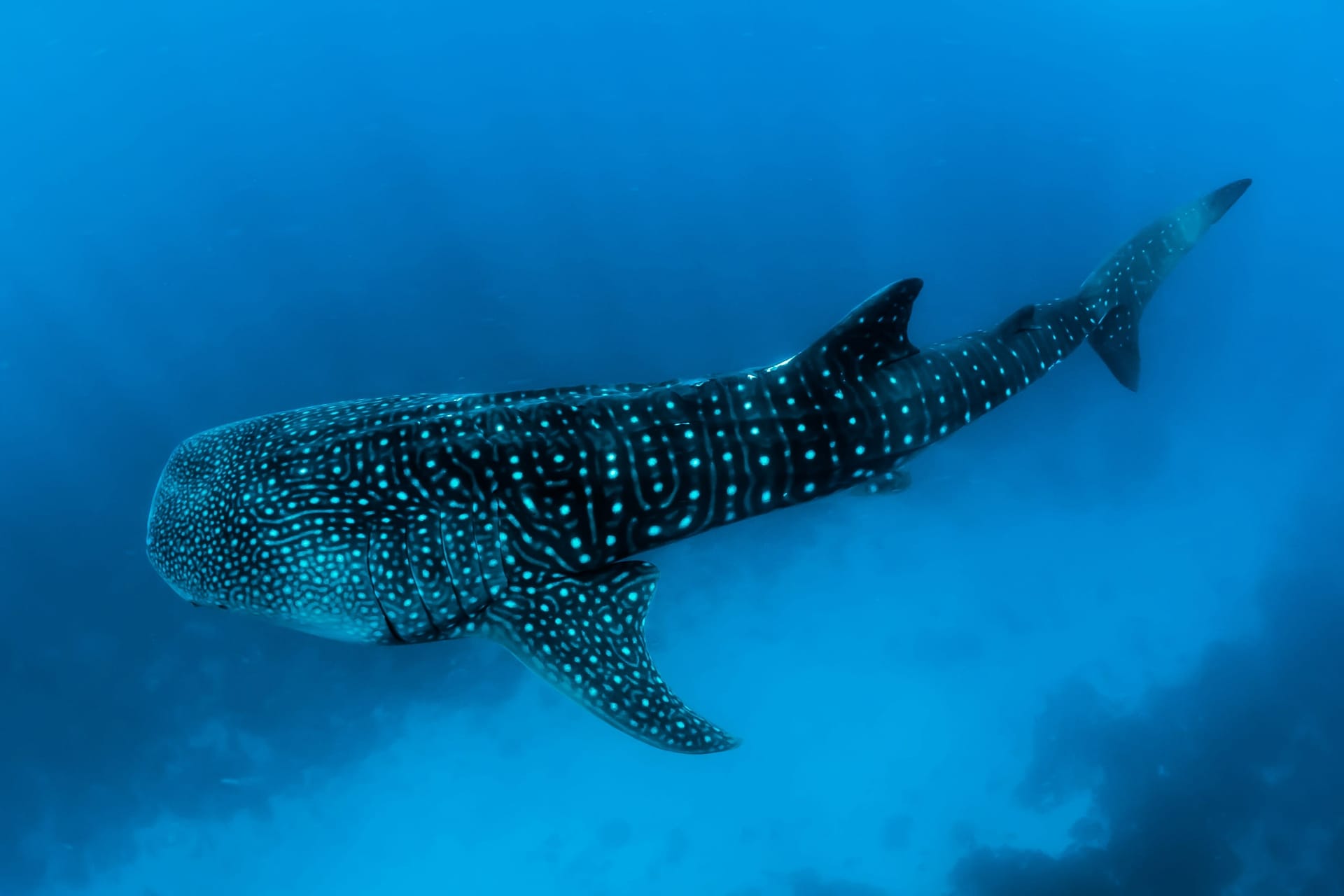
Every summer, the waters off the northern Yucatán Peninsula host the world’s largest known aggregation of whale sharks - the biggest fish on the planet. Hundreds of these slow-moving filter feeders gather at a feeding ground roughly 20–60 km offshore to consume fish eggs from spawning cubera snapper. Snorkelling alongside one is a genuinely extraordinary experience: they move past at arm’s reach, completely unconcerned by the humans in the water.
Mexico has made this into a well-regulated industry with three main departure points - Holbox, Isla Mujeres, and Cancún - each with different trade-offs.
Top Tours at a Glance
Here’s a quick comparison of top-rated tours on GetYourGuide:
| Tour | Duration | Price (from) | Group Size | Highlights |
|---|---|---|---|---|
| Whale Shark Snorkel from Holbox | Full day (8–10 hrs) | from $130/person | Small group (6–8) | Closest departure point, quieter waters |
| Whale Shark Tour from Isla Mujeres | Full day (7–9 hrs) | from $120/person | Group (8–12) | Most operator choice, ferry-accessible from Cancún |
| Whale Shark Day Trip from Cancún | Full day (9–11 hrs) | from $110/person | Group (10–15) | Hotel-zone departure, no ferry required |
| Private Whale Shark Boat Charter | Full day | from $160/person | Private (4–6) | Exclusive boat, flexible timing |
| Whale Shark + Isla Mujeres Combo | Full day (10 hrs) | from $140/person | Group | Whale sharks + island lunch stop |
Browse all whale shark tours → GetYourGuide
The Season and Feeding Grounds
Whale shark season in Mexico runs mid-June to mid-September, peaking in July and August. The feeding grounds are in an area called “Afuera” (officially the Bahía de los Términos reserve), roughly 20–60 km north of Holbox and northeast of Isla Mujeres.
The sharks gather to feed on vast floating mats of fish eggs - primarily cubera snapper spawn - near the surface. The phenomenon is predictable but not guaranteed on any single day. Experienced operators track the aggregations by boat and radio; most days during peak season, finding sharks takes 15–45 minutes of searching. On occasional days, the aggregation is diffuse or has shifted overnight.
Outside the June–September window, whale shark sightings in these waters drop sharply. A handful of operators in Cancún claim year-round sightings, but organised tours outside the main season are unreliable.
Comparing the Three Departure Points
| Holbox | Isla Mujeres | Cancún | |
|---|---|---|---|
| Travel time to feeding grounds | 45–90 min | 60–90 min | 90–120 min |
| Typical group size | 6–10 pax | 8–12 pax | 10–15 pax |
| Price per person | MXN 2,200–3,000 | MXN 2,000–2,800 | MXN 1,800–2,500 |
| Best for | Slow pace, less crowded | Most-run base, range of options | Hotel zone convenience |
| Ferry required | Yes (from Chiquila) | Yes (from Puerto Juárez) | No |
| Other whalesharks in water | Fewest boats | Moderate | Most boats |
Holbox
Isla Holbox is a small car-free island off the northwest tip of the Yucatan Peninsula. It sits closer to the whale shark feeding grounds than either of the other departure points, though the difference in journey time is not dramatic. The key advantage is atmosphere: Holbox has few large operators, tours typically run with 6–10 people, and the experience tends to feel less industrial.
Named operators from Holbox:
- Cuéntame de México Tours - family-run, bilingual, maximum 8 passengers. Price approximately MXN 2,600 / USD 130 per person as of 2026. Departs approximately 07:00.
- Holbox Dream Trips - offers combined whale shark + snorkelling tours at coral gardens. Price approximately MXN 2,800–3,000 / USD 140–150 per person.
Getting to Holbox requires a ferry from Chiquila (approximately MXN 200 / USD 10 each way, crossing time 30 minutes). Build in at least one night on the island; same-day travel from Cancún for a dawn tour is possible but very tiring.
Isla Mujeres
Isla Mujeres is the most popular base for whale shark tours due to its proximity to the feeding area, its infrastructure, and the number of licensed operators. It’s 20 minutes by ferry from Puerto Juárez (Cancún’s north zone), making it accessible for day-trippers staying in Cancún.
Named operators from Isla Mujeres:
- Sea Hawk Divers - PADI dive centre that also runs dedicated whale shark snorkel tours. Shared tours approximately MXN 2,200–2,600 / USD 110–130 per person.
- Tiburon Ballena Tours - specialist whale shark operator with a strong track record. Maximum 10 passengers per boat. Price approximately MXN 2,500–2,800 / USD 125–140. Includes a stop at Isla Contoy if time permits.
- Aquaworld - larger operator with multiple departures. Price approximately MXN 2,000–2,400 / USD 100–120. More commercial but reliable.
Whale shark tours from Isla Mujeres typically depart at 07:00–08:00 from the western docks. Most operators on the island are registered with SEMARNAT. Browse current availability on GetYourGuide (Isla Mujeres tours).
Cancún
Departing from Cancún is convenient if you’re staying in the hotel zone and don’t want to travel to another island the night before. Tours leave extremely early - typically 04:00–05:00 - to account for the longer ocean crossing. This means being at the marina at 03:30–04:30, which is a real constraint.
Named operators from Cancún:
- Cancún Mermaid Adventures - one of the longer-running Cancún-based whale shark operators. Tours include snorkelling stops at coral gardens en route. Approximately MXN 1,900–2,400 / USD 95–120 per person as of 2026. Departs Marina El Meco.
- Manta Divers - dive school with regular whale shark tours. Price approximately MXN 2,000–2,300 / USD 100–115. Maximum 12 guests per boat.
- Cancún whale shark tours via GetYourGuide - dozens of operators listed on GYG, including many that depart from Playa del Carmen and Tulum as well as Cancún. Use the booking widget above to filter by departure point and compare. Book Cancún tours here.
For Cancún-based bookings, also check the booking widget above for same-day availability and bundle deals.
What to Expect on the Day
04:00–05:00: Meet your operator at the designated marina. Bring sunscreen (reef-safe only - chemical sunscreen is strictly prohibited), a swimsuit, and light breakfast. The sea can be choppy before sunrise; take seasickness medication the night before if you’re prone to motion sickness.
05:00–07:00: Boat ride to the feeding grounds. The crew uses radio contact with other boats and sometimes aerial scouting (some operators use drones) to locate the aggregation.
07:00–10:00: Snorkelling with whale sharks. Guides jump in first and signal when a shark is approaching. Guests enter two at a time with a guide - regulations prohibit more than two swimmers plus one guide per shark. Each snorkelling session lasts around 20–30 minutes; total in-water time is typically 45–90 minutes across multiple encounters. You’ll cover the same animals multiple times as they pass through the feeding mat.
10:00–12:00: Return journey, with possible stops at coral reefs or sandbars depending on the operator and remaining time.
Eco Rules - Mandatory, Not Optional
SEMARNAT regulations require all participants to follow strict guidelines:
- No touching the whale sharks under any circumstances
- No flash photography - natural light only
- Reef-safe sunscreen only (or wear a full-body rash guard instead)
- Maintain a 2-metre minimum distance from the head; 3 metres from the tail
- No feeding or introducing any food into the water
- Maximum 2 swimmers + 1 guide per animal at any time
- No freediving under the shark
Licensed operators enforce these rules. If you observe other boats or groups violating them, document it and report to SEMARNAT (semarnat.gob.mx). The aggregation’s continued health depends on these protections being taken seriously.
What’s Included in the Tour Price
Standard inclusions at the MXN 2,000–2,800 price point:
- Boat transfer to and from feeding grounds
- Certified guide in the water
- Snorkel equipment (mask, fins, snorkel)
- Life jacket
- Reef-safe sunscreen (not always - confirm)
- Light lunch or snack on board
- SEMARNAT permit fee (included in tour price by licensed operators)
Not typically included: ferry transfers to Holbox or Isla Mujeres, seasickness medication, underwater camera rental (approximately MXN 300–500 / USD 15–25 extra).
Booking Tips
- Book direct with licensed operators - many aggregator listings are genuine but some resell spaces at significant markup. Confirm the operator name and ask for their SEMARNAT registration number.
- Weekday tours are less crowded - Saturday and Sunday bring more boats to the feeding grounds and more swimmers in the water at any moment.
- Book early in the season - July and early August are peak; the aggregation is most reliable and the weather most cooperative. September can be hit-or-miss as the sharks begin dispersing.
- Have a backup date - cancellations for weather or sea conditions are more common than operators like to admit. Book with free cancellation and keep a second date free.