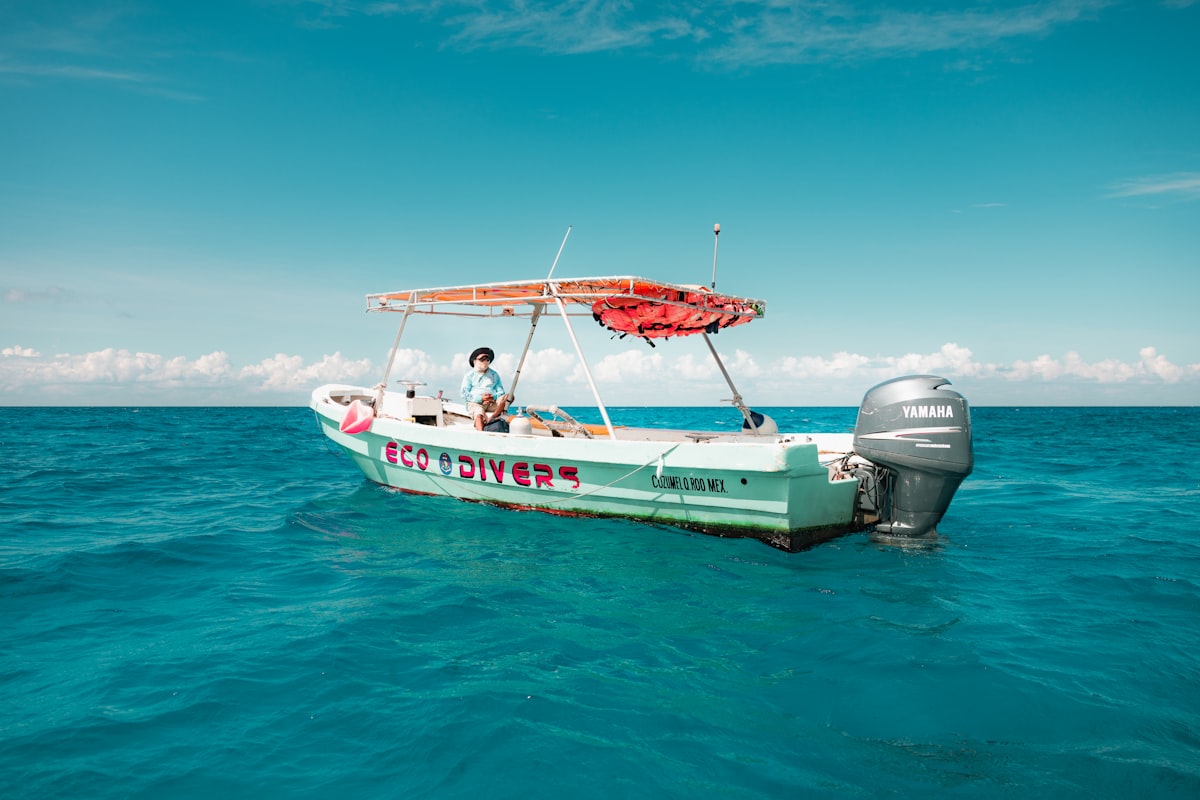
Mexico’s Caribbean coast holds three islands that reward the short boat ride it takes to reach them: Cozumel, famous for its coral reefs and laid-back San Miguel town; Isla Mujeres, a five-kilometre sliver of white sand just a short hop from Cancún; and Holbox, a carless, low-key retreat at the northern tip of the Yucatán Peninsula.
All three are reachable by regular passenger ferries. This guide covers every route in detail - operators, prices as of 2026, terminal locations, first and last departures, and practical tips for making each crossing as smooth as possible.
Route 1: Playa del Carmen → Cozumel
Journey time: ~45 minutes
Distance: approximately 19 km across open water
Operators: Ultramar, Winjet
Departure terminal
Both operators leave from the Cozumel Ferry Pier on Playa del Carmen’s main waterfront, at the western end of Avenida Constituyentes (sometimes called the downtown pier or Muelle Cozumel). The terminal is signposted from Quinta Avenida and a 5–10 minute walk from most central hotels. From the Cancún Airport, take the ADO bus directly to Playa del Carmen’s ADO terminal, then a short taxi or walk to the ferry pier.
Arrivals in Cozumel dock at the International Pier (Muelle Internacional) in San Miguel de Cozumel, right on the town’s seafront. Everything is walkable from there.
Operators and prices
Ultramar and Winjet alternate departures throughout the day, running roughly every 60–90 minutes from around 06:00 to 22:00. The two companies share the same terminal building and keep pricing competitive.
As of 2026, passenger fares are approximately:
- One-way: MXN 260–310 per adult (approximately USD 14–17)
- Return: MXN 500–600 per adult
- Children under 3 typically travel free; ages 3–11 at a reduced rate
Tickets can be purchased at the terminal desk or, for Ultramar, through their website or mobile app. The app booking can save time during peak periods.
Schedule
First ferry departs Playa del Carmen at approximately 06:00; last service around 22:00. From Cozumel, first return is around 05:00; last at approximately 21:00. Exact times vary by season and operator - check the schedule boards at the terminal or the Ultramar app the day before.
Frequency increases in high season (December–April, July–August) to roughly every 60 minutes; in low season departures may be spaced 90 minutes apart.
Buying tickets: advance vs walk-up
During normal periods, walk-up tickets are easy to get, though you may wait for the next sailing if a boat fills. During Semana Santa (Holy Week), the Christmas–New Year period, and mid-July to mid-August, the 08:00–11:00 morning sailings frequently sell out. Book 24–48 hours ahead online for those periods, or arrive at the terminal at least 45 minutes before your preferred departure.
Seasickness and luggage
The crossing is over open Caribbean and can be choppy, particularly from November to February when northerly winds push up short, sharp swells. For sensitive stomachs: sit in the middle of the lower deck, avoid the bow, and keep your gaze on the horizon. Dramamine or Bonine taken an hour before works well if you’re prone to motion sickness.
Luggage is stored in the hold or in overhead racks. Large bags and dive equipment are accepted; there’s no formal weight limit, but very bulky items may be asked to travel in the hold section.
Route 2: Puerto Juárez / Gran Puerto Cancún → Isla Mujeres
Journey time: ~15–20 minutes
Distance: approximately 11 km
Operator: Ultramar (primary)
Which terminal to use
There are two main departure points for Isla Mujeres ferries, and picking the right one saves significant time:
Gran Puerto Cancún (Ultramar terminal) - located at Blvd. Kukulcán Km 4.5 in the Hotel Zone, about 5 km from the main Cancún city centre. This is the most convenient for tourists staying along the Hotel Zone strip. Taxis from the Hotel Zone take 10–15 minutes.
Puerto Juárez - located just north of downtown Cancún, off the Periférico Norte. This terminal handles some additional services and is closer for travellers staying in downtown Cancún. A taxi from downtown takes approximately 10–15 minutes; local buses run along Avenida Tulum to the Puerto Juárez junction.
For most visitors in the Hotel Zone, Gran Puerto Cancún is the natural choice.
Prices (as of 2026)
- One-way adult: approximately MXN 200–250 (around USD 11–14)
- Return: approximately MXN 380–470
- Children under 2 free; ages 3–12 at a discounted rate
Tickets are purchased at the Ultramar terminal desk or through the Ultramar app. No advance booking is typically needed outside of peak holidays.
Schedule
Ferries depart roughly every 30–45 minutes from approximately 05:00 to 23:00, with the last return from Isla Mujeres around 23:00. After 20:00, frequency drops to roughly every 60 minutes. The crossing itself takes 15–20 minutes.
Getting to the terminal
From the Hotel Zone (Zona Hotelera): taxi from any Hotel Zone hotel to Gran Puerto Cancún takes 10–20 minutes and costs approximately MXN 150–250. An R-1 public bus also runs along Blvd. Kukulcán.
From Cancún Airport: take an ADO bus to the Cancún city terminal, then a taxi north to Puerto Juárez (approximately MXN 120–180), or take a direct taxi from the airport (approximately MXN 450–600 as of 2026).
Tips
The ferry ride is short and the water is usually calm, being partially sheltered by the Yucatán coast. Arrive 20–30 minutes early during busy periods. Lockers and luggage storage are not available at the terminal, so travel light if doing a day trip. Golf carts are the main transport on Isla Mujeres; rental stands are near the ferry dock on arrival.
Route 3: Chiquila → Holbox
Journey time: ~25 minutes
Distance: approximately 4 km across the Yalahau Lagoon
Operators: Several small competing companies operate from the same Chiquila pier, including Holbox Express and unnamed local cooperatives
Getting to Chiquila
Chiquila is the small port village on the northern Yucatán coast, 175 km northwest of Cancún. It’s the only access point for the Holbox ferry.
By bus from Cancún: Take an ADO or Mayab first-class bus from Cancún’s ADO terminal toward Valladolid or Mérida and get off at Kantunilkin (approximately 2.5 hours). From there, take a local taxi or colectivo to Chiquila (approximately 30 minutes, MXN 50–80). Total journey: 3–3.5 hours.
By rental car: Drive Highway 180 west from Cancún through Leona Vicario, then take the turnoff toward Kantunilkin and follow signs north to Chiquila. The drive is approximately 2.5–3 hours depending on traffic through Cancún.
Car parking in Chiquila: There are several private parking lots at the Chiquila pier charging approximately MXN 100–150 per day as of 2026. Cars cannot go to Holbox - the island has no paved roads and vehicles are prohibited for visitors. Leave your car in Chiquila.
Prices (as of 2026)
- One-way adult: approximately MXN 130–180 (around USD 7–10)
- Return rates are simply double - no discount
Multiple operators compete at the pier, so small price differences exist. Buy from whichever boat is loading as you arrive; they depart as soon as roughly 10–15 passengers have boarded. No advance booking needed.
Schedule
Boats operate from approximately 06:00 to 21:00, with no fixed timetable - they depart when full (which usually means every 20–40 minutes during the day). After dark, service becomes sporadic. Plan to arrive in Chiquila no later than 19:00 to guarantee a crossing.
Last return boats from Holbox leave around 19:00–20:00, but confirm locally.
Tips for Holbox
Holbox is a sandy, carless island. Golf carts and bicycles are the main transport. Accommodation ranges from budget posadas to boutique eco-lodges; book ahead in July–August and during whale shark season (June–September), when the island is busy with snorkelling tours. Luggage: wheeled bags are fine for the boat but can be awkward on sandy paths - a backpack or soft duffel works better on the island itself.
Car Ferry to Cozumel: Transcaribe
If you’re renting a car and want to explore Cozumel independently without hiring taxis, the Transcaribe vehicle ferry is the answer.
Departure: Calica Pier (also called Punta Venado Pier), approximately 12 km south of Playa del Carmen, off Highway 307.
Crossing time: approximately 75–90 minutes.
Price (as of 2026): approximately MXN 1,100–1,500 per vehicle depending on size; passenger fares are included in the vehicle ticket. Motorcycles are cheaper; trucks are priced higher.
Sailings: typically 2–3 times daily in each direction. Specific departure times should be checked directly, as they shift seasonally. Reserve a spot at least a day ahead in high season, particularly if travelling with a larger vehicle. Transcaribe has an online booking system and a phone line.
Arrival in Cozumel: the car ferry docks at the International Auto Ferry pier on the south side of San Miguel, a short drive from the town centre.
Day Trips to Isla Contoy and from Cancún
Beyond the main island ferries, several tour operators in Cancún and Isla Mujeres offer organised boat day trips to Isla Contoy - a protected national park and bird sanctuary north of Isla Mujeres. The island is accessible only via licensed tour operators; no independent ferries run there. Group tours typically leave from Puerto Juárez or the Isla Mujeres ferry pier and include snorkelling stops, running approximately MXN 1,200–1,800 per person as of 2026. Entry to the island is capped at 200 visitors per day, so book in advance.
Day trips from Cancún to Holbox - typically a long-day excursion including whale shark snorkelling in season - are also sold by many tour agencies in the Hotel Zone. These usually involve private transfers to Chiquila plus the public ferry, making for a full-day commitment.
Plan your trip: car hire · airport transfers · travel insurance.
General Tips for All Routes
Arrive early for holidays. Mexican public holidays, Semana Santa, and the July–August family travel peak see surging demand on all three routes. Aim for the pier at least 45 minutes before your preferred sailing.
Keep documents dry. On open-top areas and in choppy conditions, spray can reach bags and pockets. A dry bag or ziplock is worth carrying for passports, phones, and cash - particularly on the Cozumel crossing.
Motion sickness. For anyone prone to seasickness, the Cozumel route is the only real variable - the open-water stretch can produce a genuine swell in winter months. Medication taken 30–60 minutes before boarding is far more effective than medication taken after symptoms begin.
Cash vs card. Walk-up ticket desks on all routes are increasingly card-friendly, but cash (pesos) remains the safest option for last-minute purchases at smaller operators, particularly in Chiquila.
Water and sun. Ferry decks are fully exposed. Bring water and sunscreen for any route - 25 minutes to Holbox or 45 to Cozumel under a full Caribbean sun is enough to burn.
Cozumel, Isla Mujeres, and Holbox each offer a completely different flavour of Caribbean escape - from the world-class diving reefs of Cozumel to the slow, sandy pace of Holbox. The ferries to all three are reliable, frequent, and straightforward. Once you know which terminal to head for and what to expect in peak season, getting out to the islands is one of the easiest parts of any Yucatán trip.
Ready to Plan Your Trip?
See our itineraries for inspiration:
- 10 Days Yucatan - ten days through the Yucatán Peninsula
- Yucatan Road Trip - a ten-day Yucatán road trip
- 10 Days Mexico - ten days from the capital to the Caribbean
- 2 Weeks Mexico - the two-week Mexico circuit