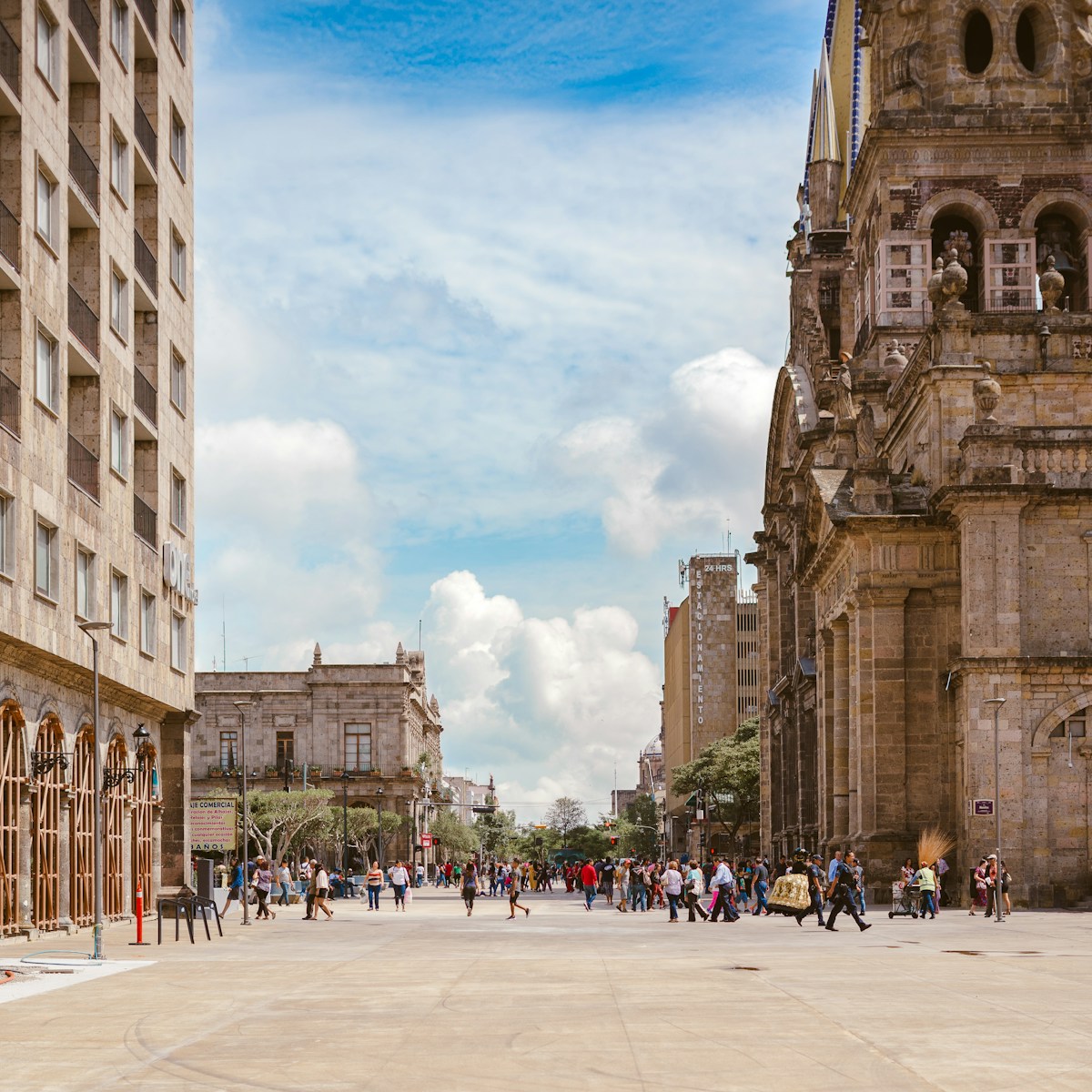
Mexico has two cities with genuine claims to being the cultural capital of the country. Mexico City (CDMX) is the megalopolis - overwhelming, inexhaustible, one of the great cities of the world. Guadalajara is Mexico’s second city and the capital of Jalisco - the home of tequila, mariachi, and a pride in tapatío identity that has produced some of Mexico’s finest cuisine and traditions. Here’s how they compare.
Quick Verdict
| Mexico City | Guadalajara | |
|---|---|---|
| Population | ~21 million | ~5 million |
| Character | Dense, cosmopolitan, relentless | Confident, culturally proud, more relaxed |
| Museums | World-class, enormous quantity | Strong regionally, Orozco murals unmissable |
| Food scene | Unmatched breadth | Outstanding regional Jaliscan cuisine |
| Tequila access | Available everywhere | Source - Tequila town 60 km away |
| Daily budget | MXN $900–3,000+ | MXN $700–2,200 |
| Walkability | Neighbourhood-by-neighbourhood | Compact historic centre, more walkable |
| Best for | Cultural immersion, museum-lovers, foodies | Tequila country, regional Mexico, relaxed city breaks |
Neighbourhoods
Mexico City is best understood by neighbourhood rather than as a unified whole. Roma Norte and Condesa are tree-lined, café-dense, and popular with expats and visitors - the place to base yourself for a first visit. Coyoacán is bohemian and historic, home to the Frida Kahlo Museum. Polanco is upmarket with high-end restaurants and the Anthropology Museum. Centro Histórico is the colonial heart with the Zócalo and Templo Mayor. Each neighbourhood feels like a different city; the metro connects them efficiently.
Guadalajara’s historic centre clusters around the Cathedral and the four plazas - Plaza de Armas, Plaza de la Liberación, Plaza Fundadores, and Plaza Guadalajara. Zapopan (15 minutes by Tren Ligero) has excellent restaurants and the Zapopan Basilica. Tlaquepaque is the artisan and ceramics district, 15 minutes south by Uber - arguably the finest craft shopping neighbourhood in western Mexico. Zona Rosa is Guadalajara’s upmarket restaurant and bar area.
Food and Drink
Mexico City offers every regional cuisine in the country plus world-class fine dining. The Mercado de San Juan (Ernesto Pugibet, just south of Alameda Central) has high-quality produce, international deli stalls, and excellent tostadas. Contramar (Durango 200, Roma, seafood tostadas approximately MXN $120 each as of 2026) and Mercado Roma (Querétaro 225) represent the city’s mid-range food scene well. At the top end, Pujol (Tennyson 133, Polanco, tasting menu approximately MXN $2,500–3,000) has been ranked among the world’s 50 best restaurants.
Guadalajara is the home of birria - the slow-braised goat or beef stew that has taken international street food markets by storm. Birriería Las 9 Esquinas (Colón 384, Centro, birria torta approximately MXN $80–120 as of 2026) in the oldest barrio in the city is an essential stop. Tortas Ahogadas - the Guadalajaran speciality of a bread roll stuffed with pork carnitas and drowned in hot chilli sauce - is the city’s defining street food, best at El Güero (16 de Septiembre 1128). The Jaliscan love of tequila means the city’s mezcalerías and tequilerías are exceptional; La Covacha (Madero 23, Tlaquepaque) has one of the finest selections in western Mexico. See our mezcal and tequila guide for what to try.
Culture and Sights
Mexico City’s cultural offering is staggering: the Museo Nacional de Antropología (Bosque de Chapultepec, approximately MXN $90 entry as of 2026) is arguably the finest anthropology museum in the Americas. The Palacio de Bellas Artes, Museo Frida Kahlo, Templo Mayor excavations, and countless murals by Rivera and Siqueiros across the city constitute a near-endless cultural programme. Allow a minimum of 5 days; 10 days is more realistic for the highlights.
Guadalajara has a more concentrated cultural core. The Instituto Cultural Cabañas (Hospicio Cabañas, Plaza Tapatía, approximately MXN $90 entry) houses José Clemente Orozco’s monumental murals - Man of Fire in the dome is one of the most powerful paintings in Mexico, and Orozco’s work throughout the building rewards 2–3 hours. The Palacio de Gobierno on Plaza de Armas has a magnificent Orozco mural on the staircase (free). Tlaquepaque’s craft galleries and ceramic workshops are unlike anything in Mexico City - this is where Talavera and blown glass workshops operate alongside quality artisan design shops. Read more on our Guadalajara city hub.
Accommodation
Mexico City has excellent options across all budgets. Hotel Condesa DF (Veracruz 102, approximately MXN $3,500–5,500/night as of 2026) is one of the most stylish boutique hotels in the country. Hotel Carlota (Río Amazonas 73, Colonia Cuauhtémoc, approximately MXN $2,200–3,500/night) is design-focused and excellent value. Hostel Home (Tabasco 303, Roma, dorm from approximately MXN $350/night) is among the best hostels in the city.
Guadalajara runs cheaper for equivalent quality. Hotel Demetria (Monteverdi 1232, Zona Rosa, approximately MXN $2,000–3,200/night as of 2026) is the city’s finest boutique property. NH Guadalajara (Vallarta 3989, approximately MXN $1,200–2,000/night) offers reliable business-hotel comfort at mid-range prices. Posada San Pablo (Madero 218, Tlaquepaque, approximately MXN $800–1,400/night) is a charming guesthouse in the artisan district.
Getting Around
Mexico City: The metro (approximately MXN $6/trip as of 2026) is fast, cheap, and extensive - 12 lines covering most tourist areas. Uber and DiDi are reliable and affordable for door-to-door trips (typically MXN $50–200 within central areas). Avoid driving.
Guadalajara: The Tren Ligero light rail connects the historic centre to Zapopan and the southern bus terminal. Ubers within the city typically run MXN $40–130. The city is small enough that a single Uber can reach most tourist areas in under 25 minutes. Tlaquepaque and Tonalá (craft market town) are easily reached by Uber.
Day Trips
Mexico City day trips: Teotihuacán pyramids (50 km northeast, bus from Terminal Norte approximately 1 hour), Taxco (colonial silver city, 170 km south, 3-hour bus), Puebla (130 km east, 2-hour bus, excellent food scene).
Guadalajara day trips: Tequila town (60 km west, Jose Cuervo Express train from Guadalajara, full-day tour approximately MXN $1,200–1,800 including tastings), Lake Chapala (50 km south, the largest natural lake in Mexico), Mazamitla (mountain village, 120 km southeast). The tequila country around Guadalajara - the highland Los Altos region - is a uniquely Jaliscan experience that Mexico City cannot replicate.
When to Visit
Mexico City is pleasant year-round; November–April is drier and clearer. The city becomes congested during Christmas and Semana Santa. Major events like the Day of the Dead (1–2 November) in the Centro Histórico are spectacular but busy.
Guadalajara is mild year-round at 1,566 m altitude - pleasant days and cool evenings. The rainy season (June–September) brings afternoon downpours but not travel-disrupting rainfall. October’s International Mariachi Festival and November’s International Film Festival are highlights. Read our best time to visit Mexico guide for the full picture.
Verdict
Choose Mexico City if you want maximum cultural density, world-class museums, the country’s finest and most diverse food scene, and a genuinely world-city experience.
Choose Guadalajara if you want a more focused Mexico experience, tequila at source, excellent regional cuisine, and a city that feels culturally proud and less overwhelming than CDMX.
The easiest solution: fly into Mexico City, spend 4–5 nights, then fly to Guadalajara for 3–4 nights. The 1-hour flight makes this practical and the contrast between the two cities tells a more complete story of Mexico.
Plan your trip: tours in Mexico City · tours in Guadalajara · flights to Mexico · travel insurance.
Related City Guides
Ready to Plan Your Trip?
See our itineraries for inspiration:
- 3 Days Mexico City - a three-day Mexico City break
- Mexico City To Oaxaca - the Mexico City to Oaxaca route
- 1 Week Mexico - one week covering Mexico City, Oaxaca and the beach
- 2 Weeks Mexico - the two-week Mexico circuit