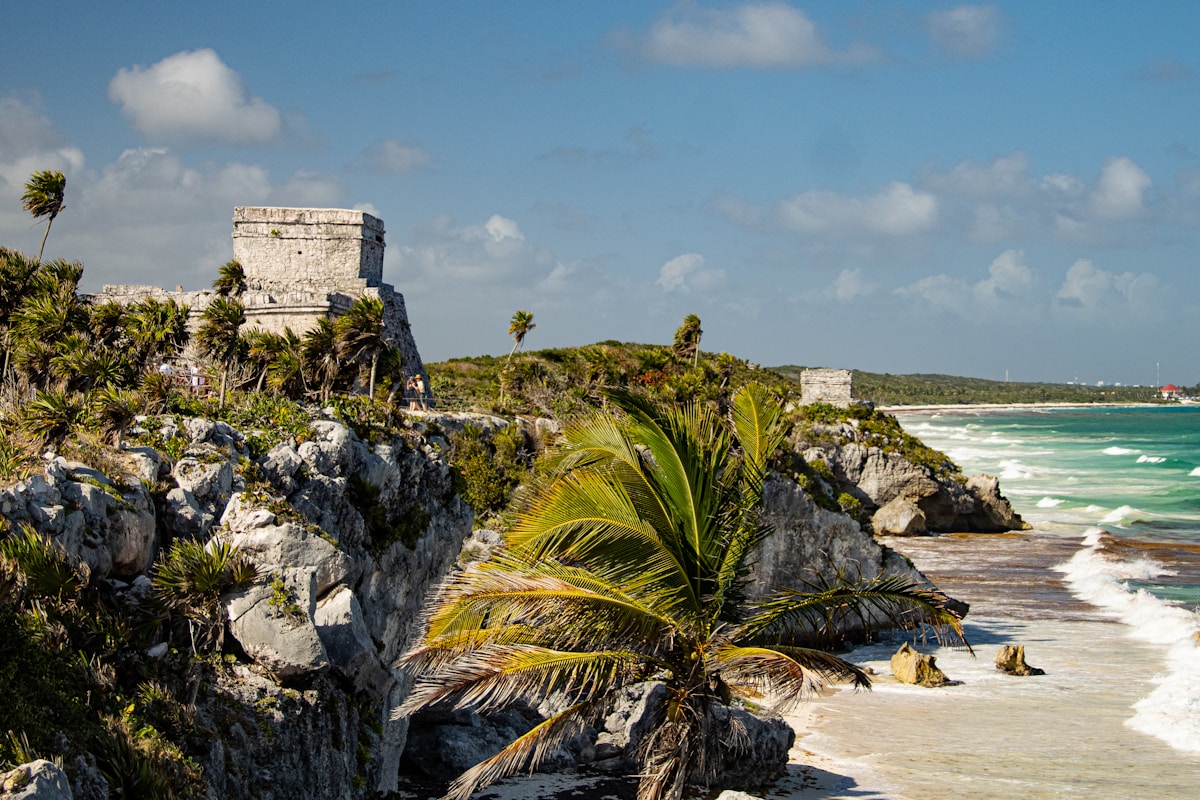
Playa del Carmen and Tulum sit 65 km apart on the same stretch of Caribbean coast, share the same turquoise water, and both attract travellers looking for a Riviera Maya base. They’re often discussed in the same breath - but they deliver meaningfully different trips. The question isn’t which is better. It’s which fits what you’re actually planning to do.
The Core Difference
Playa del Carmen is a functioning town of around 300,000 people that happens to have excellent beaches. Its pedestrian spine - Quinta Avenida (Fifth Avenue) - runs parallel to the sea for several kilometres and anchors the city’s restaurant, bar, and shopping scene. It’s walkable, urban, and a practical hub for day trips across the Riviera Maya.
Tulum is a smaller community that has evolved from a backpacker stop into a boutique wellness destination. Its hotel zone is a 10 km stretch of jungle road running south from the ruins - a sequence of eco-resorts, beach clubs, and jungle pools rather than a town. The atmosphere is more deliberately curated and less spontaneous than PDC.
Both have the same Caribbean sea. The difference is what surrounds it.
Beaches
Playa del Carmen’s main beach - Playa Mamitas and Playa Paraíso - runs alongside the Hotel Zone north of the ferry terminal. The sand is white and fine, the water is calm and clear. Beach clubs (Mamitas, Coralina, Zenzi) charge entry fees of approximately MXN $200–400 as of 2026, which usually converts to a drinks tab. Free public beach access is available at the southern end near Constituyentes. Sargassum seaweed is a seasonal issue (April–September) and varies beach to beach.
Tulum’s beaches are arguably more striking - especially the stretch fronting the clifftop ruins at the north end, and the wilder coast south towards Punta Piedra. The hotel zone’s beaches feel more secluded, each property managing its own stretch. Access for non-guests at boutique hotels can be awkward. The reef offshore provides some sargassum protection at certain beaches, but it’s unpredictable. Beach clubs here (Papaya Playa Project, Rosa Negra) run MXN $400–600+ entry as of 2026.
Edge: Tulum for scenery and seclusion; PDC for reliable access and value.
Accommodation
Playa del Carmen has the widest range of accommodation budgets on the Riviera Maya outside Cancún. Options span from hostels near Quinta Avenida (Selina PDC from approximately MXN $400/night dorm, MXN $1,200/night private as of 2026) through mid-range boutique hotels (Hotel Lunata from approximately MXN $1,800/night), and upmarket properties in the northern Hotel Zone (Thompson Playa del Carmen from approximately MXN $4,000/night, Rosewood Mayakoba from approximately MXN $8,000/night outside town). All-inclusives are available but less dominant than in Cancún.
Tulum is split between the high-end hotel zone and the more affordable Tulum Pueblo. In the hotel zone, boutique eco-resorts command premium prices: Azulik (from approximately USD $300/night), La Valise (from approximately USD $400/night), Nomade (from approximately USD $500/night). Tulum Pueblo has budget and mid-range options - Mayan Monkey hostel (from approximately MXN $350/night dorm), Casa Violeta (guesthouse, from approximately MXN $1,000/night) - but these require a taxi to the beach (approximately MXN $80–120 each way as of 2026).
Edge: PDC for range at every budget; Tulum for those who specifically want the boutique hotel zone experience.
Food and Dining
Playa del Carmen’s food scene lives largely on and behind Quinta Avenida. El Fogón is the reliable standby for charcoal tacos (from approximately MXN $40 per taco as of 2026); La Tarraya does fresh seafood directly on the beach (mains approximately MXN $200–350); La Cueva del Chango serves a slow brunch menu popular with longer-stay visitors. International options are abundant - Italian, Thai, Japanese - and prices stay reasonable away from beach club menus.
Tulum’s restaurant scene punches higher on ambition. Hartwood’s wood-fire cooking (mains approximately MXN $300–600 as of 2026) built the original Tulum dining reputation; Gitano and Taboo blend mezcal cocktails with upscale Mexican; Hemingway in the pueblo offers mid-range European-Mexican fusion (mains approximately MXN $250–450). Budget eating is possible in Tulum Pueblo’s taquerias and market stalls, but the hotel zone runs restaurant prices 40–80% higher than PDC.
Edge: PDC for value and variety; Tulum for destination dining at the high end.
Nightlife
Playa del Carmen has one of the strongest nightlife scenes on the Riviera Maya. Calle 12 Norte (the party street) and beach clubs concentrate the energy - Coco Bongo PDC, Mandala, and La Vaquita are the anchors. It’s louder and later than Tulum, and accessible by foot from most accommodation.
Tulum nightlife is diffuse and beach-oriented. Papaya Playa Project hosts full-moon parties and regular DJ nights; Vagalume and Chamico’s have live music on the beach; mezcal bars in the pueblo run late. It’s social but more intimate - a conversation-over-cocktails scene rather than a club circuit.
Edge: PDC for mainstream nightlife; Tulum for low-key evenings and beach parties.
Day Trip Access
Both cities give good access to the Riviera Maya’s key attractions. PDC’s central position works slightly better as a regional hub; Tulum’s southern position cuts travel time to cenotes and Cobá.
| Attraction | From PDC | From Tulum |
|---|---|---|
| Tulum ruins | 1 hr drive | 10 min drive |
| Gran Cenote | 1.5 hr | 15 min |
| Cenote Dos Ojos | 1.5 hr | 30 min |
| Cobá ruins | 2 hr | 45 min |
| Cozumel ferry | 30 min ferry | 1.5 hr + ferry |
| Chichén Itzá | 2.5 hr | 2.5 hr |
| Bacalar | 3.5 hr | 2.5 hr |
| Cancún airport | 55 min | 1.5 hr |
PDC wins on Cozumel (the ferry departs from its waterfront) and airport proximity. Tulum wins on cenotes, Cobá, and the ruins themselves. For a trip focused on underwater swimming, Tulum’s 15-minute ride to Gran Cenote saves repeated long transfers.
Cost Comparison
| Category | Playa del Carmen | Tulum hotel zone |
|---|---|---|
| Mid-range hotel (per night) | MXN $1,200–2,500 | MXN $3,000–7,000 |
| Budget hostel (dorm) | MXN $350–600 | MXN $350–600 (Pueblo only) |
| Restaurant meal (midrange) | MXN $180–350 | MXN $300–600 |
| Beach club entry | MXN $200–400 | MXN $400–600 |
| Cenote admission | MXN $200–400 | MXN $200–400 |
| Taxi within town | MXN $60–100 | MXN $80–150 |
Approximate figures as of 2026. Tulum Pueblo is 25–40% cheaper than the hotel zone figures above.
Who Should Choose Playa del Carmen
- First-time Riviera Maya visitors who want convenience and a walkable base
- Travellers planning to combine beaches with Cozumel snorkelling
- Anyone on a mid-range budget who doesn’t want to pay boutique hotel premiums
- Digital nomads - PDC has the better co-working infrastructure and longer-stay rental market
- Groups who want nightlife as part of the trip
- Those arriving into Cancún airport for whom a closer base is useful
For full planning detail, see our Playa del Carmen travel guide.
Who Should Choose Tulum
- Travellers whose main goals are cenote swimming, the ruins, and Cobá
- Those who want a boutique or eco-resort experience
- Wellness-focused visitors - yoga retreats, sound baths, and holistic spas are concentrated in Tulum
- Couples looking for a more intimate atmosphere than PDC’s busier beach scene
- Anyone staying 5+ days who wants a quieter base for the second half of a Riviera Maya trip
For full planning detail, see our Tulum travel guide.
Doing Both
PDC and Tulum are easy to combine - one of the most natural Riviera Maya itineraries is 3–4 nights in each. The ADO bus runs roughly hourly (approximately 1 hour, MXN $120–180 as of 2026); colectivos from PDC’s terminal on Calle 2 Norte depart when full and drop passengers at points along the highway including Gran Cenote, making the transition itself a half-day activity. Most travellers fly in and out of Cancún, base in PDC for the first half (Cozumel, beach clubs, Chichén Itzá), then move south to Tulum to finish with cenotes and ruins.
Plan your trip: tours in Tulum · tours in Playa del Carmen · flights to Mexico · travel insurance.
Related City Guides
Ready to Plan Your Trip?
See our itineraries for inspiration:
- 10 Days Yucatan - ten days through the Yucatán Peninsula
- Yucatan Road Trip - a ten-day Yucatán road trip
- 10 Days Mexico - ten days from the capital to the Caribbean
- 2 Weeks Mexico - the two-week Mexico circuit