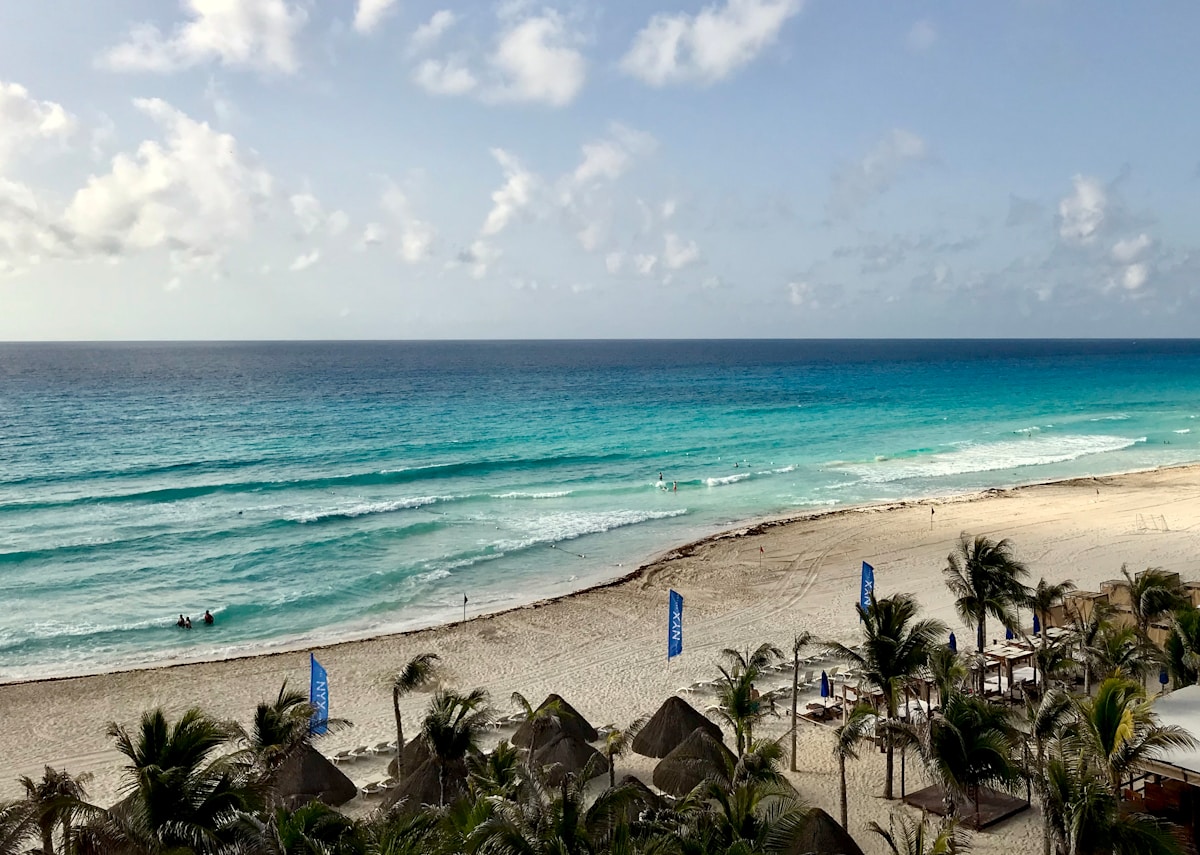
January is one of the best months to visit Mexico. Dry season is in full effect across most of the country, temperatures are comfortable, and - outside of the school holiday period in the first week - the peak Christmas crowds have thinned out. Wildlife experiences are at their strongest, with both whale watching and Monarch butterfly season at or near their peak.
Dry Season on the Pacific, Rain-Free Yucatán, Cold Nights in the Highlands
| City | Avg High °C | Avg Low °C | Rainfall mm | Humidity | Notes |
|---|---|---|---|---|---|
| Mexico City | 22 | 7 | ~10 | Low | Cool mornings, warm afternoons, dry |
| Cancún | 28 | 20 | ~65 | Low–Moderate | Peak dry season, clear skies |
| Guadalajara | 26 | 9 | ~10 | Low | Dry and warm with cool nights |
| Oaxaca | 26 | 10 | ~5 | Low | Clear skies, ideal conditions |
| Mérida | 29 | 18 | ~30 | Low | Warm days, comfortable evenings |
| Puerto Vallarta | 27 | 18 | ~10 | Low | Dry season, best Pacific weather |
| San Cristóbal | 17 | 5 | ~15 | Low–Moderate | Cool highlands, frost possible at night |
| La Paz (Baja) | 24 | 12 | ~10 | Low | Warm desert days, cool nights |
Regional variation note: Mexico City’s altitude (2,240 m) keeps January days mild at around 22°C - roughly 6°C cooler than Cancún at sea level. Oaxaca (1,550 m) sits between the two. Mérida in the flat Yucatán interior is among the warmest cities despite being far from the coast. The Chiapas highlands (San Cristóbal, 2,200 m) are the coldest point on any Mexico itinerary in January, with frost possible overnight.
Yucatan Peninsula (Cancun, Tulum, Merida): Dry season is well established. Highs of 27-30 C with low humidity and virtually no rain. The Caribbean coast is at its most pleasant, with clear turquoise water and minimal sargassum seaweed. Cenote visibility is excellent during this dry period, making January one of the best months for cenote swimming in the Yucatan.
Pacific coast (Puerto Vallarta, Los Cabos, Mazatlan): Dry and warm at 25-28 C. The Pacific dry season runs from November through May, and January sits squarely in the middle of the best conditions. Surf swells on the Pacific side are consistent, making this a strong month for surf spots like Sayulita and Puerto Escondido.
Central Mexico (Mexico City, Oaxaca, Guadalajara): Dry season with clear skies. Mexico City is mild at 15-22 C during the day, though nights can drop to 5-8 C - a warm jacket is necessary for evenings. Oaxaca’s valley is at a similar temperature range. Air quality in Mexico City is generally better in January than the March-April inversion period.
Baja California Sur (La Paz, Loreto, Cabo San Lucas): Warm desert days at 22-26 C with cool nights. This is the beginning of the best period for the Baja peninsula, with whale watching as the main draw.
Chiapas (San Cristobal, Palenque): San Cristobal sits at 2,200 m and is cool at 12-18 C during the day, dropping below 10 C at night. Palenque in the lowland jungle is warm and dry - the best conditions for exploring the ruins without oppressive humidity.
Three Kings’ Day Surge Then Riviera Maya Prices Drop 20 Percent
The first week of January remains busy, partly due to the Three Kings’ Day holiday on 6 January and partly from lingering Christmas visitors. After that, the Riviera Maya quietens before the February uptick driven by Valentine’s Day and early spring break arrivals. Accommodation prices on the Caribbean coast are at their highest in the first two weeks, then moderate by 15-20 percent for the second half of the month. Peak-week buyers often choose all-inclusive resorts in Cancún for fixed pricing, and you can compare all-inclusive rates.
Booking ahead essential: Cancun, Tulum, and Puerto Vallarta hotels for January should be booked by October-November at the latest to secure reasonable rates. Los Cabos is similarly constrained.
Grey Whales in Baja Lagoons and Blue Whales off Loreto
January is one of the best months for whale watching across Mexico’s Pacific coast. Grey whales arrive in the lagoons of Baja California Sur - Scammon’s Lagoon (Ojo de Liebre), San Ignacio Lagoon, and Magdalena Bay - from December through April, with January-March as the peak period. These lagoons are the only place in the world where grey whales calve and nurse, and the mothers and calves are remarkably approachable from small pangas. Our whale watching in Baja California guide covers operators and lagoon access.
Humpback whales are active in Banderas Bay (Puerto Vallarta) from December through March. January offers excellent sighting rates. Blue whales - the largest animals on Earth - are visible off Loreto and La Paz in Baja from January through March.
Michoacán Monarch Sanctuaries at Peak Occupancy
The Monarch butterfly sanctuaries in the mountains of Michoacan, between Morelia and Mexico City, are at peak occupancy in January and February. The El Rosario and Sierra Chincua sanctuaries are the most accessible. The butterflies cluster on oyamel fir trees by the millions, and on warm afternoons they take flight in dense clouds. The sanctuaries are at 3,000 m altitude - mornings are cold, and the climb to the colonies is steep. Bring warm layers and prepare for a moderately strenuous hike. See our monarch butterfly migration guide for sanctuary access and tour options.
Día de Reyes: Mexico’s Traditional Gift-Giving and the Rosca de Reyes
Three Kings’ Day (Dia de Reyes) on 6 January is the traditional Mexican gift-giving day. Families gather to eat the rosca de reyes - a ring-shaped sweet bread with a small figurine of the baby Jesus baked inside. Whoever finds the figurine hosts a tamale party on 2 February (Dia de la Candelaria). Bakeries across Mexico sell roscas throughout the first week of January.
January 2027 Update
- Tulum flights thin out. Volaris suspends all Tulum flights from 7 January 2027, and American Airlines is reported to end Miami to Tulum in January 2027. Aeroméxico already left in September 2026. Delta, United and the winter Canadian routes (Air Canada, WestJet, Air Transat, reported to run through March 2027) continue. For the Caribbean coast, we suggest flying into Cancún and taking the Tren Maya or a transfer. Details are in our Volaris Tulum news.
- Monarch season. The 2025-26 colonies covered 2.93 hectares, up 64% on the season before. Official 2026-27 opening dates for El Rosario and Sierra Chincua were not yet published when we checked on 4 November 2026; recent seasons opened in late November and ran to March. Entry has been reported at approximately 100-150 pesos per adult, but sources conflict, so confirm on arrival or with your guide (not verified for 2027).
- Calendar. Three Kings’ Day falls on Wednesday 6 January 2027 and New Year’s Day on Friday 1 January 2027, so expect a long Christmas-to-Epiphany stretch of full domestic flights and buses. Día de la Candelaria is Tuesday 2 February 2027.
- Quintana Roo Visitax. The visitor fee for foreigners is reported at roughly 280-285 pesos, and authorities are reviewing how it is collected after complaints at Cancún airport. Check the official Visitax portal before you fly; we could not verify a January 2027 change.
What to Pack for Mexico in January
- Light layers for daytime, a proper jacket for highland evenings (Mexico City, San Cristobal, Oaxaca)
- Sunscreen - UV intensity is high even in January, especially at altitude
- Rain gear is unnecessary for most regions; bring it only for Chiapas or the far southern Pacific coast
- Binoculars if whale watching or visiting butterfly sanctuaries
For a closer look at the Caribbean coast this month, see our Cancún in January guide with weather, crowds and prices for the Hotel Zone.
Plan your trip: tours across Mexico · flights to Mexico · travel insurance.
Related City Guides
- Mexico City Travel Guide
- Oaxaca City Travel Guide
- Puerto Vallarta Travel Guide
- La Paz Travel Guide
- Cancún Travel Guide
- Tulum Travel Guide
- Guadalajara Travel Guide
- Los Cabos Travel Guide
- Palenque Travel Guide
Plan Your Trip
January suits a Baja-plus-highlands combination better than a straight Riviera Maya trip. For whale watching, book a panga tour in San Ignacio Lagoon or Magdalena Bay by October - small operators fill months in advance. The Monarch Butterfly Biosphere Reserve near Angangueo peaks this month: access via Morelia, bring warm layers for the 3,000 m altitude. On the Caribbean coast, hotel prices drop 15–20% after January 15 once the Christmas visitors clear. If Cancun or Tulum is the goal, book by October but aim for the second half of the month for better value.
To keep planning, see Mexico Weather in February and Mexico Weather in March.
- Mexico City to Oaxaca - a highlands-focused route
- 2 Weeks Mexico - the full Mexico circuit
- Budget Mexico Itinerary