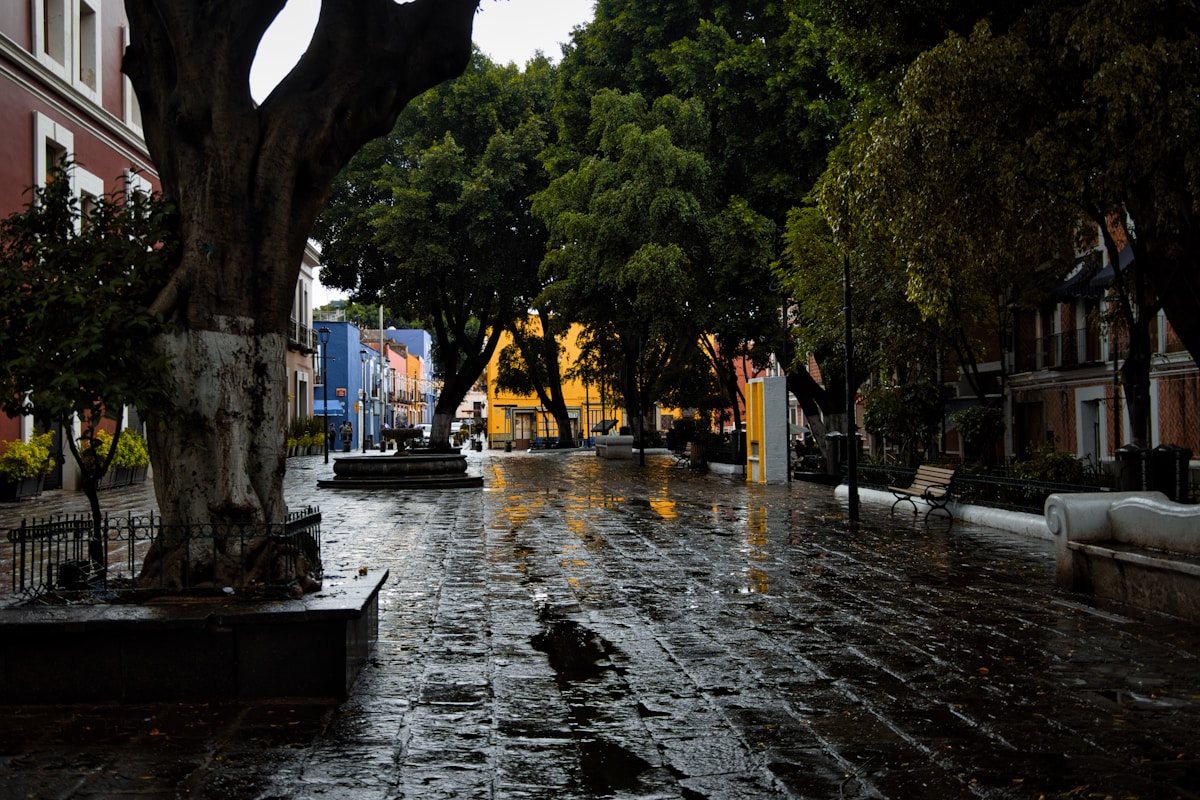
Summer in Mexico runs from June through September - a period that coincides with rainy season, lower prices, and some of the country’s most dramatic weather. Whether it’s a dealbreaker or an opportunity depends entirely on where you go.
Regional weather at a glance
Rain doesn’t fall evenly across Mexico. The highlands are cooler and see afternoon showers rather than full-day downpours. The Pacific coast gets heavy rain but less sargassum than the Caribbean. Baja California Sur stays largely dry. The Caribbean coast faces the full force of hurricane season.
| Region | June | July | August | September |
|---|---|---|---|---|
| Mexico City / Highlands | 22 °C / 15 rain days | 22 °C / 18 rain days | 22 °C / 17 rain days | 21 °C / 17 rain days |
| Oaxaca / San Cristóbal | 28 °C / 10 rain days | 27 °C / 13 rain days | 27 °C / 13 rain days | 26 °C / 12 rain days |
| Pacific Coast (Puerto Vallarta) | 32 °C / 10 rain days | 32 °C / 17 rain days | 33 °C / 18 rain days | 32 °C / 18 rain days |
| Caribbean Coast (Cancún) | 33 °C / 9 rain days | 33 °C / 9 rain days | 33 °C / 10 rain days | 32 °C / 14 rain days |
| Baja California (Los Cabos) | 34 °C / 1 rain day | 35 °C / 3 rain days | 36 °C / 4 rain days | 34 °C / 5 rain days |
Rain day counts are approximate monthly averages. Highlands rain is typically short afternoon storms; Pacific coast rain is heavier but concentrated overnight and in evenings.
Hurricane season: what you need to know
Mexico’s Atlantic hurricane season runs June 1 through November 30, with the peak window running late August through mid-October. The Caribbean coast - particularly Cancún, Cozumel, and the Riviera Maya - and the Gulf coast around Veracruz and Tampico face the highest risk. The Pacific coast has its own hurricane season, mainly affecting Puerto Vallarta south to Huatulco and Baja California Sur.
Most trips pass without a storm, but the risk is real enough that travel insurance covering hurricane-related trip cancellation and interruption is non-negotiable for Caribbean bookings in August and September. If a named storm forms while you’re there, major all-inclusive resorts have evacuation protocols. Book flexible-rate hotels where possible.
For detailed month-by-month risk by region, see our Mexico hurricane season guide.
Sargassum: which beaches are affected
Sargassum - the brown seaweed that washes onto Mexico’s Caribbean beaches - has been a significant issue since 2015. The worst-affected areas are Cancún’s Hotel Zone, Playa del Carmen, and Tulum, with deposits peaking between June and August most years. The seaweed smells strongly of hydrogen sulphide when decomposing and can cover large stretches of beach.
Hotels in the Hotel Zone employ cleanup crews who work through the night, so conditions vary day to day. Tulum’s beaches, particularly the southern eco-hotel section, tend to see more consistent coverage because cleanup is less intensive.
Where sargassum is less of a problem: The Pacific coast (Puerto Vallarta, Puerto Escondido, Huatulco) and Baja California receive negligible sargassum. Isla Holbox, on Mexico’s northwest Caribbean edge, is generally better than the Riviera Maya corridor. The Bacalar Lagoon, being an inland lake, is unaffected.
Best summer destinations
Mexico City, Oaxaca, and San Cristóbal de las Casas
The highlands are summer’s strongest argument. Mexico City sits at 2,240 metres - its maximum daily temperatures in July and August rarely exceed 22 °C, and the afternoon rains clear within an hour, leaving the streets clean and the air cool. Oaxaca city (1,500 m) follows the same pattern, with mornings consistently sunny. San Cristóbal de las Casas in Chiapas (2,200 m) is misty and dramatic; prices are low and the colonial centro is far quieter than in December.
Accommodation drops noticeably. A good mid-range hotel in Oaxaca city runs approximately $60–90 per night in summer as of 2026, compared to $100–140 in December.
Puerto Vallarta and the Pacific Coast
Puerto Vallarta gets heavy rain in July and August, but the pattern favours visitors: mornings are typically clear and sunny, with rain arriving in the afternoon or evening. Sea temperatures reach 28–30 °C in summer, and the bay is calm for swimming. The Zona Romántica has the city’s best restaurants and most of the boutique hotels, which are significantly cheaper than in high season.
Further south, Puerto Escondido and Huatulco see similar patterns with smaller crowds and lower prices. Puerto Escondido’s surf (Zicatela Beach) peaks in summer swells.
Baja California: Cabo and La Paz
Baja runs counter to the mainland pattern. Los Cabos and La Paz see very little summer rain and are effectively dry deserts. Heat is genuine - expect 35–38 °C in July and August - but it’s dry heat and the Sea of Cortez is warm and extraordinarily clear. Whale shark season runs May through October around La Paz and Isla Espíritu Santo. Summer is the Sea of Cortez’s best dive season.
Pros of summer travel
Lower prices. This is the biggest factor. Hotels in Cancún drop to approximately $80–120 per night in summer versus $200+ in winter as of 2026. All-inclusives on the Riviera Maya often run 35–40% below January rates. Tours and domestic flights follow the same pattern.
Whale sharks. The largest concentration in the world gathers near Isla Mujeres and Holbox from June through September. Tours run daily, covering the 45-minute boat ride to the feeding grounds. Expect to pay approximately $80–100 per person including snorkelling equipment as of 2026. Numbers peak in July and August.
Sea turtle nesting. Leatherback, loggerhead, and hawksbill turtles nest on Oaxacan beaches (Mazunte, Ventanilla) and along the Caribbean coast from June onwards. Some eco-reserves run night tours to watch nesting and hatchling releases - check La Escobilla and Ventanilla near Mazunte.
Lush landscapes. The dry brown countryside of February becomes deep green by July. The road south from Mexico City through the mountains to Oaxaca is particularly dramatic after the rains start. Waterfalls near Hierve el Agua and Agua Azul in Chiapas run at their fullest.
Fewer crowds. Chichén Itzá, Teotihuacán, and the cenotes of Yucatán are noticeably quieter compared to the December–March peak. You can reach popular sites earlier and avoid the worst of the coach groups.
What to pack for summer
A lightweight packable rain jacket is more useful than an umbrella - it keeps your hands free and packs into nothing. A waterproof dry bag or zip-lock bags protect electronics and documents when afternoon downpours hit suddenly. Reef-safe sunscreen (zinc or mineral-based) is required in the cenotes and preferred on all Mexican beaches. Mosquito repellent is essential from dusk in jungle and coastal areas; DEET 30% or higher works better than natural alternatives in areas with dengue risk.
See the full Mexico packing list for region-specific clothing suggestions and a complete gear checklist.
For month-by-month breakdowns of what to expect: Mexico in June, Mexico in July, and Mexico in August cover the specific conditions, events, and best bets for each summer month in detail. For the full year overview, see best time to visit Mexico.
Plan your trip: tours across Mexico · flights to Mexico · travel insurance.
Related City Guides
- Oaxaca City Travel Guide
- Puerto Vallarta Travel Guide
- Mexico City Travel Guide
- Cancún Travel Guide
- Puerto Escondido Travel Guide
- La Paz Travel Guide
- Huatulco Travel Guide
- Tulum Travel Guide
- San Cristóbal de las Casas Travel Guide
- Los Cabos Travel Guide
- Holbox Travel Guide
Ready to Plan Your Trip?
See our itineraries for inspiration:
- 1 Week Mexico - one week covering Mexico City, Oaxaca and the beach
- 10 Days Mexico - ten days from the capital to the Caribbean
- 2 Weeks Mexico - the two-week Mexico circuit
- Budget Mexico Itinerary - a full Mexico trip on a budget