Mexico’s beach resorts are impressive. But the country’s most enduring experiences often happen hours inland, in cobblestoned towns where the colonial-era church still dominates the plaza, where mezcal is distilled in backyard stills, and where Day of the Dead is not a tourist spectacle but a living tradition.
The Pueblos Mágicos programme - launched by SECTUR (Mexico’s tourism ministry) in 2001 - designates towns that offer exceptional historical, cultural, or natural value. By 2026, 177 towns carry the designation. This is our guide to the 13 most worth visiting, organised by region.
Top Tours at a Glance
Here’s a quick comparison of top-rated Pueblos Mágicos tours on GetYourGuide:
| Tour | Duration | Price (from) | Group Size | Highlights |
|---|---|---|---|---|
| San Miguel de Allende Day Trip from CDMX | Full day (10–11 hrs) | from $70/person | Group | UNESCO centre, Parroquia, food market, artisan quarter |
| Guanajuato + San Miguel 2-Day Tour | 2 days | from $200/person | Small group | Two UNESCO cities, tunnels, Callejón del Beso, overnight |
| Taxco Silver Town Day Trip from Mexico City | Full day (10 hrs) | from $65/person | Group | Baroque Santa Prisca cathedral, silver workshops, cable car |
| Tepoztlán Day Trip + Pyramid Hike | Full day (8 hrs) | from $55/person | Small group | Steamy market, Pyramid of Tepozteco on 300m volcanic cliff |
| Pátzcuaro + Day of the Dead Experience | Full day or overnight | from $80/person | Group | Lake Pátzcuaro, Janitzio island, Día de Muertos altars |
Browse all Pueblos Mágicos tours → GetYourGuide
Central Mexico
San Miguel de Allende, Guanajuato
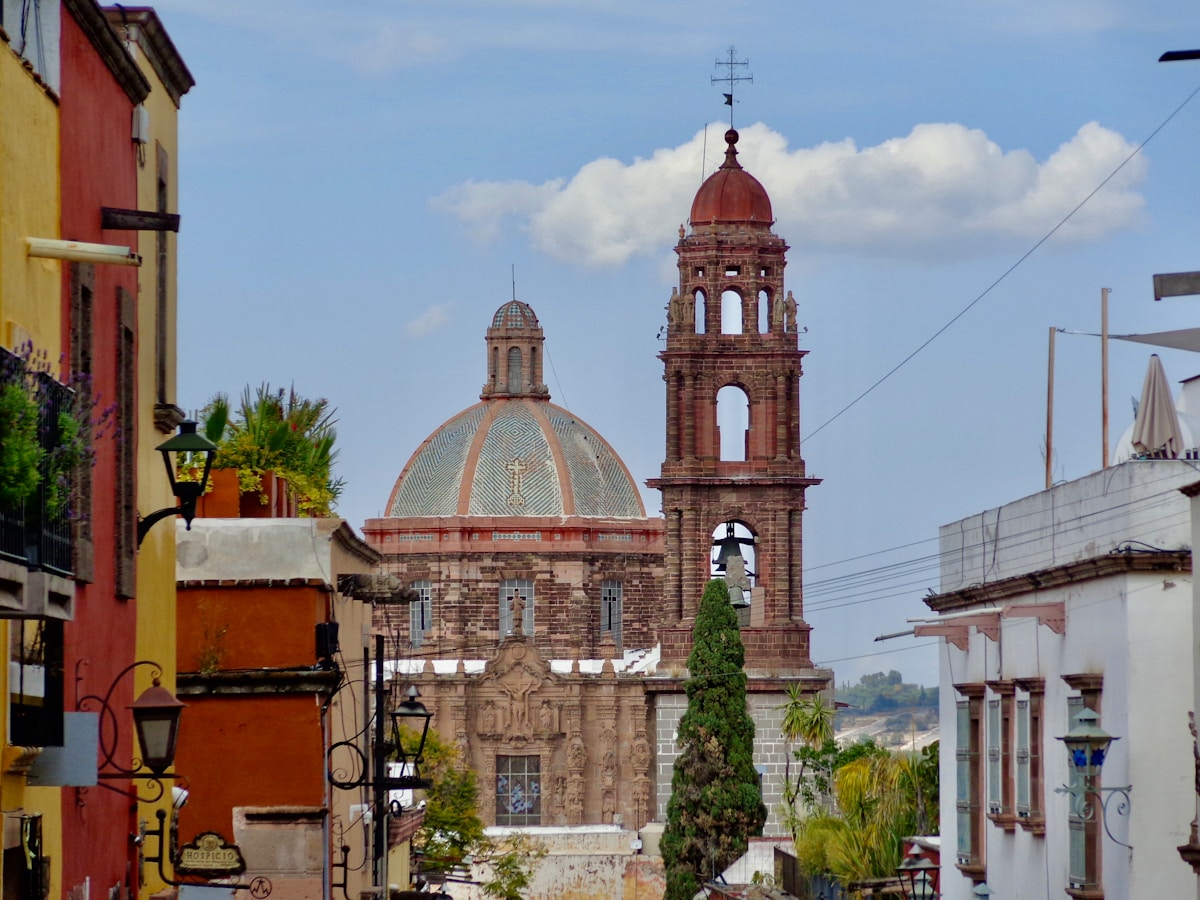
The most photographed Pueblo Mágico, and arguably the most polished. San Miguel’s rose-pink parish church, the Parroquia de San Miguel Arcángel, rises above a grid of narrow streets lined with terracotta and ochre colonial buildings. The town draws artists, retirees, and honeymooners in roughly equal measure.
What makes it special: The entire historic centre is a UNESCO World Heritage Site. There are more restaurants per capita than almost anywhere else in Mexico at this altitude, and the quality is consistently high - from market tlayudas to fine-dining tasting menus.
Getting there: 3 hours from Mexico City by ETN bus (from Terminal Poniente), or 1.5 hours from Querétaro. The bus drops at the central station; taxis and walking cover the rest.
Best time: October to April for dry weather. The Semana Santa processions and the Día de la Independencia celebrations (September 16) are the most spectacular times to visit.
Don’t miss: The rooftop bars at sunset. The Thursday organic market at Parque Juárez. The Instituto Allende art school, open for walk-in visits.
Read our full guide: San Miguel de Allende travel guide
Taxco, Guerrero
Built on near-vertical hillsides above the Mezcala River, Taxco is Mexico’s silver capital - a town where every other shop window glitters with rings, bracelets, and intricate metalwork crafted by local artisans. The 18th-century Templo de Santa Prisca, funded entirely by silver baron José de la Borda, looms over the central plaza in pink stone baroque.
What makes it special: Taxco’s silver district contains over 300 shops and workshops. This isn’t tourist kitsch - many are family workshops three generations deep, and you can watch smiths at work. Prices are lower than Mexico City or resort boutiques for equivalent quality.
Getting there: 3 hours from Mexico City (Terminal Sur, Estrella Blanca), or 1.5 hours from Cuernavaca. The bus drops near the Flecha Roja terminal; white VW Beetle taxis (peseros) navigate the steep streets.
Best time: Semana Santa is Taxco’s signature moment - the Wednesday Night of the Nazareno procession draws pilgrims from across Mexico. December through March otherwise for dry weather.
Don’t miss: The cable car (teleférico) over the rooftops. The Guillermo Spratling Museum on the history of silver craft in Taxco.
Read our city guide: Taxco travel guide
Real de Catorce, San Luis Potosí
A ghost town at 2,750 metres elevation in the high Chihuahuan Desert, Real de Catorce was a booming silver mining hub in the 19th century. When the mines closed, most of the population left, leaving behind a grid of crumbling stone buildings, a bullfighting ring, and a singular atmosphere somewhere between haunted and transcendent. Today it’s a pilgrimage site, an art colony, and the sacred homeland of the Huichol (Wixáritari) people, who walk here annually for the peyote ceremony.
What makes it special: Access through the 2.3 km Ogarrio Tunnel - a single-lane bore through the mountain - means Real de Catorce sees only as many visitors as the old cobblestones can absorb. The desert landscape outside town, the Wirikuta sacred valley, is otherworldly.
Getting there: 6 hours from San Luis Potosí city by car (2.5 hours to Matehuala, then a mountain road to the tunnel, then Jeep taxi through the tunnel). No direct bus service reaches the town itself. If you’re planning a colonial circuit or multi-town road trip, hire a car in Mexico to access harder-to-reach pueblos on your own schedule.
Best time: October through March - dry, cooler. The Feast of Saint Francis of Assisi (October 4) brings thousands of pilgrims.
Don’t miss: Rent a horse or Jeep for the Wirikuta desert circuit. The Templo de la Purísima Concepción - the church’s retablo hall is extraordinary.
Tepoztlán, Morelos
Two hours from Mexico City in a deep valley ringed by dramatic volcanic ridges, Tepoztlán is a weekend escape that rewards slow mornings in the market and long afternoon hikes. The town is famous for two things: the pre-Hispanic pyramid of Tepozteco perched on a 400-metre clifftop, and a tianguis (street market) on Sundays that covers the entire town centre.
What makes it special: The Tepozteco hike (2.5 km, 40-minute ascent) delivers views across the entire Tepoztlán valley and the surrounding biosphere reserve. The pyramid is dedicated to Tepoztécatl, the Aztec god of pulque - which you can drink in the market below.
Getting there: OCC and other buses from TAPO (Terminal Oriente) in Mexico City, 1.5–2 hours. Or car via the Mexico–Cuernavaca toll road.
Best time: Avoid summer weekends when CDMX residents flood the town. Weekdays March–May or October–November are best.
Don’t miss: Sunday tianguis for handcrafts and traditional food. The Convent of the Nativity (a 16th-century Domincan complex, free entry).
Pátzcuaro, Michoacán
On the shores of Lake Pátzcuaro in Michoacán, this is the Pueblo Mágico most closely associated with Día de los Muertos. Every November 1–2, the island of Janitzio in the middle of the lake fills with candlelit ofrendas and the Purépecha community holds all-night vigils at the cemetery - one of the most quietly powerful cultural experiences in Mexico.
What makes it special: Pátzcuaro is a living community rather than a museum piece. The Purépecha culture is present in the artisan markets, the black-clay pottery, and the copper work produced in nearby Santa Clara del Cobre. Lake Pátzcuaro itself - fishing canoes, butterfly nets at dawn - is photogenic at any time of year.
Getting there: ADO or Autovias from Morelia (1 hour) or Guadalajara (3.5 hours). Car from Mexico City takes 4.5 hours via toll roads.
Best time: Late October to early November for Día de los Muertos. March for the Corpus Christi festival. Winter is dry season and pleasant.
Don’t miss: Boat trip to Janitzio island. The Biblioteca Gertrudis Bocanegra (a former church with a spectacular Diego Rivera-school mural).
Read our city guide: Pátzcuaro travel guide
Southern Mexico & Yucatán
Bacalar, Quintana Roo
On the southernmost edge of Quintana Roo, the Laguna de Bacalar is a 42-kilometre freshwater lake with water that shifts between seven distinct shades of blue and turquoise depending on depth and sunlight. Bacalar the town is small, slow, and increasingly popular - but still a world away from the resort energy of Cancún or Playa del Carmen.
What makes it special: The lagoon’s clarity comes from its limestone bed and fresh spring inputs. Kayaking, paddleboarding, and swimming in water this colour - for free, from the public dock - is the kind of thing travellers return for.
Getting there: 3.5–4 hours from Cancún by ADO bus (frequent departures). Or 2 hours from Chetumal by bus or colectivo. Road trip from Tulum takes around 3 hours.
Best time: November through April - outside hurricane season and the intense summer heat. Lagoon visibility is best in dry season.
Don’t miss: Sunrise kayak on the lagoon. The Fuerte de San Felipe, a small fort museum on the lake’s edge. Balché cocktails made with fermented tree bark honey.
Read our full guide: Bacalar travel guide
Izamal, Yucatán
Known as the “Yellow City” because virtually every building in the centre is painted the same warm ochre yellow, Izamal is one of Mexico’s most visually striking towns. It’s also a town built literally on top of an ancient Mayan city - several pyramids rise from beneath the colonial street grid, some incorporated into private gardens.
What makes it special: The Convent of San Antonio de Padua (1561) was constructed directly on top of the largest pyramid platform in Mexico by surface area. Pope John Paul II visited in 1993; the atrium is the second largest in the world after St Peter’s in Rome. The horse-drawn calèche carriages that navigate the yellow streets are a deliberate anachronism that works here.
Getting there: 1 hour from Mérida by colectivo from the second-class bus terminal, or by rental car. Also accessible from Valladolid in 1.5 hours.
Best time: October through February. Avoid Easter Week unless you want the crowds for the pilgrimage season.
Don’t miss: Climb Kinich Kakmó pyramid for a rooftop view of the whole yellow city. The artisan market for local embroidery.
Valladolid, Yucatán
The third largest city in Yucatán but still small enough to walk across in 20 minutes, Valladolid is the gateway to several of the Yucatán Peninsula’s best cenotes and to the Ek’ Balam ruins. The colonial centre is anchored by a pink cathedral and a central plaza where Yucatecan families congregate on Sunday evenings.
What makes it special: Cenote Zací sits inside the town limits - a naturally lit open cenote where you can swim before breakfast. Cenote Suytun (15 minutes out of town) is among the most photogenic on the peninsula. The proximity to Chichén Itzá (45 minutes) makes Valladolid a quieter and cheaper overnight base than Cancún.
Getting there: 2 hours from Cancún by ADO bus, or 45 minutes from Mérida by colectivo. Regular first-class connections from Playa del Carmen.
Best time: November through March. July–August are busy with domestic tourism.
Don’t miss: Morning swim at Cenote Zací. The Calzada de los Frailes for craft shops and traditional Yucatecan food.
Read our city guide: Valladolid travel guide
Pacific Coast
Sayulita, Nayarit
A surf town an hour north of Puerto Vallarta on the Riviera Nayarit, Sayulita punches above its weight. The beach-facing streets are covered in murals, the local surf school industry is large enough to teach complete beginners, and the taco stands have a cult following. It’s also the largest concentration of yoga retreats and boutique hotels between Puerto Vallarta and the Sinaloa border.
What makes it special: Sayulita’s beach break is forgiving for learners and entertaining for intermediates. The town is small enough to walk everywhere, but developed enough to have good restaurants, beach clubs, and mezcal bars operating at the same time.
Getting there: 1 hour from Puerto Vallarta International Airport by taxi (approximately MXN 500–650 as of 2026) or by bus to Bucerías and then a local bus north. No direct airport bus.
Best time: November through April - dry season on the Pacific coast. The week after Christmas is packed; mid-January through mid-March is the sweet spot.
Don’t miss: Morning surf lesson. The Day of the Dead cemetery (one of the most decorated on the Pacific coast). Whale-watching boat trip from January through March.
Read our full guide: Sayulita travel guide
Todos Santos, Baja California Sur
On Baja’s Pacific side, an hour north of Cabo San Lucas, Todos Santos is the Baja that existed before resort development arrived. It’s a small agricultural town - mango and sugar cane farms surround it - with an arts scene anchored by galleries, the Todos Santos Film Festival, and a calendar of studio tours and workshops.
What makes it special: The town maintains a genuine bohemian character without performing it. The Hotel California (which really does exist, and yes, plays on the Eagles association) is on the main street. Pacific beaches nearby - Cerritos, Punta Lobos - are uncrowded and deliver serious surf.
Getting there: 75 minutes from Los Cabos airport by car or taxi. Aguila buses run once or twice daily from Cabo San Lucas (2 hours).
Best time: October through May. Summer is very hot and humid.
Don’t miss: Cerritos beach for surfing. The Thursday gallery walk through the Historic Arts District.
Read our city guide: Todos Santos travel guide
Mazunte, Oaxaca
A tiny fishing-turned-tourism village on Oaxaca’s Costa Chica, Mazunte has fewer than 500 permanent residents and no luxury hotels - which is exactly the point. The main attraction is the Mexican Turtle Centre (Centro Mexicano de la Tortuga), where Olive Ridley sea turtles arrive en masse for the annual nesting season.
What makes it special: Mazunte is one of the only places in Mexico where nesting turtles can be watched at close range under guided supervision (nighttime tours available July–December). The Punta Cometa headland is one of the southernmost points in Mexico and offers one of the better Pacific coast sunsets, visible without any infrastructure or crowds.
Getting there: Colectivos from Puerto Escondido (1.5 hours) or San Cristóbal de las Casas (5 hours via Pochutla). No direct bus from Oaxaca City - change at Pochutla.
Best time: July through December for turtle nesting. Dry season (November–April) for beach weather and calmer seas.
Don’t miss: Guided nocturnal turtle walk. The Cosméticos Naturales de Mazunte cooperative, which produces organic body care products.
Northern Mexico
Creel, Chihuahua
The base for exploring the Copper Canyon - a system of six interconnected canyons collectively four times larger in area than the Grand Canyon - Creel sits at 2,338 metres in the Sierra Madre Occidental. The town is essentially a service hub for two types of visitors: passengers on the El Chepe train and travellers heading deeper into Tarahumara (Rarámuri) territory.
What makes it special: The rim-to-canyon views at Divisadero, accessible by El Chepe train or road from Creel, are among the most dramatic in North America. The Rarámuri communities in the surrounding valleys sell handwoven baskets and hold competitive long-distance running races (rarajiparas) that have attracted international attention.
Getting there: El Chepe train from Chihuahua city (4.5–5 hours) or from Los Mochis on the Pacific coast (8–10 hours). A rented car from Chihuahua city takes 3.5 hours via México 16.
Best time: April–May for spring wildflowers and cooler canyon air. October–November for foliage. Avoid summer rains (July–August).
Don’t miss: El Chepe train ride to Divisadero canyon viewpoints. The Rarámuri artisan market at Creel’s central plaza on Saturday mornings.
Read our full guide: Creel and Copper Canyon travel guide
Mineral de Pozos, Guanajuato
One of Mexico’s most intact ghost towns, Mineral de Pozos reached peak prosperity as a silver and copper mining centre in the late 19th century, then lost almost its entire population when the mines flooded and closed. Today roughly 6,000 people live among the ruins - photogenic haciendas, crumbling mine shafts, and a main plaza that fills only on weekends.
What makes it special: Pozos attracts a small community of artists who have quietly restored several buildings into galleries, mezcal bars, and boutique guesthouses. The mine ruins scattered across the surrounding desert are freely explorable on foot. This is what Taxco might look like before the silver-shop tourism arrived.
Getting there: 1.5 hours from San Miguel de Allende by car (no direct bus). A taxi from San Miguel round-trip costs approximately MXN 600–800 as of 2026.
Best time: October through March. Pozos hosts a large music festival in October that draws day-trippers from across the Bajío.
Don’t miss: Walk the mine ruins circuit east of the main plaza. The Posada de las Minas restaurant in the central hacienda building.
Mapimí, Durango
The most remote entry on this list - Mapimí is a small mining town in the Chihuahuan Desert that serves as the jumping-off point for the Zona del Silencio (Zone of Silence) and the Durango Biosphere Reserve. The Zona del Silencio is a high-desert region where, according to persistent local legend (and some documented radio interference anomalies), electromagnetic signals behave unusually.
What makes it special: The desert landscape around Mapimí includes the Bilbao biosphere, the ruins of the Ojuela hacienda (reached via a long suspension bridge over a canyon), and a visual palette of ochre, rust, and chalk - completely unlike anything on Mexico’s tourist circuit.
Getting there: 1 hour from Gómez Palacio city by car. No reliable public transport to Mapimí itself. The Zona del Silencio is a further 50 km of desert track requiring a 4×4 vehicle.
Best time: October through March when temperatures are below 30°C. Summer heat in this desert can exceed 45°C.
Don’t miss: The Ojuela suspension bridge. A guided night drive into the Zona del Silencio under one of Mexico’s darkest skies.
Planning a Pueblos Mágicos Road Trip
Most of these towns are not efficiently visited one-by-one from a single base. The most rewarding approach is thematic:
Bajío Colonial Loop (4–5 days from Mexico City): Mexico City → Tepoztlán → Taxco → Pátzcuaro → San Miguel de Allende → Mineral de Pozos → Querétaro → Mexico City. All connected by toll roads; a car or hired driver makes this far more practical than buses.
Yucatán Triangle (3–4 days from Cancún): Cancún → Valladolid (cenotes, Ek’ Balam) → Izamal → Mérida → back east via Campeche. Buses cover this entire circuit.
Pacific Coast run (5–7 days): Puerto Vallarta → Sayulita → Todos Santos (fly Cabo, drive back via Baja or fly out). Car recommended.
Northern High Desert (5–6 days): Chihuahua → Creel (El Chepe) → Mineral de Pozos → Mapimí. This requires either a rental car for the desert sections or guided tours from Chihuahua or Torreón.
Transport tips
- ADO, ETN, and Estrella Blanca run comfortable first-class coaches between most large cities and the more accessible pueblos. Book via the ADO website.
- For towns like Real de Catorce, Mineral de Pozos, and Mapimí, a car or a guided tour is not optional - public transport simply doesn’t reach them.
- Colectivos (shared minivans or taxis) are the standard connection for short regional hops - cheap, frequent, and not covered by any booking system.
- The SECTUR Pueblos Mágicos website lists all 177 designations by state if you want to build your own itinerary.